Back in January 2019, I posted “Finding Waldo’s Shadier Side,” my attempt to talk about the period when Waldo south of 77th Street was outside the city limits. The city limit reached 77th by 1909, but it would be almost 40 years until that changed. My Waldo research included mentions of a lot of shady places during these years, but no proof. So, with clear disclaimer, I told what I’d heard of the story of three places, one of which was “Mary’s.
Just a few weeks ago, a person with some direct personal knowledge of the place dropped some wonderful information in my lap to share . In the realm of local lore, reality can erase a legend, but in my experience, it gives back more than it takes away.
We’ll begin with the “Mary’s” feature in an excerpt from the original piece, “Finding Waldo’s Shadier Side.”
Mary’s Circa 1932
Mary’s
Of all the anecdotes I heard about Waldo’s shady side, the most frequently mentioned name was Mary’s. Through the generosity of another Waldonian, I finally found some images of the place, although most likely after its more seamy days were behind it.
When I lived in Waldo, the building that housed Mary’s was the home of Waldo Pets, at 8011 Wornall Road. It was and is an inconspicuous building on Wornall, with one exceptional feature. It was known to have, or have had, a single apartment on a small second floor. My understanding was that in recent years the property’s owner lived there (though even that I cannot verify), but in the stories I heard about Mary’s, the apartment was more of a short-term rental, as in hourly. Mary’s was also reputably a place where female wrestling was a popular attraction, but again, this is not verified information.
Mary’s had the appearance of a nightclub, with lots of small tables, a large open dance floor, and a stage at the back. Closer inspection of the interior, however, reveals a pretty shabby nightspot – mismatched chairs, a sagging ceiling, and dingy carpeting. During the Waldo Pets era, the stage was more or less intact, though at the time, I didn’t recognize it as a stage, just a platform with no purpose in the back of the room. Only one other feature belies the building’s past. On the outside, carved into the lintel over a simple wooden door, is the proof – it says simply “Mary’s.”
********
Now, the story, as provided by Mary’s great grandson.
“My sister Ann Marie Nixon and myself are the great grandchildren of Mary Ballman of Mary’s Nightclub fame. My sister sent me an email back in 2022 with an article about Mary’s nightclub at 80th and Wornall. I am Mary’s oldest great grandson at 77 years old. I grew up at Mary’s as a kid. My sister sent it to me as she knew I would get a chuckle from the rumor about the second floor where Mary and Anna (her daughter) lived was a brothel. The stories I have only cover the first ten years she owned Mary’s. From family stories I’ve been told she came from Italy at 15, ended up at Fort Sill during WW1, ran a dairy farm, ended up provisioning for the base and somehow became good friends with General “Black” Jack Pershing.
She came to Kansas City about 1932 and opened up a roadhouse café she named Mary’s Place, near 79th and Wornall Road. She had a chicken farm, and sold sandwiches to all the cars along Wornall, which was a main drag out of town, I’ve been told. It was her chicken that made her famous. And she sold beer for 5 cents as she was outside the city limits. She opened in 1932, and two years later expanded with an outdoor beer garden, and she added ice cream to the menu.”
One thing I do know – it was not a brothel. Despite being arch Catholic, Mary and her daughter lived there from the time I was born in 1947 until their deaths. I visited frequently as I grew up from birth in the house that was behind Mary’s. I was over at Mary’s all the time. They had great Italian food. I would visit her and Anna at least once every two weeks up through Junior High School. Every time, the sugo was on the stove”
********
So here’s what I learned. I wasn’t surprised about the brothel part. And the viewpoint of a kid living in a nightclub would logically be on the nostalgic aroma of the sugo sauce.
But no much on how Mary’s was one of the biggest nightclubs in the area. 1930s and 40s newspapers had a page spread on entertainment, with ads, stories and images that painted the picture. The look was all the nightclubs in all the 1930s and 40s movies, but without the glamour. Not the sleek lounges of the downtown hotels. But not without some glitter either. And as ever, showmanship.
The evening’s program was dining, dancing, and drinking, emphasis on the latter in the early years, which coincided with the end of prohibition. And even later, there were licenses required and taxes to be paid, and there likely wasn’t a bar in town that didn’t do one thing or another to dodge the law. So let it not reflect harshly on Mary, whose name was not infrequently among those in the paper who had been arrested and adjudicated regarding some liquor law or another. It was just part of the business.
I listen to Steve Kraske’s Up to Date on KCUR almost every day. I found the May 2nd conversation particularly fascinating. Steve’s guests were members of Kansas City’s reparations committee who, over the next year, are going to begin the process of actually addressing how reparations can best be made. I don’t envy them their task. It seems impossible to do, and particularly impossible to do so that everyone feels fairly compensated, individually or as a community. But I do believe in the idea. Like every city in America, Kansas City has a lot to account for.
But there is one thing Kansas City does NOT have to account for, and when I heard it referenced several times in the on-air discussion, I was moved to write this piece. I doubt I’ll ever get the word out enough to dispel all the misconceptions, but here goes.
Two of the members of the committee referred to Kansas City’s “unique” burden in considering reparations, meaning its legacy of discriminatory housing. These committee members, who included a UMKC professor, not once but twice labeled Kansas City as the home of deed restrictions designed to keep blacks from residing in artificially created whites-only neighborhoods. Specifically, they laid the blame to just one person, J.C. Nichols.
As one who has written a book on the subject of the Nichols Company’s Country Club District and makes regular appearances to groups of all kinds on the subject, I’m familiar with the fact that this misconception is out there. But when some months ago I attended a constitutional law lecture from the dean of the Berkley Law School, a leading member of the UMKC Law School faculty, serving as moderator, told the gathering that, in fact, racial restrictions were invented in Kansas City. That’s when I truly became concerned. That’s a powerful authoritative voice that has a lot of audiences, spreading a completely wrong depiction of Kansas City’s role. So when, in the course of the Kraske show, I heard it said that “J.C. Nichols created the blueprint for racial restrictions,” I decided to do what little I could to set the record straight by writing this post.
There is plenty of documentation on this subjection so if you want some sources, let me know. But if you find yourself in a casual conversation about any of this, there are only two things to understand and share:
#1 – Kansas City was not the first place to have racial restrictions, and J.C. Nichols did not invent them.In their early iterations, racial restrictions started appearing after the Civil War, most particularly with the new Jim Crow laws originating in the late 19th century. Interestingly, most of them first came from the famously abolitionist northeastern US, places like Pennsylvania, Connecticut, Massachusetts, New York and Maryland. Kansas City’s own Kersey Coates, who came here in 1854 from Pennsylvania, developed the Quality Hill neighborhood in 1857 as an exclusively white neighborhood, but his deed restrictions were more interested in requiring all houses be built of brick than that all residents be of a single race. The price of his houses made them effectively restricted to whites. As a committed abolitionist, however, Coates felt compelled to also build a neighborhood for the city’s black residents. It was called Perry Place, just east of where City Hall and the Jackson County courthouse are located downtown. For thirteen years he built Perry Place into a neighborhood exclusively for blacks. In 1870, he opened the development up to anyone.
Edward Bouton, who started his noted real estate career in Kansas City working on Janssen Place, and ended it by developing the iconic Roland Park neighborhood in Baltimore, was trying to insert racial restrictions in Roland Park by the mid-1890s, when JC Nichols was still a teenager.
#2 – J.C. Nichols did not create a blueprint for racial restrictions. It is true that Nichols was of a new generation of developers who were the first to take deed restrictions to new levels of detail. That innovation was to spell out in the deed documents the exact requirements for renewing or changing the deed restrictions for each homeowners association. The rules required that votes on all proposed changes were keyed to the original date of the documents. Changes could only be considered when proposed changes were submitted on the original signing date, five years before the next renewal period, which were only held every 5 years.
No doubt, it was intentionally as convoluted as it sounds. But Nichols’ interest in making changes difficult was clearly more about securing property as residential, requiring new construction adhere to certain rules regarding proximity to the street, size of house, etc., and to regulate the types of activities allowable on the property, i.e., no burning of trash, no commercial use, and so on. Nichols first development south of Brush Creek was one he took on from a developer who started but could not complete. Nichols inherited the name McCormick Place, from the original owner, and it stands in what today is the South Plaza neighborhood.
Nichols also inherited racial restrictions in the deed when he bought McCormick Place, another indication he did not invent them. But the McCormack Place project taught Nichols a lesson that was the real impetus for his interest in the new version of the deed restrictions. The McCormack Place restrictions were to last twenty years, and then retire if no one renewed them. No one did. So Nichols saw what became of McCormack Place after twenty years. Commercial uses moved in, many completely incompatible with the middle class homes Nichols had built. The property values had not been maintained. This was the impetus for Nichols’ deep dive into deed restriction reform.
In an average Nichols Company covenant and deed restriction document, there could easily be pages and pages of clauses, the clauses numbering in the dozens, and paragraphs by the hundreds detailing restrictions by every measure possible. But somewhere in the midst of all those clauses, there would be one of clear meaning and few words – “The property may not be owned or occupied by members of the Negro race.” Contrast that with the restrictions formed by another infamous Kansas City real estate firm of the post-war era – Kroh Brothers. Kroh Brothers was most notably the developer of much of Leawood, and other places in the growing areas of Johnson County after WWII. Their deed restrictions concerning race were quite detailed and lengthy. One example: “The “Declaration of Restrictions for Leawood Estates” filed by Kroh Bros. in 1945 prohibits ownership or occupancy “by any person of Negro blood or by any person who is more than one-fourth of the Semitic race, blood, origin or extraction, including without limitation in said designation, Armenians, Jews, Hebrews, Turks, Persians, Syrians and Arabians.”
By the way, the Nichols Company did not have written restrictions in their deeds against Jews. Many people have said that there were, but to date, no one has provided me with a copy of a deed saying so, while countless people have shown me their deeds prohibiting “Negros.” But there does seem to have been an unwritten policy in the early days of the Nichols Company, a policy that said while the Nichols Company itself did not want to sell to Jews, they had no interest or intent in prohibiting original homeowners to sell their property to Jews, and I have met many second-buyer Jewish families who lived within the Country Club District.
Nichols conformity to deed restrictions in general was part of the requirement by the members of the National Real Estate Board, who started at the time that Nichols rose to prominence. Nichols and the other board members referred to themselves as developers of “high end residential.” In fact, by the 1930s, Nichols was trying to convince his fellow members of the National Real Estate Board that they were doing themselves and their communities a disservice by excluding Jews from their neighborhoods. Nichols made a plea to them at one of their national meetings, that in his experience in Kansas City, members of the Jewish community were intrinsically involved in the life of Kansas City, and as well-reasoned and thoughtful men, there was much they could contribute to their towns if they were allowed to enjoy the social status afforded non-Jews. The members of the National Real Estate Board would not listen.
********************
I am not interested in being an apologist for J.C. Nichols or any other developers, financial institutions, businesses or other entities that made gains from the segregationist policies of the past. Saying they are men of their time provides context, but it serves as a poor excuse for men of their time, with the resources and opportunities provided them, to not rectify an obvious injustice that the country had recently fought so hard to end..
But if we are to fairly measure the decades of damages inflicted by willful bad intent, let us in Kansas City also fairly measure the damages for which Kansas City can truly be held responsible. The local work that must be done to address Kansas City’s responsibilities should be focused on our own injustices perpetrated against our own citizens. Kansas City didn’t invent the evil of housing segregation, it simply bears the responsibility for addressing the harm that the housing gap created.
(Top images are just three of the sketches Norman Rockwell tried out for the painting, The Kansas City Spirit.)
We’ve already demonstrated that the phrase “Kansas City Spirit,” did not originate with the Convention Hall of 1900, but besides dispelling that misconception, I’d hoped to find a fresher, more pertinent meaning than seemed evident in the original phrase. It turns out that the deeper meaning was there all along, but to the modern ears is seems a glib slogan. In truth, the whole totality of the Convention Hall experience – from building to ashes to building again – had long ago turned a glib saying into a community’s credo.
E.M.Clendening
It wouldn’t be until three years after the fire that someone first tried to define and describe the Kansas City Spirit, beyond its use as a mere slogan. The man who took the simple slogan and gave it the form of a manifesto was E.M. Clendening. In 1903, as (still) Secretary for the Commercial Club, he had been asked to address a large group of Indianapolis community leaders and businessmen. The banquet was convened as part of building interest in the construction of an Indianapolis hall. Clendening had been invited by his friend and former Commercial Club member, Hugh McGowan, now a resident of Indianapolis. McGowan had been involved in the Convention Hall project, but he knew only Clendening was in a position to know the real story, all the tricks and tips.
Clendening noted early in his speech that he recognized he was being asked to respond to question, “How did you do it?” He went on to say that he knew what the gathering really wanted, the answer to the question, “How did you get the money.” In sharing this in his speech, Clendening admitted he could have made an easy answer of it, telegraphing back to his McGowan, the glib answer of, “We did everything, and we did everybody,” for which he got a big laugh. But Clendening quickly changed the tone by adding, “or I might have said we laid awake at night thinking what we would do the next day.”
Clendening’s speeches show him to be a strong and clever speaker, adept at framing a story, and knowing the moment to set the hook, persuasion-wise. Here, the “hook” was a call for the greater good. The quotes above and following come from the minutes of the Indianapolis gathering.
“Civic pride,” he declared. “Unless you have that element in your hearts so deeply rooted that it will make you cheerful donors to a public enterprise, unless you value citizenship far more than the luxuries and comforts it buys for yourself, and your own family, and unless you have realized that you owe something to the community in which you live, you cannot hope to make a success of the proposition which you are about to launch.”
When the spontaneous applause died down, he finished his civic pep talk by describing the Kansas City civic pride.
The Kansas City Spirit inspires an original and locally published march, shortly after the Convention Hall’s reconstruction.
”I come from my own town, and there is one thing of which we are justly proud and that is civic pride. It has been inculcated into us, we preach it, we talk it, and we believe it, and we practice it. The building of a coliseum or convention hall such as Kansas City’s is not the work, gentlemen, of idle dreams, but in a modern phrase, it is the work of those who hustle while they wait.“
”These are sentiments that ring true to me. This speaks to me about a place where genuine individual connections to the community bring enthusiasm for seeing things done, to fix and especially to build for the community. It also heartens me that Clendening declares actual criteria for being able to claim one has civic pride. These lessons in character are particularly aimed at the well-to-do and those of any stature who believe they can only win if others lose. Clendening had spent his career with people who were genuine movers and shakers, and others that were opportunists and posers. He would have seen many examples of those both qualified and unqualified to earn the right to claim their civic pride based on his criteria. The Convention Hall experience taught him this, and helped him make clear his convictions around civic pride.
Just one view of the horrific destruction that the 1903 flood that tore through the West Bottoms, and other parts of Kansas City’s riverside neighborhoods.
Five months later, Kansas City would face its next great challenge. The 1903 flood wiped out the west bottoms, from the train depot to the rails to all the parked rolling stock. It killed the livestock, wiped out a whole riverside neighborhood on the Kansas side, and dozens of businesses in the area. It also was just one chapter in a flooding event that covered north Kansas and Missouri, the Missouri river towns above Kansas City into Nebraska, and east all the way at least to Des Moines.
There would be more floods in 1951, 1977 and 1993. There had been a tornado in 1886, and there would be more in 1957, 1996, and 2000. There would be ice storms in 1984 and 2002.There were three major fires over one weekend in January 1978. Structural calamities happened in 1979 and 1981, And bombings in 1977 and 1988. Each of these devastating events grabbed the full attention of the area when they happened, and no doubt they were worthy of summoning the phrase “Kansas City Spirit” in some way to raise the local moral.
But if the Kansas City Spirit were only about the strength to get up and go again, it might as well be “We’re Kansas City Strong.” Sadly, too many American cities have had to adopt the “be strong” message, after devastating human and property loss in the wake of weather and violence. But time has shown that while good at rallying a community in the moment, the “be strong” messages ironically weaken over time.
Norman Rockwell on site in KC for preliminary sketches
The phrase, “Kansas City Spirit,” has been around since about 1870. The underlining meaning was crafted by E.M. Clendening, around 1903. But the image that will forever be associated with it came as a result of another flood, the flood of 1951. Locally, the damage is remembered as, like in 1903, centered in the West Bottoms. In reality, over a three-day period the flooding covered more than 300 miles along the Kansas and Missouri Rivers and their tributaries, from Wamego, KS east to St. Louis, Mo. Hallmark’s Founder, Joy C. Hall commissioned American’s most famous illustrator, Norman Rockwell, to capture the Kansas City spirit as a way of invoking the ideal and raising civic pride once again. The picture would be named “The Spirit of Kansas City.” Note the banner image at the top of this post. These are three of many of the sketches Rockwell produced and considered before selecting the final composition (below).
Rockwell’s finished painting
The image is remarkable on so many levels. First it is itself a collaboration, and the only collaborative painting of which Rockwell was ever a part. Collaboration has been a constant feature of the evolving definition of the Kansas City Spirit. The picture captures as best as can be hoped, the spectrum of industry that has – again in evolving forms – become the recognized character of Kansas City. Smoke stacks and sky scrapers fill the background. The airplane in the upper left heads west, while the locomotive in the lower right heads east. A shock of wheat, a stalk of corn, cattle in the pens make clear the foundational role of agriculture. Among the buildings, there’s a generic church, iconic government buildings with their deco touches, and some architectural references to the style of the Country Club Plaza. The only thing missing is the river. Given the prompting reason for the commission was the flood, its absence is understandable.
That background was painted by another Saturday Evening Post illustrator, John Atherton. But the central figure, “The Builder,” is classic Rockwell in detailed features, realistic rendering, and humanistic portrayal. It’s easy to identify any number of fine traits in the man, but the ones that come to my mind are strength, confidence, insight, determination, and readiness. That’s just me. But I’m guessing most everyone’s word choices could fall under that larger category of “heroic.” Each of these ideas, or all of them, I would find easy to argue are part of the Kansas City Spirit.
But I take my final cue from one of the things E.M. Clendening said in his 1903 speech:
Unless you have [Civic Pride] in your hearts so deeply rooted that it will make you cheerful donors to a public enterprise, unless you value citizenship far more than the luxuries and comforts it buys for yourself, and your own family, and unless you have realized that you owe something to the community in which you live, you cannot hope to make a success of the proposition which you are about to launch.”
Joyce C. Hall, Founder of Hallmark Cards
As an early definition of the Kansas City Spirit, Clendening’s words align well with what has become the institutionalized definition, assigned in the dedication of the Rockwell painting, by Joyce C. Hall. For me, this is what began as and still is the definitive idea of the Kansas City Spirit.
The Kansas City Spirit is something to be found in good men’s hearts that enables them to place service above self to accomplish the impossible.
(Photos above: A view of each of the 1900 Convention Halls, before and after the fire, left and right respectively)
More than a century has passed since the Convention Hall disaster and subsequent triumph. Such a time gap fairly begs for the chance to see what has happened to the stories that have been covered here.
Like the trails and the rails before them, the roads created another crossroads for Kansas City. Missouri and Kansas are two of the three states that claim to be where the Federal Highway System began, putting Kansas City right in the middle of that beginning.
Kansas City as a Crossroads
Kansas City has remained a crossroads of America, even as some of the modes of travel and the markets it served have changed dramatically. But more than changes in technology or economy, it was the proliferation of towns and cities popping up all over the west, tied directly to the growing networks of the railroads, that diminished Kansas City’s stature. The city remained important because of its central location, and the fact that its early prominence in transcontinental rail meant it had bigger and better infrastructure than most places. Some fifty years later, Kansas City further benefited from its place in the early development of the federal highway system. There is more to say about Kansas City’s economy during those years between then and now, but as to its identity as a crossroads, whatever has remained is a result of national interests in rails and roads.
The “old white men” are no longer the only faces among Kansas City leadership. For 27 of the last 31 years, Kansas City has elected three African-American men (Emanuel Cleaver II, Sylvester James and Quinton Lucas) and one woman (Kay Waldo Barnes.) In addition, the clubs of the old white men have had to share influence with a wide range of organizations with wildly diverse backgrounds and interests. All to the city’s betterment.
Kansas City Leadership
In the Convention Hall story, Kansas City leadership is represented by the Commercial Club, the embodiment of collective private interests organized for civic improvements. Like most of the other like organizations around the country, the Commercial Club transformed into the Chamber of Commerce in 1916, and continues to this day. But it is not alone. As the city has grown, the number of organizations that participate in promotion, advocacy and economic development projects toward the betterment of the city has grown to an incalculable number. Some are focused by type of project, others by micro-geographies, and some continue to represent the entire metropolitan area. These changes are minor in the grand scheme of things, and the segmentation should, and often does, create greater efficiency and results. But one change is dramatic from the Commercial Club of the Convention Hall story – almost none of the efforts promoted by any of the modern organizations relies solely on private money contributed by citizens, and almost all of them rely heavily on public funding mechanisms.
The Mayor and the Chief
Less than two years following the Convention Hall fire, the man who had served the department in every capacity from mechanic to chief for thirty-one years, the man who had once been proclaimed the world’s greatest fireman, was fired by the Kansas City City Council, under the persuasive guidance of Mayor James L. Reed. Reed wanted to award a lucrative contract for a fire alarm system to the Gamewell Company. Hale refused. In his open letter in the Kansas City Star, Hale called the system unreliable and flimsily constructed, and further pointed out that Gamewell was charging Kansas City twice what Hale knew other cities to have paid. The inference about Reed and kickbacks, though implied, was clear.
In later years, (left) James A. Reed, former Kansas City Mayor, and the man he fired, (right) George C. Hale, former Kansas City fire department chief.
Reed countered with his own accusations of Hale’s self-dealing. Unrelated to the current contract, Hale the inventor had worked with a firm that was a competitor of Gamewell on a new piece of firefighting equipment. Strangely, it was an accusation that was already well known to be false – Hale had long since relinquished his rights to his patents, and so was gaining no benefit from the competitor. But Reed also accused Hale of insubordination, and since the fire chief was a subordinate of the mayor, there was no arguing with that. The mayor’s firing was upheld by the city council in a vote of 11 to 3.
The Kansas City Star
William Rockhill Nelson died at the age of 74 in 1915. By then, the Kansas City Star was a thirty-five-year-old Kansas City institution. The leadership Nelson had installed long before his death served the paper well for many years, and the fact that the newspaper had been purchased by the employees continued to ensure its ties to the community would remain strong for decades. Over its life, the newspaper has won eight Pulitzers, the latest in 2022.
(left) The Kansas City Star headquarters since 1918 has been converted into high-end residential housing with attached retail. (right) The Kansas City Star printing plant, built in 2006, has been sold. It’s future use is undecided.
The newspaper was sold to a national media company in 1977, and since then it has been owned and operated by two other national media interests. In 2020, it was purchased through a bankruptcy auction by a hedge fund, part of a national trend of similar investment interests purchasing local newspapers that have wrecked havoc on the institutional of the local newspaper. Today, the Kansas City Star is a shadow of its former self. Its iconic headquarters has been developed into condominiums, its striking press building has been closed, and the newspaper’s printing has been outsourced to a firm in Des Moines, Iowa.
The Convention Hall
The Convention Hall continued to serve Kansas City for more than thirty years. It was a tumultuous three decades in the life of Kansas City, and America, and the Convention Hall provided a home for that. First and foremost, it fulfilled its original intent, and countless conventions, rallies, corporate and civic events and entertainments were held there. Some of them were more noteworthy than others, and two were famous. Between 1922 and 1924, the hall was rented by the Ku Klux Klan, for a series of meetings. In 1928, Kansas City played host to its second convention, this time for the Republic Party. Herbert Hoover was nominated, and went on to win the Presidency by defeating Governor Al Smith of New York.
The Municipal Auditorium shown here from the corner of 13th and Wyandotte, was built one block south of the Convention Hall.
The City had been working on a plan for civic improvements, a scheme that brought some order to public buildings by their location and their style. Municipal Auditorium was the first of the buildings to be constructed, followed shortly by City Hall and the Jackson County Courthouse, all still in operation today. The auditorium was built in the block directly south from the Convention Hall, and for a short time, the two sat across from one another, an architectural vignette of passing time. Before the hall was demolished, the “Century Box,” the time capsule placed in the stonework of the facade the night of the Century Ball, was removed and reinstalled in the auditorium.
Somewhere in the bowels of Union Station, the contents of the Century Box (foreground) were laid out and indexed before being handed over to the custody of the State Historical Society of Missouri.
On January 2, 2001, Kansas City held a special event for the opening of the box. Letting the usual New Year’s Eve events around town have their own moment, as the year changed into a new year, a new century and a new millennium in the same second. The box had been removed from its place in Municipal Auditorium, and brought to Union Station, a place that did not exist 100 year before but is now its own venerable venue. The public was invited, and the local dignitaries ran the program. In the lead was Mayor Kay Cronkite Waldo Barnes, the city’s first female mayor. The box was opened, and local archivists removed the contents carefully, one by one. The contents aligned with the accounts from one hundred years earlier, and judging from the reactions of those present, they achieved what the forefathers had hoped – a sense of how different the life and times of Kansas City were then. But nothing so clearly demonstrated that than when Mayor Kay Barnes opened the letter that Mayor James Reed wrote to his 20th century counterpart. She opened the letter and upon reading it to the crowd, the first words she read captured the changes instantly.
What with the string of events that had just transpired, the Democratic Convention had become the finish line for Kansas City. Keeping focus on the do-or-die task at hand made the successful completion of the 1900 Democratic Convention the big “ta-da” moment the city needed to pinch themselves into recognizing that they’d made it. They’d built a hall a second time, at an impressive pace, and they’d played host to some of the country’s most influential men of politics and the press.
The story of the Kansas City’s first convention hall, what it took to get it, and do it all over again, and the triumph of the Democratic convention was over. But of course, the life of the hall was just beginning, and beginning right in time for a most auspicious occasion.
In the ninety days available to rebuild the Convention Hall before the Democratic Party descended on Kansas City, it quickly became apparent that the hall might be serviceable for the convention by July 4, but it would be far from complete. That probably suited Kansas Citians just fine. When the first building had been completed, the opening day celebrations were left wanting. The general public was awed by this impressive building in which Kansas Citians felt invested. But with three frantic months of rebuilding the hall and preparing for the convention, there had been no time for Kansas City to congratulate itself on its monumental achievement. But now the convention was over, and an opportunity was on the near horizon which brought a reason to celebrate anew the Convention Hall, literally a once in a century opportunity.
The future looked bright for Kansas City at the start of the 20th century, at least from the point of view of the publisher of the Kansas City Times.
As those of us who experienced the beginning of the 21st century learned or were reminded, a decade, any decade, begins with the year ending in one, not zero. While the zero seems to make some sense aesthetically, since there is no year 0 the first year is always 1. So it was that the night 1999 ended and 2000 began, we were actually celebrating the beginning of the last year of the 20th century. But folks in the century before us must have been smarter than folks from 2000. They understood that the really important date of celebration for the shift from the 19th to the 20th century would be December 31, 1900, and that January 1, 1901 was the first year of the 20th century. And so to welcome in the century and to finally and properly welcome their new Convention Hall into the life of Kansas City, the Century Ball was planned for New Year’s Eve, 1900, to be held in the Convention Hall, of course.
The idea for the ball was presented and approved by the board on October 11, a mere eighty days before the event. Admittedly, for a town that had just built an entire building and planned a convention in 90 days, 80 days should be more than sufficient to plan a big party. The proceeds of the ball would go into the hall’s operating fund, although the Committee thought it best to focus the reason for the celebration on the important moment in history and that a specific – yet to be determined – ceremony would provide a nice theatrical touch to the celebration.
But first, there were some items on the to-do list. At the top, by the calendar at least, was the matter of post-fire subscriptions that had been pledged but never paid. The organizational structure of the convention hall was expanding – it now had its own Finance Committee, but still within the purview of the Commercial Club. The finance committee met the week after the Democratic Convention, on July 11, to discuss ways to collect those subscriptions. The pledges, particularly the larger ones, were needed immediately as the Convention Hall had only about $1,000 in its coffers, and needed to add $10,000 to the pot to finish off the work that couldn’t be completed in time for the Convention. That $10,000 was over and above the amount of past due subscriptions, about $14,500.
The July 11th minutes recount that the Secretary E.M. Clendening submitted a list of unpaid subscriptions, and that a special committee of four members of that committee were selected to meet personally with one of the slackers, none other than W.R. Nelson himself, who had made a showing of his largesse by committing to that pledge publicly in his newspaper the day of the fire. His pledge was for $5,000, almost one third of the total unpaid subscriptions. In a meeting of the committee a week later, a motion was approved to provide a list of the outstanding debts to the newspaper for publication, to be accompanied by a short description of why the money was so urgently needed.
For reasons not detailed in the record of the Convention Hall directors the following week, this resolution was proposed and adopted:
Dancers on the floor of the arena, as depicted in the Kansas City Times
WHEREAS; woman, in all crises affecting the home, the community and the nation, can always be relied on for material assistance and moral inspiration, and
WHEREAS, in the great task of rebuilding Convention Hall the Directory has been sustained and encouraged by the loyal support substantial, financial assistance and patriotic endeavor of the women of Kansas City,
THEREFORE: be it resolved by the Board of Directors of Convention Hall, that we extend to the Megaphone Belles, the Women’s Auxiliary, the Harmony Musical Club, and all the noble women who have assisted in forwarding the great enterprise of rebuilding Convention Hall, our sincere and grateful thanks for the magnificent services they have rendered in this crisis in the history of our City.
********************
Based on the minutes and other corporate documents, the planning for the ball took up much of October, November and December, and the man hours of a remarkable number of committee members. So many, in fact, that the minutes reported that the committee would be wise to contact the newspapers to request that the names of committee members not be listed. This many people out in the community asking for advice, sometimes for favors, negotiating terms with vendors, could not help but spread the word about the Century Ball quickly, which would naturally result in requests for tickets in exchange for goods or services, or special requests for this accommodation or that many tickets, and so on. It was probably too late to stop the side deals, but keeping the wraps on the committee members’ names might stop the spread.
Ultimately, the committee took a similar approach to the arena floor tickets. The arena floor was the premium spot for the occasion, where everyone would be in their finest ballroom attire, where the band would play for the dancers, and where the finest of everything would be on offer to those who could afford the high price of that admission. The committee chose to extend invitations for the arena floor, presumably based on lists of names of the city’s wealthiest, most influential, and most generous citizens. When requests for those tickets came in, the policy was to inform interested parties that those tickets were by invitation only, and that the invitations were in the process of going out. Beyond that, there was nothing to be done. No amount of pleading, no side deal offers could materialize an invitation.
As the committee agreed, the ceremonial focus around the evening was this important date on the calendar, when not just a year or decade but an entire century was closing, and the promise of a new century lay just ahead. Arbitrary, it’s true, but the human instinct to mark the passage of time in significant increments makes it feel like the work is making itself anew. The impulse to bridge past, present and future is undeniable, and calls for ceremony. It’s recorded that the Decorations Committee for the Century Ball had been tasked with orchestrating the moment on stage that celebrates the moment in history, but no committee minutes or similar documents appeared to detail the discussion. Their choice was a fine one – tried and true and still in use today. The time capsule.
The time capsule was officially known as “the Century Box.” The box was built of heavy copper plates joined at the edges by ornamental brass trim, and measured 19 inches long, 15 inches wide, and a foot deep, sufficient to hold artifacts and messages. Another metal plate was affixed to the top, inscribed, “To the Mayor of Kansas City, Kindly Open the Enclosed” along with the date.
Based on lists provided from various sources both at the time and later, the following pieces were part of the collection ceremonially placed in the Century Box in front of the crowd gathered at the Convention Hall the night of December 31, 1900:
The dinner menu for those who paid for the arena floor seating, the most expensive ticket for the night of the Century Ball.
Photographs of the forty-three men who were officers and directors of the Commercial Club during 1897 and 1898
A list of all the Century Ball committees and their members
Century Ball ephemera – badges, programs, tickets, menus and the like
Messages to future Kansas Citians, written out on small cards provided to the Century Ball attendees who had paid for the premium seating on the floor and in the boxes
A letter from Judge Charles E. Moss who proposed the Century Box as the ceremonial piece of the celebration. Judge Moss’ letter was purely tongue-in-cheek – it was addressed to the future President of the United States under the fanciful presumption that in 100 years, Kansas City would surely be the nation’s capital.
Letters from James A. Reed, the mayor of Kansas City, Missouri, and Robert L. Marshman, the mayor of Kansas City, Kansas, both letters addressed to their future counterparts.
Similarly, letters from Fire Department Chief George Hale, Police Department Chief John Hayes, and other city officials, each letter addressed to their future counterparts as well.
City information, including the annual Fire Department report, the Police Blue Book (a sort of department directory) along with the department’s rules, the City’s Blue book, a State of Missouri handbook, and the annual Police Department reports.
The current city directory, assuring a great number of Kansas Citians that their names were included in the box.
The society blue book, featuring all the names, club affiliations, business affiliations and events of interest to those who followed Kansas City high society.
Various Kansas City newspapers
A poster from the 1899 American Royal. Note: The American Royal’s own history dates their origins to 1899, but at that time it was still known as the National Hereford Show.
Materials related to the Livestock Exchange
A program from the sausage makers’ ball
Examples of lacework and embroidery
Samples of local businesses’ advertising materials
The Masonic by-laws
An 1898 issue of Century magazine with a Maxfield Parrish cover illustration, as well as other magazines including Harper’s
A John Deere equipment catalog
The box was enclosed in the western most of the pillars that marked the main entrance at the south. It was covered by a plate, not be opened until the dawn of the 21st century. In the accounts of the fire and the second rebuilding, however, I found no mention of the Century Box. Some thirty years later, when the Municipal Auditorium was built adjacent to the Convention Hall site, the box was moved there, waiting patiently for the midnight toast to the new 21st Century. It would have to wait almost seventy years.
Kansas City Star’s front page depiction of the Century Ball’s costume dance, wherein many wore the fashions of the 18th century, in celebration of the 19th century’s departure and the 20th century’s arrival.
And so the story finally reaches the day on which Kansas Citians had for so long pinned their hopes and dreams. Many had been convinced of its importance because they were assured that word would be sent far and wide about their wonderful city, how miraculous its resurrection had been, and how Kansas City was on the brink of a bright and unparalleled future.
Kansas City had already received a great deal of positive press and a genuine outpouring of support and sympathy across the nation for its recuperation from disaster. As to the other imaginings – how wonderful the city was, and the brightness of the city’s future, the wire stories that came out of the convention give a peak at the impression Kansas City was making on those in attendance – or at least the press in attendance.
On July 4, 1900, Kansas City played host to the Democratic National Convention. The city had long struggled to shake off a rough and tumble reputation glommed together from images of wagon trains, outlaw gangs and border wars. Indeed, even as it grew, connecting to rail lines, building the stockyards and linking the most disparate and distant places in the country, it remained a place on the way to somewhere, but with seemingly nothing to offer the country’s more sophisticated citizens.
This illustration published in the Kansas City Star during the three days of the Convention depicts shows the Convention Hall’s arena floor literally packed to the rafters with enthusiastic delegates and spectators.
Of course, that wasn’t true. By 1900, Kansas City was on its second generation of Eastern investors who had sent their sons and sons-in-law, their seconds-in-command and their hired advisors to come to Kansas City and figure out how best to invest in, and profit from, the growing markets Kansas City provided. And when these relative newcomers established themselves as community leaders side-by-side with those who had been here since “pioneer” days, the whines and moans of a collective inferiority complex were transformed into a community-wide determination for changing that image.
Securing the bid for the Democratic convention was the cherry on top of the sundae that was the city’s new Convention Hall. Originally, the hall had been planned for more commonplace – though important – conventions of trade and professional groups. But the City’s links with the eastern establishment gave it an opportunity to claim the Democrat’s big event with relative ease. They were officially notified only about a year prior to the convention, so the city went into overdrive to make the convention happen, at the same time remembering that this was their chance to emerge from the shadows and walk into the spotlight.
So how did Kansas City fare? It almost didn’t matter what Kansas City did or didn’t do to fashion the particular image of the city they wanted the world to see. As it has ever been and will be, it was the press that fashioned the image. And in the process, they give us a glimpse into what Kansas City was like that wouldn’t necessarily have been mentioned in the local press. What follows are some selected passages from field reports by correspondents from three major New York papers of the day – the New York Times, the New York Tribune, and the New York Sun that follow several themes. The newspaper accounts below have been condensed and conflated around these themes, and are taken from editions of each paper during the first week of July, 1900.
Advertising cards were a great way for local saloons, hotels and entertainments to entice the out-of-towners to the places in Kansas City that had given the town its well-deserved “rough and rowdy” reputation.
“Wide Open Town”
Kansas City is a wide open town, whatever else you can say about it. Conventions don’t interfere a little bit with the regular order of things on Sunday out here. {If} there is any stranger within Kansas City’s gates tonight who doesn’t have a good time it is because he doesn’t want it.
Kansas City seems to be the paradise of the nickel-in-the-slot machines and similar automatic gambling devices. Besides the cigar stores and saloons, the drug stores, newsstands, restaurants, theatres and every other place where the public may be expected to gather is fully equipped with machines of one kind or another. In the barrooms there are machines for winning drinks and cigars on either end of the bars and away from the bars there are other machines where you can gamble for the nickel that your less fortunate brothers have dropped in and failed to get back. These machines would not be tolerated a minute in New York. No one wins by playing them.
How is it that we have not heard of this before? New York has a reputation for extreme wickedness, and we are painfully aware that we are none too good. But New York does refrain, nominally, and, to some extent, really, from many forms of Sunday amusement that Kansas City permits, and yet Kansas City does not get its name into the magazines. In some respects it is a great advantage to be little, unimportant, and inconspicuous.
The City Beautiful
The bar room fad of Kansas City just at present is cut glass displays. In many of the most popular and prosperous of these places there is a most elaborate selection of beautiful cut glass, consisting of punch bowls, vases, flower dishes, etc., piled up in the middle of the shelf behind the bar, in one of the places where an exhibit of cut glass is made it is placed upon a revolving shelf and is a very attractive sight, as it shines and sparkles in the rays of the electric light and is duplicated in the many mirrors of all sides of the room. In the smaller places the glass exhibit is stationary and not so expensive, but the general idea seems to prevail all over the town.
A modern colorization of the original Pergola on The Paseo Boulevard at 11th Street. Though the quote (right) references “Grand Boulevard,” by its description the writer was describing The Paseo, one of the earliest developments in the Parks & Boulevard Department’s “Kessler Plan,” begun in 1893.
Kansas City is not all made up of hotels, theatres, barrooms and places of that kind. It has some beautiful spots where quiet, modest people live who know nothing of politics and care as little. These pleasant breathing spots are scattered here and there, mostly on the bluffs that line all sides of the city, and there is one place that is unique. There is the Grand Boulevard that is ten squares long and contains green grass and fountains and attractive walks and drives all around and about it. There are pillars and arcades, too, of Grecian architecture, and during this hot Sunday the benches that line the walks were filled with men, women and children in their best clothes, looking as if they were all having a good time in spite of the trouble down at the political centres.
A perpetual source of delight to convention visitors is the attention which is paid by the average Kansas City householder of modest means to the cultivation of flowers. They are seen in window boxes in little area plots abutting on the pavement, in more ample beds on the lawns and along the walls and fences, on hundreds of trellises may be seen the beautiful purpose clematis, which is now in season, while the crimson rambler, with its clusters of diminutive roses, is just closing a brilliant and successful engagement. The hollyhocks are in bloom and are seen in pleasant profusion and in great variety of colors.
How Kansas City Runs Her Railroads
There are a lot of mighty sore people in town today who don’t like the way Kansas City runs her railroads. It is the custom in this town to start the last car from each terminus at 12 o’clock midnight. That this was the custom was not generally known, and when, at half past 11 o’clock last night, when it was still hotter than mustard, and growing hotter, the people who did not have anything else to do but search for ways to keep cool, took to the street cars. They intended that they should go to the end of the line and come back. They went to the end of the lines all right and those who are kicking today discovered when they go there that the last car had gone. The ends of the Kansas City street car lines are most of them miles away from the city itself and these unfortunates were held up with no means of getting to town but to walk. The Hon. C.A. Walsh, secretary of the Democratic National Committee, was one of the victims. Mr. Walsh got out on the end of one line that ends somewhere near Independence, Mo. The conductors said when he got there, “We turn in here.”
“Thunder,” said Mr. Walsh. “How am I going to get back to town?”
“Don’t know, and care less,” said the conductor, cheerfully.
Walsh got off and snapped back at the conductor, “Why didn’t you tell me?”
“I didn’t know where you wanted to go,” said the conductor, and Mr. Walsh started trundling the miles back to the city. He was in luck, for he had not gone far when he found a telephone and he got a hack to come out for him. It was 2 o’clock before he got to his hotel. In many cases people were not able to find telephones and they had to walk it clear in.
A portly office holder from Greater New York, after enjoying a two hours’ session in a cool lager beer resort, started for his hotel about midnight. When about to cross the street an open car bowled along, and the New Yorker soliloquized: “Guess I’ll take a ride.” He did. The car took him to the Kansas line, and alighting, he waited expectantly for another to convey him back to the Midland (Hotel). After waiting fifteen minutes he made inquiry of a policeman and learned that no cars would go out until morning. Then he trudged along and heartily cussed the railroad company.
“Kansas City is All Right.”
This spirit of hospitality exists everywhere in this town, and the verdict on all sides is “Kansas City is all right.” The men are just as kindly as the women. Here if a stranger’s face wears an inquiring look…the citizen will ask him if there is anything that he can do. If the stranger wants to go anywhere, the man tells him how many hills away it is, or very likely he will accompany him there and that, too.
In the era of the “big hat,” it shouldn’t be surprising that someone designed this wearable marvel in celebration of the opening of the Democratic Convention, Note, too, that she wears one of the subscription buttons like a broach on her collar.
They are very swift people out here in Kansas City. You can get almost anything while you wait. Right opposite [from] the Baltimore Hotel, there is a tailor shop where you go in and get measured for a suit of clothes and get it before dark the same day. At the hotel if you want to get your clothes cleaned and pressed, they will do it for you in fifteen minutes. Of course, every Eastern man who comes here has had to have his clothes cleaned and pressed. The tailor shops in the hotels have this sign: “We fix you up while you eat or sleep.” The laundries in the hotel get clothes in the morning and return them before noon. On Walnut Street there is a sign in front of a doctor’s office: “We diagnose your case without asking questions.”
Kansas City expects a lot of women at this convention. Many delegates and leaders have sent word that they intend to bring their wives and the Kansas City women have made up their minds to give them a good time. The Athenaeum of Kansas City will throw open its house at Ninth and Locust streets, and it has invited all the women’s clubs of the city to help entertain the ladies who come here to attend the convention. All the women are going to wear lavender badges with a ribbon of red, white and blue. Like the badges the Kansas City men wear here, the badges of the Athenaeum women will contain the words: “Ask me anything you would like to know.”
The hospitality is genuine. It is kindly and not obtrusive. And visitors will go away from Kansas City with a warm spot in their hearts for the people here.
**************************
This political cartoon from Harper’s Weekly from the week of the Kansas City Convention is a master-class in squeezing as much political symbolism into a single panel as possible.
As to the politics involved at the 1900 Convention, I leave to others to dissect, to the real historians who have devoted their time and talents to the stories of William McKinley, William Jennings Bryan, “the Cross of Gold,” the McKinley/Bryan rivalry and the short-lived Roosevelt/Bryan rivalry following President McKinley’s assassination shortly after his second term inauguration in 1901, and Vice President Theodore Roosevelt’s sudden start on what would become one of the most interesting and influential presidencies in American history. See what I mean? A lot of history there, and Kansas City was just a small early part of that.
Also, none of that has anything has anything to do with Kansas City’s history.
But another story does, if it is in fact true. The local democrats were not only contractually saddled with underwriting much of the hospitality costs involved, they were challenged to provide the convention with a large number of volunteers for various roles. The best assignments of course went to the party’s most faithful and most generous supporters. Something as small as serving as a page on the convention floor, a grunt assigned to be available to help delegates with anything they needed whenever they needed it?
Well, that was an assignment for a youngster, maybe one whose interest in politics was just beginning, and would relish this chance to play a small part in history in the making. Perhaps even one without ambition, one who’d never imagined himself as playing a large part in history. Certainly not as President of the United States.
Such, as the story goes, was President Harry S Truman’s first entry into the world of politics. But note that even though this story is (or has been) made available through the Truman Library’s website, a conversation with staff there revealed that they themselves could not identify the source of that information. If that story isn’t true, it should be.
Young Harry Truman, probably a few years before he served as a page at the 1900 Democratic Convention in Kansas City
(photo above: In the background, the gutted remains of the fire’s victims. From Left to right, Second Presbyterian Church (steeple & attached), unidentified residential or commercial building on Broadway, Lathrop School, Convention Hall (long row of arches), partial view of the Williamson block flats directly north of the hall. In the center a small crowd next to some of the few salvageable materials, and foreground and right, small lots with stables, worksheds, small houses, etc., and larger tenement housing)
In this dual-topic post, it’s time to consider causes and effects of the Convention Hall Fire. The Causes segment refers to the single, technical causes of the fire, plain and simple. On the other hand, the fire’s Effects are varied and nuanced. How does a major disaster affect the morale, the economy, the priorities of a city? Whose reputations would rise or sink as a result of the calamity? And the city’s reputation, how was that effected, and would it also effect the city’s ability to keep the all-important Democratic Convention, scheduled to open exactly 3 months to the date after the fire?
Let me be clear right up here.There were no conspiracies or heinous crimes behind the fire. And there are no singular heroic deeds of sacrifice and bold action in resurrecting the hall. But there are some fascinating backstories that I’ve never seen in any of the modern accounts of the event. It’s possible I’ve missed them, but not for lack of searching.
Causes
An ad from the Kansas City Star the day after the fire. In the ad copy, the store plays off descriptors of its hats as “hot,” “bright,” and “radiant” in appearance, causing effects like “combustible,” to make a weak and exploitive connection between a hat sale and a civic disaster. However, not the first to do so, and more than a century later clearly not the last.
The Convention Hall fire consumed virtually any possible evidence of the cause of the fire. Even if there had been evidence, forensic investigation in this era was limited Inevitably then, the exact cause of the fire was never determined, but it was officially declared accidental.
The most likely cause was electrical, based on the most informed comments quoted in the paper in the days following the fire. It was disclosed in the editions of the Star on the evening of the fire and the next evening that well before the fire, back when the building was nearing completion, the wiring was deemed to be inadequate by industry standards, even though the city inspectors had approved it. They approved it because the city’s building codes process had been followed, even though it was out of date. The wiring contractors, the H.R. Electric Company and the electrical engineering firm, Hodge, Walsh & Loring, had installed the wiring as directed by the plans. Before they could be paid, the city’s electrician and the insurance underwriters had to approve the work. Insurance for the hall had been underwritten by many companies so as to minimize the risk to any one company. The underwriters and the city inspectors all approved the work, and the contractors were paid.
Subsequently, Frank Fetter step forward to dispute those approvals. Fetter was the manager of a bureau that was not named but according to the Star, was where “all the insurance companies get their information about building.” Fetter pronounced the wiring as inadequate.
“It was done after a fashion that is prohibited by the national underwriters,” Fetter said. “The rules do not permit running as many lights from one wire as they insisted upon running. I don’t know that the electric wires caused the fire, but where so many lights run from one wire the current runs to 300 or 400 ampheres, and that produces heat.”
Carbon arc lamps, like the ones used in the Convention Hall, were the first electric light bulbs to be developed and made commercially available. These examples are from the 1880s.
The wires to which Fetter objected serviced 3,200 arc lights. Arc lights were used then for lighting large spaces, like factory floors or arenas. They were also used to bring intense light to small areas, like the stage in the Convention Hall. All it would take is for just one lamp in the string to malfunction and overheat, conducting that heat through the length of the wire and igniting fire along any combustible surface it encountered, which was most of the interior of the hall. The arc light wiring connected at the main junction on the building’s northwest corner, creating a probable place for ignition and for spreading throughout the building quickly..
An electrical fire would explain the fire’s ability to move as it did throughout the building without creating the kind of billowing smoke that a rubbish fire usually makes. The fire had to have been burning for a long time to create enough heat to cause the front of Lathrop School to be hot to the touch even before the fire broke through the roof of the Convention Hall.
Eye witness accounts corroborated Fetter’s theories. There were witnesses inside the hall at the time, who saw the blaze’s beginnings. The men were C.B. Norton, a local wholesale jeweler, and his two out-of-town customers, E.V. Moorsel and R.J. Maulsby. When the visitors expressed an interest in the new hall, Norton offered to take them to see it over the lunch hour. In a newspaper account shortly after the fire, Norton recalls they entered the building just before 1:00 pm. They walked right in, entering the building from the southeast corner, passing only a few other people. Everything seemed normal until they reached the center of the large arena floor and, looking around, saw the flames at the northwest corner near the stage. Even after they could hear shouting in the street and a voice that said the fire had been called in, they remained a few minutes more to watch the fire progress. “The tongues of flame that were just starting their work when we first saw them rapidly grew into blazing sheets that climbed up the sounding board and ate their way to the roof,” Norton told the Star reporter. “The area of the blaze broadened on all sides and the entire north end of the hall became a mass of flaming red as we watched. The blaze reached the ropes that supported the curtain and ate them away. The big roll of canvas fell with a crash that shook the building and as the sparks became too numerous we hasted from the building and took a stand at the church corner. We were driven from there a few moments later by the sparks and heat together.”
Effects
Without its first-class venue, there was great doubt, locally and across the country, whether Kansas City could find the capacity to hold the convention, particularly given it was scheduled to open in just three months. There were three major threats to Kansas City’s goal of holding the Democratic Convention on schedule:
These clippings and two others appeared in April 5, 1900 edition of the Star. Simultaneous assurances from the National party, on demand site inspection, and the threat of other cities luring the convention away kept Kansas City having to defend from multiple angles
The efforts of other cities to convince the national party they would be better off changing plans now and selecting another site for the convention.
The financing of the new building, which had to be in place soon so work could get started and keep moving.
Revisions to the design to improve fire protection, and the actual rebuild, which had the usual odds of facing problems with labor, materials, scheduling, and weather, just to name a few.
Democratic Convention:
If the Democratic Party backed out, local enthusiasm for the rebuild project almost certainly would wane. The purses of the corporate financiers and the common citizens would snap shut. It might never again be possible to regain the civic commitment to a Convention Hall, and if that weren’t bad enough, a large empty chunk of downtown Kansas City would remain a sad reminder of failure.
The “Imperial Brochure” prepared as a promo piece for the Democratic Conventioneers had to be printed before the building was completed. They chose to use a photo of the original building (and identified it as such), with a footnote stating the building was in the process of being built.
Almost immediately, it became clear that some elements of the building would have to be temporary, only serviceable for the term of the convention, and subsequently made permanent after the convention was over. As part of considering the possibility of a temporary facility, immediately upon hearing about the fire representatives came from St. Louis came to Kansas City, ostensibly to give advice on the quick construction of a hall, having recently completed a similar but much smaller venue in seventy days. St. Louis assured Kansas City that it came only to help its Missouri sister city. Should Kansas City decide to build a temporary structure, they were welcome to use St. Louis’ plans. Said a member of the St. Louis advisory delegation, “I don’t believe there is a business man in St. Louis who did not feel a genuine sorrow when he heard of Kansas City’s loss yesterday. We here want to do everything we can and offer every encouragement to her at this time. St. Louis doesn’t want to be put down in the vulture class, like Cincinnati and Milwaukee, who were hovering over your town, asking for the convention before your building had ceased to burn, but if it is found that Kansas City cannot handle it we will make an attempt to keep it in Missouri. We have a hall not quite as large as your Convention Hall, but it is big enough.”
Even as firefighters and laborers worked to clean up the disaster site, the city of Cincinnati was letting it be known through the Associated Press that it was interested, as was Kansas City’s rival in the final round, Milwaukee. But the same day as the fire, the Star ran a small piece, “Will Meet Here Anyway.” The article was filled with mostly reservedly hopeful statements of various members of the Democratic Party higher-ups, from Missouri’s former Governor Stone to the Secretary of the Democratic Executive Committee. But the most affirming statement came from the secretary of the Democratic Executive Committee, who offered, “Any person who has come in contact with the business men of Kansas City must have been impressed with the fact that the town contains a higher degree of public spirit than any other city in the United States, and I believe the people there will provide suitable accommodations for the national Democratic convention. It seems to me that the national committee will certainly aid them in every way in its power.”
And while the Democratic Party did not have to step in to play a direct role in getting Kansas City ready for the convention, the Party’s reiteration of its plan was enough to quash any serious discussion of moving the convention, which immediately helped solidify Kansas City’s attempts to start rebuilding the hall right away.
Finance:
It may sound like local myth or great press, but it is absolutely true that as soon as the Commercial Club crowd heard the Convention Hall was on fire, they set about raising money all over again. While reports differ slightly, the figure that came up most frequently was that they were able to raise (not hard cash, but firm commitments) about $35,000 before the fire was extinguished. The Commercial Club was not alone in this spontaneous fundraising, but having been the flag bearer for the first Convention Hall, it was natural and inevitable that the lead of the rebuilding movement would position the Commercial Club members and staff as the public faces of the effort.
There was a critical need for financing as soon as possible because there was an even greater need to demonstrate to the city, the nation and most of all, the Democratic Party that Kansas City could rebuild. The rebuild would turn out to be considerably cheaper than the original, because big ticket items among the original expenses like the property acquisition, the predevelopment steps, and the design wouldn’t be repeated. But the speed required to do the work would add back costs when it came to expediting materials. The construction estimate was already about $180,000, with no contingency attached. The insurance on the building amounted to $150,050. The coverage was spread among 92 different companies, many responsible for only $500 each, and eleven responsible for between $4,000 and $5,000 apiece. The Building Committee had another $10,000 in the bank. And though there had originally been some hope of salvaging some of the trusses, they were declared unusable, but would be scrapped for another $8,000. The $35,000 in subscriptions that was collected from the public in those first days after the fire took the total available funds to about $203,000.
The Commercial Club probably would have been able to cover the costs based on the money from all sources they had in hand in the first week. But, since no one yet knew what the final cost would be, because any remaining money could be used for additional investment in the building now or in the future, and because the public subscription drive was, as it had originally been, the best way of making sure the citizens of Kansas City felt truly invested in the success of the “people’s building,” the decision was made to continue the subscription drive.
Design/Build:
The new steel trusses for the rebuild of Convention Hall #2 go up, even as the old trusses wait in front to be hauled away by the salvagers.
One of the overarching effects of the fire on the city was the doubt cast by many that it wouldn’t be possible to rebuild the hall in three months. Some of the most persuasive voices were noted architects and builders in the city, who seemed to be in agreement that it would be an “absolutely impossibility,” according to the newspaper. Their reason was the steel, which everyone believed could not be fabricated to specifications and shipped to Kansas City in time..
The architectural plans would need some revision, but not before the basic construction could begin. So it was decided that Frederick Hill, the architect who had designed and built the original hall, would be retained for the rebuild. Commercial Club Secretary Clendening took the lead on contacting the metal manufacturing companies, to determine the earliest possible date for duplicating the ironwork and steel trusses. He contacted one company in Minneapolis about the ironwork, but the steel trusses were more imperative, and more difficult to have produced quickly. Several other members of the Commercial Club, with one connection or another to a short list of three national steel producers, reached out to them about their ability to meet Kansas City’s needs. While the others were still contemplating and calculating what it would take to produce the trusses, the Carnegie works in Pittsburg responded, pledging to produce three trusses deliverable in six weeks, and three more every week until the work was completed. The directors wasted no time, and voted to accept the Carnegie proposal.
The one and a half million board feet for the original building had been furnished by the Kansas City Lumber Company. When contacted by Chairman Campbell of the original Building Committee, company Secretary and Commercial Club member George Gray not only pledged that the lumber would be provided on schedule, but that the cost would be the same as it had been when construction on the original hall in 1897. In the four years that had since passed, the price of lumber had risen nearly forty percent.
The Building Committee and the Hall’s Board of Directors may have seen these early offers as signs of victory over the greatest challenges they faced in meeting their July 4 deadline. But in the way of almost every construction project completed since perhaps the Pyramids, the usual snags and delays kept the board and committee members individually involved in making the project work. Carnegie’s pledge for the trusses fell apart when they failed to meet the schedule they proposed. The job scheme had been designed for an efficiency that presumed each trade would follow the other in proper sequence, working in sequence from the south end of the hallto the north. When installation of the trusses, one of the most basic building elements, was delayed, it stalled every trade in the queue behind it. And beyond their delay, even when the trusses arrived, the crew that had been hired to salvage the burned trusses that littered the worksite was barely making any progress.
Finally there were problems with the laborers. Because of Carnegie’s failure to produce, the contract was given to Gillette-Herzog from Minneapolis, who brought their own non-union workers to install the trusses. The work, they explained, was better done by those with the specialized training, which, given the company’s area of expertise, the workers definitely had. They added they also had hired a few of the top men from the local unions. Labor disputes of all types continued through the rebuilding of the Hall. It’s a complicated story involving all the trades, with continuous lockouts creating a herky-jerky feel to the pace of progress. The Commercial Club and their supporters simply wanted to have the hall ready by July 4. The various labor unions and industrial councils wanted to remind the community of promises made and speeches given underscoring the project as the “people’s building,” in every sense of the word, including its provision of a working wage for all the laborers on the site – union and non-union. And contractors were anxious about meeting their individual deadlines, and thereby avoiding any financial penalties.
In the end, Gillette-Herzog finished installing the steel trusses three weeks ahead of their promised deadline of June 21, and the work now progressed smoothly from the south end to the north. The labor disputes were resolved in time to get to the hall completed sufficiently for the Democratic Convention. And though victory was declared, and no real mention of the matter was made during the convention, the hall was, in fact, incomplete, and many of the interior spaces and fixtures were barely finished enough to be serviceable.
The hall would not be complete until the end of the year, just in time for the city’s end-of-the century New Year’s Eve celebration. They would call it the Century Ball.
The Great Kansas City Convention Hall Fire is about to start. And those who were there will tell the fire’s story. The accidental witnesses, the denizens of the boarding houses and shops in the vicinity, the newspaper reporters, the civic leaders all have a view to share. There were so many, in fact, that their pieced together stories provide a continuous story of the day, raising this event from a common conflagration to an influential milestone in the city’s history, and deservedly so.
Thanks to the exhaustive reporting of the Kansas City Star and other local papers, as well as an excellent retrospective that appeared in the Star fifty seven years after the event and a few other miscellaneous sources, it is possible to capture the big and small moments over the course of the day from multiple points of view. The March 31, 1957 Star retrospective, “The Fire that Gave Birth to The Kansas City Spirit 57 Years Ago,” was written by Henry Van Brunt. Van Brunt was a well-known architect who had submitted a design proposal for the hall in 1898 at the start of what became a long, distinguished career.
Monday, April 2, 1900: Two days before the fire
That evening, the Chief of the Fire Department, George Hale, came to the Convention Hall to meet with some of his men, in anticipation of the National Democratic Convention, still three months away. That same night, the local Democratic Party was meeting at the hall, to plan the individual events of the convention in the spaces where they were to occur.
Fire Chief George Consider Hale
Hale walked with his men around the arena, assessing the hall for fire hazard concerns related to the convention. As the firefighters toured the building, Hale noticed piles of old straw under the arena balcony, some empty paper boxes and other debris in a corner, left behind after a recent event, and the number of people inside – workers and visitors both – freely smoking. Smoking was prohibited inside the building but the rule was rarely observed. Hale immediately called the hall’s manager, J.P. Loomas, to the site and ordered the mess cleaned up as soon as possible. Loomas promised to attend to it first thing in the morning, so Hale kept watch by the piles for the remainder of the evening.
Tuesday, April 3: One day before the fire
As directed by Chief Hale the prior evening, J.P. Loomas put a crew on clearing the debris under the balcony. He later told the Star, “I had the old paper and rubbish carried away so that the place had been cleaned thoroughly the day before the fire. Except that there was tobacco on some of the floors that had not been cleaned since the Democrats had their big meeting Monday night, the building was cleaner than it had been, I might say, since it was built.”
Also that day, the city had elected its 32nd mayor. Democrat James A. Reed succeeded Republican James M. Jones, and would be sworn in two weeks later.
Wednesday, April 4: Morning of the fire
Four carpenters and a plumber were working on the flooring in the building’s interior roof garden. A group of boys who had been hired as part of the janitorial crew were working on small jobs about the building. When interviewed later by Fire Chief Hale, the boys said they had seen two men walking around inside the building smoking cigars in the late morning. The boys ordered them to leave, but the men ignored them. It is worth noting that the story the boys told was later corroborated by Chief Hale, and so was deemed credible. It is also worth noting that the boys were identified in the newspaper account as “negroes.” That, and the fact they were young boys likely accounts for why their order to leave the building was ignored, and the fact that they did not press the point further.
12:00 pm: An hour before the fire
Noon brought the lunch hour. Three janitors were inside the building, taking a break. The building manager, Loomas, went home for his meal. Despite the blustery southwest wind and the mid-day chill of early spring, the sun was shining and the downtown sidewalks were filled with people going about their lives.
12: 45 pm: The fire starts
The likely source of the start of the fire was identified at the time as the northwest corner of the building, where the boiler and circuit rooms were located. Picture of Convention Hall is oriented so that north is to the left.
Based on the investigation that followed the event, the actual fire likely started somewhere around 12:45. It must have traveled quickly through the building. The first sightings all focused on the northwest corner. There were two potential sources of heat or combustion housed in adjacent rooms in that northwest corner – the circuit room and the boiler room. Whatever the source, the fire likely used the wiring to start spreading out, slowly igniting the wooden elements as it went, until there was sufficient fire to break through the roof, where the flames were fanned by the strong southeast wind.
1:00 pm: Flames sighted
At 12th and Broadway, just a block north of the hall, someone outside the Eyssell Drug Store spotted smoke coming from the northwest corner of the hall. At 1:00 pm, the store clerk made the first call to the fire department. At the same time, or shortly thereafter, the janitors inside the hall discovered the fire, and made another call to the fire department.
At the Lathrop School, just across from the hall on the west side of Central, lunch period was over and the study bell at the school had just rung. About 200 students were at school that day. Principal J.A.Barnard looked out his window and saw flames and smoke right across the street, coming from the Convention Hall. Walking toward the school from the schoolyard where students had gathered before the bell, the teachers and students saw fire too. Barnard ran to the front entrance only to discover the front façade of the school was already hot. Embers at first, then pieces of wood on fire floated with the wind and settled around the school. As teachers and students came down the stairs toward the front entrance, Barnard directed them to the back door, away from the fire. Some of the teachers and children who were still outside first headed for the front door, but by then the school had caught fire, so they ran north on Central. No serious injuries were reported, but the newspaper noted that “the pupils nearly all lost their schoolbooks.”
A view of the gutted Lathrop School, looking through the east wall of the Convention Hall, through the hall’s interior to the school sitting on the west side of Central Street.
Sitting just south of the Lathrop School and across Central from the south entrance to the hall was the sanctuary and the parsonage of Second Presbyterian Church. The school and the church buildings were most likely ignited by the flames from the south end of the hall, so the church likely caught fire shortly after the school.
1:05 pm: Fire engines head to the fire
No picture of firemen on the scene of the Convention Hall fire could be found, but this 1893 photo of another downtown KC fire shows the KC Fire Department at work.
Fire Chief Hale was enjoying his luncheon in a downtown eatery, having left Assistant Chief Alexander Henderson in charge at the department’s headquarters at 8th and Walnut. Henderson led the first crew to respond to the call. The minute the team left the firehouse, Henderson could see the smoke billowing above the buildings in the direction of the convention hall eight blocks away to the southwest, and he called back to the men on watch in the firehouse to give the second alarm.
More calls started flooding in, including one from Edward H. Murray, a sign painter, who saw the smoke from the back door of his shop at 13th and Main, about two blocks east of the hall. According to Murray the first fire engines arrived on the scene nine minutes after he called in the alarm.
1:10 pm: Reporters on the scene
Peck’s Dry Goods Store at the NE corner of 11th and Baltimore, would have been only two blocks east and two blocks north of the fire.
On the fifth floor offices of Peck Dry Goods Store at 11th and Baltimore, Charles Blood, editor of the Star’s regular feature, “Forty Years Ago,” was waiting for Mr. Peck. Peck’s had provided one of the prizes for the Convention Hall’s subscription drive – a pedigree English bulldog named Buckskin Pritscher, and Mr. Blood, the winner, was there to pick up the dog’s certification. Mr. Blood was waiting by the window when he noticed a plume of smoke in the general direction of the Convention Hall, quickly followed by the clang of the fire wagon bells and the sound of galloping hooves on the cobblestone streets below. Fires being fairly common , Blood paid no particular heed until he left the Peck building and came out on Main Street, just as another fire engine raced past him. He watched the horses as they turned to climb the 11th Street hill, and then noticed the growing mob following in the fire engine’s wake. Blood followed the crowd until he reached the Kansas City Club at 12th and Wyandotte, only a half block from the hall.
The Kansas City Club
Another reporter, Louis Shouse with the Kansas City Times, was walking down Baltimore when one of the first fire engines came by, led by Dan and Joe, the horse team that Chief Hale and his men had made famous at the international firefighter competitions in recent years. The horses headed up 10th Street, then turned south on Central. In a 1950 edition of the Star commemorating Kansas City’s 100th anniversary, Shouse recalled the moment.
“By the time I reached Twelfth Street, flames were bursting out of the roof of the hall…It soon became plain that there was not a chance of saving any part of the building…Exposition buildings of this type had in them enough wood to create such terrific heat that the thousands of panes of glass melted to a liquid and the steel girders twisted like strips of tin…”
1:15 pm: Word spreads far and wide
Twelfth Street was flooded with onlookers who, along with Mr. Blood of the Star, were catching their first glimpse of the fire by peering down the alley between the north end of the hall and a row of boarding houses known as the Williamson block. But by then, there was little to see of the hall but “smoke and ashes and stark, twisted girders.” Mr. Blood looked at his watch. It was 1:15 pm, just 15 minutes after the first call, and about 30 minutes after the fire had started.
It could not have taken more than ten minutes for at least the first two fire engines to arrive on the scene. However, it is true that there were some engine teams – one from the West Bottoms was mentioned in the reports – that had trouble getting to the site of the fire quickly. Poor equipment, steep terrain and aged horses all played a part in the delays. At the fire, the water was woefully under pressured. There was also one report that one of the hoses had become disconnected and that for nearly ten minutes there was no water being sprayed on the fire. But none of this likely would have changed the outcome. When Assistant Chief Henderson and his men arrived, first on the scene, it was already too late to save the hall. From the Star:
“When we reached the hall,” [Henderson] said, “the heat was so terrific that we never got inside the building. It was a blessing to the firemen that we did not, for if it had been possible for human beings to stand the heat I would have sent those boys into the building and they wouldn’t have hesitated to go. Every fireman who was there contributed to the building of the hall and had the interest in it that a man has in his own property. But we never got nearer than across the street. The men dragged one line of hose across 13th Street, but the heat drove them away, and before the water could be turned on or the hose dragged back the hose was burned to pieces.” The fire was so intense that there was really no need for the rope blockades the fire department had put in front of the crowds: the heat was enough to keep everyone far back from the fire.
Fifteen minutes after the first report of the fire had come through the phone company’s Central exchange, word of the disaster had passed to towns all over the region. Between the calls from locals wanting to know what was happening, and the newspapers from all over the area trying to call in for information, the Central exchange reportedly set records for the number of calls handled within an hour. The Star reported the manager of the exchange claimed, “Our operators were so busy that several of the girls fainted from exhaustion. It was by far the busiest day in the history of the system.”
Kansas City Star’s office, 1908
Meanwhile, Charles Blood headed back to the Kansas City Star’s offices, but first stopped to talk with some of the men he knew who had come out of the Kansas City Club to witness the fire. The men were collecting money from people in the crowd, money that was then stuffed into envelopes. When Charles Blood asked the men what they were doing, they answered they were starting a fund for donations to rebuild the hall, just as they had done for the one that now lay in ruins. The hall, they reminded Blood, had to be rebuilt in time for the Democratic Convention, just 90 days away.
1:30 pm: Breaking news
Charles Blood raced all the way to the Star’s offices, and up the inside stairs until he found William Rockhill Nelson himself in conference with city editor Ralph Stout. Blood would later claim to be the first to tell Nelson about the fire, even though it would be reported later that there were already 34 reporters on the scene by this time. Blood noted how both men were stunned to hear the awful news, and in a retrospective on the fire in 1857, the author, Henry Van Brunt’s account reported that the story Blood told brought tears to Nelson’s eyes. While that might be hyperbole, it is important to remember that this was more than a major newspaper story to Nelson. This was one of the major civic projects where he used the Star’s position and influence to promote broad community support for something he believed was absolutely necessary for Kansas City’s growth. So when Blood further told him about the fund raising efforts that were already underway, Nelson declared this would be the feature of the paper’s evening story on the fire. The evening edition did focus on the donations, and reported that already, almost before the fire was extinguished, Kansas Citians had contributed more than $30,000 for reconstruction. This time, the largest contribution that first day came from the Kansas City Star.
By 1:30 a fire engine arrived at the south end of the hall, only to spot a workman on the roof. It took four long minutes to raise the ladder to the roof, and in that four minutes the wind had shifted and was quickly spreading the fire southward. The workman (identified only as Roby in the Star, but as James Brennan in the Kansas City Gazette), and the fireman who climbed the ladder to reach him both came down unharmed.
Convention Hall interior, post fire. Based on the plan, these doors likely led to offices or coat rooms.
When the roof had burned nearly all the way to the south end, Charles Blanton, a janitor at the hall and a black man, made a daring decision. His boss, J.P. Loomas, having gone to lunch, had locked the door to his office near the front (south) end of the building. Blanton knew the office held the hall’s most important records. Many were in a safe, but as to the rest, he broke into the office and took as much as he could hold in his arm, rescuing these papers from the fire. Included among the papers were correspondence, invoices, contracts, photos and other documents that told the early history of the Convention Hall, some of which served as invaluable resources for this series on the Convention Hall fire.
1:45 pm: A complete loss
The far south end of the Convention Hall, the last part of the building to catch fire, finally succumbed. It crashed onto 13th Street, taking with it the brick Corinthian columns that had become a signature feature of the hall. And with that, at last, the remainder of the ceiling and the burned twisted trusses crashed to the floor of the burned out shell that had only moments before been the building that was the pride of Kansas City. As if choreographed, at the same moment, just across Central the tall graceful steeple of the 2nd Presbyterian Church leaned to the west and collapsed almost silently while suddenly sending up a column of sparks and smoke.
2::00 pm: More devastation
The north end of the Convention Hall, see from the interior. The building with multiple chimneys just beyond the hall’s north wall is the Williamson block
The wind-stoked flames and the flying embers and debris caught the Williamson block on fire. The Williamson block consisted of six different boarding houses, directly north of the hall along 12th Street. Firemen evacuated the buildings as quickly as possible, while some residents stayed behind to save belongings. Eventually, however, though the block was a total loss, the residents were all safe.
The 1200 block of Broadway, the stretch directly west of and behind the 2nd Presbyterian Church and the Lathrop School caught fire, too. The fire eventually reached six private homes, the Arklow boarding house, Carey’s book store, A.G. Gardner’s tailor shop, Wolf’s meat market, the Hotel Cunningham, and Eysell’s Drug Store, where the original call to the fire department had been made just an hour before.
As the occupants of the Broadway buildings struggled to save whatever possible by dragging their belongings into the street, linemen were working to cut the wires along both 12th and 13th Streets, creating a level of chaos and a threat of electrocution that the police department struggled to control.
Crowds gather outside the east wall of the Convention Hall, even before the fire was under control.
2:30 pm: It’s over
The fire was finally contained and with the exception of a few remaining hot spots, nearly extinguished. The crowds moved back to their position next to the ropes that kept them from harm’s way, straining to get a look at the extent of the damage. One look and they saw the awful truth – virtually nothing remained of the Convention Hall. Even the stone and concrete work that remained standing looked unstable, visibly pitted and scorched, and broken in places where the great, twisted trusses shattered it apart as they fell to the ground.
3:30 pm: Wasting no time
The Board of Directors of the Commercial Club quickly convened an emergency meeting at their offices just a few blocks north of the hall. The meeting was largely ceremonial. They entered into their minutes a statement describing how the devastation of the loss of the Convention Hall struck at the heart of the City and its residents, and that the Club was committed to the effort required to rebuild the hall or, in the event that wasn’t possible, to find a suitable place for the meeting of the Democratic Convention. They had three months. The manager was directed to begin the site clean-up. Secretary Clendening was directed to meet with the insurance companies, and to give notice of a public meeting to be held the following evening. The Kansas City Star was already tallying the fundraising efforts.
The work of rebuilding the hall had begun. And the story continues.
(All photos courtesy the State Historical Society of Missouri – Kansas City)
At the time of the Convention Hall Fire, Kansas City was home to two extraordinary men who were in a position to be influential in the story of the Convention Hall fire and resurrection. One was at the start of a long and brilliant political career that would put him in the circles of the most influential men in both the national political arena, and the local criminal organizations. The other was already at the height of his career as an internationally recognized leader in the innovation of his profession. Both would have been in a position to emerge as one of the heroes of the Convention Hall fire story, but it was hubris for one and unforeseen forces for the other that kept them from that opportunity. So why include them? Because these two men are among the most fascinating and influential men in Kansas City’s history, yet among the least familiar. Because their lack of influence serves as a reminder that position and expertise shine when a project is on the rise, but it’s often luck, timing and grit, the purview of the less exhalted, that seize the day when the going gets rough.
James A. Reed
James A. Reed on the cover of Time, March 7, 1927. Reed was featured in an article on the League of Nations debate in the Senate, where Reed took the lead in the opposition. Time Magazine
The day before the Convention Hall fire, April 3, 1900, Kansas City held its biennial council and mayoral election. The mayoral race went to James A. Reed. Reed was a prominent public figure by this time, but I had yet to come across Reed’s name in any of the documented discussions, public or private, that I had unearthed concerning the Convention Hall project. Reed was, as they say, conspicuous by his absence. But whatever his role in the resurrection of the Convention Hall, Reed’s is a story worth sharing, because it captures a genuine national-level politician’s long and eventful career at the moment it begins, at the rise of the Kansas City political machine’s influence and with a national political convention waiting in the wings.
James Alexander Reed was twenty six when he came to Kansas City in 1887 having learned the law in the apprentice’s way at a firm in his hometown of Cedar Rapids, Iowa. The move was precipitated by his recent marriage to a woman with whom he had had an affair, resulting in her divorce and her subsequent marriage to Reed. In Kansas City, Reed started his law practice almost simultaneously with his lifelong association with the Pendergasts. This was Reed’s entry into the political life of Kansas City, in particular, the Democratic life. For in those days, the Pendergast machine wasn’t the only one in town, or even the only Democratic faction. Reed was welcomed by the Pendergast men, but not as much by Shannon’s. But when it came to bipartisan elections, the two groups found a way to bond behind a single candidate. So in that way, Reed was both the darling and the black sheep of Kansas City’s Democratic “family.” 1897 saw the end of Reed’s private law practice when he was appointed city councilor, and in 1898 was elected Jackson County prosecutor, both positions courtesy of Pendergast support. And thanks, too, for the support that positioned him to fulfill his political ambitions, for in 1890 there would be a mayoral race that Reed had his eye on.
While no question Jim Pendergast’s support was instrumental in giving Reed his start, Reed was by all accounts a remarkable attorney. Over his long career, he prosecuted some of the most notable or notorious cases in local history. He was a remarkable orator – erudite, but plain spoken and direct. He was not known for his public persona, which ranged from taciturn to dour, but he evoked strong reactions in everyone he met. In 1910 Reed was elected to the US Senate, and served three terms. In 1919 he was the most vocal among the senators who voted against President Wilson’s League of Nations. For that, Wilson excoriated him publicly. When Wilson retired in 1929, he was lauded by the noted journalist, H.L. Menken, who wrote in “American Mercury,” the journal he co-founded,
H.L. Mencken.
“To be a fraud is safer and happier in Washington today, [for James A. Reed] …has hung up his sword and gone home to Missouri…The stature of such a man as Reed is not to be counted by his successes. The important thing is that he fights.”
But that was still ahead of James Reed early in 1900, as Kansas City was anticipating the imminent opening of the new convention hall. Reed was not-so-privately discussing the pros and cons of running for mayor with the political influentials in town. The election was little more than three months away. The Kansas City Star had written an article speculating on Reed’s candidacy, attributing his reticence to the pay disparity between the county prosecutor and the mayor – $1,600 per year.
When the Kansas City delegation made its pitch to the National Democratic Party in Chicago that February, the contest had come down to Kansas City and Milwaukee. Each city was allowed to present a case for its selection using no more than three designated speakers. Kansas City went first in the debate, and James A. Reed was its opening speaker. Kansas City won the vote, and more than a few reports indicated Reed’s powers of persuasion played no small part in the victory.
If there had been any doubt that James Reed would run for mayor, by the time the Democratic junket returned to Kansas City that doubt was erased. The pieces had all fallen in place. But even with all his talents, Reed was not a shoe-in, but what today would be cast as a “likeable candidate.” His personality deficits have already been noted. Worse, Reed was not a big promoter of the city – he had actively opposed the parks and boulevards plan and he had opposed the building of the convention hall, one of the issues that put Reed on the outs with William Rockhill Nelson and The Kansas City Star, an unfortunate dissonance for a politically ambitious lawyer like Reed.
But a convention, especially a Democratic one, was something else. The pitch session had already given Reed a chance to show the national party what he was made of. And no doubt the Pendergast imprimatur on Reed made for a fine introduction to the men to know in Chicago. Confident in his oratory and his rhetoric, Reed would likely have considered primarily one thing – a chance to be mayor in a city hosting a national convention of his own party would be the ideal setting for laying the groundwork for future political office.
Senator Reed begins the midwest leg of his bid for nomination for President at the 1928 Democratic Convention with a radio broadcast from Chicago. KCPLibrary, MVSC
In some ways, Reed won the primary, and then the general election, almost in spite of himself. Reed was the king of the county courthouse, but city hall was of only occasional interest, unless it had to do with legal work. Being, as he was, almost completely unfamiliar with the day-to-day tasks of running the city, and the issues of the day, and where the important players stood on the issues, he tended to lead with his personal opinions (not necessarily fully informed, nor aligned with his constituents) and then rely on his talent for rhetoric and oratory. Early in the race he arrived at a series of town-hall-like meetings so ill-prepared that he became the laughing stock of the week, and every one of Reed’s missteps made the pages of the Kansas City Star – Nelson made sure he had reporters at every meeting to catch Reed in a moment of embarrassment.
When Reed awoke on the morning of April 4, he was looking at Kansas City with new eyes, no doubt, seeing a world in which he had a strong professional reputation, a network of well-positioned supporters, the majority position gained from the Democrat sweep of the election night, and more or less carte blanche to set the city’s agenda. But by 1:00 that afternoon, a lot of what Reed assumed he had was, quite literally, going up in smoke. And that, as we’ll see in an upcoming piece, Reed discarded whatever chance he had to provide help to the rebuilding efforts. And eventually, prove himself no friend of the subject of the following profile.
********************
George C. Hale
Learning about George C. Hale, Kansas City’s world-famous fire chief, and writing a bit of his story for an earlier KCB post was one of the tales about the Convention Hall fire that made me interested in learning more. And I have learned more – enough, in fact, that the original piece, while largely on the mark, assumed some things that have proved to be more common belief than fact. At the same time, I came across information that wasn’t present in the original research pertaining to the Convention Hall story. So here, now, is the slightly updated story of George C. Hale.
Kansas City was lucky in so many small ways – the right people at the right time to make use of the opportunities presented. But of all the ones unearthed as a result of putting together the Convention Hall’s story, no example of providential opportunity should have been better than that of George Consider Hale, the premiere firefighter of his day, certain in this country, and quite possibly anywhere.
George Consider Hale, early in his career with the Kansas City Police Department
Locally, George Hale was praised as Chief of the city’s Fire Department, being in possession of all the most important attributes needed for the job. As proclaimed by his predecessor who endorsed him for the position of chief, Hale was “an active worker…always found in the thickest of the fight…a man without fear, always ready to command.” But George Hale’s legacy, the important attribute that kept him from being relegated to a footnote in history, had nothing to do with his talents as a leader of the city fire department. Indeed, Hale was unique among peers for this talent. He was an ingenious machinist and engineer – a sort of firefighting entrepreneur.
Not much is readily available on Hale’s personal life. He was born in 1849 or 1850, and came to Kansas City when he was about thirteen. It’s reasonable to assume he came here with family, but with or without a family, he apparently set out straight away on an apprenticeship as a mechanic. During that apprenticeship, he is credited with having built the first industrial steam engine in the city. That might seem far-fetched, but consider that just three years later, only about 20 years old, Hale was in charge of a major feature of building the first bridge to cross the Missouri River, the Hannibal Bridge (today’s Broadway Bridge). Hale was key to the bridge’s greatest innovation, the rotating bridge that turned ninety degrees to create clearance for the larger ships navigating the river. Hale worked directly under the supervision of the famous Octave Chanute, the world renowned engineer who designed the bridge and oversaw its construction.
Hale was said to have had a long-standing fascination with fire engines and the fire service. That may explain why just after the bridge was completed, when he was still only about twenty-one, he joined the fire department to work as the chief mechanic for the department’s first steam engine. A year later, the department completed the transfer from all volunteer to full-time staffing. Fire was an increasing problem in Kansas City – in every city, for that matter – where so many of the structures were wooden, yet fueled by wood burning stoves. With the full-time staff came an expansion in the number of fire houses, and the acquisition of more and better equipment. Lucky, then, was Kansas City to have George Hale in its ranks. In the years between his first hiring, through all his advancement in the department, George Hale turned his ideas into inventions, and with Hale as its leader, the Kansas City Fire Department became one of the most famous fire departments in the world.
Hale’s mobile water tower near the 19th & Central Station
Because Hale was a fireman, he understood at a very practical level what firefighters needed in terms of equipment. As an engineer, Hale understood the mechanical principles needed to make more modern and more specialized equipment. Over the years, he became the holder of some sixty U.S. Patents, most of which registered between 1878 and 1890. His inventions included a specialized rotary engine, a water tower that could be transported to the site of the fire. He also paid attention to the small improvements, like specialized cutters, alarm systems, and special fittings for the horses that pulled the fire engines.
Through the popularity of these inventions, Hale and, consequently, the Kansas City Fire Department became so well regarded that twice they were selected to represent the United States at the International Fire Congress, first in 1893 in London, and then again in Paris in 1900. At both competitions, Kansas City performed heads and shoulder above its European counterparts, and Chief Hale in particular was celebrated, including an audience with Queen Victoria. Stopping over in London on the return from the Paris showing, Chief Hale was offered $3,000 a week to exhibit his crews’ talents nightly at the London Hippodrome. Even though the trip had drained most of their travel funds, Hale declined, saying they had not traveled to make money, but only to promote Kansas City, Missouri and its fire department.
The Kansas City Firefighters, winners of the International Fire Congress competition, held at the Crystal Palace in London, in 1893.
Hale and his award-winning team appeared at the Paris Congress in August of 1900. By that time, all of America and most of Europe had heard about the great fire that had consumed Kansas City’s brand new convention hall, and how the city had rallied to rebuild. Hale and his crew were already celebrated in Europe, so recognition of the role that the Fire Department must have played in this great catastrophe only enhanced that reputation. As bad as the fire was, outsiders could only assume that it would have been worse if not for Kansas City’s excellent fire department: How could it be otherwise?
How indeed? In next week’s post, we will experience the fire – as close to minute by minute as possible, from the perspective of a dozen or so first-hand accounts, that will reveal the true extent of the role of the fire department on that all important day.
(Banner Photo: (left) Kansas City City Hall, and (right) Fire Department Headquarters at the time of the fire in 1900.)
The Industrial Revolution. Reconstruction. The Gilded Age. The Progressive Era. At least four major periods of American history are packed into the last quarter of the 19th century, filled with significant and sometimes contradictory events, like the wave of European immigration and the Chinese Exclusion Act; like the 15th Amendment as the first Civil Rights Act along with the rise of “Jim Crow” laws and the so-called Indian Wars; or the rise of the wealthy alongside the rise of the labor unions, but also two major economic depressions. All of these issues touched Kansas City in large or small ways. So, too, were the great political debates of the time of interest to Kansas Citians, and certainly Kansas City was in the political landscape. What was missing was Kansas City’s chance to step into the spotlight. That is, until the Democratic Convention of 1900 came to town.
The Local Effort
The day after the official opening of the Convention Hall, the Kansas City Star’s editorial page kicked into gear to promote its next civic goal – attracting one of the national political parties to hold their 1900 National Convention in Kansas City’s new hall. It was not a new idea, but Kansas City’s lack of a venue had always been a sticking point. That obstacle was gone, and finally Kansas City was going to take a fair shot at a national political convention, as long as William Rockhill Nelson had ink in the barrel. Of the dozen of the Star’s quick editorial comments printed that opening day, the following summed all up.
A completed original (pre-fire) Convention Hall, circa late March 1900. State Historical Society of Missouri
“It has been demonstrated that Kansas City can build a great hall and can manage it. When the great national convention of whatever political party first shows the good judgment to summon its class to Kansas City to meet in the Convention hall, a novelty in such gatherings will be witnessed. There will be room for everybody, and everybody will be able to hear, and there will be no such scenes of suffering and disorder as have occurred in the improvised wigwams and shanties which have served as corrals for national conventions.”
The first steps were shaky. A new group had split off from the local Democratic group. The original crowd represented a long-standing source of leadership, while the splinter group’s unnamed leader was Jim Pendergast – the bar keep in the West Bottoms, presumed racketeer and older brother of the man that would be known in twenty years as “Boss” Tom Pendergast. It was a surprisingly wealthy group of men, many of whom were newcomers to the city. But more than wealthy, they were influential, involved in city issues through their own system of social connections, like the Commercial Club. The original Democratic club claimed the newcomers wanted to take the lead with luring the national party convention so as to grab the glory, the spotlight and the perks of hobnobbing with the notable national Democrats of the day. The newcomers saw the old guard as mired in their entitlement, which led them to think connections were more important than a good strategy, and that fawning over the nationals would buy them everything they wanted.
Ultimately the dispute was resolved. The Democratic Club of Kansas City became the public face of the effort, which made sense from both the social status of the Commercial Club, whose membership overlapped heavily with the DCKC’s, and the fact that the Commercial Club had spearheaded the Convention Hall initiative, and through its Convention Hall Building Committee, had the power to enter into contracts with the Democrats. The breakoff group, while not excluded, served at the direction of the newly formed “Convention Committee.” It would not be long, however, before the Pendergast influence changed all the old social dynamics.
An early headquarters of the Democratic Club, upstairs at1908 Main Street.
Kansas City had an excellent chance, owing mostly to its new Convention Hall. Among the cities considered viable rivals – Indianapolis, Chicago, Denver, and Cincinnati – Chicago was presumed the leader. Chicago was a major Democratic center, having hosted the 1892 and 1896 conventions. Cincinnati had hosted twice before as well. Then again, national leadership were interested in reaching the emerging west, hence Denver’s place on the list. But Kansas City could satisfy both goals, and provide a new convention hall that even Chicago admitted was the superior among the choices. Best of all, the party’s presumptive candidate liked the Kansas City proposal. Native son of Nebraska and presumptive Democratic presidential nominee William Jennings Bryan had been in Kansas City to speak to the gathering of the agents of the Modern Woodmen of America Insurance Company. Bryan praised the hall publicly and often during his visit, in particular citing the building’s superior acoustics that made the speaker easily understood from the farthest rows of the audience. Worthy praise, considering Bryan was famous as one of the country’s greatests orators.
Page from the brochure promoting Kansas City’s capacity as a convention city.
There was only one perhaps insurmountable issue. As a general rule, the Democrats would expect the host city to pay $50,000 in largely in-kind contributions to cover the Democratic Party’s expenses. This included a waiver of the rental fees for the hall, and all other operational expenses yet to be named, as well as accommodations for party leaders, and favorable room rates for delegates. On the heels of fund-raising for the convention hall, which itself was the last of several civic projects that had been funded at least in part by the good graces of the citizens of Kansas City, another $50,000 ask might be difficult. But not impossible.
What might be impossible was that the $50,000 would only cover the costs for the Democratic party, but the total costs for the civic celebrations – the decorations, the promotions, the printing of brochures and maps, the complimentary trips on the trolleys, everything and anything to make the visitors comfortable and viewing Kansas City favorably, would add another $50,000, making the necessary pitch a total of $100,000. That figure was perilously close to impossible. But Kansas City kept moving forward, moving in the way that it had with the convention hall. Entreaties to local businesses and prominent businessmen, events held with proceeds going to the convention effort, convention promotional contests and souvenirs for sale. Any idea seemed worthy of execution. Some combination of Kansas City’s occasional luck and ever present tenacity brought the total to within $10,000 of the first $50,000 by mid July 1899, a year before the convention.
Three hotels that “volunteered” to underwrite convention expenses by serving as convention headquarters for various state delegations to the convention.
Then, between July 1899 and February 1900, the weekly reports in the newspaper tracked the shifts in the saga. Efforts to raise money for the remaining $50,000 was now overlapping with the local party’s actual preparations. Other cities were still in the running, donations were being held back until deemed “safe.” Then, suddenly, a piece in the Kansas City Star reported the Milwaukee committee had turned “lazy.” They counted on votes that hadn’t been secured, or that they assumed they had based on old information. When they arrived in Washington to meet with the selection committee, they put out the word that they were amenable to consideration in the cost of their rooms at a Kansas City hotel in exchange for dropping their bid for the convention.
On February 22, 1900, exactly one year to the day since the Convention Hall’s grand opening, the Democratic Party announced that Kansas City would host the 1900 Democratic Convention, and that the Convention would begin on that most patriotic of days, July 4, 1900. When the announcement was made, Kansas City had exactly 132 days to get ready.
The National Agenda
At the beginning of this post, four major periods of American history were tied to the period of the Convention Hall, the last thirty years or so of the 19th century (and into to the 20th century, too) – the Industrial Revolution, Reconstruction, the Gilded Age and the Progressive Era. Now add a fifth – the Fourth Party System of American politics. Note the name “Fourth Party System,” wholly different than a four party system, which would be like the two party system but likely twice as dysfunctional. Generally, the Fourth Party System refers to what historians named in the 1960s as the fourth configuration of political parties since the beginning of the Republic. What began as the Federalists versus the Whigs (First Party System), shifted to the Second around 1824, with the Federalists now known as the Democrats and the Whigs as the National Republicans. The system shifted again about 1854 to the Third Party, with pro-slavery Democrats (or Redeemers) in the South and the Republicans (or Freedmen) of the North.
Then, in 1896, following the latest in a string of national economic depressions, the Fourth Party System began to rise around the shifting of issues associated with each of the two major parties. The progressive issues (i.e. social welfare, economic reform, professionalism and organizational efficiencies) were first picked up by the Republicans but would in a few years shift to the Democrats, for Republicans had become too closely aligned with the interests of big business which largely had no interest in the large costs and considerable changes that Progressivism required. The Democrats, who had been marginalized because of their ties to the South, therefore started with an interest in agrarian issues (the backbone of the South’s economy) but broadened slowly to include labor issues, industrial regulations and other interests that would early in the 20th century become the heart of the Progressive movement, now aligned with Democrats.
The central issue at the heart of the 1896 convention was the question of the gold vs. bimetallism (gold and silver) as the standard for American currency. William Jennings Bryan may have been one of American politics’ greatest orators, but today he is mostly known for one speech, a speech at the Chicago 1896 convention where he was first nominated for President – indeed, really only for one line in his address to the convention during the debate on the issue. Bryan is famous for saying, “You shall not press down upon the brow of labor this crown of thorns; you shall not crucify mankind upon a cross of gold.”
Though McKinley prevailed over Bryan in 1896, the subject of bimetallism remained at the heart of the Democratic Party’s polemic, or at least it did with Bryan, who was for the time the voice of the Democratic Party. Having regained the White House, the Republicans had moved on to new issues of more immediate interest to the voters. The Democrats had moved on too, and had a robust platform. Yet the Democrats would stick with their bimetallistic platform at Bryan’s insistence, in fact under his threat to withdraw his candidacy. For all his single-mindedness, the Democrats knew he was still their best chance for victory.
Despite that, William Jennings Bryan (spoiler alert) went on to be defeated again in 1900 by McKinley. And when Theodore Roosevelt became President following (spoiler alert again) McKinley’s assassination shortly after his second term began, Bryan lacked support for another Presidential run until the 1908 election, where he ran one more time and (last spoiler alert) was defeated handily by William Howard Taft.
As to Kansas City’s role in all this, it has nothing to do directly with national politics except as one scene of the continuing drama of American political theater. Whether or not it influenced either party’s course of action at the local level, I cannot say. But it gave local politicians an up close and hopefully meaningful behind-the-scenes look at national politics. And it whetted the city’s appetite for more. Through the lens of the convention, the world had seen Kansas City’s new hall, and the city was open for business.
(All images: the archives of the State Historical Society of Missouri)
Rather than burden each post with all the terrific images I’ve found that are connected to those stories, I’m including “photo essays” of additional image material I found for the respective stories. The first essay, below, includes images related to the first nine stories that take us from the motives behind building the hall, through the fundraising, design and construction, and ending with the short period before the fire, when the first convention hall began to fulfill the long=standing dreams of the Kansas City business community.
Grading
In the post titled, “Crossroads: Kansas City Builds an Economy,” we covered a bit about the efforts it took to turn Kansas City into a place physically capable of supporting a city-scale economy, beginning with the incredible street grading that occurred over several decades before and after 1900. The banner photo depicts two men on the north side of the Missouri River looking across to the bluffs on the south side. While this spot is actually a bit further east than the spot where Kansas City was born, it perfectly displays the massive limestone bluffs that runs all along the south side of the Missouri River in western Missouri.
The pictures above from 1867/68 depict the grading along Delaware Street at its intersection with 2nd Street (left) and 4th Street (right).
The Commercial Club & E.M. Clendening
The post about the Commercial Club (Post #4, 6 /21/22) included a short biography of its long-time director who managed the Convention Hall Project, E.M. Clendening. Clendening’s life was one of great highs and lows. He had early success as a prominent merchant in Kansas City, but remained within the city’s circle of influence due to his long and distinguished time with the Commercial Club, even if he found himself more on the outer ring of that circle. This advertising card is very typical of the period, which present beautiful images of landscapes or floral arrangements, but many times had no image of the product – not unlike advertising and promotion of the current period.
Photos of the buttons the Commercial Club issued as promotion and fund-raising tools. “Come to Kansas City and Be Welcome” (left) buttons were issued to all members and others affiliated with promotion and operations of the 1900 Democratic Convention. “Good for One Share of Stock” with its individual number, was issued to one of the businesses or individuals who contributed funding or prizes to be used in fund-raising. Those who contributed wore them as a sign of civic pride – or seen another way, a not-so-subtle way of influencing others to be a part of the much heralded “Kansas City Spirit.”
The Exposition Hall
In the post, “Ink by the Barrel,” reference was made to the Exhibition events held in Kansas City prior to the Convention Hall idea took hold. Unfortunately, there wasn’t room for a fuller discussion of this period in the city’s history. While I hope to make that right in the weeks to come, for now, I wanted to include a few images to give a glimpse into the impressive scale and architectural treat the Exhibitions were, as well as their importance in establishing Kansas City’s first reputation as a gathering spot for national industry.
The poster for Kansas City’s inaugural National Agricultural Exposition and the depiction of its Crystal Palace to rival London’s of 1851 made a promise to visitors of something spectacular – a “45-day wonder.” It did not disappoint in its early years. But even in 1871, the first year of Kansas City’s exposition, such events were somewhat passe due in part to its limitation to a single event held once a year, and its focus on agriculture in an increasingly more modern and industrial world. Below, Kansas City’s Crystal Palace under construction.
Details of Frederick E. Hill’s original plans for the Kansas City Convention Hall
As was mentioned in the post, “Design & Construction,” (#8 in the 1900 Series, 7/19/22) the model Frederick Hill used for his design for the Kansas City Convention Hall was New York’s recently built Madison Square Garden. Kansas City’s version was unquestionably more modest in every respect, but it is generally an apt comparison because all of the civic halls that began springing up around the country – particularly in the emerging west – were modeled on that same general design. In this day and age, the basics of this new type of building were still being established – the breakout examples were still to come.
Even so, because the Convention Hall had such a remarkably short life, having Hill’s original drawings to review is helpful to making the building come to life in its own history.
(Right) The arena setting, the configuration used for the 1900 National Democratic Convention.
(Above) The Mezzanine Floor, which opened out on the west side to a roof-top garden (not shown) was designed to accommodate smaller groups in as wide a variety of configurations as possible. From left to right: The Banquet Hall, suitable for organization’s programs, large annual meetings or board of directors’ meetings, or private events such as wedding receptions; The Ladies Hall, with its small stage, is shown here set up for a small program or entertainment event; and The Armory Hall; so-named and perhaps dedicated to the use of the gun club members of the armory facilities in the hall’s basement.
The Short Event-filled Life of the Convention Hall
Even though the first Convention Hall was operational for only about 14 months, it had plenty of events of all kinds. In this post, (#9, 7/26/22) we covered some of the more interesting events, but these two images really capture something of the era, though not necessarily one of the city’s proudest moments.
Uriah Spray Epperson lived all but the first eight years of his life in Kansas City, was a self-made man who became wealthy in the insurance industry, and was one of the great civic leaders of his day. His particular passion for music led him to be a supporter of the Music Conservatory and other performing organizations in the decades around 1900.
But his interest also led him to form a minstrel show – a very popular form of entertainment in its day, but one for obvious reasons that is looked on with combinations of guilt, shame, repulsion, embarrassment, and regret, among other reactions. Its one saving grace is that Epperson’s Megaphone Minstrels were, as far as I was able to find, employed as entertainment for the purpose of fundraising for Kansas City’s large civic initiatives as well as smaller organizational functions.
The poster (right) shows the kind of promotional billboards often found paced on the sides of buildings or along fences. The black-face character is prominent in the poster, but programs for specific events don’t indicate the interlocutor segment of the classic minstrel show was a very large part of the Epperson show. This should be considered as more of a curiosity than any sort of absolution for the misrepresentation.
From the standpoint of the Convention Hall story, note that the date of the performance on the poster is April 3, the night before the great fire that destroyed the original hall.
The pages from a program (left) for the Epperson Megaphone Minstrels give a sampling of the men who were regular performers with the group. The Epperson group was an entirely volunteer group. In fact, part of the appeal of the show for locals was a chance to see men who were well known on the civic front perform their low-brow musical numbers and comedy sketches. This page shows 36 regular members of the Megaphone Minstrels.
For those in the day-to-day trenches of it, the work on the convention hall had been a struggle to find time to breathe. The Convention Hall initiative had been announced in June 1897, but the fundraising work had begun some weeks before that. The site selection officially started that fall, but real estate deals had been proposed from day one. In the first quarter of 1898, the competition for an architect began, but the actual plan had been in the discussion since 1894, a plan suggested by the architect who was eventually chosen.
And so it was with the bookings. No need to wait until the hall was finished before starting to book acts. In fact, no need to wait until the hall was even started. As soon as the plan was established, there was plenty of regional and national interest in the hall. Eventually, thirty acts would appear in the Convention Hall between the time of its grand opening and its last performance the day before the fire. And while there was plenty of local groups who were ready to book – like the Priests of Pallas and the Epperson Megaphone Minstrels – the hall’s national exposure had attracted the interest of an artist whose music established a new genre that became the soundtrack of the era.
John Philip Sousa
Early in 1898, just as the committee was preparing to open up the design competition, J.M. Loomas, President of the Priests of Pallas came to see E.M. Clendening, Secretary of the Commercial Club. He brought a letter from the business manager for John Philip Sousa, arguably the most famous musician in America. The letter offered the band’s availability for the first week of October, during which Sousa and his band were willing to perform sixteen concerts – the equivalent of two per day, for the total fee of $6,000. This being early December, Sousa’s manager advised in the letter that the band couldn’t guarantee that availability until the end of January. Sousa was no longer affiliated with the U.S. Marine Band, but his own band, formed in 1892, was one of the more popular touring acts during America’s “ragtime” years.
John Philip Sousa, 1910. MVR, KCPLibrary
Such enthusiasm there was among the committee for this idea that they wasted no time in advising Sousa’s manager of their interest. This would give the whole project a specific goal, a timeline for completing the hall by early October, a full ten months later. Sousa could be the centerpiece of the hall’s grand opening, and the whole affair would coincide with other fall festivities, most importantly the Priests of Pallas celebrations.
In the end, the building was not ready by October 1. The committee had to renegotiate an agreement with Sousa, but as it turns out, to the betterment of both parties. Sousa offered a couple of options; in the end, Sousa would only do one concert, but something he had never done before – a dance. The Sousa band would provide music for a ball, to be held as part of the hall’s opening day festivities.
As the Kansas City Star touted when the event was announced a month before opening:
The first town on earth to dance to Sousa’s music, played by Sousa’s band under Sousa’s direction will be Kansas City… Think of all that glory crowded into one night!…Sousa’s band, under John Philip Sousa himself, will begin a new career here that night. It will be a new experience for that greatest of all bandsmen to lead his own musicians through the intricacies of dance music while dancers really dance to it.
Subscribers & Prizes
On New Year’s Day, 1899, the hall served as the venue for distributing the gifts to the hall’s subscriber donors. Among the some 8,000 gifts given away over three days were several heads of prize winning cattle, a couple of thoroughbred race horses, real estate, plans and materials for the construction of a house, a piano, a billiard table, typewriters, a buggy, a bicycle, various pieces of jewelry, and one hundred dollars each in gold and silver. The gifts were somehow assigned to individual subscribers – presumably by a ticket-like number on each certificate. The Committee had to follow that format, cumbersome though it may be, because to have a random drawing for the prizes constituted a lottery in the State of Missouri, where lotteries were prohibited.
“Armour Rose” decorated the tickets that gave entrance to the awarding of prizes to subscribers. Ironically, the heifer was not given as a prize, but rather was sold at auction for $40,000. The committee had originally hoped to sell the animal for $1,000.
The first day the drawing was a celebration. The Third Regiment band played in between sessions of drawing tickets. Short tours were provided by the hall manager, Mr. Loomas. But the hall was very much incomplete, so on days two and three of the drawing, the tickets were selected amidst the sounds of construction all around the building.
Epperson’s Megaphone Minstrels
The Epperson Megaphone Minstrels performing at the Convention Hall
In the relatively short life of the first Convention Hall, there were plenty of other entertainments held in the hall both before and after its official opening. When it was clear that the hall wouldn’t be ready for the Sousa Band by early October, there was still the need to continue to raise money for construction and, soon, operation. Instead of the Sousa band, the Committee looked to a tried and true – and highly popular – entertainment at the time, the minstrel show. In this case, it was a local group known as Epperson’s Megaphone Minstrels, funded and partially led by U.S. Epperson, a prominent Kansas City business man.
Minstrel shows are most often associated with whites performing in black face. In some shows, everyone on stage was in blackface. While there were notable differences from show to show, the minstrel show followed a general form. An interlocutor was part emcee for the change of scenes and acts, and part straight man for the jokes. The show moved briskly through the vignettes, and featured all types of music of the day, particularly ballads, ragtime and spirituals, and almost always a few tunes crafted for the occasion. Minstrel shows could have a hundred or more performers, all men. Most of the performers were part of the orchestra; however, because amateur shows like the Epperson show were rooted in the membership of social or professional clubs, there were performers in the orchestra whose instruments were rudimentary and rhythmic – triangles, tambourines, wood blocks, etc. Everyone, including the orchestra, performed on stage. The interlocutor and the acts performed in front of the orchestra. E.M. Clendening, the Secretary of the Commercial Club was also one of the interlocutors for the Megaphone Minstrels.
Program from later performance by Epperson’s Megaphone Minstrels, in service to the ongoing maintenance of the Convention Hall (#2).
Then there were the “end men” who, in blackface, performed the role of clown, making fun of the black race or making fun of the white race’s misperceptions about blacks. There’s no question that at their core minstrel shows were a vehicle for disparaging the black population; after all, the name “Jim Crow” originated in association with a buffoonish Negro character in a minstrel show. But it’s also interesting to note that minstrel shows regularly included barbs and ridicule directed toward many issues of the time. For example, some would knock the aristocratic North for its corruption and its condescending, patriarchal view of blacks. Others might possibly mock Southerners’ for what was characterized as their parochial attitudes, or even lampoon topics having nothing to do with race, like women having the vote. And throughout the history of minstrelsy in America, in addition to all-white shows and mixed-race shows, there were all-Negro minstrel shows as well. When vaudeville began in the early 1900s, blacks who could not get hired for vaudeville moved to the minstrel show, increasing the number of shows in the country. In the surviving pictures of the Epperson show, only the two “end men,” were in blackface.
U.S. Epperson circa 1930
Uriah Spray (U.S.) Epperson had grown up in Kansas City, and came from a modest background. He was 39 during the period of the Convention Hall opening, and was in the middle of a 22 year career as general manager of the Fowler Meat Packing plant. The years of his wealth building were still in his future, when he would create both a fire insurance underwriting company, and a land investment company. But his real love and the beneficiaries of his philanthropy late in life was the cultural life of the city. Epperson had formed the Megaphone Minstrels around 1895, as a means to raise money for Kansas City’s new parks system. The Megaphone Minstrels appeared in the hall, such as it was, on October 1, 1898, the original opening date. In April 1899, the Megaphone Minstrels performed for what for was billed as an “Easter Monday Ball,” underwritten by William Rockhill Nelson, for the support of proposed public baths, which were never completed. The Minstrels were deployed similarly once it was known the building would not be ready for John Philip Sousa by October 1.
Opening Day, February 22, 1899
The day so long in the planning finally arrived. Opening day would truly be a full day of excitement, with two Sousa concerts, and the all-day chance to roam inside the new building to see what all the money, the effort, the time, and the good will of the community had bought. There were 10,000 in attendance for the afternoon show, and another 12,000 again that evening. The best sense of what those ceremonial moments must have been like was expressed in some articles and speeches left behind. The Kansas City Star wrote:
Sousa on Stage on opening night, as illustrated in the Kansas City Star the next day
“As John Philip Sousa stepped out of a small door in the rear of the sounding board of the huge Convention Hall shortly after 2 o’clock this afternoon, he stopped for an instant, and on his face was written a look of mixed astonishment and admiration. It was not the wild burst of applause that caused his expression of wonderment, for that is an old story to the great bandleader, but it was because he saw before him a sight that even to a man of Mr. Sousa’s wide experience was never duplicated. He saw a hall interior, the like of which is not found in the United States, unless it be Madison Square Garden, in New York. He looked upon thousands of faces and double that the number of hands, every pair trying to outdo his neighbor’s in his appreciation of the occasion. He beheld a large number of American flags that were probably bigger than anything ever brought together under one roof for decorative purposes, and palms that had they been gathered together in one bunch might have reminded one of a tropical jungle. And this made John Philip Sousa stare. Why not? Even he never saw its like before.
Charles Campbell, President of the Convention Hall Committee of the Commercial Club, made an address to the crowd, in which he said, “You all look happy and contented, and well you may be, for today you are by your own fireside, sheltered ‘neath the friendly roof of your own home. It is yours to keep forever. The bondholder shall never have it, for not a dollar of debt is against it. It stands as a fitting monument to the progressive and generous people who, by their contributions, whether one dollar or thousands of dollars, have made it possible for you all to be here today at the opening of this grand building. You have built better than you knew.” Then finally, Campbell made the official pronouncement. “And now to Kansas City, the peerless Queen of the West, in Commerce and Trade, Agriculture and Mining, Manufactures and Machinery, Architecture and Building, Science, Art and Music; to the garden fields to the north and east, the rugged hills and forests to the south, the golden prairies to the west; in peace and prosperity, to charity and good will to all mankind, and to “the Stars and Stripes Forever,” this building is most respectfully dedicated and now declared formally opened.”
Another Kansas City Star illustration of opening night. The stage where Sousa and his band play is in the background.
Mr. Campbell bowed and left the stage. Then Sousa waved his baton, and the band began “The Stars and Stripes Forever,” when from the topmost point of the sounding board directly above his head a large, fluffy national emblem unfolded itself from a decorated box where it had been concealed, until it hung there with each red and white bar and star and blue field displaying its own individuality, while around it, on all its edges, sparkled red, white and blue lights. At the same moment Sousa raised his baton and really before the flag’s colors could be made out the hall was filled with the strains of the stirring “Star Spangled Banner.” The effect was instantaneous. Men and women stood and waved hats and handkerchiefs until the air was filled with waving black and fluttering white.
Other Events
The announcement of the planning of the opening day events was likely at least part of the reason that, almost immediately after that, the Committee started having to field requests for future dates. Again, the reality of the demand for the hall was well ahead of the committee’s plan for its future. Once the Convention Hall project was announced to the public, requests for future use of the hall came pouring in. The Convention Hall Building Committees minutes during late 1899 and early 1900 were replete with requests, not all of them honored. The hall was not yet fully completed, so there were legitimate accommodation issues. There were also issues of scale – some proposed events were too complex, or anticipated large attendance, and until the Committee had some experience actually in the hall, they were reluctant to book such risky events.
Then there was the matter of rates. Rates had generally been established, but it seems, according to the minutes, that every organization that requested dates in the new Convention Hall wanted to renegotiate the rates, and not just the dollar amount. Some wanted it free, some wanted to have to pay direct expenses only, others agreed to pay the rate if certain accommodations were added, as in one case, a special floor. Still another, a nonprofit, wanted to borrow 200 chairs at no cost. The sheer time it was taking for the appropriate Convention Hall Building Committee members to try to define policies, and to be present, debate and then counteroffer was eating up scarce time and risking forfeiting income. By December the board had made the decision that rates were to be straightforward and consistent.
The occasion of that decision was, ironically, a request from the fire department. The city’s chief of the Fire Department, George Hale, requested a rental price reduction for “entertainments” to be given by the department for two days in mid-December. He was denied. The Universities of Kansas and Missouri asked to hold their November 30, 1899 game in the hall, but they were denied as well, and ended up playing at the old Exposition Park.
Gleaned from the Convention Hall Committee’s financial report at the end of 1899, and miscellaneous minutes of the committee, the following are some of the other events that took place between opening day and March 30, 1900, just five days before the fire.
(Banner photo: The full compliment of the membership of the Epperson Megaphone Minstrels, on the performance stage of the Convention Hall.)
With the site selection completed, the Convention Hall Committee was ready to precede with design. In late December, 1897, the committee made public its invitation for any local architect to submit a design. The design process the committee would follow was somewhat unusual. The submittal was required to include floor plans, elevation drawings, a description of recommended materials, and general estimates of material and labor costs, an overall production schedule and a more detailed schedule tracking when the various trades – masons, plumbers, electricians, carpenters, and such – would be on the job site. These plans would be the starting point for future bids from those subcontractors.
Where the process was untypical was in its architectural fees. Instead of a flat fee, the top four submittals would be awarded prizes – $500, $250, $150 and $100. In a speech E.M. Clendening of the Commercial Club made a couple of years after the hall was built, he recommended this process to the City of Indianapolis, where he was speaking to the local Commercial Club regarding their interest in a convention Hall.
“Now, you may want to say to your architects as we did, ‘We agree to pay the successful architect $500 in cash, to give him $2,000 in stock and $2,500 more as the work progresses,’ so that, no matter what the building might cost, his entire compensation would be $3,000 in cash and $2,000 in convention hall stock. The ordinary fee on our building would have amounted to something like $10,000.”
This was possible because the committee had limited its applicants to Kansas City architects, and the reason for that was to capitalize – or some might say extort – the local talent who would feel it part of their civic obligation to perform their professional services at a significantly reduced fee. At least, that’s what William Rockhill Nelson wrote in an editorial in the Kansas City Star early January 1898, when the architects were still in the early stages of drafting their designs. Nelson was particularly peeved that members of the architect’s guild had banded together to protest the fee structure. “No man need apply a moment’s thought or an instant of endeavor to this project unwillingly. It continues to be, as it has from its conception, a voluntary enterprise…But to promptly league together a whole guild to compel the adoption of the most expensive methods of carrying out the project – that is another matter and one which calls for public protest.”
The architects wanted payment as it had traditionally been calculated – five percent of the cost of the building. But they offered what they believed was a concession, by agreeing to accept eighty percent of that five percent fee in cash, and the remainder in stock. The architects who coalesced around this complaint were not listed in the newspaper accounts, but architect Henry Van Brunt had made a public statement in favor of the architects that prompted W.R. Nelson’s response in the quote above. Though the request (demand) was turned down by the committee, Van Brunt was still interested in doing the work, and was among those who bid on the project regardless.
On March 15, 1898, the seven submitting architectural firms arrived at the Commercial Club to make the presentations of their proposals to the committee. One firm having submitted two plans, there were eight plans under consideration. Kansas City was fortunate to have a strong field of professionals in the construction industry. Many of the architectural and engineering firms, as well as the materials providers and master tradesman had come to Kansas City for work on the Hannibal Bridge, and the significance of Kansas City in that industry would continue to rise into the 20th century. The mid-1880s brought many soon-to-be notable architects to Kansas City, including several among those submitting designs for the Convention Hall. The more recognizable names who submitted plans for the hall include the following:
Louis Curtiss (age 33) was a relative newcomer to the field. He had only recently stopped working for Adriance Van Brunt and started his partnership with Frederick Gunn. Over the next two decades Curtiss’ diverse designs included the Boley Building (12th & Walnut), Mineral Hall on the campus of the Kansas City Art Institute (4340 Oak), the Hotel Baltimore (11th & Baltimore), the Bernard Corrigan residence (55th & Ward Parkway) and the Folly Theatre (12th & Central).
Frederick Gunn (age 35) was Louis Curtiss’ partner in the Convention Hall project. Gunn would gain a solid reputation that led to a long career. Before his death in 1959, Gunn had designed General Hospitals 1 and 2, the City Market, and the Jackson County Courthouse. He is also the architect of a half dozen or so prominent homes in the Country Club District.
Adriance Van Brunt (age 62), part of the Hackney, Smith & Van Brunt team, would be most remembered as one of the first members of the Parks Board, and an architect associated with public structures, including the entrance to Swope Park, and the former stables building at 39th and Gillham Road. He also was the architect for some of the early high-end residential housing in the Country Club District. Adriance Van Brunt had a brother John who was also an architect, but neither was directly related to either Henry Van Brunt (below) or his son, Courtlandt Van Brunt.
Henry Van Brunt (age 62), partner of Frank Howe in the firm Van Brunt & Howe, had come to Kansas City in 1887 from Boston, with the flood of eastern investment. The partners designed the Bullene Moore & Emery Building (later Emery Bird Thayer at 10th & Grand), the Kansas City Club (12th & Wyandotte), the Coates House (10th & Broadway) and the August Meyer residence (now Vanderslice Hall at the Kansas City Art Institute, 4415 Warwick.) Henry Van Brunt would soon gain a national reputation as one of a team of designers of the 1904 World’s Fair in St. Louis, a team that included some of the most famous names in architecture: Daniel Burnham, Louis Sullivan, and Frederick Law Olmsted. In 1899, Van Brunt served as the President of the American Institute of Architects. The Van Brunt & Howe firm submitted two plans for the Convention Hall competition.
Frederick E. Hill (age 38), a Minnesotan by birth, first practiced in New York then came to Kanas City in 1885. Operating as a sole practitioner, his local work included the 12-story New York Life Building (9th & Baltimore), generally considered to be Kansas City’s first skyscraper, and the first building with elevators. Hill also designed Oak Hill, the baronial home of William Rockhill Nelson of the Kansas City Star, the home of Judge Edward Scarritt (3500 Gladstone Blvd.,) and the Westport City Hall.
Three other sole practitioners also submitted designs: George Matthews, William W. Rose, and C.P. Schmidt.
Each plan was allowed only twenty minutes for its presentation. But in the end, the interview process lasted more than six hours, until 8:30 that evening. The vote resulted in two firms tied for first – Frederick E. Hill, and Van Brunt & Howe. But after the second vote, the chosen architect was Frederick E. Hill. Three additional votes were taken to individually award the prizes for the design competition. Second prize went to William W. Rose, third to Van Brunt & Howe, and fourth to Gunn & Curtiss.
The next day, Frederick Hill arrived at the Commercial Club at the request of Secretary E.M. Clendening for the public announcement of the architect selection, and the awards for second, third and fourth place. Newspaper reporters had been gathering in front of the Commercial Club all morning. The reporters were invited into one of the main rooms of the Club, where Clendening announced the names, and unveiled the drawings of all the plans. The press took photos or made sketches of the drawings.
Frederick Hill’s winning design for the Convention Hall: the main floor in the arena configuration.
Two days earlier, the committee had received a letter from the local office of Studebaker Manufacturing, offering its show room windows as a display venue for the winning drawings, and further included an offer of a $100 donation for the Convention Hall fund. The notion of a public display hadn’t occurred to the board until that letter arrived, but they immediately agreed it was a good idea. But an earlier disagreement about Studebaker’s expectation of compensation for items which the club considered donations left the club disinclined to take their offer. Rather, after some discussion, the committee chose to award the honor of hosting the drawings to someone who had already supported the convention hall effort, an early supporter who had been generous and required no conditions. In fact, this person had given the fund its very first check to deposit. So the drawings were displayed in the windows of Mary McDonald’s Popular Price Millinery House, the very same Mary McDonald who had sent in the letter with the $100 first check. The Popular Price Millinery House would display the drawings in the windows of her shop at 1013 Main.
The site and design now settled, there was about six months remaining to complete the hall before October 1, the deadline the Commercial Club committee had set for itself. Ultimately, that date would be extended into February of 1899, but not until the October 1 date had passed. Still, in the early days, under the assumption of a six month deadline, there was much to be done before the public would see any physical progress at the project site. Demolition, soil tests, utility connections and then grading needed to be done. Meanwhile, offers to supply materials or provide technical services were already pouring in, offers meant to subvert or leap over the required bid process. And the bid process couldn’t begin until all the legal needs of the committee were attended to – certifying them as the agency authorized to redevelop the site, and then all the administrative tasks involving contracts, titles, permits, and insurance.
The basement of the first convention hall included an armory and a rifle range
Originally, the Convention Hall Company (the name of the newly formed legal corporation) had been insured the hall for $ 110,000. Shortly after the original October 1 deadline passed, and realizing the final construction costs would be greater than originally planned, the board of the Company voted to increase the insurance to $150,000, the purpose being, “to have our property so insured that in the event of a big conflagration, the policies would represent their face values.” They further authorized the building manager to purchase an office safe (no more than $200) for the purpose of storing the books of the company, the stock certificates, and other valuable papers, in the event of theft or fire.
Here are some of the main characteristics in Frederick Hill’s design for the Kansas City Convention Hall as described in the Kansas City Star:
Location: Northeast corner of 13th & Central
Dimensions:
62,275 square feet
Footprint: 198.33 feet on 13th Street; 314 feet on Central
Height
to roof apex: 75 feet
to roof edge: 40 feet
Seating capacity: 5,000 main floor; gallery/amphitheater seating, 16,000. Total = 21,000
Two stories, styles:
1st Story: Renaissance
2nd Story: Peristyle (open colonnade)
Exterior finish: Native stone, cream brick, terra cotta
Roof: Copper and composition
Encircling roof garden, 25 feet wide at north & south ends; 40 feet wide at east & west sides:
Assortment of smaller rooms for event service, small meetings, ladies meeting room, etc.
Arena floors are removable, adjustable
Inclined walkways to substitute stairways in patron seating areas
Porte cochere entrance
Full service kitchen and banqueting hall
Estimated building cost (March 1898): $100,000
********************
The site and design now settled, there were about six months remaining to complete the hall before October 1, the deadline the Commercial Club committee had set for itself. Ultimately, that date would be extended into February of 1899, but still, in the early days, under the assumption of a six month deadline, there was much to be done before the public would see any physical progress at the project site. Demolition, soil tests, utility connections and grading needed to be done. Meanwhile, offers to supply materials or provide technical services were already pouring in, offers meant to subvert or leap over the required bid process. And the bid process couldn’t begin until all the legal needs of the committee were attended to – certifying them as the agency authorized to redevelop the site, and then all the administrative tasks involving contracts, titles, permits, and insurance.
Originally, the Convention Hall Company (the name of the newly formed legal corporation) had insured the hall for $ 110,000. Shortly after the original October 1 deadline passed, and realizing the final construction costs would be greater than originally planned, the board of the Company voted to increase the insurance to $150,000, the purpose being, “to have our property so insured that in the event of a big conflagration, the policies would represent their face values.” They further authorized the building manager to purchase an office safe (no more than $200) for the purpose of storing the books of the company, the stock certificates, and other valuable papers, in the event of theft or fire.
The bid process for all the materials required – steel, stone, lumber and wire and so much more – took most of the summer. But in the short term, construction consisted mainly of the tedious process of preparing the site. On August 6, 1898, the Convention Hall’s commemorative corner stone arrived at the construction site pulled behind a festooned wagon hitched to a two-horse team giving the appearance of a very short and slow parade that still drew a fair-sized crowd. Made of dressed limestone, measuring seven foot square and three feet thick, the stone was inscribed simply “Corner stone for the Convention Hall Building,” but no date mentioned in the account provided by Clendening’s report two-and-a-half years later. That report mentions the Convention Hall directors had decided against holding a public event when the stone was put in position. They may have felt that way, but clearly Clendening didn’t, for he defines the exact time and day the stone was positioned, officially (if arbitrarily) marking the beginning of construction as Thursday afternoon at 5 o’clock, August 12th, 1898.
While all of the exterior construction and most of the interior finish was completed by December, there were a seemingly endless list of details to attend to inside that kept the project going longer than the public could appreciate, as they gazed at the exterior of a seemingly finished building. But on February 21, 1899, 344 days after Frederick Hill’s plan for the hall had been chosen and the real work of building the Convention Hall began, 163 days after the cornerstone was placed, and 144 days after the original opening day target, the new Kansas City Convention Hall was ready for its grand dedication then next day.
The first convention hall, arena floor, completed. The semi-circle is the bandshell on the stage at the north end of the hall.
The last post ended the story of Nelson’s campaign for a convention hall with a reference to the headline on the day it was announced the project would go forward. “A Start On the Building,” was how it read. No need to say which building; by now, as all of Kansas City knew which building was THE building. But as ever, Nelson wasn’t yet showing his readers all his cards. The real start on the building had begun weeks earlier, when Arthur Stilwell, eccentric entrepreneur and President of what would become Kansas City Southern Railroad, took over the task of raising funds for the Convention Hall. His business acumen and his connections throughout the Midwest and within the railroad industry made him well suited to the task.
FUNDRAISING
In the late spring of 1897, William Rockhill Nelson successfully completed the publicity campaign that earned public support of the Convention Hall. But that effort was for the benefit of the public. Behind the scenes, Kansas City’s men of influence – in this case mostly in the form of the Commercial Club membership – had started the work of funding the project at the same time Nelson started his campaign, and by the time it was finally decided, were well underway, with only the most general ideas about what the property and construction might cost.
In the world of development, as far as financing that is, the approach remains today as it was in the 1890s. Development doesn’t depend on certainty. A project doesn’t have to have a final price tag, a detailed design or even a specific site to get started. The only essential for development is an idea for which there is a market. For the Convention Hall, the market was local businesses that would benefit in many ways – construction companies, product expositions, conventions, hotels, restaurants, theatres, saloons – there were few businesses of a retail nature in downtown Kansas City that wouldn’t have benefited. This was the real purpose of the Commercial Club, and others like it. The socializing, the lobbying and the charity were important, but a club like the Commercial Club provided the Kansas City business community a separate non-profit legal status that allowed its members to take an active role in directing civic improvement.
Illustration of the Commercial Club meeting that appeared in the Kansas City Star
Mid-afternoon, June 12th, the Commercial Club held a special meeting. With the usual discussion and declarations of support, the Club voted 1) to proceed to procure funds for a public building, and 2) to form a committee to organize and manage the fundraising. But in between those two motions, the subject of the discussion, largely led by Arthur Stilwell, was the status of the fundraising that had been done to date. Some additional donations were made during the meeting, so that by the end of the day, the Convention Hall fund already had about $25,000.
On that first day, the contributions were all pledges, mere promises (although almost all would be made good.) But up until that point, the project had received no outside contributions, nothing from the general public. But the Commercial Club’s Secretary, E.M. Clendening, had arrived at the meeting with a letter. He opened the letter and read it to the group.
“Dear Sir: Enclosed you will find my check for $100, which amount I take pleasure in subscribing to proposed public building to be erected in Kansas City. Very truly yours, Mary McDonald.”
Clendening said, “Here’s the check, boys,” as he held it up. “The first check given, and by a woman!” When someone asked who this person was, Clendening answered, “She’s proprietress of McDonald’s Popular Price Millinery House at 1013 Main.” Somewhere in the gathering, a man was heard to say, “It may be a little inelegant to say so, but I say bully for Mary,” which prompted a vigorous round of applause.
Although they hadn’t yet determined the cost of the property or the building, the committee determined they need to work toward a goal of $150,000. After one day they had almost $25,000, at two weeks it was $50,000 and by the end of July, they had $100,000. A significant portion of that were pledges, not cash in the bank. Still, it was an impressive effort.
These were cautious businessmen who well understood two seemingly contradictory concepts. They understood that once you got into a project so far, with enough prominent names behind you, you didn’t need all the money on hand to start. In the end, the money would be found somewhere, for there were too many prominent names invested in the project’s success to ever allow it to fail. But they also understood there was no reason not to keep fundraising, and in fact, some very good reasons to keep fundraising, even if the amount you might collect would be only a fraction of what was needed.
The big wallets and well-known names represented by the Commercial Club needed the public sentiment behind them, particularly if funding ran thin towards the end, when the project might need an injection of the public’s money – individual contributions, like businesswoman Mary McDonald’s had been. To insure that support would be there when it was needed required just the right marketing. The Commercial Club had intended all along that the hall be built with private money – from businesses and individual citizens. The people of Kansas City needed to feel a personal connection to the building. So the building started to be touted as “Kansas City’s building,” “the people’s building,” and “the heart of the City.” At least once a week, The Kansas City Star ran an article (often front page) detailing the growth of the building fund. Each article listed every contributor in descending order of the size of the contribution. While there were always businesses and organizations prominent on the list, over time more individual names appeared, a great many contributing ten, five, even one dollar, and a few pledges of fifty cents. Workers at factories would pool their contributions and be proudly listed under the company’s name, and then each employee and his or her contribution amount.
Unidentified men atop wagon bearing sign that reads “It Costs One Dollar to Talk To Me – Buttons for Sale Here – Kansas City Admirer’s Association”. Wagon parked in front of Silverman Brothers Grocery Store. MVR, KCPLibrary
Despite their almost certain success, the fundraising committee tried everything they could imagine to keep dollars coming in. A productive ploy that appealed to a broad spectrum of Kansas Citians was the sale of buttons. The buttons were small, plain pins, numbered sequentially and sold for one dollar each. Arthur Stilwell and his committee marketed them as “badges of the Kansas City Admirers.” Funds were being donated from the proceeds of amateur baseball games, horse races, bicycle races, and concerts. The children of Kansas City were fair game for fundraising, too. Witness the message in the letter of a little girl, sent to The Star in early July:
“I am a school girl 11 years old. I have been reading about the convention hall the city is going to build and about the park scheme. I am in favor of both and hope they will be fully carried out. I have always lived here and am interested in the city’s progress and welfare. I think it would be a good plan for some child to start a fund for the benefit of the hall. I will head the list with $24 which papa gave me. Hoping there will be other children who will follow this plan, I am, yours very respectfully, Lulu S. Hayes, southeast corner of Twelfth and Michigan Avenue.”
BUILDING SITE
In early November, the Convention Hall Committee was presented with a petition at their regular weekly meeting. The petition was signed by some of the project’s most influential and well-financed supporters, including Standard Oil, Armour Packing, the Kansas City Star, and three of Kansas City’s leading banks. It called for “prompt action in selecting a site and beginning the construction of the building, and respectfully request your honorable body to proceed in this matter with the subscriptions now in hand with as little delay as your good judgement may suggest.” The committee immediately strategized about how to claim every penny pledged, to revisit every unanswered request, and aim for December 1 as the goal to be ready to move to the next step. And whether or not they had reached their goal by December 1, they faced the reality that the project had to begin, and soon.
“If every business man in our city will do what he can toward it, a noble building will soon be erected as a monument to those public spirited men. ¶ As to the method in selecting a location for the building and raising money for it, I suggest that we use prudence and carefully avoid blundering. I hope that loyalty to Kansas City will influence every man who would give money for a building on any particular site, to give it for any site that may be selected.” – William Barton, VP Commercial Club 1897
The quote above, said on the occasion of that June 1897 meeting where the club voted to move the Convention Hall project forward, is a lesson in hidden language. Barton opens by encouraging the support of every business man for the hall, declaring that the building will be a monument to those who built it. In other words, we’re honoring you for building your own monument. And the caution to avoid blundering? Always a good idea to avoid blundering. But then, he gets to the point, and in a rather convoluted way, reminds the business community that their support of the hall shouldn’t be determined by what site is selected. That’s a proper caution. For every man who would be selecting the site, or having any influence on it, had interests in downtown real estate. Even if your interests weren’t tied to the land, they were likely tied to your business’ proximity to the site of the “noble building.”
As Commercial Club members arrived for the meeting, several came bearing offers to sell land for the hall. The offers were politely accepted for consideration, but the specifications for the property had yet to be discussed Keep in mind, there was not yet even a formal board to accept these offers, let alone the completion of all the legal requirements to satisfy the formation and actions of such a board. That may account for why, even though the discussion began in June, it took until October 11 for the committee to announce its formal notice of accepting proposals for the purchase of a site. The specifications they had decided upon were: 1) located between 7th and 14th Streets, and between Broadway and Locust; 2) the property should at a minimum be able to accommodate a 60,000 square foot building; and 3) the price of the property could not exceed $50,000. Proposers were given nine days to submit a formal proposal.
Seventeen proposals were submitted, and the committee reviewed them for almost a month before convening to select a site. The minutes of their November 15 meeting list the proposals they had reviewed, each providing the location, dimensions and price for the site, and what that meant in terms of price per square foot as a relative measure for comparison purposes.
Having looked at all the proposals in terms of their response to the criteria, not a single proposal met all the criteria set out for the site. Most were too small, but several failed on all points – too small, too expensive, and/or outside the target area. The committee then reached out to two bidders with the closest specifications. The committee gave them a new ceiling of $70,000, and asked them to try to work within that budget. Both attempted, but tried as they might, they couldn’t meet the $70,000 requirement.
But having lifted the acceptable price level, one proposal where the only failed criteria was price was now hitting all the marks. Arthur Stilwell’s proposal for the site at the northeast corner of 13th and Central was selected. There’s no denying Stilwell had influence within the Commercial Club ranks, but having scrutinized the merits of the proposals simply on the basis of the criteria the club selected, it’s undeniable that Stilwell’s site was the only one to comply with all of the criteria for site selection.
By the 1890s, the influence of the Kansas City Star had risen to the position of the dominant newspaper in the city, particularly with regard to issues that effected the city’s prosperity on a political, economic and social level. What made The Star effective in its job of creating and driving the public agenda was the genius of good newspapermen. Nelson was a great newspaperman, and was particularly adroit in simultaneously using the feature articles and the editorial columns of the Star to introduce the public to a subject and articulating the civic issues, then repeatedly reinforcing these messages in subsequent editions, so that just when the matter became urgent, the work of persuading the public was complete. The city could, as they say, strike while the iron was hot, and keep the project moving forward, and at the same time, maintain nearly complete agreement with the vision described by the paper. Based on the copious articles related to the Convention Hall between 1893 and 1900, it’s a practice that worked. In fairness, the idea of a convention hall, or as it was originally labeled, a public building, had been part of the civic discussion for quite a while, but it was an idea that seemed relegated to the “ought to someday” category, until the “Daily W.R. Nelson” dug into the cause.
For twenty six years, Kansas City held an annual Exposition, in the tradition and the promise of London’s Great Exhibition of 1851. Expositions such as these were meant to showcase a city’s technological advancements, and industrial and creative craftsmanship, while serving as a draw for visitors and potential customers. The locations changed five times, but a permanent exhibition building, referred to as the “Crystal Palace,” referencing the building used in London. But in the fall of 1893, Kansas City abandoned the Exposition Grounds in the same year that Kansas City’s much loved fall event, the Priests of Pallas celebrations were starting to wear thin. In the six years they were both operating, the combined appeal of a business-focused exposition and a Mardi Gras-esque multi-night revelry in the streets made Kansas City a very popular destination in October. And the combined loss (or decline) of the fall events made October 1893 the perfect time to start pitching the idea of a convention hall.
October 6, 1893, “A Need and And Opportunity,” and October 7, 1894, “A Great Convention Hall”
In the October 6, 1893 edition of the Kansas City Star, the day after the Priests of Pallas parade, under the headline “A Need and An Opportunity,” Nelson declared the Priests of Pallas celebrations of such importance to the culture and the economy of Kansas City, that it had earned the right to some assistance. And with an “oh-and-by-the-way” approach, he raised again the need for a public building, without committing to its intended purpose. Exactly a year later by one day, October 7, 1894 , under the headline, “A Great Convention Hall,” and presented as news, the subject was brought up again. The article sketches out what this public building might look like. The design was borrowed by a local architect – I suspect not so coincidentally the architect that had designed Nelson’s great home, Oak Hall – from the plans for Madison Square Garden in New York.
For the next two years, The Star would return to the subject, on the odd occasion when opportunity presented itself, or sometimes as a short quip on the editorial page. By January 1897, the subject came up again, and now it was here to stay. At first, there was some article about, or reference to, a Convention Hall for Kansas City several times a week. A little more than a year later, when the project was finally being decided upon, the articles were daily, and many days multiple articles appeared. The articles are so many, in fact, that the small sample that follows diminishes the impact of the frequency, which seemed like a the bombardment of persuasion the newspaper gave its readership. But these quick summaries do provide a sense of the carefully played strategies and use of language that shows the collective talent of the Star staff to make the case for the Convention Hall.
February 15, 1897, “For a Home Product Show”
Here The Star harkens back to its successful support of the Exposition Grounds, by touting the same type of program for the new public building that was a proven winner a decade before. It also introduced – or perhaps more aptly, reintroduced – the Commercial Club as a driving force for this particular event, citing the Club’s capacity and experience, both of which would be equally valuable in the context of a future convention hall project. Simultaneously, the Commercial Club was already discussing playing this role, though no formal agreements had been reached.
2 weeks later; February 28, “All in One Building”
Nelson expands the concept and the utility even further by once using the Commercial Club as a mouthpiece. The club’s president, M.V. Watson, is positioned in the article as suggesting and supporting the combination of the Convention Hall with the Western Gallery of Art (WGA). The WGA was a collection of art gathered by none other than W.R. Nelson, who was looking for a place to house the works. The entire collection had been moved to one floor of the old Kansas City Public Library at 9th and Locust, and stayed there for 36 years. Eventually it would serve as the core collection for the Nelson-Atkins Gallery of Art, but it never had a home at the Convention Hall.
4 days later: March 3, “Gives a Site for a Hall”
One of the most politically charged questions about the Convention Hall was where to locate it. Kansas City was crawling with land speculators, and in fact, right next to this article The Star printed the story “Life in Real Estate,” which extoled the prospects for Kansas City real estate, listing several indicators which the paper surmised “all show that Kansas City with its present real estate values presents an attractive field for investment.”
That enthusiasm for capturing real estate investment was undoubtedly one of the factors that took the topic of the Convention Hall from an “if” proposition to a “when.” The Star gave a tacit endorsement to the offer of Kansas City pioneer business man William Askew, who offered the obvious location – the site of the Priests of Pallas’ dilapidated “den,” what was essentially warehouse space where the Priests of Pallas stored its floats and held its annual parties. Askew was the owner of the den property. The newspaper covered this offer as an event during a meeting of the Commercial Club, of which Askew was a member. Askew made the offer as a gift, which gave that location a distinct advantage right out of the gate. Further, it was framed as a gift to the people, not to the Priests of Pallas, nor the Commercial Club, nor even to the government. This underscored and endorsed the public character of the future building’s use. Finally, Askew tied the donation to giving the Priests of Pallas’ access to the site and their activities as a priority use of the property.
3 Months later: June 3, “More Proof of its Need,” and June 6, “The City’s Greatest Need”
The whole matter came to a head in late spring, 1897, with an article, “More Proof of its Need,” quoting an unidentified attendee to the annual Home Products Show, complaining about how the location (described only by its address at 12th and Main) was too small to accommodate the visitor demand. “The only way we’ll ever get a big hall is to agitate – agitate every chance we get.” The quote might just have well been Nelson’s own, and in fact may have been. Three days later, under the heading “The City’s Greatest Need,” the report identified a handful of community leaders willing to commit to partial financial support of a new building.
June 7, “Mr. Corrigan’s Offer,” and June 8, “A Site for the Big Hall“
With only that much certainty, the project was suddenly of interest among those with real estate they believed filled the bill. It started with an offer of a whole real estate development package by the city’s transit baron, Bernard Corrigan, for property he owned on the southeast corner of 11th Street and Baltimore Avenue. The property was too small for the prototypical public hall, but Corrigan offered to make it taller, to compensate. The property was not to be a gift, as with the Askew property. The monthly payments from the Commercial Club to Corrigan, covering the cost of the property and cost of construction, Corrigan estimated would run about $6,000 per year. The Commercial Club’s reaction to the offer must have been negative, for the next day’s Star reported an entirely different offer from a triad of famous local names, one of which was also Bernard Corrigan, hedging his bets. “A Site for the Big Hall,” the June 8th article explained, was the site on the northeast corner of Eighth Street and Grand Avenue. Corrigan et al proposed a lease arrangement for the sum of five percent per annum on the property value, or a total estimated at about $3700. Another of the names in that deal was Norton Thayer, Sr., a real estate man who was also a member of the family that would soon be part of Emery Byrd and Thayer department store fame. Thayer stood as partner and broker for the deal. The third partner was Thomas Swope, who owned some of the proposed property.
William Rockhill Nelson and Bernard Corrigan had famously and publicly clashed for nearly twenty years on issues related to the city’s streetcar operations. Corrigan’s personal interests in the deal were obvious. Not only did he own the rail lines that encircled the site, but had an interest in the Hotel Baltimore, which he had helped development, a hotel that would surely benefit from a nearby Convention Hall. So, in quick response to the Thayer/Corrigan/Swope offer, a Star editorial the next day scuttled that plan on the basis of its location away from the center of downtown activity, and the fact that the property itself was only about half of a city block, nowhere near the size needed to accommodate the big conventions Kansas City had its eye on.
June 9, “An Offer by Mr. Stilwell,” and “The Two Essentials”
On Friday of this same week, The Star announced Arthur Stillwell, Kansas City’s railroad magnate, would be presenting a plan the next day at a meeting of The Commercial Club, a plan so complete that it answered all the requirements of the Convention Hall. Its location was to be at 13th and Central Avenue, the most centrally located of all the proposed sites. The property was not free, but the annual lease cost would be about 20 percent less than the other proposals. The lot would accommodate a building large enough for all likely purposes, and seat at least 10,000. The estimated cost of the building at this early stage in the planning was between $50,000 and $75,000. As a final show of his commitment to kick-starting the project, Stilwell contributed $4,500 toward that cost. Impressive as that was, Stillwell already knew what kind of money could be coaxed out of the members of The Commercial Club, and that was just the beginning. Well, not exactly. The beginning of the fund raising had started long ago. It wasn’t yet popularly known, but it soon would be.
That same day, an editorial in the Star focused on the particulars of the proposals, and from reviewing them all, informed the readership that it knew the two most essential characteristics of the site to be chosen – central location and sufficient space. Without naming names or pointing to specific offers, the Daily Nelson dismissed every proposal except the Stilwell offer.
June 10, “Success Seems to be Near,” and June 11, “Success Depends on It,” and “Ideas for a Building”
Saturday, June 12th was the date set by the Commercial Club to hold “a mass meeting of business and professional men to put the project on its feet.” Nelson did not waste the opportunity of the two days left to him before that meeting. Two articles focusing around the idea of “Success” were filled with accounts of the endorsements of many local leaders, most for the basic concept of a public building, but several in direct support of the Stilwell offer and the proposal that the Commercial Club serve as be charged with overseeing the project.
“Ideas for a Building,” was openly a reprint of its own October 7, 1894 article, wherein architect Frederick Hill had brought forward some plans for the hall that mimicked Madison Square Garden in New York. Hall would eventually be awarded the design contract, and his design varied mostly in scale from the original. The Daily Nelson had pointed the way for the Convention Hall project, and thirty two months later, it had landed just as planned.
And in case there was any doubt as to the influence W.R. Nelson and The Kansas City Star had on the outcome, the following day, June 12, the day of the Commercial Club meeting, the Star printed the article “A Start On the Building.”
Photos: (top banner) an example of a printing press of the era (there being no available picture of the Kansas City Star’s press at that time) comes from Reading, PA, circa 1900; remaining photos in sequence depict the street-level distribution system of the Kansas City Star of that same “circa 1900” era from top to bottom: (top) paper boys sort and count the daily papers delivered to the Olathe, Kansas Star offices, 1922; (second) Papers ready for delivery by the Olathe paper boys, circa 1922; (third) In 1910 in Pittsburg, Kansas, newspaper delivery was by horse drawn wagon; (bottom) By 1925 , a news agency in Pittsburg, Kansas was delivering the Kansas City Star by truck.
The previous post looked at the role of the Commercial Club, one of the driving forces behind the Convention Hall project. Now we look at the man and the institution that brought the project to the people, and then pushed it forward every step of the way – William Rockhill Nelson and The Kansas City Star.
In a modern world, it gets harder to remember that once, cities had many papers, and the bigger the city, the more newspapers. Competition for eyeballs was keen, and the market was large for news at all levels, but particularly local. Like other cities, Kansas City had newspapers for different faiths, different ethnicities, different parts of town, different social strata, and different professions and special interests. Newspapers came and went. But none approached the status of a newspaper for the whole city, and an authority for the whole area, like the Kansas City Star, and its morning sister, the Kansas City Times, all thanks to the confidence and determination of the driven, opinionated and self-assured publisher behind the newspapers, William Rockhill Nelson. This 19th century newspaper baron and his part in the Convention Hall project serve as a reminder that the persuasive powers of the press are not just a product of modern communication.
First, it’s important to know that there was such a thing as a “golden age” of newspapers – several of them, in fact. One of the better known periods runs from about 1870 to 1920. In American history, it’s a time when the Gilded Age and the Progressive Era would overlap, and newspapers were a large part of the shift between the two. By 1880 – the year Nelson starts his Kansas City newspaper empire – the Gilded Age was tarnishing. The wealth gap, the flagrant disregard for the workforce, the hubris of the corruption, the accidents and disasters, the strikes and protests, had changed what the public thought of when they heard the names Vanderbilt, Rockefeller, Morgan and Carnegie. But sometime before 1900, the mood started to shift, and the America people – not just the workers – looked for change at a larger scale. Americans starting taking an interest in doing better. Professional disciplines emerged, research and innovation were becoming part of the norm. Cities established new departments with new programs designed to be – fingers crossed – the rising tide that would lift all boats. The ability of a large part of a nation to embrace even the possibility of change is no small matter. But they did for a time, and a large part of that shift was the impact of the newspapers.
A quick note or two about someone who preceded Nelson as king of the Kansas City daily. Robert Van Horn ran the Republican-leaning Kansas City Journal from 1858 to 1942. Van Horn was a man of many accomplishments. He learned printing as an apprentice in his native Pennsylvania, and was trained as a lawyer in Ohio, both by his twenty sixth birthday. He came to Kansas City at the age of thirty one and by thirty three, he was a member of the city’s board of alderman, and city postmaster. The next year, 1858, he started publishing the Journal. He had been in Kansas City only three years.
Van Horn was the city’s mayor in the years before (1861), during (1863), and after (1864) the Civil War. Simultaneously, he served with the Union Army in the 25th Regiment of the Missouri Volunteer Infantry. Right after the war he served in the Missouri Senate, then immediately went on to represent a Kansas City district in the 39th, 40th and 41st Congresses through 1871. He remained active in national, state and local politics in the Republican Party, then returned to serve again in the US Congress from 1881 to 1897, when he retired. During his terms in Congress he was Kansas City’s man in Washington when it came time for negotiating the regulatory, legal and contractual requirements to secure the Hannibal Bridge for Kansas City, the single most important economic project in Kansas City up to that time.
Van Horn used his paper to encourage support for projects that, while sometimes benefiting his own interests, were still fundamentally good projects for Kansas City. Van Horn understood what Nelson would later understand as well – that newspapers could be effective tools of change, particularly at the local level. When it came to the Convention Hall, however, the Star had better timing. Van Horn was just a few years away from retirement. In 1897, just as the Convention Hall project was gathering momentum, he retired as editor of the paper. He was 73. At the same time, Nelson was a youthful 56.
William Rockhill Nelson
William Rockhill Nelson came to Kansas City from Indiana in 1880, specifically to start a newspaper in what he deemed to be a city on the verge of great growth, and facing the problems growth brings. Nelson had three guiding principles for his newspaper. He freely admitted that his voice and the editorial voice of the Star were one and the same. As posthumously quoted in the Star’s own fifty-year retrospective edition, Nelson unapologetically admitted, “I am publishing the Daily W.R. Nelson. If people don’t like my paper they can buy another.” He also believed that newspapers should be about the important topics of the day. In Harry Haskell’s fine book, Boss-Busters and Sin Hounds: Kansas City and its Star,” he quotes from an interview in which Nelson said, “Anybody can print the news, but the Star tries to build things up. That’s what a newspaper is for.”
In these two guiding principles, Nelson is aligned with his contemporaries, Hearst and Pulitzer. But in the third, Nelson’s aim could not have been more antithetical to the others. Pulitzer and Hearst appealed to the masses by dropping scandal, lascivious crime, and defamatory stories in and amongst the real news. Nelson proclaimed his paper to be a “family” paper. Nelson once said, “You can always trust the people to do what is best when they know what is best.” Of course, Nelson was certain of what was best and was unequivocal in his position, once taken. And no doubt at various points in his career he used his powers of editorial persuasion strategically to his personal benefit as well. But at its core, The Kansas City Star fairly declared itself “a paper for the people.”
The Kansas City Star Builiding, 1900
But Nelson expected something from the citizenry in return. He was an agenda setter, a rabble rouser and an iconoclast, but at every turn he urged Kansas Citians to take responsibility for their part in the growth of the city. On October 7, 1894, under the editorial heading, “Kansas City’s Opportunity,” he writes,
“The manifest destiny of Kansas City is to be the Chicago of the Southwest. But the fulfillment of this destiny rests with the people who live here – not the people who have lived here nor the people who shall live here in the future – but the people now on earth. The conditions are all favorable; the beneficiaries must place themselves in an attitude to take advantage of these conditions. As genius has been defined to be the faculty for taking infinite pains, so success is the result of constant vigilance and untiring effort.”
The editorial continues for several column inches – Nelson was a man of many words and barrels of ink, after all. But among the remaining paragraphs, one stands out for its foreshadowing:
“The conditions which favor Kansas City today are more promising than those which confronted Chicago after the great fire of 1871, and Chicago’s chief progress dates from that period.”
Time would tell if Kansas City’s progress would date from its own day of reckoning.
Next post, we’ll look at how Nelson’s editorial influence was put to use for the Convention Hall project, by following selected editorials and articles designed to persuade the community.
(Editor’s note: Most of the information used for this profile was gleaned from Boss-Busters and Sin Hounds: Kansas City and its Star, by Harry Haskell. I highly recommend the book. It’s a thorough look at the history of The Star and its founder, as well as the perfect framework for understanding Kansas City history – its politics, its culture, and its major events – from 1880 to the 1960s.)
Top Photo: Page one of the Kansas City Star the evening after the Convention Hall fire, April 4, 1900.
As the 19th century moved toward its close, Kansas City had become the type of city of which its founders could have only dreamed. An increasingly important part of the national economic network, and the new gateway to the vast resources of the west. A city resilient in its response to hardships, and a modern city in terms of culture, industry, and expertise. And a solid location for investment from the commercial capitals of coastal New England and the river towns of the new industrial Midwest. But those dreams were fulfilled, and belong to prior generations. This generation of Kansas City leadership had its own dreams.
Consider that the Hannibal Bridge was completed in 1869, and that the City of Kansas City was incorporated only nineteen years earlier. Would a town with only two decades of experience have the financial or even the administrative capacity to broker and implement such a monumental deal? With all due respect to the city’s leadership of the day, it seems a stretch. And, in fact, the story of the Hannibal Bridge demonstrates that while there’s always an important public component to such projects, it was the needs of business that prompted the campaign, and it was individual private interests that sealed the deal.
For the first thirty six years of Kansas City’s existence, the private interests played a role in every major project, working together through a network of social and business connections that were organic and informal. But the pace of progress had changed dramatically with the completion of the Hannibal Bridge. What had been a city of 32,000 in 1870 would be one hundred thousand more by 1890. The city government had grown as well, but the involvement of the business sector had exploded to the point that had left the long-timers awash in a sea of new faces.
Presidents of the Commercial Club, and its latter form, the Chamber of Commerce, 1887 to 1925. MVR, KCPLibrary
Kansas City was coming to grips with the need for order, like other cities of its age. Kansas City’s eastern influences brought with them a model for that order. The Commercial Club, the forerunner of today’s Chambers of Commerce, dated back to 1830s Boston. The Commercial Club of Kansas City was formally organized in August 1886, with an initial membership of fifty-seven, although within a decade its membership exceeded one hundred, and by the turn of the century, two hundred. For many years its membership was limited in a couple of ways. First, only officers or executives of a company could represent that company as the certified member. At the time of the Convention Hall project, the total membership was limited to 250. The other limitation was affordability. The certificates cost $100 and then the annual dues were another $50. In modern terms, that equates to about $3,000 for the membership certificate, and $750 for the annual dues.
The Club’s objective, as their adopted slogan put it, was to “Make Kansas City a Good Place to Live.” The strategy to achieve that was initially very simple – encourage good business relationships within the community, and widen Kansas City’s trade territory. One tactic for the latter was the junket – short trips, usually by rail, to other parts of the region. The club’s archive at the State Historical Society contains itineraries for two junkets in 1890 – one through southeastern Kansas and southwestern Missouri, another through northern Texas and the Indian Territory (modern day Oklahoma). These trips included upwards of 100 members traveling in special Pullman cars and lasting anywhere from two to ten days. While there were many stops along the way, most were whistle stops. There were typically only one or two cities where the group stayed longer than a few hours. But even the briefest stop featured a local band to herald the arrival of the train, and a brief but flattering speech by a local dignitary expressing gratitude for the visit, describing the city’s best assets and overall prosperity, and their sincere desire to have a trade relationship with Kansas City. Sometimes there were tours, and in select cities, formal banquets and entertainments. The direct benefit of these junkets is hard to calculate, but the fact that they were only conducted during the club’s first few years suggests the benefits did not exceed the expense. The junkets did geographically broadened the Commercial Club’s reputation, but it was through its local work that its true influence was raised.
Though the Club had strict guidelines forbidding the direct endorsement of specific candidates or taking formal positions on strictly political questions, from its earliest days the club played a passive role in most of the community-related issues of the day. As time went on, The Commercial Club took on a civic leadership role in implementing plans that were – or could be – solely the concern of the city’s private sector. At the first mention of a new cause to champion, the Commercial Club would assign the subject to one of its numerous committees. Or create a new one, if the matter was deemed sufficiently important. Committee members were selected on their position within the community and/or within their industry, but also for the special talents they might have – a savvy investor, a level-headed negotiator, an attorney experienced in contracts. Notable individual members and familiar names included Arthur Stillwell, August Meyer, U.S. Epperson, Gardiner Lathrop, Kirkland Armour, Kersey Coates, George Fuller, F.A. Faxon, Hugh McGowan, Walter Dickey, and J.V.C. Karnes, while corporate members included company names still known, like the Kansas City Star, the Midland Hotel, the John Deere Plow Co., the Armourdale Foundry and Berkowitz & Co.
During the early days of the Commercial Club it was critical to have these “marquee” names associated with it, but the long-term success of the Commercial Club required the inclusion of businessmen and businesses more familiar with Kansas City at the “main street” level. Representatives from smaller manufacturers, retailers, insurance agents, utility operators, bank branch managers, sales representatives and the like kept the more elite elements of the Commercial Club connected to and in the service of Kansas City’s broader interests in maintaining a healthy local economy for everyone and a quality place for business to locate.
E.M. Clendening
The light that shines bright on the names that live through history leave other names in their shadow. The minutes and correspondence of the Commercial Club highlight the real and considerable contributions of these notables, and other names less familiar are present, but their contributions are less clear. Then there is E.M. Clendening, a man who’s contributions to the Commercial Club and the Convention Hall project arguably exceed that of every other member of the club.
E.M. Clendening, later in his career. MVR, KCPLibrary
Edwin McKaig Clendening was one of few early members well connected on both sides of the Club’s status line. Clendening had arrived in Kansas City in 1882 as owner of a shoe manufacturer and wholesale distribution company. “E.M. Clendening & Co. Fine Boots and Shoes,” sat at 8th and Main Street, as close to the center of Kansas City commerce as one could get. Clendening and his business would have been well known from the moment the doors were opened. He came from West Virginia (at the time, part of Virginia), with his family. His in-laws’ had wealth and position back east, and some of Clendening’s shirt-tail relatives were the wives of men who had also come to Kansas City to represent that wealth, and who wound up in the higher ranks of Kansas City elite. Clendening was well-regarded, but not as favored, and his life would not always be as comfortable. In 1892, his business failed, and for a while, his financial position was shaky. But the same year that his business closed, the Commercial Club offered him the recently vacated position of Secretary, a position comparable to the modern Executive Director. Clendening held the position for the next 32 years, and became the driving force behind many of The Commercial Club initiatives.
During his tenure, The Commercial Club would take on a number of important projects beyond their immediate interests, including formation of the city’s public library system and its manual training school, active involvement in the creation of the Kessler Parks and Boulevard Plan, the expansion of the city’s Priests of Pallas celebration, and public relief and improvements following the 1903 flood. Clendening was crucial to the Commercial Club’s success in each of these endeavors, and most of all in the Convention Hall Project. For if there is one entity that was responsible for Kansas City’s Convention Hall story, it was The Commercial Club, and if there were only one person responsible for overcoming the remarkable obstacles between the first brick laid and the opening of the Democratic Convention, it is E.M. Clendening.
Clendening’s name appears frequently because he was the thankless administrator who handled it all for the city’s influential men. He’d already being doing that for five years when the Convention Hall idea became a real undertaking. This became a project of enormous complexity, and for a period of about five years, Clendening added to his load the management of all the various Committees and Boards associated with the club and the Convention Hall, and was the on-site manager of the Century Ball.
Clendening’s name appears in virtually every document in the Convention Hall archives, and so his name will also appear in future posts regarding the actual events involved in building the fire and all that follows from that. While there is not much personal correspondence, Clendening appears to have been well regarded by the Club’s Board of Directors, of which he was one, well recognized in his position by the public in general, and with an affable personality he employed in service to the Club. Clendening embodied the philosophy that the Commercial Club promoted, a philosophy he summed up years later in a 1904 edition of Harper’s Weekly:
The lesson to us of Kansas City is to take advantage of our opportunities to redouble our energies, to encourage higher manhood and better citizenship, to place in office men of ability, and to do whatever is right, not only to make this place great commercially, but also to make it a city worthy of emulation.
Top Photo: Members of the Commercial Club board a streetcar during the 1900 Democratic Convention. MVR, KCPLibrary
I had always wondered about the phrase “Kansas City Spirit” – where it came from, and what it meant. I knew the former wouldn’t be too hard to find, but I figured the latter would be impossible to answer. Still, when I learned that it was commonly accepted that the phrase emerged from the Kansas City Convention Hall fire story, the whole phoenix-rising-from-the-ashes motif, I decided it was a good time to explore those questions in the context of this event.
In upcoming posts, the subject of that spirit comes up often, which gives a chance to see the small, singular ways the theme of Spirit is used to a purposes other than rallying the citizenry. This story is more about humans than buildings. We’re guaranteed to run into occasions when the people are tested and prevail, as well as occasions where “better angels” are ignored in favor of expediency, pecuniary interests or personal aggrandizement.
The Spirit of Kansas Cityby Clara Virginia Townsend
First, let us recognize the poem for what it is – a distinctly 19th century poem filled with nods to romanticism, individualism, natural beauty, myths and legends, wholly dependent upon meter and rhyme, and unapologetically in praise of place. It extols history even as it glosses over it. And it was very, very popular. I found this poem by Clara Townsend as the opening entry in noted local history tome, Charles Deatherage’s 1928 Early History of Greater Kansas City. The poem was the winner of a local poetry contest in 1915. The phrase “Kansas City Spirit” was certainly applied to the rebuilding efforts of the Convention Hall in 1900, but it was not the first time. The phrase was used in both the Kansas City Star and the Kansas City Times as early 1885, in reference to earlier efforts at becoming an exposition city.
Some point to the opening of the Hannibal Bridge, the first train bridge to cross the Missouri River, as the probable source. Well it may be, but I have found no contemporary document that uses that phrase. Whether it’s either of these choices or another entirely, two things are clear: the use of the phrase “Kansas City Spirit” clearly predates the construction and reconstruction of the Convention Hall, and its earliest uses all pertain to characteristics having to do with commercial and industrial projects and the city’s skill at using such projects to promote itself.
Both the top illustration and this one are portions of the border artwork around the poem “The Spirit of Kansas City,” as printed in the Chaarles Deatherage history.
But I’m really less interested in the “when” than the “what” and “why” of the idea of a Kansas City Spirit. And because of its association with the Convention Hall of 1900, I’m going to look for it in its various forms in some of these Convention Hall stories. I don’t expect to answer anything definitely, but it’s still worth exploring. The idea of having “spirit” allows for broad interpretation of meaning, making the phrase both practical and poetic. “Spirit” is the can-do attitude, a warm aura of optimism and determination. It’s also the fighting spirit, akin to “can-do” but decidedly more about advocacy. “Spirit” is ephemeral in nature, too. It evokes thoughts of resurrection, and themes of firm resolve and overcoming hardships. In short, “spirit” captures all that we all want to believe is within us. But to embrace the idea of a “Kansas City Spirit” based on the earliest experiences with self-promotion requires us to embrace the less-than-honorable efforts that also made the construction of a major bridge and a spectacular hall possible – political maneuvering, side negotiations and the investment of power and authority in those who sometimes abused the position. It takes a lot of things to put the “do” in “can-do.” Not all of them are pretty.
Here where these rocky bluffs meet and turn aside the sweeping current of this mighty river; here where the Missouri, after pursuing her southern course for nearly two thousand miles, turns eastward to meet the Mississippi, a great manufacturing and commercial community will congregate and less than a generation will see a great city.
Senator Thomas Hart Benton – 1852 speech in Kansas City
Kansas City’s rose up from its geographic influences – from is geology and topography, to its anthropology and economics. The subject of the history of the Convention Hall begins there as well. Were it not for its geography, the Convention Hall might have been built in another location entirely, forever affecting the city form built after it. More importantly, geography was at the center of what made Kansas City grow, and made it worthy of and ideally suited for a Convention Hall.
There is much Kansas City history to tell from its earliest beginnings to the late 19th century, and many fine sources of that history. But thankfully for us all, I’m content with providing a general reminder of three periods in the city’s history that help explain the connection between those early years and the ultimate manifestation of a Convention Hall.
Early 1800s:
There had been native peoples here forever. Even when Lewis and Clark floated by in 1804, there were already men who had explored the west for their personal interests in trade or trapping. The mission of the Corps of Discovery was greater. Lewis and Clark came to map the west for the government’s interests in the future. Many settlements along the Missouri River were established because of the travels of the Corps, but Kansas City was in the perfect position to capitalize on the “opening of the west” before the others. The spot that would become Kansas City was the first major place for trade, with its confluence of the Kansas and Missouri rivers. Having established a foothold, the founders of Kansas City started making the local economy a place that took the greatest advantage of its location. Kansas City became what St. Louis has claimed – the gateway of the west. If St. Louis was a gateway, it was a gate to a single path west, the Missouri River. Kansas City was the gate that swung wide, and opened the northwest, southwest and far west to the agents of change. The gate swung wide to the east, too, happy to help bring the wealth of the new world to the old.
Covered wagons were still coming through the city as the grading began. 2nd & Delaware, 1869. KC Public Library, MVSC
1830 to 1860s:
The era of the Overland Trails further fueled the area’s growth, and turned Kansas City into the ultimate “jumping off place.” The Santa Fe Trail opened up, and a vital trade route that now connected the United States and Mexico ran right through Independence, then Westport. Gold was discovered in California, and almost every overland route to the gold fields came through Westport, where prospectors spent their last cent with certainty of its ability to grow into a fortune. The territories of the northwest that became Oregon and Washington were opened to settlement, and families came through in the thousands, again, loading up in Kansas City. All told, about a half million people traveled through this area on their way west in the twenty years before the Civil War.
Every event that had contributed to the growth of Kansas City and helped insure the city’s place as a center of enterprise gave the community every reason to believe it could continue to grow well into the future. Except for one thing. There was no more room to grow. The city had become so crowded with its success that it was crammed between the south bank of the Missouri River and the foot of the limestone bluffs just a few hundred south. There was only one way to go – up. Up to the top of the bluffs.
3rd & Walnut, looking north, 1868. This shot gives some sense of how the streets were carved around and beneath existing buildings. KC Public Library, MVSC
The ravines that runoff had carved in the bluffs over millions of years were only a start. What were needed were ravines thirty, forty, fifty feet deep, in some places more. The city began the arduous, almost impossible job of claiming the high ground of the bluffs by clawing up and then through them. They started slowly at first, in the 1850s, then delayed during the Civil War, revived after the war, continued through the end the 19th century. Kansas City’s new nickname became Gullytown.
The city first budgeted $10,000 for improvements, to dig below grade to create Main Street. The edge of the bluff near the river was graded down, and the levee widened and paved for the distance of one quarter of a mile. Within the next three years, Second, Third, Fourth and Fifth Streets were improved; Broadway and Wyandotte, Delaware, Main and Market (Grand Avenue) Streets were graded from the river south to Fifth Street.
To provide a more contemporary account of this effort, I have included some excerpts from the narrative of this period found in Carrie Westlake Whitney’s Kansas City: Its History and Its People, Vol. I, 1908 (a separate KCB story on Whitney can be found here.) Whitney’s account provides more detail on the grading project than any account I’ve seen to date. And while some modern-day citizens might bemoan the loss of these natural outcroppings, it’s interesting to note what Whitney notices from the viewpoint of the day:
Obstacles in the shape of elevations or depressions were met at every turn, tons and tons of rock have been torn from the crest of the hills and used to fill up the valleys and ravines, and out of the chaos a beautiful city with magnificent thoroughfares, has arisen. The cliffs and valleys that were left undisturbed later were utilized to beautify the driveways and boulevards… In looking backward through the years to the dim horizon of fifty years ago, one can scarcely realize the wonderful transformation that has taken place, topographically, in Kansas City. It required wonderful perseverance and energy to make Kansas City sightly.
Grading at the foot of the levee at Walnut St., 1870
1870-1890:
This final era of Kansas City’s pre Convention Hall period began around 1870, even though the construction of the hall wouldn’t get truly underway for about twenty years. To begin, in 1870, the Hannibal Bridge was built by the Hannibal & St. Joseph Railroad Company, and for the first time, a rail line crossed the Missouri River. For several years any commodity needing to cross that divide traveling in either direction had to make its way through Kansas City to do so. And because of that, Kansas City became an early home to the railroad industry as it conquered the west. And then it built a stockyard, second only to Chicago’s, which in turn justified building a new Union Depot in the West Bottoms. From which the growing independent interurban lines began to form a network that helped to define Main Street as just that – a larger version of an “everytown” main street.
So began Kansas City’s life as a true crossroads, a place that connected the corners of America – the cultured east with the western wilderness, the industrial northeast with the agricultural southwest. Whether by river or trail, or rail, Kansas City was a physical crossroads. Whether to trade, to make, to buy or to sell, Kansas City was an economic crossroads. And those fortuitous intersections brought investment interests from the financial capitals of the eastern seaboard.
Of course, Kansas City was infamously known as a rowdy, open town. That rough side was part of the attraction for some, but for most, it made them cautious. The city struggled with that image for years, and in the early 1890s, the city was at a turning point. But turning from what to what? In Kansas City’s case, it’s from the type of city it had become while no one was much paying attention, to the city it imagined itself to be, or could be, and for some people already heavily invested in Kansas City’s future, the city it simply had to be. A producer of wealth and influence.
And so the civic discourse began on how to remedy the situation and redraw the city’s image in the eyes of the country. It didn’t take long for the convention hall idea to rise to the top of the list, where it found the influential champions it needed, those who recognized the opportunity for all its virtues. The city had a well invested and successful old guard, fresh eastern money, political leverage, and the economic foundation of the railroads and the stockyards. What they wanted and needed was a combination civic monument, world-class spectacle, and most importantly, an icon of Kansas City’s economic success and its vision for the future.
And what better to fit that bill than a public building, a building that could house the spectacle of a circus, grand concerts by the likes of John Philip Sousa, industrial expositions highlighting the city’s economy, or conventions bringing industry leaders or political candidates and their entourages of power brokers? Nothing, that’s what. Nothing could be better.
Banner Photo: Bird’s Eye View map of Kansas City, circa 1870
KCBackstories has been pretty much idle since COVID hit. I think the pandemic gave us all pause on a lot of things in our lives – and for me it was my writing. Ready for something different than what I had focused on in my books, I revived an idea I’d started and stopped several times. But this time, I started and didn’t stop until I was done – two years later.
First, the venue had to change. KCB left its woefully lacking home on Facebook (Goodbye, Zucker!) and resides now in its own site, KCBackstories.com, with all of its archival posts. No loss of content.
The new posts start here, and the next 18-20 posts will be under the banner of what I’m calling the KC 1900 Series, a collection of essays about Kansas City in the pivotal year of 1900, but all related to the story of the catastrophic Kansas City Convention Hall fire. What makes that moment worth exploring can be easily explained right here up front, and yet will take nothing away from the larger story. It is the moment that the city’s brand new Convention Hall burns to the ground one early April afternoon, in the space of about 30 minutes, exactly 90 days before Kansas City was to play host to the Democratic National Convention that would nominate William Jennings Bryan as its presidential candidate.
But I’m most excited about these new stories. But they all explore aspects of that singular moment in Kansas City’s history. The series is filled with the tales of spectacle and tragedy one might expect from such a disaster. The conflagration, along with its aftermath, stands on its own as a story worth telling, and one could stop there if one is only interested in how a fire consumes a building and its surrounds. But the hall was years in the planning, and had been burdened with the future of the whole city riding on its success. So many of the city’s famous names of the period played a role in the story – Arthur Stilwell, James A. Reed, the Pendergast brothers, William Rockhill Nelson, Robert Van Horn, Bernard Corrigan, Kersey Coates and even a young Harry Truman. Other familiar stories like the development of the West Bottoms and the Hannibal Bridge provide the backdrop for the times. And then there the tales not yet explored, like the myth that this was the event that started the slogan, “The Kansas City Spirit.”
Except for this introduction accompanying the first post, the stories will be posted about once a week. Each of the 1900 Series posts will be numbered, and are always available in the archive. The blog archives posts from newest to latest, so the numbering system helps makes sense of the order.
Thanks for your continuing interest. As we make this transition, please bear with us as over the next two weeks duplication of emails will be necessary with overlapping close out and start up dates overlap.
If you would are not already, please consider being a follower – just use the invitation forms throughout the site, or the direct email info on the Contact page.
If you are no longer interested in receiving KCBackstories updates, likewise use any of the contact info on this site and we’ll happily remove you.
During a recent audit and survey of the Municipal Auditorium, there came to our attention an old safe in the control room. The combination was not available and no one appeared to be familiar with its contents. It was deemed advisable to have this safe opened and an inspection made of its contents.
It was found to contain all of the original records of the “Kansas City Convention Hall Building Co., 1897 to 1936.” The contents were inventoried and brought to the City Auditor’s Office for analysis and disposition. These official records include the Articles of Incorporation, Bylaws, Minute Books, Stock Certificate records, ledgers, contracts, etc. Newspaper clippings were arranged in ten large scrapbooks. Also available were hundreds of excellent photos of the old building and the attractions which used it. All of these records covered the period between 1897 and 1936, and are now available because of the foresight and care of Louis W. Shouse, who, for the life of the Building Company, was its Secretary and General Manager. A copy of a summary of the inventory is attached.
These records being 40 to 50 years old, we deemed them to be of great value as they portray a colorful era in the history of Kansas City, as most of the public events were held in old “Convention Hall.” A summary of the more important of these is attached. It will be noted the list contains two national political conventions – the Democratic National Convention in 1900 and the Republican National Convention in 1928; the second historic national convention of the America Legion, when Marshal Foch of France, Admiral Beatty of England, General Diaz of Italy, and our own General Pershing were distinguished guests; the first Boy Scouts’ exhibition, the first Mayor’s Christmas tree; the first Kansas City Automobile Show.
The Hall was closed in 1936, the last attraction being the Ararat Shrine Vaudeville Show on the night of May 1. An overflow audience danced in the incomplete new Municipal Auditorium across the street.
From the books, records, newspaper clippings and other data available, we have prepared a chronological history in “The Story of Convention Hall,” a copy of which is attached.
All of this wealth of material is a symbol of the aggressiveness, vision, and faith of a previous generation out of which developed the “Kansas City Spirit.” We believe these records should be carefully preserved and to that end should be delivered to the Native Sons of Kansas City of the Kansas City Museum for preservation and display.
We request instructions from the Council as to the appropriate disposition of this material.
Respectfully submitted
Chet A. Keyes, City Auditor
A few years back, while research for an earlier project, I stumbled across the story of the 1900 Convention Hall Fire. I was captivated by the positively cinematic structure of the story. A conflagration of epic proportions, a community’s hopes and dreams first consumed by the flames and then resurrected from the ashes. The backdrop of a famous political rivalry at a pivotal time in American history. The lucky detail of having the 4th of July – Independence Day! – as the date recovery was achieved and victory declared.
The story was already fascinating when I found this letter from the City Auditor (above). It stopped me in my tracks. First, I had a feeling akin to what surely those who opened that safe must have felt – the excitement of first discovery. But then, I took a step back from focusing solely on the building and the fire, and when I did, I saw a story in layers. At the center is the miraculous story of the building’s first life, then the fire that took it, and its resurrection. The next layer is a story of the city, how the culture of those times influenced the events that made the Convention Hall project possible. The final layer that encompasses it all is the story of the oft-cited “Kansas City Spirit,” a popular phrase that’s generally told came to be part of the city’s identity as a result of this very event, but that would be called upon in countless future challenges in Kansas City’s future. Recognizing that, I saw that this wasn’t a book – it was a series of stories that attempt to answer the questions I asked myself when the project started.
There’ll be lots to cover: a view of a Kansas City that’s long-since disappeared, the beginnings and endings of several careers a few secrets, a few deals and more than a few smoke filled rooms. But since I’ve put the Convention Hall fire in the center of this narrative, let’s review the central event:
Around 1897, after years of discussion and planning, the City of Kansas City, Missouri finally determined to build a Convention Hall, a venue for every conceivable purpose that might draw thousands of people, and boost the local economy. Trade shows, concerts, rodeos, traveling exhibitions, annual meetings for all sorts of groups – religious denominations, fraternal organizations, professional groups – and political delegations. The city did not formally lobby for the 1900 Democratic convention until after it had committed to building the hall, but once committed, the national convention certainly would prove to be a fabulous endorsement of Kansas City’s national stature as a city on the rise. The building opened on February 22, 1899. One year later to the day, the Democratic Party announced it would hold its convention in Kansas City on July 4, 1900.
An illustration from the Kansas City Star the day after the fire. The arches are on the southeast corner of the Convention Hall, the crowd standing along Wyandotte looks west, and the cross street is 14th.
In the early afternoon hours of April 4, 1900, a fire broke out in the building. Near as it was to the central commercial corridor of the city, it was noticed almost immediately, and the city’s fire department was quick on the spot. Even so, in just about 30 minutes, the entire structure was engulfed in flame. Except for some of the stone façade work, it was a total loss. The fire would eventually and officially be determined to be an accident, but the exact cause was never definitively identified.
Even before the fire was extinguished, plans were underway for reconstruction. With a well-organized effort, the entire demolition and reconstruction was completed in time for the Democratic National Convention on July 4, three months to the day after the fire. The convention went off without a hitch, and the hall enjoyed almost 30 years of service before it was replaced by a second hall, and ultimately by the Municipal Auditorium that still stands at the south end of Barney Allis Plaza.
That’s the story to which we’ll return as we flesh out the story of a city that had the will, the capacity and in some ways the audacity to take on such a project – not once, but twice.
Future posts in this series will include:
How the Convention Hall helped Kansas City shift from being a Cowtown to one of the promising cities leading America into the 20th century.
The powerful influence of William Rockhill Nelson and his Kansas City Star in setting Kansas City’s agenda, with exampless from the Convention Hall coverage.
Why the powerful Commercial Club of Kansas City, its members among the city’s most notable men, used their power and influence to make the hall something in which every Kansas Citian would feel ownership.
The early political career of James A. Reed, still one of Missouri’s all-time most influential politicians, a career that began the day the Convention Hall burned down.
The story of the world’s greatest fireman, Kansas City’s own George C. Hale.
A moment-by-moment account of the fire, collected from the many eye-witness reports captured at the time.
What caused the fire, and how much of the city beyond the walls of the Convention Hall was decimated.
How the triumverate events of the building, burning and rebuilding of the Convention Hall impacted Kansas City then and now.
I look forward to sharing it all with you. Starting now!
Top Photo: Letterhead from the actual letter sent to the city regarding the Convention Hall documents.
With something as auspicious as a 100th anniversary, one doesn’t want to limit celebrations to a single date. If any anniversary is worth spreading it out over a year, surely it is the centenary. A lot of us had high hopes for the types of celebrations and events that might come out of such a special occasion. Alas, Brookside’s big bash was another pandemic casualty. So with the close of September 2020, a date that marks the end of a year’s worth of recognizing a 100th anniversary, the celebratory year comes to a close with a whisper.
Since the first shops opened in October 1919, 2019 was the year declared to be the anniversary year. But there has always been some confusion about Brookside’s dates of origin, in no small part because of some of the merchants. The Brookside district’s website even touted the 1920 date, causing at least one notable merchant to sink marketing dollars into promotional pieces for sale that declared “Brookside 1920.” But before that, I’ve encountered more than one merchant who, having heard a date associated with when their particular shop space first opened, assumed that translated to the whole district. Nothing could be further from the truth.
The timeline from the Brookside Shops’ conception to the moment that the last major area of today’s Brookside landscape was developed actually spans more than 100 years. Including the important planning phase, the era of the Nichols Company’s construction of its iconic buildings on the north side of 63rd Street covers the years 1909 to 1950. Construction of new buildings south of 63rd Street generally occurred between 1930 and 1970. At that point the footprint of the Brookside Shops was established, although a few individual sites have been redeveloped and renovated over the last 50 years.
This is good news for the merchants, patrons, neighborhoods or anyone else who still cares about celebrating Brookside – there are many other milestones in this small corner of KC’s history left to celebrate, if one is so inclined.
In this, the fourth and final post of KCB’s Brookside 100 tribute, I offer a brief timeline of how the Brookside Shops were developed by the Nichols Company and others over the last century, along with mentions and pictures of some of the businesses most associated with those parts of the district, particularly those rare businesses that have stood the test of time.
The combined fire and police station was built by the city around 1917, but it was the Nichols Company that sold the city the land for its development.
1908 – Nichols begins developing the Country Club District residential area, starting with the neighborhoods between the south bank of Brush Creek to approximately 55th Street.
1909 – The Nichols Company purchases the property that will be its Brookside Shopping District from the Wornall family.
1911 – The Nichols Company donates land to the city for construction of a new state-of-the-art police and fire station on 63rd Street.
The original Standard Oil station at 62nd Terrace and Brookside Boulevard, circa 1915.
1915 – The Nichols Company’s first single-tenant building, a Standard Oil station, is built on the southeast corner of 62nd Terrace and Brookside Boulevard, where the Roasterie coffee shop sits today. It remained a Standard/Amoco Station for about 70 years.
1919 – The front page of the October issue of the Country Club District Bulletin, the Nichols Company’s newsletter, features an announcement of the opening of its first multi-use commercial building in the Country Club District Bulletin on October 1, 1919. The building is named the Brookside Building, and sits on the northeast corner of Brookside Boulevard and 63rd Street. (see banner photo at top).
Announcement for the Brookside Garage in an early Country Club District bulletin.
1920 – The Brookside Garage is constructed, just west of the police and fire station.
1925 – Phase II of the Brookside development begins on 63rd Street. The US Postal Service opened the Country Club Station just west of the Brookside Garage, and over the next few years construction continues westward on 63rd Street to the intersection with Brookside Plaza (then Wyandotte Street).
Phase II – Brookside Plaza (then Wyandotte St.) on the left, looking from 62nd Terrace, and, on the right, the northeast corner of 63rd Street and Brookside Plaza.
1925-1930 – Phase III begins with the extension of the 63rd Street shops around the corner at Brookside Plaza, and north to 62nd Terrace, and finally, the last few shops east of the police and fire station, continuing eastward to Main Street and the Phillips 66 Service Station.
Final phase: the northwest corner of 63rd Street and Brookside Boulevard
1930-1936 – The final phase was slow to start, owing to the upheaval that the 1929 stock market crash caused in the development industry. But the Nichols business model had been working toward a more balanced approach to developing resident and commercial properties simultaneously, so the company was better positioned than most to throw its resources at commercial development. The last piece of the Nichols Company’s development was the shops on 63rd Street between Brookside Boulevard and Wornall Road.
Located at 308 W. 63rd, the building housing the Brookside Barber may be the last phase of Nichols Company development in Brookside, but the barber shop is now (as of this posting) the oldest Brookside Business, and the oldest currently operating in its original location.
Also during this period a few businesses showed up on the south side of 63rd Street between Main and Baltimore, most done by individual developers commercializing small parcels of land.
The Brookside Theatre Building on the east side of Brookside Plaza (Wyandotte) between 63rd Street and Meyer Boulevard, shortly after
1938-1949 – During the years surrounding World War II, development continued, but was somewhat sporadic. The biggest developments began at the beginning and end of this period. In 1938, Harry Jacobs’ Brookside Theatre Building rose along the east side of Brookside Plaza between 63rdStreet and Meyer Boulevard, creating the district’s largest and most varied collection of businesses under one development “roof.” In 1949, Jacob Hyman purchased most of the property on the west side of Brookside Plaza, opposite the theatre complex, to construct the flat-iron shaped office and retail building that sits there today.
The flat-iron building on the west side of Brookside Plaza (Wyandotte), between 63rd Street and Meyer Boulevard, circa 1960.
1950-1970 – During these last years, a few other smaller developments appeared that finished off the Brookside landscape as we know it today. The properties along 63rd Terrace just west of Main were developed, as were some of the smaller buildings on the south side of 63rd Street, also east of Main. The largest of the last plots to be developed was the site of today’s Commerce Bank building at Brookside Plaza and Meyer Boulevard.
Since that time, only two completely new buildings have been constructed. The most recent is the latest iteration of that Commerce Bank building mentioned above, just within the last few years. The other takes us back to the site of Nichols first stand-alone development, the old Standard Oil Station site. The station was razed in 2000 by the district’s new local ownership, who built the first retail shop for the coffee company that was born in “a basement in Brookside,” – the Roasterie.
The design of the Roasterie at 62nd Terrace and Brookside Boulevard, generally imitates the style of the original Standard Oil station.
When I thought about a post to mark the centennial of the 19th amendment, codifying women’s’ voting rights, I saw the opening I’d been looking for to write about Carrie Westlake Whitney, the first director of Kansas City’s library system. In my admittedly limited research, I found no evidence that Whitney was an active member of the suffragette movement, but neither have I found evidence she wasn’t. I did find one particularly succinct quote in a 1910 Kansas City Star piece on women and the vote. In response to the question of her support for or even interest in the right to vote, Whitney responded,
“It seems that the right of suffrage is an inevitable issue; almost a pending one. Had I the privilege of selecting a motto for the cause I would choose, “He that controlleth his temper is greater than he that taketh a city.”
I do know that she shared a too common experience with women of her time – publicly accepted bias against her competency based on her gender. That event began the end of her career, but by then she’d had 30 years of building Kansas City’s public library system, imprinting values and philosophies present today, through the strength of her convictions.
The Life Behind the Librarian
Very little is certain about the woman who became Carrie Westlake Whitney before she arrived in Kansas City.(1) The facts about which sources seem to concur are that Whitney was married in Sedalia in 1875 to E.W. Judson, that she gave birth to a daughter, Edith, who died as an infant in 1879, and that by 1881 Carrie had come to Kansas City, employed as the first head librarian of Kansas City’s only circulating public library. She arrived still using the name Mrs. Carrie Judson, but the fate of Mr. Judson, deceased or divorced, seems to have been lost in the cracks of history, along with the rest of Carrie’s early story. She married a second time, in 1885, to a Kansas City Star newspaperman, James Steele Whitney, who died around 1890 from tuberculosis. She was known forever after as Carrie Westlake Whitney.
The first home of the library, where is occupied the second floor above commercial offices, and shared space with the school board staff.
As much of her early life is shrouded by conflicting stories, her later life is cloaked in allusion. For more than forty years, she lived with Frances Bishop, the most constant relationship in her life. Bishop was second librarian for most of Whitney’s tenure as head librarian. They began living together shortly after James Whitney’s death, and continued until Carrie’s death in 1934. Their names were often mentioned together in the newspaper in stories about the library or Whitney’s involvement with state and national library associations, as when the two traveled together to the national library convention one year at Mackinac Island, Michicgan. That established relationship created a safe place for the following declaration, taken from the Kansas City Star article on the occasion of Whitney’s death.
After retirement Mrs. Whitney lived a very quiet life. She and her inseparable friend and assistant librarian, Miss Frances A. Bishop, already had cast their lots together. For more than forty years these two, bound by a rare and beautiful friendship, found happiness in each other and the books and current literature with which they surrounded themselves.
Creating the Library Life
The Kansas City library system began with the Kansas City School Board. The superintendent, James Greenwood, was a visionary man who would go on to be a nationally prominent leader in education. It was at his suggestion that the idea of a public library was first proposed, a somewhat daring idea given that the norm was not for free or public libraries as part of a public institution, but rather libraries organized by private charities run by subscription. At the time of Whitney’s arrival in 1881, the library was little more than a small but growing catalog of books, where Greenwood was still the one only employee, who took time from his superintendent duties to open the small room to readers and handle the check-out process. Whitney was hired as the library’s first full-time librarian…but her job description said she would also perform “such other clerical work” as assigned.
The first purpose-built library building, shown here in the late 1980s. The building is still in use as offices, and is listed on the National Register of Historic Places.
The school board and the library were housed together at 546 Main Street. The growth of both the school and library systems kept them on the move in the early years – from Main Street to 8th & Walnut in 1884, and from there to 8th and Oak in 1889, the first purpose-built building. It would take another eight years for the library to plan and fund their next building at 9th and Locust, where it would operate for the next 63 years.
Nothing seems to document how Whitney came to even be considered for the job, but whether or not she had bona fides, she had vision and passion in abundance. Over the years she became known as an ardent advocate for libraries in general, and Kansas City’s in particular. She rose to be on the first board of the Missouri Library Association, and the next year went on to be its President. She was involved at the national level where she often spoke at library association conventions. Locally, she became known, too, as an often-quoted public presence. The area newspapers carried frequent features on new books, trends in reading, and the growing uses of the library. Whitney was an innovator, and credited with two of the library’s most important early initiatives: she took the library from a subscription fee-based membership, to open and free access to the community; and she began the practice of giving school age children access to the library and with special services for smaller children, a process that would for a long period place a library branch in nearly every public school in the city.
The Reading Room at the 9th & Locust library.
Whitney used the financial resources she had for acquiring books with a clear strategy – diversification. While most libraries in the country counted about 80 percent of their collections in the fiction category, in Kansas City it was 50 percent. Whitney herself was known to disdain the popular fiction of the time, but kept it in the stacks along with what she considered the “best” fiction. She was never one to deter any potential patron, but she was ever eager to improve their quality of reading. With more reference and nonfiction resources on hand, the library become a source of useful information for more types of readers. She put much effort into developing the library’s children’s room because she considered it a social need, but also a way to foster new generations of patrons.
To her credit, Whitney was smart enough to grow her staff along with the library collection. By 1900, the staff numbered 28. A larger staff surely made it possible for Whitney to pursue her passion projects within the library, and a few of her own. She edited the library’s quarterly magazine, and penned a number of the articles for it. In 1908 she published her three-volume masterwork, Kansas City, Missouri: Its History and Its People, which thoughtfully and thoroughly explored the story of her adopted home both in terms of the chronological history (Volume 1) and biographies of hundreds of figures of note throughout the state (Volumes 2 and 3). Out of the entire catalog of profiles, there were only six women listed, Whitney being one.
The End of the Librarian Life
The Women’s Meeting Room at the 9th & Locust Library
In 1910, seemingly out of nowhere, Whitney lost favor with the School Board. A July 21 Kansas City Star front page story reported the board’s request for Whitney’s resignation. As to the cause, the only hint is in her quote:
“I think, since my ability to administer the affairs of the library has been questioned, that an investigation should be made. I court it. The only treatment I ask is justice and fairness.”
In that same issue, on page 3 a lengthier story about deposing Whitney included statements from Frank Faxon, then head of the library committee about the change in librarians. Of their conversation, Whitney is unequivocal about the reason for the requested resignation.
“Yes, it’s true I have been asked to resign. The request came personally from [Faxon], when he came to see me at the library Tuesday. It was not because of any fault that the committee had with my work, he said, but was instigated simply because the committee believed that a man could fill the post of librarian to better advantage than a woman.”
Later, other reasons appeared in the newspaper reports – allegations about deteriorating patron service, feuds between staff members, and Whitney’s inability to get full productivity from the staff. There was also likely interference in administrative details by board members, encouraged by staff who capitalized on personal relationships with influential people to carry their complaints around Whitney and directly to the board.
With Whitney’s fate still in the balance, the paper reports on August 2 “Many Seek Librarian’s Place,” with the board cautioning it would not be hasty in filling the position, so as “to make no mistake.” By August 6, the matter was resolved. Whitney agreed to a position of assistant librarian, pushing the faithful Miss Bishop to second assistant librarian, though their salaries remained the same. Publicly Whitney continued as “Acting Librarian,” because, true to their word, the board didn’t settle on a candidate until January of 1911, six months after ousting Whitney.
The board’s choice for the new head librarian was Purd Wright, recently from St. Joseph, but currently in his first year as head Librarian of the prestigious Los Angeles city library. Before that, Wright held the same position in St. Joseph, before that several years with the St. Joseph newspaper, and before that as an advertising copy writer. Wright and Whitney were acquainted at least as early as the formation of the Missouri Library Association in the 1880s, where she had served as the organization’s second president and Wright the third. Wright went on to serve as president of the National Library Association.
Whitney and Wright shared a keen intellect and a talent for library promotion, but otherwise they could not have been more different. Wright was a bit of a gadabout professionally, where Whitney spent her entire working life as a librarian. Her talents for promotion and advocacy were rooted in a genuine love and respect for literature, his talents were in diplomacy and relationships, rooted in his affable and social personality. Whitney was studious and serious, Wright was an inveterate publicity hound and yarn spinner.
Questions about Wright’s selection should have been raised when, after a January 1911 offer of the Kansas City position, he required another two months before accepting, and yet another two before he arrived in Kansas City. His salary was $1,000 more than Whitney’s had been, and he immediately ordered new office furnishings and a personal stenographer to boot. Then, too, within a few short months of Wright’s employment, it was clear that the board’s goal of increasing productivity and mending interdepartmental feuds was no closer to being realized under Wright than it had been under Whitney.
Claiming an unspecified illness that was adversely affected by the frustrations of his new position, Purd Wright offered his resignation in to the board in July 1912, just 14 months after he arrived. Carrie Westlake Whitney and Frances Bishop were still on staff when Wright left Kansas City for Excelsior Springs and other therapeutic locations. By September 1912, Whitney had been fired, and Miss Bishop sent to one of the branch locations.
Carrie Westlake Whitney in her later years.
With Wright’s resignation it appeared the board would have to start a new search. Some of Whitney’s longtime supporters briefly lobbied for her reinstatement, but it was far too late for that. In the end, after delays in organizing a search process, further inquiries into the internal problems at the library that went nowhere, the seeming improvement of Wright’s health, and no doubt the board’s exhaustion over the whole mess, the board’s library committee refused to accept Wright’s resignation, almost a year after he had tendered it. Wright effectively took a year’s leave from the library after only his first year, and returned to work as if nothing had happened. He would remain head librarian until 1937.
Carrie Westlake Whitney retired to a quiet private life following her departure. Though she had been out of the public eye for more than twenty years, when Whitney died in 1934 at age 80, letters and remembrances filled the local newspapers for several days. The accomplishments which were celebrated in her tributes were those which were likely most valued by her, for they were where she spent her life’s energies – on her relationships with the library, the city, and her friendship with Miss Bishop.
(Featured Photo: the library building at 9th and Locust served as the main branch from 1897 to 1960. Courtesy Missouri Valley Room, KC Public Library)
Last week, I shared some of Midwest Research Institute’s early history. A hallmark of those early days was the struggle to stay current with, or even just acquire, the high-dollar, over-sized equipment that was necessary for “hard” science research. The whole field of instrumentation was evolving. The market for that equipment was small, and those who understood, built, installed or maintained it were few and far between. For its first projects, MRI often borrowed equipment from their client to perform the research, all the while hoping that the client might “forget” they loaned it out. No such luck.
Even when I arrived in the early 1980s, things were not as up to date as one might think if one only has a 21st century perspective. Most of us in the Economics and Social Sciences Department didn’t need fancy equipment, but we were still calculating with adding machines. It wasn’t just that these machines weren’t electronic, they didn’t even run on electricity. All manual, punch in the numbers, pull the handle down, listen for the big “ca-chunk” and so forth. No hard feelings nor disrespect. The cost of keeping current on equipment was and probably still is, an ongoing challenge for the Institute. But we got there. By the time I left as an employee 8 years later, most people had a PC.
So this little photo essay is an “homage montage” to the early years at MRI when scientists not only had to be innovative in their methods, but also in their mechanics, a time when references to working with “chewing gum and baling wire” were not that far-fetched. In keeping with that spirit, the captions that accompany the pictures here were the same ones that accompanied them in Charles N. Kimball’s book “Midwest Research Institute: Some Recollections of the First Fifty Years – 1945 -1975,” (hereinafter MRI30) which was the source of last week’s piece as well.
Nothing Up My Sleeve!
“Gained through hard work, not magic, MRI’s first project was nevertheless celebrated with good humor in an early photograph.” (Image courtesy MRI30)
Let’s be honest. It’s not that scientific types don’t have a sense of humor. They do. What they often lack is a sense of whimsy, which is what struck me about this photo. This literal interpretation of a scientific discovery as equivalent to “pulling a rabbit out of a hat,” is – admit it – kind of charming. But to my original point, of all the many photos in MRI30, this is the only one with any sense of whimsy. After all, science is serious business. By the way, the fellow left rear, gazing at the bunny and holding the hat, is the infamous and beloved Charlie Kimball, the “father” of MRI.
Science Fact – Stranger than Science Fiction?
In a world where there’s more computing capacity in your smartphone than there was on an Apollo guidance system, the equipment shown below seems more like the gizmos of a Saturday matinee sci-fi flick than state-of-the-art systems. But state-of-the-art it was in their respective periods – roughly 40s, 50s and 60s left to right.
(left) “Equipment was scarce in the beginning and what MRI had was often secondhand or borrowed. A 1946 electronics bench looks primitive by today’s standards. (center) “Paul Constant, electrical engineer, worked with the hydraulic analog computer planning water distributing systems in Iowa, Kansas, Mississippi and Nebraska, 1952.” (right) “The accident rate for aircraft landing on carriers at sea and to the US Navy’s program at MRI to develop methods of tracking wind speed and gusts to reduce these hazards.”
Chewing Gum and Baling Wire
With the sort of equipment in use in MRI’s early years, it makes sense that repair/customization was often DIY. But don’t discount the technical skills (soldering, wiring, fabrication, etc.) and the wonderful ingenuity and inventiveness of a scientist. Such talents might as well be part of the job description, so prevalent are they. The images below attest to that. From (left to right) having to innovate a new technology for an urgent need, to customizing the equipment for the subject, to finding equipment at hand for new applications, these scientists were handy to have around the MRI house.
(left) “After the 1951 flood, the worst in Kansas City’s history, MRI’s researchers used stress gauges attached to oil storage tanks to measure possible stress fracture.” (center) “A special assignment for MRI was the transfer of NASA’s life science findings to the health care industry.” (right) “New methods of measuring air speeds of helicopters were found for Bell Helicopter Corp. in 1959.”
Rosie the Researcher
World War II gave women employment opportunities they might otherwise never have had. But for most women, those jobs disappeared when the war ended. And, too, most jobs women held were not jobs yet elevated to a professional level where a woman would have been considered as a candidate. Yet, as they say, “she persisted.” To the Institute’s credit, women were a part of MRI from the beginning, even if in the early years their roles were too often relegated to administrative and supportive research roles. By the time I came in the early 80s, there were a fair number of women at all levels and in all roles, including as principal scientists and division and department leadership. There could have been more. I hope by now there are.
(left) “Staff members in the home economics section evaluated restaurant equipment, conducted food-related studies, and experimented with detergents , laundry methods and coffee brewing.” (center) “Studying ‘dishpan hands’ helped in the evaluation of detergents for skin irritation in early MRI experiments.” (right) “Research associates in the Chemistry Division in 1945. Most of the Institute’s early projects were in the chemistry field.
Strange Places
A research institute sounds like a pretty sterile place to work, but a lot of the work spaces were about as quirky as they get, as the photos below show. Not pictured but worth mentioning is the Deramus Field Station. Just a few blocks south of Main Street in Grandview, the station sits on 125 acres, including a lake, donating by the Deramus family in 1957, and used primarily for environmental projects and anything requiring being outdoors. Let your imagination run where it might. I don’t know what went on there – I’ve never been on site.
(left) The original caption for this picture talked only about the testing, but it’s included here to point out that the original MRI labs were in the fire engine bays of the old Westport Fire Station, as evidenced by the large arched doors in the background. (center) “The Barstow School loft, once an art studio, served many purposes for the Economics Division.” (right) “A permit for the Institute to handle radioactive materials came in the mid-1940s.”
Modern Times
Even during its early years, and for all its quirkiness, MRI really has made some significant contributions. The images below represent just a few of those, chosen because the focus of the research is something most of us have seen at work during the course of our lives.
(left) “Bioengineering done in collaboration with the Kansas University Medical Center resulted in an early heart-lung machine, a forerunner of those used in cardiac surgery today.” (center) “A scale model of the Apollo was used to study the effect of sun on the spacecraft. Studies simulating the sun’s heat showed that spacecraft could be slowly rotated to distribute heat and cold. This discovery is still important to space exploration today.” (right) “The role of automobile exhaust in creating smog was confirmed by a 1955 project sponsored by the Southern California Air Pollution Foundation. The effects of sunlight on engine exhaust were measured in a greenhouse behind the Institute.”
When I scheduled a post on the history of Midwest Research Institute for this year, I truly didn’t realize (or perhaps remember?) that the story of MRI begins where the previous three posts ended – ongoing opportunities presented by Kansas City’s WWII-era defense production plants. Serendipitous, yes, but that fact is just one small part of the fascinating early history of MRI I’m sharing here. I had the great fortune to work for MRI first as an intern, eventually as a senior analyst, and finally as a contractor, between the early 1980s and the late 1990s. It was the start of my career as a jack-of-all-subjects researcher.
The history I’m sharing here is taken almost exclusively from the book MRI published on the occasion of its 40th anniversary in 1985. The book was written by Dr. Charles Kimball, who referred to MRI in that book as a “lighthouse on the prairie.” Kimball became MRI’s third President in 1950, but from the standpoint of the ongoing life of the institute, he is considered the intellectual and organizational father of MRI. Among the staff – even those who didn’t know him or even had met him before he retired in 1975 – he was always referred to as “Charlie.” Something about that familiarity speaks to the regard his employees and colleagues had for him, and indeed, for the affection he felt toward everyone there that permitted him to put his impressive titles and credentials aside.
A telegram from President Harry Truman, a official (though largely honorary) member of MRI’s Board of Governors, as they were then called, sent to the group on the occasion of their 1947 meeting.
The end of WWII left a lot of assets on Kansas City’s table. Facilities that had employed technologies that could be privatized, a population of scientific intelligence that would have to migrate to suitable jobs in other locations, and a local capacity for growth that would be sent elsewhere if something weren’t done to capture it. Several regional business leaders, coming from backgrounds as varied as real estate, manufacturing, chemical production, research, and philanthropy came together to create a non-profit institute that could be the mechanism for turning all that potential into real local value, and in the process, turn Kansas City into a midwestern mecca for research. In 1945, there were three other comparable institutions, all east of the Mississippi. The model was for an independent institute that would be different from the others, whose funding came from long-term sponsorships. MRI would contract with research interests – public or private – on a project-by-project basis, allowing it a flexibility in responding to the market that other contract research institutes lacked.
As Kimball described it in his book, “The charter was unusual in its emphasis on regional development through science, a new direction for research institutes. The founders were more than hometown boosters. They believed in the midwest’s potentially dynamic mix of industry, resource utilization, and food, fiber and livestock production and processing. They wanted to turn an area of the country that was all but ignored, except for its natural resources, into a self-supporting region.”
When Westport was its own city, 4049 Pennsylvania was its first city hall and fire station. In the late 1940s, it served as MRI’s first home. The building was razed in the 1970s.
The Institute was chartered in 1943, but it took another two years to put all the elements in place. Employees were hard to find – much of the talent was either employed by or enlisted in the armed forces. As they did in war production factories, women with appropriate expertise would have had a rare opportunity for work here, but sadly workers, too, were few and far between. The equipment required for even the most basic tests was expensive and in demand due to war production, and while MRI was quickly developing a backlog of potential projects – demand was surprisingly high for this sort of work – funding for equipment would only be available after project revenue came in. The first big-ticket item purchased was for an RCA electron microscope, but most of the rest was war surplus machining equipment from places like Pratt & Whitney. Computers, such as they were, were far too big and expensive for a fledgling firm. The whole operation ran on mechanical adding machines.
MRI is responsible for the big white “M” on every M&M you’ve ever eaten, and the coating process they created made possible the claim that the candy “melts in your mouth, not in your hands.”
MRI’s first official quasi-permanent home was in the old Westport City Hall and former fire station at 4049 Pennsylvania. The building was so small, and so ill-suited to the purpose, that a half dozen other buildings, many of them formerly residential, were leased for additional space. MRI started with core capacities around traditional scientific disciplines, predominately chemistry and chemical engineering, microbiology, mechanical and electrical engineering, and food science. In fact, two of MRI’s most “famous” projects were in the latter category. Between 1944 and 1963, the Institute had several contracts with the Folger Coffee Company to work on projects like instant coffee and the mechanics of brewing coffee for an automatic coffee dispenser. MRI also helped M&M candies live up to their claim of “melts in your mouth, not in your hand.” As recounted in the company’s 1985 history, “To keep from melting, the chocolate center of the candies needed a smooth coating applied as sugar syrup. Then the coating could be waxed, polished, and imprinted with the letter “M” before packaging. To be able to use this process profitably, the company had to increase production. MRI developed the prototype of an automatic method for continuously applying the special brightly colored coating to 3,300 pounds of candies per hour in an exact proportion of color and sugar for each little chocolate center. The process also reduced the need for refrigeration and lowered handling costs.” Also, the original “M” was black – MRI worked out the formula to make it white.
Three views of the new MRI campus at 425 Volker Blvd: (l) the original Kimball building; (c) aerial view of the campus built out by the 1970s; (r) the amphitheater behind the old Barstow School building.
With more and larger contracts coming its way, MRI began to plan for a new location, a purpose-built facility that it still occupies at 425 Volker Boulevard. The main building opened in 1955, but additions over the next twenty years included a laboratory expansion, a world-class research library, 5,000 square feet devoted to a state-of-the-art mainframe computer center and acquisition of the old Barstow Sch00l building at 51st and Cherry, on the southeast corner of the MRI campus. The Barstow building became home to non-laboratory dependent disciplines like the Economics and Social Sciences Department (of which I was a member). The Barstow facility also included the old school’s gym, which became an employee gym, and the amphitheatre between the school and the gym buildings, a popular place for lunch, company social gatherings, and the occasional departmental meeting on a nice day.
An early view of the construction of the original KCI airport, for which MRI supplied the construction management plan.
From approximately 1960 to the mid 1980s, MRI’s client-base shifted slightly from a dominance by private industry to a dominance by the public sector, in particular, the federal government. MRI took over operation of the government’s Solar Energy Research Institute (SERI) in Golden, Colorado, now known as the National Renewable Energy Laboratory; it played a major role in various projects with agencies like NASA, the National Institutes of Health, and the US Department of Transportation. There were Department of Defense contracts, including one that identified possible reuses for a number of military bases the government was closing in the early ‘80s. Some of these federal contracts were classified, but a good many dealt with more routine matters, like NASA’s need for an improved system for storage of its more routine materials and equipment. On the local front, MRI developed the construction management program for the build-out of the Kansas City International Airport. It also created “Framework for the Future,” a long-term comprehensive economic development plan for the City of Kansas City, Missouri; a feasibility study for a possible Kansas City World’s Fair; and a study to identify potential development sites along the (then) soon-to-be-opened Bruce R. Watkins Roadway.
MRI’s reputation and that of its leadership brought many famous and important people to the Institute as speakers or recipients of MRI’s annual Citation Award. (l) Senator John Kennedy, speaker, seated beside “Charlie” Kimball, 1959; (c) noted physicist Edward Teller, Citation recipient 1960; (r) Walter Cronkite, Citation recipient, 1979
When I was associated with the Institute, I was often asked about what “mysteries” MRI holds, and if this or that project really did happen. The short answer is this: Most of MRI’s project work, if not officially classified (a small percentage at best), is most definitely proprietary. I never worked on anything requiring more than the most basic clearance, nor did many of my projects involve non-disclosure agreements. I’m quite certain there is much project work that I would never have known about, nor would many of the employees. But I can confirm that sometime in the late 1960s, early 1970s, they conducted studies on marijuana use, as over the years I’ve had at least two or three people confirm they served as subjects. They spoke fondly, if hazily, of the experience.
I left the Institute in 1990 as an employee, though I remained a contract employee for special projects over the rest of the 90s. So I am not able to speak to their current history, and not surprisingly, the Institute’s promotional materials do not cover their projects in much detail. In 2011, the Institute changed its legal name to MRIGlobal, an apparent nod to the fact that its interests and influence had grown well beyond its midwest origins. But I noticed in researching the recent history that it still often refers to itself as Midwest Research Institute. It’ll always be MRI as far as I’m concerned. It was a remarkable place to land as I did in 1982, a graduate degree in public administration in hand, but no real plan for where that degree would lead me. Gratefully, it led me to MRI, and what I learned there led me beyond its campus to a smorgasbord of professional adventures. It was exactly as Charlie Kimball described in his book:
“Many people at MRI are doing things that they never dreamed of doing. Researchers don’t move deliberately and self-consciously from one discipline to another, but they may begin the shift to a new scientific activity by working on the fringes of some other program. Professional growth is evolutionary, and a number of individuals over time at MRI have developed impressive generalist backgrounds. Through the years, MRI has seen the emergence of a new type within a research institute: the professional who is flexible, who is interested in the scientific method irrespective of the particular science to which it seems technically to belong. Research institutes are the ideal environment for such individuals to develop to their fullest capabilities.”
Next week, there’ll be a photo montage of some more of the vintage MRI photos that give a glimpse into research technology of yesteryear.
[Photos: All photos included here, with the exception of those in the top banner, were taken from Charles N. Kimball’s book, “Midwest Research Institute: Some Recollections of the First 50 years, 1945-1975]
Last week, we looked at three plants that dominated the Kansas City area’s defense plant industry. This week’s offerings are no less important to the war effort, but less familiary to many and in some ways, hidden in plain sight.
SUNFLOWER ORDNANCE WORKS – DeSoto, Kansas
Sunflower Ordnance Works under construction in May 26, 1945. Image courtesy: Kansas State Historical Society.
Location: What remains of the Sunflower Ordnance Works plant can be found in northeast Johnson County, KS just south of the Desoto exit on KS Highway 10 between Lawrence and Kansas City. Accounts of Sunflower’s size vary between 9,000 and almost 11,000 acres, making it the largest WWII defense facility built in the Kansas City area, about 2 ½ times the size of Lake City.
Workers at the Sunflower Plant take their war bond “drive” to the road.. Image courtesy Kansas State Historical Society
Significance to the War Effort: During WWII, Sunflower was the world’s largest “smokeless powder” plant. While it was neither a powder (instead granules) or smokeless (only in the sense that it created less smoke than black powder), it was a replacement for black powder, and was used as propellant for artillery shells, cannons and rockets. During World War II, the Sunflower Ordnance Works produced more than 200 million pounds of propellants.
Operations: Sunflower was another defense plant that was government-owned and contractor-operated. In this case the operator was the Hercules Powder Company, a part of DuPont Chemical. The plant was home to 4,500 buildings, 175 miles of roads, 70 miles of railroad track, and 12,000 employees.
Life after World War II: Sunflower operated for three years during WWII and immediately after. In 1947 when the Hercules Powder Company contract expired, the plant was secured and placed on standby. During the next five decades, the plant went through repeated periods of production and closure until the Army closed the plant in 1998, and finally designated it as surplus property.
In 1999, out-of-state developers tried to get Johnson County support for a “Wonderful World of Oz” theme park and resort. The initial proposal projected the park to cost $860 million, and extraordinary amount that didn’t seem to fully account for the expenses of environmental remediation. Even without that concern, the Johnson County Commission had concerns about both the developer and the project, and they rejected the Oz concept in 2001.In 2002 the Shawnee Tribe of Oklahoma tried to reclaim the Sunflower property, which was part of its reservation property in the late 1800s. The federal courts rejected that claim. In 2005, Johnson County had transferred development rights to a local developer. But development cannot be planned until the federal government completes the environmental remediation. The latest date for completing that is 2028.
OLATHE NAVAL AIR BASE – Gardner, Kansas
The original administration building at the Olathe Naval Air Base. Image courtesy Johnson County Museum
Operating today as the New Century AirCenter, the old Olathe Naval Air Base is one of only two of the original Kansas City area defense facilities still in operation, albeit for a very different purpose. The original base earned much distinction as a transport facility during the war, but over the years a far greater reputation as a training facility, where future astronaut John Glenn made his first military solo flight as a cadet in training.
Location: The Olathe Naval Air Base is actually located in Gardner, KS, just southwest of Olathe. It’s directly north of the 175th Street exit on I-35 heading southwest from Olathe. At the time the Navy purchased it, the property included the original Johnson County Airport.
A training flight begins, with the Olathe base’s operational buildings in the background, circa 1955.
Significance to the War Effort: When the Olathe Naval Air Base was built in 1942, its purpose was to relocate its training facilities in Fairfax, which had been crowded out by the new B-25 bomber plant. A 1938 Navy plan had already recommended modernizing and expanding the capacity of all its Navy bases, so the new facility was designed with those needs in mind.
The function of the Olathe air station changed completely in 1944, when its primary mission became that of training transport pilots and providing support facilities for Naval Air Transport Squadron (NATS) Three. The purpose of NATS was to transport personnel and cargo to both the Atlantic and Pacific theaters of the war. The primary duty of Squadron Three was to operate hospital flights, so as to equalize patient load among all naval hospitals. The Olathe base became the largest of these transport facilities because its central geographic location made it a convenient mid-continent stop.
Operations: The base was officially commissioned on October 1, 1942, as the United States Naval Reserve Aviation Base, Olathe, Kansas, but its name was changed on January 1, 1943, to the United States Naval Air Station in order to give it comparable status with other air bases.
Construction began in January 1942. First phase projects included a hangar, an assembly and repair shop, personnel quarters, a ground-school building, and fuel storage facilities, as well as three 5,000 foot runways. Over time, additional property was acquired to expand. The initial purchase of what was then the Johnson County airport cost just over $72,000, while the construction of the new facilities cost about $12.2 million. When completed, the Navy estimated the base could accommodate 2,000 Navy personnel, but by the end of the war, that number was 6,400. Cadet instruction peaked between the spring and fall of 1943, when 1,100 prospective pilots were in training at one time.
Life after World War II: In July 1946, the Olathe Naval Air Base was one of 17 stations selected by the Navy to continue operations as a reserve training center, in addition to its service to both the Navy and the Marine Corps as a base for flight operations.
In 1951, early in the Korean War, the Air Force’s Air Defense Command selected the base to be one of 28 radar stations in the command’s radar surveillance network. For a two year period during the Korean War, the Naval Reserve Fighter Squadron 774, based in Olathe, was recalled to action, extending the base’s period of military service. That war also prompted runway extensions and new pilot training programs for use by both Air Force and Marine reserve units. The base was officially closed by the Navy in 1969, but continued to occupy some of the facilities and use some of the services for many years after the base was transferred to the Johnson County Airport Commission in 1973. The transfer stipulated that the property had to be used as an airport. The Airport Commission renamed the facility New Century AirCenter in 1994, and all military functions ceased at the airport in 1996.
THE DARBY SHIPYARDS – Kansas City, Kansas
Panorama of the Darby Corporation’s WWII shipyard operations at Kaw Point.
Unlike the other Kansas City defense facilities profiled here, the steel plate-manufacturing Darby Corporation was not government-owned. Darby was one of many existing area businesses that ceased normal operations to provide the US military with either services (mostly training) or goods needed for World War II. Much of what was produced locally had logical connections to Kansas City industries – meat packing, food processing, garment construction, chemistry and even steel. But the Darby Corporation built one of the most recognizable pieces of World War II equipment, in what seems like the least likely place in the country. Darby built boats.
Location: The Darby Corporation was located in the Kansas-side West Bottoms area, on property adjacent to what is known today as “Kaw Point,” the junction of the Kaw and the Missouri rivers.
A postcard of one of the Darby landing craft, as its launched and starts its journey to the Gulf of Mexico.
Significance to the War Effort: During World War II, Darby operated the biggest shipyard in the region, manufacturing amphibious landing craft, including some of those that brought the troops to the beaches of Normandy on D-Day. Specifically, the craft were known as LCTs (Landing Craft, Tanks) and LCMs (Landing Craft, Mechanized). Darby delivered an average of a vessel a day for the US Navy, a total of about 2,000 ships. Located as it was on the river bank, the company could launch the completed boats on the 1,000 mile journey down the Missouri/Mississippi waterway to the Gulf of Mexico. From there they were deployed in both the European and Pacific theatres of war. The curiosity of the ships coming from the country’s deep, farm inland earned them the nickname, “prairie ships.” While the boats were Darby’s main product during the war, they also made locomotives and 1/2 ton bombs.
A Darby LCT in a testing operation, 1942.
Operation: The Darby Corporation had roots in Kansas City going back to the mid-1890s, and had considerably more after the acquisition of another steel company in Leavenworth, Kansas. Darby survived the Depression, and shortly thereafter, the death of founder Harry Darby. By the time WWII began, Darby was operating in the black under Harry Darby, Jr. the second generation of family management.
There is not a lot of ready information on the operations of the corporation, but there is one account of an event in its war-time history that has made it into some Kansas City history books. Early in 1944, Darby had 62 vessels that could not be sent down river owing to low water levels. The delay created a surprising sense of urgency within the Navy, which started throwing out several ill-conceived plans for healing this break in the production chain. An order to release reservoir water far upstream on the Missouri resulted in just a one-inch gain on the water level. A proposal for shipping the boats overland was nixed when Darby reminded the Navy their ships were too large for bridge clearances. The Navy’s response was a plan to remove the bridges and replace them with temporary structures, further evidence of the Navy’s sense of urgency, now nearing panic. The planned demolitions were set to begin, but the night before, storms blew in from the west and raised the river four feet. The boats were on their way. Only six months later did the world, and the Darby Corporation realize the Navy needed the boats fully deployed by June 6, 1944 – D-Day.
Life after World War II: After the war, the Darby Corporation continued to produce steel products, including railroad equipment and water towers. The company continued to diversify within the steel fabrication industry, and to acquire other steel companies. Harry Darby Jr. died in 1987. The company continued to operate for a couple of years after his death, but had been struggling for some time and finally just couldn’t continue. Without a buyer, the Darby Corporation closed in 1989, and its assets were sold at auction.
There is no doubt that the economic impact of all the facilities this series has covered – and all the other war-related business in the area – changed the city both during the war and afterward. That contribution continues to this day through both the operations long gone, and those like Lake City, Fairfax and Olathe that continue today, even where the history is buried beneath the current operation.
There is another legacy that continues today, one for which it may be impossible to ever calculate the importance. One that for me – and I’m sure many, many Kansas Citians – is very personal. Two generations of my family worked in some of those plants during WWII – my mother, my father (before he enlisted), my father’s dad and his older brother and an aunt and uncle, two each at Pratt & Whitney, Sunflower Ordnance and Lake City. It was part of their story, but not one they talked much about, as if these were typical experiences. I suspect they were, in that lots of people they knew shared them. But in retrospect, I see how important this war-time employment was at the family level. It kept food on the table and gas in the car in leaner times, and it kept them from having to leave everything and everyone they knew, to move to where the work was, an all-too-common experience during the war.
One of the many government-issued “propoganda” posters for the defense production efforts.
Last week the first in a 3-part series of Kansas City’s WWII experience laid the background on why the Kansas City area was able to land so many important defense plant contracts, considering the long tradition of military production plants located predominantly on the coasts. For this week and next, we’re going to look at some of the most noteworthy of those facilities – noteworthy for their importance, their impact, or the peculiar role they played. This week’s group might be called “the Big 3,” for they seem to be the most often mentioned among the plants, and for good reason.
Despite the genuine interest in supporting the war effort shared by Americans, the cities that landed these new defense plants were primarily looking to their post-war futures. An injection of the level of capital that building these massive facilities and employing the tens of thousands of workers would bring meant money to sustain the local economies through the lean war years, and, if all went as hoped, the jobs and the investment would continue for years after. Of all the Kansas City area plants, it’s easy to make the case that the first three, this week, did the most to create a lasting impact on Kansas City, albeit in different ways. The North American Aviation bomber plant in Fairfax cemented that relatively new (in 1940) district as one of the leading industrial locations in the midwest. Pratt & Whitney’s plant near 95th & Troost morphed over time into the Bannister Federal Complex that housed everything from the production of non-nuclear bomb parts to the regional processing center for the IRS for more than 60 years after the WWII production stopped. Lake City Army Ammunition Plant’s impact is hardest to calculate, because it’s in operation today, and with the exception of a short stand-by period, has stayed in production since the end of WWII.
NORTH AMERICAN AVIATION BOMBER PLANT – Fairfax Industrial District, Kansas City, KS
A 1941-45 aerial view looking north at Fairfax Airport, with the North American factory at top-left, and the Modification Center at the right, surrounded by dozens of military aircraft. Image courtesy Fairfax Industrial District.
Location: The North American Aviation B-25 bomber plant was located in the Fairfax Industrial District, Kansas City, KS. The District covers 2,000 acres of bottom land just north of the confluence of the Missouri and Kansas Rivers, of which 75 acres was the site of the B-25 plant. The District is northeast of downtown KCK, and it connects by bridges to Kansas City, Missouri to the east and to the Parkville/Riverside area to the north. The district was created in 1923 by the Union Pacific Railroad, and lays claim to being the first planned industrial district in the country. Between its creation and the time the North American bomber plant was installed on the site, Fairfax housed facilities for railroads, foundries, refineries, construction firms, manufacturing plants, a lumber mill and an airport. All of these added to Fairfax’s attractiveness as a military production site, but so was the fact that the military was already highly invested in Fairfax. A naval reserve base was installed at Fairfax in 1935, one of several elimination bases in the country charged with screening candidates for final training as pilots.
B-25s being assembled within the massive North American Aviation facility at the KCK Fairfax Industrial District. Image courtesy Fairfax Industrial District.
Significance to the War Effort: The B-25, a medium-sized bomber, was ubiquitous in World War II, serving in every theaters of operation, and in the air forces of virtually every member of the Allied Forces. The plane was known as the B-25 Mitchell, named for General Billy Mitchell, considered the father of the US Air Force. On April 18, 1942, Lt. Col. “Jimmy” Doolittle led his squadron of B-25s in the bombing raid on Tokyo.
Operation: While the government owned the building and property, the plant was operated by a specially-formed subsidiary of North American Aviation. Over the course of the war effort, the plant was reported to have produced 6,608 planes, about 40 percent of all B-25s produced for WWII. Approximately 26,000 workers were employed at the plant.
Life after World War II: For a time, the government used the plant as the depot for selling its remaining B-25s to public and private buyers. Private carriers leased parts of the base for aircraft maintenance. But by far, General Motors accounts for most of the long-term use of the plant. Immediately following the war, General Motors leased the assembly buildings to produce both automobiles and – for a while – post-war military aircraft. After fifteen years as a lease holder, GM purchased the property from the government. The original B-25 plant was demolished for GM’s expansion, and a replacement (Fairfax II) was built in 1986. GM continues assembly operations there to the present.
PRATT & WHITNEY ENGINE PLANT – 95TH Street at Troost, Kansas City, MO
The Pratt & Whitney Complex, looking ESE, circa 1945. Image courtesy Kansas City Public Library.
Location: The Pratt & Whitney Engine Plant sat about 300 acres at the northeast corner of 95th and Troost in Kansas City, Missouri. The site had originally been developed in 1922 as a 1.25 mile wood oval track for auto racing, known as the Kansas City Speedway. The track lasted only two years, and the property effectively sat dormant for almost twenty years. As an industrial site, the location had advantage of being close to Dodson, the small emerging industrial center to the east, and was adjacent to the streetcar line that ran along the property’s northern border, the Missouri Pacific rail lines that also ran through Dodson, the Blue River and major road transportation routes.
A “test cell,” for testing the Pratt & Whitney engines. Image courtesy National Park Service.
Significance to the War Effort: The plant was responsible for manufacturing and testing the 3,400 horsepower, R-2800-C engines. In the 2 ½ years of its operation, Pratt & Whitney produced 7,934 engines for a variety of planes that saw action in Europe and the Pacific, including the Army’s “Thunderbolt” and the Navy’s “Corsair” and “Hellcat,” three of the most critical American aircraft flown in WWII.
While the engines the Pratt & Whitney plant built were important in terms of performance, the plant’s design made a significant contribution, too. The war’s dependence on basic materials made steel a scarce commodity for construction, so the army hired famed industrial architect Albert Kahn to design their production facilities with as little steel as possible. Kahn’s concept used wide-span concrete arches. The material – concrete – was relatively cheap and far more forgiving in construction than steel. The 40-foot arches made possible huge expanses of uninterrupted floor space, adding flexibility to the use of the space. And the building process was much quicker, making it possible to serve the war effort faster.
Operation: At the peak of its war-time operation, Pratt & Whitney employed around 22,000 workers. When completed, the plant covered about 3 million square feet, the equivalent of about 69 football fields. The engines, mounted on trolleys, moved around the plant on tracks as workers attached the engine’s 18 cylinders, one at a time.
Life after World War II: For a while after the plant closed in September 1945, parts of the facility stored surplus goods the military transferred or sold. In 1947, the Internal Revenue Service moved into some of the facility, and would be a tenant for the next 60 years.
In 1949, the building returned to military use when Westinghouse moved in to part of the facility to produce engines, jet engines this time. Westinghouse also leased part of the space to the Bendix Aviation Corporation, with whom they were in a partnership on the engine production. Bendix would become another long-term tenant.
In addition to its work with Westinghouse, Bendix soon had separate contracts with the Atomic Energy Commission for the production of non-nuclear parts in America’s nuclear weapons. That work continued when Bendix merged with Allied Signal in 1983, and until the final closure of the complex in 2014. Demolition on the entire facility began shortly thereafter, and continues now. After what is anticipated to be at least several years of environmental remediation, the federal government has general plans to redevelop the site in conjunction with private developers and city assistance.
LAKE CITY AMMUNITION PLANT– Lake City, Missouri
Contemporary photo of the Lake City Army Ammunition Plant. Image courtesy of LCAAP
Location: The Lake City Army Ammunition Plant (LCAAP) sits just south of Highway 24 on 7 Highway in the northeast corner of Jackson County. While the plant is within the city limits of Independence, the plant takes its name “Lake City” from a small unincorporated farm community north of the site. The operation sits on almost 4,000 acres.
Significance to the War Effort: Lake City’s mission has always been to provide the Army with its ammunition for small, military-issued pistols, revolvers, rifles, and machine guns. During its initial WWII operation, Lake City produced nearly 6 billion rounds, still only 13% of total military production. It shared war-time production responsibilities with 12 other similar facilities around the country. Today, Lake City is the army’s only small arms ammunition plant, but its production is dramatically less than it was even twenty years ago, less than 2 billion rounds per year.
Like the other plants, women were on average 40 percent of the war-time work force at the KC defense plants. Image courtesy LCAAP.
Operation:The first facilities at the site had 340 buildings, most related to production, but a large number devoted to services for personnel, especially with regards to worker safety. Not only were there first-aid stations throughout the plant, but there was a separate hospital. WWII employment peaked around 21,000, including a police force, a 640+ member horseback detail used for perimeter security, and a fire department with 82 firefighters.W
The initial operation contractor was Remington Arms, and in its day, the plant was often referred to as “the Remington Arms plant.” As contractors changed over time, it became Lake City, the only constant identity the plant has had. It is also the only defense operation profiled here that still operates to the same purpose as it did when it first opened.
Significance to the War Effort: Prior to WWII, the Army’s only small arms ammunition plant was in Philadelphia, already deemed outdated by the 1930s. In the late 1930s, the Army, anticipating involvement in the war in Europe, devised plans for increasing capacity and modernizing production methods. The Lake City plant was the first of six of these new plants to be built, and served as a prototype for the construction of the others. It was also one of only two of these plants that were put on standby status at the conclusion of WWII.
Life after World War II: When Lake City was put on standby status in 1945, the plant’s production facilities were closed down and stored in place, and for the next five years, the plant was monitored and maintained by the Army’s Ordnance Department. The plant came back on-line in December 1951, with considerable investment on the part of the Army in the facilities and the technology, even though the old production machines remained in place and in use. Remington Arms returned as operating contractor, and would remain so until 1985. Employment didn’t rise to WWII levels, but was still an impressive 15,000. Lake City served the Korean War efforts by producing ammunition with an average annual production of around 1 billion rounds. Also during this time, another 135 buildings were added to the site, and many of the original buildings were modernized. The plant continued operations after the Korean conflict through the 1960s and 1970s, through the Vietnam War, and to keep up, added another 35 buildings.
Remington Arms operated the plant from its opening in 1941 until 1985. Olin Corporation operated the plant from 1985 to 2001. Since that time, a succession of mergers have moved the plant under the operating umbrella next of Alliant Technologies (2001-2015), then Orbital Sciences (2015-2018), then Northrup Grumman (2018-2021). Last year, the modern iteration of Olin Corporation, known now as Olin Winchester, will assume that role. After a one-year transition period, operations will pass to Olin Winchester. Lake City is now the country’s only government-owned, contractor operating facility manufacturing ammunition for small arms.
All of the WWII era original equipment is reported to still be onsite, functional, and for the most part still in use. It sits alongside equipment of every other era in Lake City’s history, up to and including the sophisticated robotics used today.
Next week, we finish up the series looking at three slightly less familiar defense operations, coincidentally all on the Kansas side of the metro – the Sunflower Ordnance Plant in Desoto, the Olathe Naval Air Base, not in Olathe, but in Gardner, and the Darby Corporation, also in the Fairfax district of KCK, and fabricators of some of the most recognizable equipment from World War II.
(Featured photo: A billboard encourages Kansas Citians to join the industrial production effort by coming to the War Job Headquarters at 11th and Grand.)
J.C. Nichols in his Washington office at the Advisory Committee for the National Council of Defense. Nichols headed the Miscellaneous Equipment Division.
In July 1940, J.C. Nichols, Kansas City’s nationally renowned real estate developer, arrived in Washington D.C., with World War II still just beyond the horizon. At the request of his government, Nichols had agreed to join the ranks of the “dollar-a-year” men – notable corporate and institutional leaders from a wide range of businesses all over the country. These were people whom Franklin Roosevelt had tapped to help organize and then implement the public-private work that would support the war effort. For though the US was not yet formally engaged in the war, the Roosevelt administration was anticipating the inevitability that became reality in 1941. First, the Lend-Lease Act of 1941 gave structure and sanction to America’s involvement in the War in Europe, and on December 7, 1941, the attack on Pearl Harbor put the US at the center of the conflict.
The National Council of Defense was a collection of cabinet members from defense, interior, agriculture, commerce and labor, but the real work came under the council’s Advisory Commission, where the dollar-a-year men worked, distributed among various departments aligned with industrial production, transportation, labor, and agriculture. As the Commission’s own manual explained, its purpose was “to translate this national defense program from appropriations and blueprints into action. It is based on three fundamental questions: What do we need? Where is it? How do we get it?”
The morning after the attack on Pearl Harbor, hundreds wait in line for the opportunity to join the workforce at the Fairfax B-25 bomber plant. Image courtesy Kansas State Historical Society
Nichols had been involved at the national level before, working on public infrastructure commissions under President Hoover. But that was different – volunteer committees, not working positions. And the air was more than a bit rarified in this assignment, for Nichols’ fellow conscripted CEOs were people of considerable reputation. William Knudsen, who had left his position as president of General Motors to head the Production Division, had been the one to suggest Nichols to Roosevelt. In that same division, holding similar positions to Nichols, were presidents and vice-presidents of companies including Proctor & Gamble, AT&T, Pontiac, McGraw-Hill Publishing, the Chicago Tribune, and the director of the Mellon Institute. Heading Nichols’ specific department was W. Averell Harriman, at the time Chairman of Union Pacific, but with a resume that would eventually include a long list of historically important positions, including Governor of New York and Ambassador to the Soviet Union.
According to Nichols’ unpublished memoir, he had only expected to be there for six months. But upon arriving, it seems he found there was more to do than he had expected. Nichols wrote, “As soon as I arrived in Washington I was astounded to find that the proposed program included no defense plants or air bases between the Mississippi River and the Rocky Mountains except in the extreme south. I immediately contacted all the important officials in Washington, including President Roosevelt; Secretary of the Navy, Frank Knox; Secretary of war [Harry] Stimson; Admiral [John] Towers, head of our corps, and many others…not once but many times. In fact, it might be said that I camped on their doorsteps! I rallied support from leading industrialists; business officials and heads of chambers of commerce throughout the middle west, getting larger delegations to come from certain states, and we finally changed the whole thinking in Washington and brought about establishment of a reasonable number of defense plants throughout the middle west. At that time there were more than 500 men a week being shipped out of Kansas City alone to defense plants on west and east coasts.”
Nichols wrote as much in a letter to the New York Times, which it published on August 18, 1940. In it, Nichols wrote, “It is essential not only for maximum production but for the creation and maintenance of a sound and balanced national economic machinery that every geographic section of the country take part in the industrial expansion contemplated.” Then, on August 30, the Midwest Defense Conference met in Kansas City. Its attendees included governors, senators, local politicians and businessmen from Minnesota, North Dakota, South Dakota, Iowa, Nebraska, Kansas, Missouri, Arkansas, and Oklahoma. They adopted a resolution in support of the same concern, entitled “Decentralization of Defense Industries.” Both Nichols’ letter and the conference resolution were entered into the Congressional Record in October, by a sympathetic member of congress from Mississippi. And by December 1940, when the National Council on Defense formally defined its role in its official publications, the functions of the Procurement Division included the provision of “whole new factories” to be built, “some, such as those making munitions, in inland areas away from the unusually vulnerable industrial region.”
Front page of the Kansas City Star, December 29, 1941, announcing plans for local defense plants. Image courtesy newspapers.com
J.C. Nichols is most known as a real estate developer whose work impacted Kansas City in ways both intended and beneficial, and unintended and detrimental. But if there was anything Nichols loved more than his Country Club District, or was more adept at than the management of large-scale development projects, it was his love of the Kansas City area, and it was his talents as a salesman which here translated to converting his belief in Kansas City’s potential into tangible support for drawing defense dollars to his hometown.
That said, it’s not realistic to attribute Kansas City’s success only to Nichols’ talents and efforts. History, as they say, is written by the winners. So while the record supports J.C. Nichols as a leader in this national discussion, he himself attributes the importance of others in applying local leverage to the Washington fulcrum. And there is plenty of evidence that this idea of broadening the geography of the home front war effort among the branches of the military pre-dates the Advisory Committee. Indeed, the Committee’s Knudsen, having come from the auto industry was specifically charged with revamping aircraft production from the single-output model to the auto industry’s mass-produced assembly model. As it turned out, middle America was ideal as a location for the defense industry. There the government could find a surplus of housing and labor, two crucial requirements that were suddenly in short demand in locations where production was already concentrated.
If there were a lot of locations in the running for defense plants and contract work, there was more than enough to ensure the impact of that investment in the heart of America would be important. Years later, Nichols recalled, “I estimate that this change of policy… has resulted in the establishment of more than a hundred defense plants, air bases, etc., in the middle west, many of which have been converted to peace time usage, and are still functioning.” Indeed, that was the case in the Kansas City metropolitan area where we benefited from five different facilities, well scattered around the region, as well as several hundred existing businesses who retooled their operations and under contract produced goods and services for the military.
Over the next two weeks, we’ll look at six “mini-histories” of some of these facilities. Next week, we start with three of the largest and most familiar plants – North American Aviation’s B-25 bomber plant at Fairfax in Kansas City, Kansas, the Pratt & Whitney engine factory in south Kansas City, Missouri, and the Lake City Army Ammunition plant in eastern Independence.
The following week finishes up with the Sunflower Ordnance Plant in Desoto, Kansas, the Olathe Naval Air Base in Gardner, Kansas, and the Darby Corporation, a private contractor in Kansas City, KS. Each of the six profiles will share something of how the plants operated, how their contributions were significant to the war effort, and what fate has befallen them since the end of World War II.
(Feature Photo: One of a series of U.S. war effort posters that served as a constant reminder of the importance of industry’s role.)
The artist Christo passed away last weekend. Many of us 50+ers will remember Christo’s connection to Kansas City – two weeks in October 1978, when the pathways in Loose Park were wrapped in gold. An improbably amazing event by an artist who was then only about 20 years into his 62 year career. But this is not a Christo bio cum obit. The reason I had already planned this piece for this summer was that I wanted to know more about the how and why of it all. And as usual, while finding those answers in the research, I came upon even more.
But first things first…
Jeanne-Claude and Christo in studio, New York, 1976, two years before the Kansas City project. Image courtesy artist’s website.
Knowing something of Christo’s body of work gives context to the Loose Park project. His portfolio begins in 1958, the same year he married Jeanne-Claude, with whom he collaborated on every project since at least 1963. He was Bulgarian, but he escaped Communism and fled to Austria when he was 20. Jeanne-Claude was French, but born in Casablanca when her family was stationed there. The artists met in Paris, but spent most of their careers in New York. They led international lives, and created international art. Over the course of their joint career, Christo and Jeanne-Claude wrapped Italian fountains, a Germany art gallery, and the entire Chicago Museum of Contemporary Art. They wrapped monuments in Milan, walls in Rome, and in Newport, Rhode Island, they wrapped the beach and the ocean. Their art was impermanent, lasting anywhere from 8 hours to two months. Fabric was the medium of choice from the beginning, and Christo often used the term “wrapped” in the title of his pieces.
“Running Fence,” Sonoma & Marin Counties, CA, 1972. Image from author’s website.
In 1977, Christo was well known within the art world, but was not quite yet a household name in America. His most notable work was a 1972 piece. Running Fence was a 24.5-mile fence of white nylon supported by posts and cables that ran across the hills of Sonoma and Marin counties in California, until finally it crossed the coastline and ended in the sea. But it was another piece, Valley Curtain that first brought Christo to Kansas City. Valley Curtain, 200,000 square feet of orange nylon, was strung between two mountains, hanging over a highway near Rifle, Colorado. That was 1972, and owing to a sudden wind, the curtain hung for all of 28 hours. Later that year, a Kansas City gallery held a showing of photos of Valley Curtain. Christo came to the opening of that showing, his first trip to Kansas City. A connection was made.
Fast forward five years, and the Contemporary Art Society (CAS), a new membership subgroup of the (then named) Nelson Gallery of Art was looking for a unique inaugural event. The Nelson Gallery’s reputation in contemporary art had been strong in the 1960s, but was thought to be fading, and the Society wanted to reverse that. CAS approached Christo, and discussions began in earnest in September 1977.
But where to put Christo’s signature brand of over-sized art? The city had two suggestions – the Missouri River, and Loose Park. Christo’s past work had given him the idea of wrapping a pathway, and he’d been looking for the right spot. And as he said many times, he had never had an installation in such a busy place, such a public space. So Loose Park it was. His proposal illustrated a vision of the walkways just as they would be realized, a project timeline of a year (a short time-frame for a Christo project), and a public viewing of two weeks in October 1978.
The concept of wrapping a sidewalk may seem simple, but the numbers prove the extent of Christo’s undertaking.
The schedule anticipated that public resistance might delay things. Past experience had taught him to anticipate that time, and plan accordingly. But Kansas City was different than other places Christo had worked in one fundamental way. There was no long convoluted permitting process for this type of project. The Board of Parks & Recreation has complete autonomy over how the parks are used. Citizens could appear before the board with objections, but in all the meetings held before the final agreement was reached in April, more people showed up to support the idea than oppose it. Individuals could – and did – have their letters to the Star’s editor published, but rather than offering persuasive arguments like the disruption to the neighborhood or presenting a safety hazard, most of the letters landed on one of two softer points – the project was a scam or folly, or a sinful waste of resources.
As newspapers often do, the Star’s reporting continually mentioned the “controversy” surrounding the project, even when the only controversy rose from the letters to the editor the paper published. But say something often enough and it becomes truth, and the walkways project became the subject of a broader, but still ineffectual debate. The Star itself added to the confusion by contradicting its own stories – sometimes stories in the same edition. It repeatedly reinforced or failed to correct two pieces of bad information – that Christo had come to Kansas City of his own volition just to sell his project, and that he’d convinced the City, or the Nelson, or both to pay for the work. None of that was true. The invitation came from the Contemporary Art Society. Aside from the usual practice of underwriting travel expenses for a trip made at the organization’s invitation dating prior to any formal agreement, the executed contract explicitly stated that all project expenses were the responsibility of the Christo team.
A sample of the slick and shiny saffron nylon used to wrap the sidewalks was included in the book, Christo: Wrapped Walkways, a commemorative book on the event.
Even so, some nerves were rattling in City Hall at the thought of angry citizens flooding city meetings. And while only a few complaints ever arrived, the city felt the need to pass a resolution that formally disassociated it from the project, an act both spineless and pointless. The park board, by charter, is its own entity, so the city had no authority in the matter. The only group that might have had some authority was the Municipal Arts Commission, but because this was to be a temporary piece, the Parks Department rightly defined it as an event in their application, and avoided need for MAC’s approval.
The only legitimate concerns were raised by the Park Board, all about safety and security. Would the wrapped walkways present trip hazards? Would someone be responsible for repairs? How would the property be patrolled for security? To answer the first concern, Christo installed fabric on a small stretch of sidewalk in the park. Seeing it and walking on it themselves, the board members concerns were allayed. That same month, April 1978, the Park Board approved the project, CAS entered into an agreement with Christo, and the project that Christo and his team had already been working on for the last six months was finally given the green light.
One group of installation workers hammering the spikes into the fabric’s grommets, securing it to the ground. Image from project book.
The other two questions about repairs and safety may have come from Frank Vaydik, the director of the parks department. His years of experience would have told him that projects like this are usually long on promise and short on delivery. He was neutral on the question of art/not art, but was determined not to use valuable department resources for the maintenance or security of the piece, nor for the inevitable damage left behind. But at the end of the project, Vaydik allowed that he had never seen a team so well prepared and so efficient as Christo’s.
By 1978, Christo had cultivated an impressive team. He typically worked with three engineers, each taking the lead in the design process, project management or project construction. He always included a local contractor, this time A.L. “Augie” Huber. Christo probably didn’t tell anyone in Kansas City how far the project had progressed, even before it had begun. Most of the design time was spent just working out what was effectively a pattern for every inch of the pathways. The asphalt, cement and gravel paths, all different sizes. The twists, turns, bends and circles in the pathways, all measured to a custom fit.
Ruby (center) was one of four professional seamstresses hired for the project. The heavy duty machines were put on wheels so that could be moved around the park as needed. Image from project book.
Then production began. Whole factories were involved. The specially designed saffron nylon came from a factory in Putnam, Connecticut. Once finished, the raw yardage was sewn to specification in West Virginia. Two kinds of spikes to hold the fabric into the ground, each for its own soil type were custom made. Workers had to be hired – installers, security guards, monitors for repairs, even professional seamstresses for piecing the long stretches together, and for on-site modifications.
Everything went as planned. It took two days to wrap the walkways. The grand opening was October 4, 1978, but the park had been open to the public during the two days of installation, so people had already experienced the walkways before opening day. For two weeks, Kansas City was the center of attention in the art world, and Loose Park was the center of attention in town. By the time Wrapped Walkways was over, the project had many converts, and the whole experience was hailed as a success.
(l) The duck pond bridge was a popular viewing spot. On a busy day during the two weeks of the project, people had to wait in line to cross it. (r) Christo liked the contrast between the park’s formal areas, like the Rose Garden (top) and the informal areas like the winding path around the duck pond (bottom), and how those contrasts gave a different look to the walkways. Images from project book.
I saw it in person, and I lived in midtown then so I saw it often. The gold walkways were streams leading through the morning fog around the pond. They caught the early autumn colors in the bright light of day, and reflected back the sunset and the glow of streetlights in the evening. Some years ago, I was delighted to find a copy of the commemorative book for the project in Prospero’s Book Store. Christo: Wrapped Walkways is the source of much of what I’ve shared here. Which, it turns out, is what Christo intended all along.
That’s what I learned forty plus years later. Christo intended that the books he published for each project to be as much a part of his art as the instillation itself. In true artist fashion, Christo could only articulate his work from his own perspective, and his perspective was his experience of the project from concept to conclusion. For him, the finished art was inseparable from the effort. So, in the spirit of Da Vinci, I suppose, he preserved letters, photos, sketches, calculations and contracts of each project, and put them in a book. Further, he saw every event of the process, including the meeting he attended, the hurdles he encountered, the public discourse, the eventual response by the community, the very setting of the piece, all a part of the art. So the documentaries, the photo prints, the working sketches, and other pieces that he sold both bankrolled his art and deepened the experience for public.
That’s exactly what happened when I read the book and did the research. And it’s what I hope has happened here with this post for you.
(Featured Photo: A detail of one of the wrapped walkways as featured on the cover of Christo: Wrapped Walkways, published to help support the project.)
It doesn’t seem possible that 1920 is one hundred years ago. My parents were born within a few years of either side of that date, and so growing up, when I remember them best in the 1960s and 70s, 1920 was only about 40 or 50 years earlier. Now, I hate to recall, those 60s and 70s were 50 or 60 years ago. Time doesn’t just fly. It speeds through like a Land Speed Record car – the thrill is in the anticipation as it comes hurtling toward you, but it disappears into the distance at an alarmingly fast rate in a blur.
I’ve gone back to the archives of my two favorite local history resources, the Kansas City Public Library and the State Historical Society of Missouri, to cherry pick some photos from 1920 that remind us (or at least me) how long ago 1920 was, and how much the city has changed since then. Each picture was chosen because of that very fact – it’s a symbol of change, a reminder that change is constant, and not just there when thrust upon us.
Let’s begin with the feature photo (top). While the photo doesn’t have a specific address associated with it, based on geography, some address clues hidden in the photo, and a familiarity with how this city has developed, I believe this photo was taken somewhere in the vicinity of what today we think of the East Crossroads, the flats just north of Hospital Hill. There have been “junk yards” there since at least 1908, and some are there still. In that respect, it hasn’t changed. What has changed is that now, the treasures, like the airplane shown here, are hidden from view by virtue of city ordinances that protect us from what we believe to be a visual assault. In 1920, this yard was in full view of the public. The variety and value of its offerings were in bold display. The stairs leading up to the large sign were the business’s front door. And the workers there mostly seem to be dressed in slacks, white shirts and straw boaters. A business of which to be proud. (This image is a detail of an uncropped version included at the end of this piece.)
City Views
City Views: clockwise from upper left: Threshers north of the river; military parade; Intercity Viaduct; downtown regrading
While we think of the 1920s as a sophisticated and even urbane time, here in the heartland, our rural origins and original terrain were still near-at-hand. But clearly, by 1920, Kansas City was already an expanding metropolis.
(Upper left) The threshers have descended upon this field of wheat in the rural countryside north of the Missouri River. But not as far north as it might seem. There on the right, in the visible distance, behind the clouds of black smoke billowing from the farm machinery, is the downtown skyline.
(Upper right) The photos from 1920 included a lot of “military parades.” Closer look reveals they aren’t all military – for instance one I found was for a parade held when the annual Future Farmers of American came to town. But here, sailors who served in World War I and recently returned are the stars of the parade.
(Lower right) Even though it had been completed in 1908, the Intercity Viaduct (now Lewis & Clark Viaduct) had only two years of operation before finally being opened to traffic, and this after the project was seven years in foreclosure (tolls failed to pay the debt). The view is to the northwest, toward Kansas City, Kansas. The Missouri River is seen next to the bridge, well out of its banks, but well below the concrete traffic lanes.
(Lower left) Fully forty years after serious development of Kansas City’s downtown began, the savage regrading that forever changed the city’s topography has come as far south as today’s Crown Center complex. The car in the center of the frame is headed north on McGee, about even with 23rd Street.
Neighborhoods
Neighborhoods – Clockwise from upper left: Parks plan built out on Ward Parkway; Northeast Branch of the Kansas City Public Library; Belvidere Hollow neighborhood; Happy Hollow Park in Crestwood
1920 was the pinnacle of a national housing boom that started in the early 1900s and lasted to the Great Depression. The period paralleled the Progressive Era, and together the two social forces brought shape to the city’s modern urban form. Kansas City became a model other cities emulated, in two disparate categories. It was the first city in the US to have a Board of Public Welfare, which set the model for public involvement in the common good, and the social issues of the city’s least fortunate citizens. It was also the home of the country’s largest contiguous residential development, the Country Club District, whose residents were nothing if not fortunate – a new upper middle class of professionals and business owners, ranging up to the city’s most influential families.
(Upper left) The city’s parks plan provided the form, and the expanding Country Club District provided the development incentive for the first stage of Ward Parkway, looking north east from 59th Street. The streets, sidewalks and other features were built long before much of the housing.
(Upper right) 1920 saw the Kansas City Public Library in the midst of a forty-year period of extending libraries into the city’s ever expanding neighborhoods. The Northeast Branch, seen here in 1920, was the first of many branches to be located within a public school.
(Lower right) The Belvidere Hollow neighborhood was an early enclave just west of today’s Independence Avenue and The Paseo. It was home to many of the families who worked in the West Bottoms industrial plants and meat packing houses. Because it was a working class neighborhood, Belvidere attracted a diversity of residents, by race, religion and ethnicity. By 1920 Belvidere was a predominately black neighborhood. The building’s sign reads “Belvidere Neighborhood House – Social Welfare – Everyone Welcome.”
(Lower left) The Nichols Company, developers of the Country Club District, installed many landscape features into the neighborhoods they built. Happy Woods Park was a “hidden” park in the Crestwood neighborhood, located on the interior of a block but still a shared neighborhood space. The park was built before much of the Crestwood housing had even been started. In a time when safety and liability were not as primary as today, this pool was originally intended as a wading pool for young children. These parks were problematic in other ways, in terms of responsibility for maintenance and blurring of the property lines. Only a few remain in any of their original forms. Crestwood’s park space remains, absent the pool.
Kids
Kids: Brookside kindergarten; Mill Creek Park; Switzer School’s Boys’ Club; Boy scout troop hikes a trail in Mission Hills.
More than a century ago, children’s lives were lived much closer to home than they are today. A child’s whole universe was contained within their neighborhood , but by 1920 that was changing, with new places to go and new adventures to experience.
(Upper left) Brookside’s original building at 63rd& Brookside was only a few months old in 1920 when Miss Houston’s kindergarten class met regularly on the second floor Community Hall in that first Brookside building. Until the late 1940s, community hall was home to everything from the Conservatory of Music to the meeting hall of Masonic Lodge No. 655. Around 1949, the space was converted to offices.
(Upper right) The city had been developing its system of parks for almost 20 years when it created Mill Creek Park, just east of the Country Club Plaza at 47th Street and Mill Creek Parkway (Broadway). Seen here in 1920 looking north from the 47th Street side, the park has nothing yet in the way of facilities. But a broad open field was an increasingly rare sight in a developing city, and a welcome one for kids with more imagination than space. Mill Creek Parkway retained that open field quality until the late 1960s, when Miller Nichols donated a fountain salvaged from a demolished Long Island mansion. Today, the J.C. Nichols Fountain – sometimes referred to as the “horse” fountain – occupies the space from which the photo was taken.
(Lower right) This is a gathering of a neighborhood Boys’ Club, the members standing on the steps of their meeting place, the Switzer School branch of the public library. The breeches and newsboy caps place the scene squarely in the 1920s, but by facial expression and pose, it’s clear the spirit of young boys is just the same.
(Lower left) Though the Country Club District was at the height of development, the Nichols Company had left large stretches of woodlands intact on the Kansas side, in the areas surrounded today by Mission Hills, Fairway, Prairie Village and Indian Hills. In the center of those communities today three country clubs occupy most of that once open area. But in 1920, bridle trails, foot paths small lakes and picnic ovens were intentionally built into the landscape as amenities for the area. Here, a Boy Scout troop is hiking along one of those trails.
Play
Play – clockwise from upper left: wading pool in Gillham Park; excursion boats on the Swope Park lagoon; polo match at the Kansas City Country Club; Fairmount Park, Independence
The growth of Kansas City’s park system created a new kind of leisure time. In the 19th century, opportunities to be outdoors and active were occupational, but by 1920 they were far more recreational, and in the city’s many parks, boating, fishing, and riding become sport and play.
(Upper left) Folks gather on a sunny day at the casting and wading pool that was once on the south side of 41st Street, just east of Gillham Road. The activity of the day is casting; presumably casting and wading did not happen concurrently. Gillham Park is not officially a park, but rather the remnant of the right of way the city acquired for the construction of Gillham Road. The pool in the photo was built in 1913 and lasted until 1976.
(Upper right) In Swope Park, there were “excursion” boats available for rental, though the excursions were short tours. Early in the park’s development, this lagoon was created, and a boathouse for rentals was installed. The boathouse lasted until 1949.
(Lower right) When something is called “The Sport of Kings,” it’s clearly an exclusive experience. This photo shows a match underway on the polo grounds of the Kansas City Country Club, when the club occupied property that is now a part of Loose Park. The club’s original property extended a block or two further west than today, and this is where the grounds were located, according to maps. When the Club moved to its current location on Indian Lane in 1927, the polo field was on the southwest corner of the current golf course.
(Lower left) Fairmount Park in Independence was built about the same time as Kansas City’s parks . Fairmount Park is now remembered for its amusement park, but it also had a lake with canoe rentals, until a fire destroyed the boathouse in the late in 1949.
Work
Work – clockwise from upper left: Motorcycle unit of KCMO Police Department; unidentified business, possibly print shop; Wilson & Company meat packing annual picnic; KCMO’s new street sweeper
Changes in culture and technology have made the workplace one of the most transformed places over the last 100 years.
(Upper left) The latest in emergency response – the Kansas City Police Department’s new motorcycle unit, no helmets required.
(Lower left) This Waycleanse Street Sweeper was 1920s state-of-the-art city maintenance equipment, even though many of Kansas City’s streets were not yet paved by then. The Waycleanse, according to the promotional literature, was a leap in technology, designed to pick up the fine dust left behind by the conventional machines. While it may seem like a marginal difference, in fact the small fine dust was the cause of much of the problem. Litter and debris could be swept up with brooms or captured by more rudimentary mechanisms, the fine dust, continually kept adrift by traffic and winds, contained the materials that caused serious harm. It choked the engines of cars and trucks, carried waste particles from horses, and caused serious pulmonary issues. The Waycleanse machine was introduced to the market in 1920, making Kansas City one of the first cities to purchase one.
(Upper right) The information accompanying this photo gave no address, no company name, and could not identify the type of work being done. That I can do. Three of the fellows with their backs facing the camera are wearing matching printers’ coats, and all four of them are using earlier versions of the mimeograph machine – the hand-cranked, drum-based copiers many of us remember from our early school days.
(Lower right) In 1920, meat-packing was still a large part of the Kansas City economy, though nowhere near as dominant as it had been around the turn of the century. Among the leaders in the meat-packing industry that descended upon this area in the 1890s was Wilson & Company, located in Kansas City, Kansas. This picture was taken on the occasion of a company-sponsored picnic for the “Plant Girls,” the women who worked in one of the company’s processing plants. Wilson & Company operated in KCK for another 55 years, and was the last of the area’s “big four” meat-packing plants to close, having outlasted the plants of the more recognizable names of Armour, Swift and Cudahy.
As promised, the uncropped version of the picture used for this post’s Feature Photo
Kansas City has many claims to fame, but I unearthed a new one today – at least new to me. It wasn’t news to Dr. Felicia Londré, author of 2007’s The Enchanted Years of The Stage, Kansas City at the Crossroads of American Theater 1870-1930. I have her to thank for filling out the story so well that it compelled me to share it with you.
These hats were featured in a Kansas City Star advertisement for a local millinery, in the same time frame as these events
In the 1890s, the entertainment culture in Kansas City covered the spectrum from crude to refined. On the one hand, downtown was home to a number of attractions that wouldn’t be appropriate anywhere today, let alone in the heart of the city’s business district. Freak shows, dime museums, vaudeville houses and cycloramas – these “low brow” entertainments were scattered among the same blocks that were home to the city’s most “high brow” venues, like the Coates Opera House, the Grand Opera House and the Ninth Street Theater.
But in 1895, the eyes of the city’s theatrical maven, D. Austin Latchaw, were trained on something more problematic, more of an assault to theater-goers’ sensibilities than tawdry entertainments and collections of phony relics. Latchaw was incensed about the wardrobe of many of the ladies who attended the city’s more refined performances. Specifically, their over-sized hats.
Latchaw was a major figure in the city’s theatrical community, by way of his position as drama and music editor for both the Kansas City Times and then the Kansas City Journal. Latchaw left the Times for the Journal in 1895, the year of this event. Ultimately, he found his way to the Kansas City Star where he finished his forty-year newspaper career in 1928.
Latchaw took up the “big hat” question because hats represented a real distraction from the enjoyment of an evening’s performance for all patrons, although as events were recounted, more attention seemed to be put on the “poor, suffering men” who accompanied these women to the theatre, or had the misfortune of being seated behind one.
Reproduction of the notice printed in the Coates Opera House program.
Latchaw approached Mel Hudson, manager of the Coates Opera House, requesting he include a notice in the program politely asking women to remove their hats during the performance. Hudson refused, not willing to offend or inconvenience half his patrons. So Latchaw organized the city’s other theatrical and society columnists to join the campaign by addressing the “hat issue” in their columns. The campaign convinced Hudson to include the message in his program.
The following is a transcript of the front page article on the event as it appeared on the front page of the Star’s edition the following day. The story captures with humor and charm the moment-to-moment account of the big hat showdown in the Coates House that March night in 1895. Of course, having occurred 125 years ago, the modern reader will quickly see the vast difference in the presumptive role of the sexes, as well as the obvious class boundaries, to say the least.
Her Ladyship, with gracious suavity, has taken off her hat! When the comic paragraphers jeered, when the Man Behind grumbled, when the witch-burning legislators threatened, Her Ladyship’s hugest hats and broadest bows and proudest plumes held their begrudged place in calm defiance.
But when Melville Hendrick Hudson, manager and diplomate, gave courteous wording to the pleas of Those Who Came Yet Saw Not, and with irresistible politeness, requested forbearance, the obstructive top-gear-vanished as if by magic.
The scene of this most memorable and generous capitulation was the Coates Opera house; the time, last night. The programme of the evening’s performance contained – as the newspapers had foretold – this card:
When the people began pouring into the theater, shortly before 8 o’clock, it looked bad for the hat proposition. The way hats floated in, defiance seeming to breathe from each feather and flower and ribband [sic], was appalling. There were moments of hope, moments when the mirror in the lobby became a kaleidoscope reflection of yellow hair. Why it was that blond women, particularly,, made that mirror a sacrificial alter of headgear is past finding out, but they did.
Then big, defiant black hats would come in a bunch and hope was thrust back, until a concourse of sweet little hats, followed by a bevy of absolutely hatless heads and radiant smiles, gave reassurance. Then a big black hat, again, like an unrelenting conspirator in the court, and so the tide of hats and heads flowed in.
Five minutes before the curtain rose, there were hats all over the house like ominous specters. Manager Hudson flung up his arms. “All is lost” he exclaimed.
The subservience of man was pitiful. The man who has said many bitter things about big hats – who has railed at big hats – was there and the bitterer the anti-hat man, the bigger the hat of his companion. The big hats marched in front and the man followed after, like a captive dragged at the chariot wheels of female supremacy.
The hatless women and the almost hatless ones bowed and smiled to friends; they were happy. The big-hatted contingent looked neither to the right nor to the left, but seemed resolute. They were only misunderstood: they knew their own plans and were content to await, in patience, their exculpation. But it looked like open war.
Suddenly came the stampede!
Stories have been told of the stampedes of wild-eyed cattle; of mad stampedes of scared soldiers who wanted to quit the war quick; of conventions stampeded to a “dark horse,” but a stampede of hats had yet to occur and it happened at 8:07 o’clock last evening at the Coates.
Just where it began observers differ. Some say a large yellow hat just behind the rail on the right started it. It is asserted that this hat riveted the glance of every feminine eye and it became thus the leader, and when it sank from sight the rush was on.
At any rate, an uneasy flutter ran through the house, like the sound of leaves shaking in the presage of a tempest, and here and there white hands went up and tugged at hat pins and other mysteries. Hats disappeared on all sides. Two hundred hands fluttered about hats that had seemed defiant.
Incredibly, this is neither the largest nor the most outrageous of the Merry Widow hats.
One, two, three, four, and ten! The curtain rolled up and only three big hats remained in all the orchestra seats and orchestra circle.
Two of them were together, far back. The other held its own alone.
There were hats which stayed on, to be sure, but they were not the “theatre hats” of fame. The parquette contained 201 women. They wore, to begin with, five distinct sorts of headgear, namely: Big, big hats, 19; big hats, 22; unobtrusive hats, 37; sweet little hats, 39; no hats, 84. When the stampede was over three big hats remained, together with fourteen of the obstructive kind, and twenty-seven sweet little hats.
The eighty-four who came hatless and charming were the phalanx of victory against the big hat in the parquette and they were radiant with triumph.
In the balcony it was different. An atmosphere of perversity as subtle as the perfume that floated about, surrounded exactly two-thirds of the fair ones there. The other one-third sat hatless, targets of disapproving eyes of their twenty-five unyielding sisters, but inwardly upheld by their own conscious graciousness. Of these those who came without hats were about equal in number to those who removed their hats after entering.
Manager Clark of the Ninth Street Theater will agitate a like movement with possibly a few variations. “I have been thinking of trying the scheme for some time,” he said this morning. “It’s a good thing, doubtless. It certainly ruffles a man a bit to pay a dollar or a dollar and a half for a seat at the theater for the privilege of contemplating a rear elevation of elaborate design in headgear. I shall inaugurate the plan in a few days and I believe it will be successful. If the ladies object to holding their hats on their laps, I will arrange a dressing room where they may check them on going in.”
Manager Judah at the Grand takes a different view of the matter. “I don’t feel that I have any right to dictate as to what ladies shall wear in the theater,” he said. “there is no doubt that it would prove a great benefit to the men if they would not wear hats, but if there is any change here at the Grand it will be entirely voluntary. The plan worked very nicely at the Coates last night and believe it won’t be long until the ladies will either all remove their hats or else wear small ones, but if they haven’t enough consideration for the men to remove them without a request from me, why, they’ll continue to be worn. I’m not going to ask them to take them off.”
Latchaw was not the first in the country to call attention to this – for lack of a better word – problem. Londré writes “Latchaw must be credited as the trail-blazer who changed Kansas City audience behavior in a way that was quickly emulated in theaters nationwide.” Her research and citations back up the claim. The Coates Opera House event occasioned a number of articles in the major newspapers from coast to coast, adding to a national discussion. But Latchaw’s success was fleeting. Just on the other side of 1900, a new millinery trend emerged, a trend toward hats twice as large and infinitely more extravagant as they had been in 1895. They were then and are still referred to as “Merry Widow” hats. Ironically, the name came from an extravagant hat worn by the actress Lily Elise, who played the title character in one of the most popular operettas of its time, “The Merry Widow.”
********************
All due credit for the content of this post is given to Dr. Felicia Londré and her wonderful book for providing the basis for this piece. Among her many accomplishments, Felicia Hardison Londré is the former long-time Resident Dramaturg with the Missouri Repertory Theatre at UMKC. Her previous eleven books include the History of World Theater: From the English Restoration to the Present, and Words at Play: Creative Writing and Dramaturgy.
(Featured Photo: two ladies with extreme hats, in one of the popular styles of the time – use of a stuff bird in the ornamentation.
Last week introduced us to the colorful figure that is Dr. David Waldo, original owner of the property around 75th and Wornall, and the man whose name was adopted for the community in that area. Having established himself financially and professionally in the eastern part of Missouri in his twenties, he moved to Jackson County and started learning the freighting business accompanying his mentor, Samuel Owens, on trips to Santa Fe.
The center of modern day Waldo is noted by a star. Waldo’s land was ideally suited for its proximity to Independence and the edge of the frontier. When Westport rose to prominence some ten years later, the Waldo homestead was well located to that as well.
In the mid-1830s, about midway into the preeminent years of David Waldo’s career, internal conflicts between the Mexican government and its provinces began to make freighting along the Santa Fe Trail increasingly dangerous. The uncertainty along the trail caused David Waldo to focus his attentions on other aspects of his growing business, in particular on his Jackson County land holdings. In 1841, David Waldo purchased the land that is today part of the Waldo community. The greatest contiguous acreage constitutes much of what today lies between Wornall Road and Troost Avenue, north of 75th Street. At one thousand acres, it was the largest of Waldo’s holdings throughout Jackson County. He built a house and barn and convinced another brother, Lawrence, to manage his Mexican mules on the farm. Waldo also planted a grove of walnut trees that were for many years the only cluster of trees on the open prairie. It was no doubt a nice little farm, but David Waldo was no farmer, and his interests in it were purely to support his other operations. As it turned out, his brother Lawrence shared David’s disdain for farming and his love of adventure. Shortly after taking over the mule operation, Lawrence Waldo turned it over to his wife so that he could join brothers David and William in the freight operation business.
This engraving of Bent’s Fort is taken from an 1850 account of “Doniphan’s Expedition,” of which Waldo was a member as was the book’s author, John T. Hughes.
His brothers proved more than capable as freighters, so when the United States went to war with Mexico in 1846, David Waldo was able to be a part of the fight. By this time, he was forty-four years old and no longer a young man, but he felt compelled to join in. After all, he was a patriot with strong business interests at both ends of the conflict. The United States Army recognized the value of Waldo’s personal experiences in Mexico. He was made a captain in the Missouri Mounted Volunteers. On June 22, 1846, Waldo’s regiment departed from Fort Leavenworth under the command of Colonel Alexander Doniphan as part of the famed “Kearney’s Army of the West.” The soldiers reached Santa Fe unscathed. Upon arrival in Santa Fe, the U.S. Army declared New Mexico to be a territory, and Waldo was on hand to witness his old friend Charlie Bent sworn in as the territory’s first governor. In the two years of the war, David Waldo saw only one major conflict, in which his reputation as a fearless fighter was reaffirmed. The writer and historian Rudolph Umland attributed Waldo with this famous quote made during that battle, which seems to sum up both Waldo’s fearlessness and pragmatism: “Shoot low! Shoot low, boys! If you break one man’s leg, it will take two men to carry him off!”
When the war with Mexico ended in 1848, David Waldo moved dramatically away from the life he had lived for so long. He kept his trade business but favored a less speculative government contract, under the name Waldo & Company, to ship supplies for the army. The world was changing, and adventure had taken its toll. Only four months after his appointment as governor, Waldo’s friend Charlie Bent was ambushed in his home in New Mexico and murdered by rebels. Tragically, a few days later, Waldo’s brother Lawrence was killed in a fight with Mexican revolutionists over the caravan he was leading. Now Waldo had Lawrence’s young family who needed his financial support.
Shortly thereafter, Waldo had his own family to support. On March 27, 1849, at the age of forty-seven, David Waldo married for the first time in his life. The bride was Eliza Norris of Independence, twenty years his junior, and the daughter of a prominent local family. In a few short years, the Waldos were the parents of five children. The change seems to have domesticated David Waldo. Visitors to their house recount the elegant decorations in their home at what is today 1018 West Waldo Avenue in Independence, Missouri. In those years, Waldo led a gentrified life. He read and translated Spanish, Greek and Latin (all self-taught). He remained current on all events and politics of the day and was a favorite of Independence society, always with something to offer any conversation. He was well known to drive about town in a fine carriage pulled by two black mules, and Waldo proudly declared himself a “mule man” after all his days on the Santa Fe Trail. He remained active in business, mostly managing his assets and dabbling in a little trade, and he expanded his government contract work the same year as his marriage. Through a partnership that included Kansas City founding father William McCoy, the stagecoaches of Waldo, Hall & Company carried passengers and mail deliveries across the Indian territories between 1850 and 1854.
In this only known photo of Dr. David Waldo, taken near the end of his life, it’s not hard to guess the rough frontier life and the hardships of age. Waldo died in 1878. Courtesy Jackson Co. Historical Society
The Civil War years took their toll on David Waldo. Like many of his Missouri contemporaries, he was that curious combination of a slaveholder who seemed to have Unionist sympathies. As a result, he was neither side’s friend, and the conflicts associated with both the guerrilla actions of the “border war” and the subsequent Battle of Westport left much of his property decimated. In his account of the life of David Waldo, Rudolph Umland notes that the doctor’s enterprises suffered heavily during the war years and that “marauding bands of guerillas drove off his horses, destroyed his fences, burned his buildings” to such an extent that the war is considered by some historians to be one of the major contributors to David Waldo’s later mental decline. After the war, his behavior was variously described as “eccentric” and “depressed.” He was inclined to fits of insomnia, of disorientation and memory loss, and he may have suffered from dementia. In the late 1860s, he was admitted to an asylum. After years of taking morphine to help him sleep, he died of an overdose of the opiate in 1878, at the age of seventy-six.
His unfortunate end did not diminish David Waldo’s reputation in the community, nor did it lessen the unending affections of his family. Years later, writing for the Jackson County Historical Society, his grandson Waldo Douglas Sloan recounted how his mother, Lula Waldo Sloan, remembered her father.
“His mental faculties were marked by great strength, breadth and quickness; his heart, like his intellect, was large, vivid and keenly sensitive; his imagination far-reaching and brilliant. Over these splendid powers there reigned a will so strong that he could command his strongest emotions to remain unseen in the secret recesses of his soul and allow himself to execute his business enterprises without their interferences. He was a constant reader, genial and social, and of sunny nature. A grand, noble man; an earnest Christian.”
(Feature Photo: 1855 illustration of the Independence Courthouse by artist Charles Dana.)
The one thousand acres that Dr. David Waldo purchased in 1841 might have been any one other thousand acres in the area. Had anyone else bought it, the area obviously would not be known today as “Waldo,” a unique corner of Kansas City’s urban landscape. But location was central to Waldo’s objectives. He wanted property he could use in his new Santa Fe Trail freighting operation, both close to the trail system that ran through the area, and to the border Missouri shared with Indian Territory in modern-day Kansas. When he purchased the property – north and east of the current intersection of 75th Street and Wornall Road – he had no plan to start a community that would bear his name. But in the space of one generation, Waldo’s instinct about the property would prove true.
I shared the story of David Waldo in The Waldo Story not just because his was the enterprise that fostered that area. I have read a great deal about the American west, and one would be hard pressed to find a more fascinating character of remarkable talents who played a part in many events of his day. Yet outside the Kansas City area, he remains virtually unknown. Perhaps if I share this story often enough, that might change. So in the next two posts I’m reprinting the story as it was originally published (with minor modifications), and maybe Dr. Waldo’s story will be shared a little wider.
The only known photograph of Dr. David Waldo, likely from the late 1860s or early 1870s. Courtesy of the Jackson County Historical Society.
David Waldo was born April 3, 1802, in Clarksburg, West Virginia, on authority of an article written by his grandson, Waldo Douglas Sloan, for the Jackson County Historical Society in 1968.
Other sources have attributed Waldo’s birthplace to Virginia. Whatever his birthplace, Waldo only spent his first eighteen years outside Missouri. In 1820, he moved to Gasconade County. Why he chose Gasconade isn’t known, but in hindsight, it is easy to see what may have attracted him to the place. Still, Waldo displayed remarkable insight, particularly for his young years. Insight would be a distinguishing characteristic for him throughout his life.
“Scene on the Missouri River” taken from an unknown geography book published in 1872 showing a raft of logs in the lower right hand corner with sleeping and supply quarters and small boat riding along. The Big Piney and Gasconade River rafts would have been smaller. Courtesy of Mike Dickey, Missouri Dept. of Natural Resources, Arrow Rock Historic Site.
Missouri was about to be designated a state then, and Gasconade was one of the first counties established when that happened. The Missouri River, with all its riverboat traffic moving goods to and from St. Louis, was the county’s northern border. Its interior was filled with woodlands ripe for the cutting, and the Gasconade River made it easy to move the wood to trade. Young David Waldo made what some considered later a small fortune off the timber, helped in part by his brothers who had joined him in Missouri. [Note: Post-publication research reports the Waldo Brothers were one of several groups that also operated a distillery along the Big Piney River just south of Gasconade.] The money he made was certainly sufficient to invest in his future, to position himself for more and better opportunities. This, too, would be a lifelong trait.
In 1821, Waldo took his earnings and traveled to Lexington, Kentucky, to attend medical school at Transylvania College. Academic requirements being considerably less than present-day, Waldo earned his medical degree in one year and returned to Gasconade as Dr. David Waldo. Now he had a profession. He also had an instinct for civic interests, another recurring attribute. As a man of education now, he quickly became involved in the local business and political communities. In a short time, he held a number of influential and strategic positions—postmaster, county assessor, county treasurer, circuit court clerk, justice of the peace and deputy sheriff, among them. In his spare time, he practiced medicine. One account of this period recounts that Waldo became known locally as “governor of Gasconade.” He accomplished all this by the age of twenty-six.
Daguerreotype of Samuel Owens, Waldo’s mentor
He could have easily and successfully lived out the rest of his life in Gasconade. But he wouldn’t have been content. The same instinct for budding opportunity that had first drawn him to Missouri drew his attention farther and farther west, as the years went by. In 1828, at the invitation of a friend and business acquaintance, Waldo traveled up river to Independence, Missouri. David Waldo’s host, Samuel C. Owens, was himself already making a fortune in the Santa Fe trade, but Owens’s view of the world was larger than Missouri. He shipped merchandise not just between Mexico and Missouri, but also all the way to the industrial east. He is considered by some to be the “first citizen” of Independence. He believed that Independence would be the next, and perhaps last, great eastern trail station. Owens was in the business of convincing others that this was so. His success was dependent on it, as he was heavily invested in the area. He recognized that a man of David Waldo’s ingenuity and enterprise would be a welcome asset to the area.
David Waldo, interested as he was in new opportunities, was easily persuaded by Owens. He moved to Independence and began buying property around Jackson County. He made his home in Independence, but there was scarcely a township in Jackson County where David Waldo did not own land. Over the course of his life, there would be many purchases and sales of property. But the property some four miles south of Westport would be among his largest contiguous holdings and where he put the most effort.
Samuel Owens also enticed Waldo into traveling with him on a trade expedition to Santa Fe, then still a part of Mexico. For a man of Waldo’s inquisitive nature and entrepreneurial leanings, the invitation would have seemed the chance of his young life. The trip proved as much adventure as opportunity. Their first journey south introduced Waldo to some of the most important and colorful characters of the early days of the frontier. Some are lesser known but critical in their influence, such as Ceran St. Vrain, one of the leading fur traders of the day, based in St. Louis. On that first trip, Waldo and St. Vrain formed a partnership for a freighting expedition. That partnership made St. Vrain and Waldo a nice profit.
By the next year, Waldo had enlisted brother William to leave Gasconade County and join him again, this time shipping goods in from St. Louis. The Waldo brothers would lead the train to Santa Fe themselves. They took seventy men and thirty-seven wagons. Their captain was Charles Bent, who, with Bent’s brother William and St. Vrain, had established Bent’s Fort in modern-day southeast Colorado. Bent was another major figure of the west in those days. In his future, Charles Bent would be named the first governor of territorial New Mexico.
Basic Santa Fe Trail routes – the Cimarron (southern) and the Mountain.
In these and various other partnerships, Waldo and his partners would hire trappers, teamsters and guides, among them the legendary Kit Carson and his brother Moses. Also during this period, Waldo became friends with Josiah Gregg, whose 1844 publication on the Santa Fe Trail, The Commerce of the Prairies, was so widely circulated that it became the most influential resource for promoting westward expansion. In the book, Gregg attributes David Waldo as a primary source of true and critical information on trade with Mexico.
From his late twenties to his mid-forties, David Waldo led an exhilarating life. When at home in Independence, he was an active and prominent citizen, thoroughly well-respected and sought-after as a business partner. With his professional degree and the reputation of his considerable civic history in Gasconade, the citizenry of Independence considered him among its most important and educated residents.
On the trail, he had another persona altogether. There, Waldo was part teamster, part fighter. By doing the work himself, Waldo learned what sold and what didn’t, and he learned how to organize a successful convoy of men and goods. He trucked household goods to Mexico and brought back Mexico’s resources in the form of furs, minerals and livestock, particularly mules. He encountered trouble with Indians almost from the start. On its first trip with Bent, the Waldo party was attacked shortly after crossing into government territory. One of the teamsters was killed, though the goods had been what they were after. For the next month on the trail, the harassment continued, and Waldo and Bent repeatedly had to fight off their attackers. Through the years, they are said to have both earned reputations as fearless men who never backed down from a fight.
In Mexico, Waldo had yet another reputation. There, in his dealings with other traders, he was clever and strategic. Bargains were struck at the Mexican end of the trail, as well as up north. Here, too, his reputation as a fair man made him a popular business partner. But there was a political climate to consider in Mexico. So David Waldo became a Mexican citizen, on paper at least. It afforded him a few advantages, not the least of which was his apparent commitment to both ends of the trail. He also practiced medicine a bit in Mexico and is considered to have been the first doctor to practice in Taos. In Santa Fe, he opened stores and banks. He was a solid member of the Santa Fe and Taos communities.
********************
Next time we’ll follow Dr. Waldo as he purchases the property which will one day bear his name, and “settles in” to life off the trail, even as he becomes one of the trail’s most prosperous freighters.
(Featured Photo: Engraving from the original 1844 edition of Josiah Gregg’s Commerce of the Prairies, the first published account of life on the Santa Fe Trail. Gregg acknowledge David Waldo’s contributions to his work.)
“Every product – every industry – every modern industrial development – has its “story.” The pages may not have been turned back so that he who runs may read and be interested, but the story is there. Perhaps some of our greatest untold romances concern those taken-for-granted commodities which the public sees, uses, appreciates without giving a thought to their interesting origin or the struggles of men in their development.
As an outstanding example – ice.”
This was the opening to an article in the inaugural issue of City Ice Man magazine, first published in March 1925. The article was titled “The Romance of Ice.”
I had been reading up on the history of refrigeration, which was the actual topic of the article. So I read it, as I have now read several other pieces on the history of commercial ice. I don’t know everything, but I do know one thing for certain. I find nothing remotely romantic about ice. But City Ice Man magazine, now that’s another story altogether.
I’d first come across City Ice Man for the book on Waldo. In its April 1925 issue, the article, “Waldo, a Beautiful City of Homes” gave me some great background on 1925 Waldo, and a wonderfully useful photo spread. But the story of the magazine was one I always wanted to revisit. Since then, for other projects, I’ve come across a number of industrial magazines from the first half of the 20th century. They always prove to be a rich source of information on the context of time and place, and for supplying obscure facts, great quotes and wonderful pictures. City Ice Man has all that, with the added bonus of being in a unique position to reflect the time when home-delivered ice was as essential to daily life as electricity, but just a few years before the service would disappear forever.
Typical early 20th century ice box, most commonly made from wood, or as with this example, porcelain.. Here, ice was stored in the upper left compartment.
The industrialization of ice is a longer story that I realized – dating back to the late 1700s when ice was first harvested from great bodies of water (notably New England), then shipped around the world. The switch from harvesting to manufacturing happened in the late 1800s As the process evolved, smaller local ice plants were making it possible to deliver ice to individual homes. The ice box was a staple in every home, commonly in the form of a free-standing wooden locker with one lined compartment for the ice, and the rest for the storage of food. This “technical innovation” served families for generations. Even so, around 1910 inventors were already working on translating the principles of commercial ice manufacture to the residential scale, creating what became the early refrigerators.
But in 1920, home delivery of ice was still the norm, and would be for the most part until World War II. And in Kansas City, the ice industry was doing what it was doing all around the country – consolidating. Local ice companies merged with one another, creating local monopolies. These, in turn were purchased by larger companies; utilities and storage companies were frequent buyers. By the time the demand for home delivered ice was replaced by home refrigeration, what remained of the ice industry was a minor business activity that might not even be contributing to the parent corporation’s bottom line.
The “pretentious” cover of Kansas City’s own City Ice Man magazine’s first issue.
As a result of a 1922 merger, the City Ice and Storage Company was born. Their main office was at 21st and Campbell, but they operated numerous ice plants all around the city. City Ice Man magazine was the brainchild of Arthur Hargrave, the post-merger president and managing partner. He used City Ice Man to promote the business to employees, vendors and clients. The first edition of the magazine was the subject of a review in the national industry’s own Ice and Refrigeration Magazine, which started out by noting City Ice was following in the footsteps of other similar magazines put out by companies like Detroit’s General Necessities Corporation, and Chicago’s Consumer Ice Company. Then, after calling the cover of the premiere issue “very pretentious,” the reviewer admits “the magazine itself has gotten up in a very interesting manner,” and goes on to describe some of the articles. The previously mentioned article, “The Romance of Ice,” is one of those. The following are others that fit that “very interesting manner” description.
A Word from the Chief was President Hargrave’s opening address to employees, with mottos and slogans reminding employeees they share in the work and reward of the company’s success. Hargrave closes with, “Put your shoulder to the wheel, side by side with mine, and let us, together, build for the City Ice Company a reputation for fair dealings.”
Clothing featured in “Our Pattern Department” runs the gamut from children’s rompers to sophisticated day wear.
Articles that might generally be categorized as Home Economics ran throughout the issue. Intended as a regular feature, the first installment in The Department of Economics deals with “The Refrigerator in the Home.” Its tips on product choice, cleanliness and maintenance seem targeted for the consumer, not the employee. But they are informative, if one can imagine a time when the notion of keeping food preserved by refrigeration was still novel. Good Things to Eat promised to be a regular series that offered “original and out of the ordinary recipes of unusual and appetizing dishes” all of which required ice or refrigeration in some creative way. Sadly, none of the recipes for egg lemonade, chicken mousse, iced bouillon or – worst of all – jellied tongue, excite the palate today as they must have 100 years ago. On another kitchen front, an upcoming cake baking contest was promoted repeatedly throughout the magazine. And finally, The Our Pattern Department provided illustrations of dress patterns that could be ordered directly from the City Ice Company.
The “jolly” employees attending the company’s Employees’ Mutual Benefit Association dance, 1925.
Company news started with a headline touting the recent EMBA (Employees’ Mutual Benefit Association) Dance as a big success, indicated by the picture caption question, “Doesn’t it seem that everybody was having a perfectly jolly time?” The answer is no – on closer inspection, those present were at best mustering polite smiles. Employee mutual benefit associations were once a popular method of covering wages in the event of worker injury or illness, by way of subscriptions to a common fund paid by member employees. Creating a social component was the company’s way of using an existing program to further employee collegiality.
Among all the offerings in City Ice Man magazine, the worst by far was the column Ice Picks, a motley assortment of quips, quotes and jokes, the best of which were corny or fell flat, and the worst, as read today, are blatantly racist and demeaning.
The American Royal winning teams were (clockwise from upper left) Dan & Joe, Charlie & Ray, Mac & Sandy, and Jim & Laddie.
The best feature by far was “We are Justly Proud of Our Horses.” Four of the company’s horse teams for their delivery wagons were award prizes at the prior year’s American Royal. The occasion was a good opportunity to introduce the horses as part of the City Ice Company family. Horses were mascots of the company, with “Bill” and “Jerry” featured in the magazine’s logo. In the neighborhoods, the ice wagon and its horses were beloved as part of the fabric of daily life. “Out in the resident districts, [the horses] come to know the home of every customer,” the article explains, “and remember with remarkable accuracy those who treat them to a daily lump of sugar.” Residents were asked to put a card in their front window indicating they did or did not want ice that day, the article explains, then adds, “Yet ‘Bill’ and ‘Jerry’ would insist on stopping for just a moment and looking longingly towards the door. They of course could not understand that while the sign said ‘no ice’ it also meant ‘no sugar’.”
There was no ready evidence of how long the company published City Ice Man, perhaps, because as the companies had merged to form the City Ice Company, future mergers and consolidations folded local company magazines and newsletters into one publication for the larger group. These mergers were no doubt good for the companies and their shareholders. Hopefully for the employees as well. But for a while City Ice Man helped knit together the fabric of industrial life in Kansas City, promoting values that benefited the company, but for the most part those that benefit the employees and their families, and the community at large.
(Feature Photo: The cover banner of City Ice Man‘s inaugural edition)
For more quaint expressions of historical behaviors and consumer attitudes, virtually check out the Kansas City Public Library’s online copy of the magazine.
I’ve written several pieces about amusement parks in Kansas City on both sides of the state line, but mostly turn-of-the-century parks, including one of the so-called Negro parks, Pastime Park. Kiddieland in Waldo is the only park I’ve written about that I imagine anyone who reads this might possibly remember. But the one I’ve never written about, but inevitably comes up in conversation, is Fairyland Park.
I’ve intentionally avoided writing about Fairyland Park. It’s a well-documented story, and a place that many readers remember vividly from the 60s and 70s, right before the park closed for good. I remember going once when I was very young, but mostly I remember my dad saying he and his brothers sneaked in through a back fence in the late 1920s. They lived just behind the park on a street now buried under Interstate 49. For him and other long-gone members of his generation who knew the park as it is depicted here, reflecting on youthful adventures at Fairyland evoked a wistful smile. But not everyone felt that way. Except for one day a year, Fairyland was a segregated park, in keeping with those regrettable times. As a result it became a symbolic battle ground for racial integration in the early 1960s.
I couldn’t imagine anything I could add to that story that I hadn’t already heard. But as usual, while looking at the 1940s Tax Photos for a recent post, I found unusual photographs that gave me a view of the park I hadn’t found elsewhere. The 1940s Tax Assessment Photos were intended to take a picture of every taxable structure in Kansas City. Since there was usually only one main structure on each parcel, there was only one picture. In a few relatively rare cases, there might be two, if the property included a sizeable outbuilding. For Fairyland, there were 10 photos extant, and no doubt as many as 20 at one time – many within the set of tax photos were lost in storage long ago.
I’m not sure why Fairyland was an exception, but apparently the photographers, erring on the side of the tax revenue, took photos of all the main buildings on the park site in 1940. Then, I found a detail on a 1925 map that showed the layout of the park. The park first opened in 1923, so the map is a fair representation of what the park looked like from the beginning. Judging by the 1940s photos, it hadn’t changed much by then, either. The big changes would come later, in the 1950s on. Most of those who do remember the park remember it from that period. The double-sized Olympic pool had closed. More roller coasters and a giant Ferris wheel were added.
So today we’re piecing together a view of Fairyland Park as it was in its earlier days, a time almost beyond remembering. This is purely about the park’s architecture and layout, as a glimpse of what the park experience might have been in its golden age.
Fairyland Park, 1925. Red numbers correspond to photos below.
This map is from the Tuttle-Ayers-Woodward Atlas of Kansas City, Mo., and Environs, 1925. Not shown on this map, but included in the 1940s photos were two small, ramshackle homes. Their tax ID numbers indicate they were a part of the same parcel that held all Fairyland’s property, likely in the northeastern area of the property, where houses abutted the backside of the park.
The numbers in red on the map indicate the location of the remaining park pictures included below:
1) Fairyland’s main entrance at 75th & Prospect.
1) Park Entrance: The park’s main gate at the southeast corner of 75th and Prospect faced northwest across a triangular shaped greenspace. Today, this area and most of the north side of the property is occupied by Alphapointe, an agency supporting the visually impaired.
2) (left) Tunnel from main gate to park interior. 3) (right) Funland; kiddie rides.
2) Park Entrance Tunnel: Once through the main gate, the long dark tunnel heightened the effect when the visitor emerged from the tunnel into full view of the park. The picture on the left shows that tunnel exit.
3) Funland: Funland, directly east of the main gate, the kiddie park rides. Some accounts claim that when Kiddieland in Waldo closed in the early 1960s, some or all of those rides were brought here, but this is only anecdotal.
4) (left) Skyrocket, the roller coaster. 5) (right) Skooter (bumper cars); the Shooting Gallery
4) Skyrocket: Located next to Funland, Skyrocket,, a wooden roller coaster, was the original signature ride of the park. In the 1960s, the Skyrocket was replaced with the Wildcat, a more modern, but still wooden coaster.
5) Scooter: Next to Skyrocket was the “Scooter.” On the map it is marked as “Dodge ‘Em,” but both names apply to bumper car rides. Next door to “Scooter” is a staple of the midway, a shooting gallery.
6) (left) Concession area; 7) (center) Merry-Go-Round; 8) (right) Crystal Pool swimming pool.
6) Concessions; The man holds the ID plaque in front of the concession stand, represented by a tiny square on the map. It’s unclear whether he’s identifying the concession stand or the building labeled “Booths” on the map.
7) The Merry-Go-Round: The pavilion features a row of glass windows to illuminate the interior, but sadly, not enough to be able to see the carousel figures inside.
8) Crystal Pool: The entrance to the Crystal Pool, perhaps the most popular attraction overall, especially during the heat of summer. The pool itself was said to have been twice the size of a regular Olympic pool, or roughly ¼ of a football field. The photo also shows tracks of two other rides. Just outside the entrance to the Crystal Pool was the miniature Railroad. Inside the train’s loop was the “Mill Chute,” a water flume ride.
(9) This example of Auto Polo comes from an early 1910s match in New York State. Auto Polo was one of the original Fairyland Park rides.
9) Auto Polo: Depicted on the map is another attraction inside the railroad loop, “Auto Polo.” I was unfamiliar with Auto Polo, but a quick-apedia research yielded Depicted on the map is another attraction inside the railroad loop, “Auto Polo.” I was unfamiliar with Auto Polo, but a quick-apedia research yielded this photo not from Fairyland Park, but somewhere in New York state. The sport only lasted from the late 1910s to the late 1920. From what the picture shows, it’s hard to imagine guests participated. Perhaps it was only a spectacle event. Eitherway, it’s no small wonder that the Auto Polo “ride” did not last long.
The park’s first catastrophe hit just three years after the 1940s photos when a fire burned most of the south end of the park. There were fires before then, and there would be fires later, as well as a tornado in 1977 that bent the Ferris wheel in half. The park faced too many costs and the competition of modern parks like Worlds of Fun, and closed by the 1978 season.
The pictures help capture some of the park’s early days, but there is no real way to capture what the experience was like. Then again, if you’re a fan of roller coasters, you might try this link to the Wildcat (see video link below). The replacement coaster to the Sky Rocket, the Wildcat was the park’s signature ride in its last half. When Fairyland closed, the Wildcat was sold to an amusement park in Oklahoma City. Since this video was made, the Oklahoma City park has closed. While the course was slightly modified to fit the space in the new park, the video otherwise gives you a pretty good idea of what the ride was like.
Just remember to raise your hands in the air as you go down that first drop!
(Feature Photo): This high angle partial shot of the park shows generally the park in its early to mid-life, as covered here. The photo was on a Facebook page called We the Italians, (see link below) posted by a member of the Brancato family, who built and operated the business during its entire life, from 1923 to 1977. The article tells the backstory of the Brancatos.
In my July 18, 2019 post, I wrote about the 1940s Tax Assessment Photos available online for Kansas City, Missouri. If you don’t want to go back and read the earlier post, here’s the short background. In 1940, Kansas City participated in a WPA program whereby all – yes, all – of the structures in Kansas City were photographed, to establish information for the basis of assessing property taxes more accurately. The photos were produced as tiny thumbnail pictures, smaller than those on photo contact sheets, and as a result, many were lost, but a remarkable number were saved. Eventually they were digitized and you can follow the link at the bottom of this post to learn more, and search the database.
At the time of that original post I didn’t know how to incorporate photos into the post, so the only examples I could show were in the header. Now, I’m all about the photos , so this week I’m focusing only on the photos and why people are drawn to them. My categories mirror those interests. Some folks begin with a search for a photo of their own home, then the home they lived in as a kid. It grows outward from there – their friends’ houses, their school, their favorite haunts, still personal memories. For some, the interest ventures beyond the personal into a broader interest in the community. Those folks interested in change, or the lack thereof. They search for a Kansas City long gone and largely forgotten, or for hints of the old hidden behind the new facades. So this sampling of the tax photos includes all that, and ends with a smaller story hidden at the edges of the photos.
Then and Now
Kelly’s, Pennsylvania Ave. and Westport Road
“Then and Now” pictures are a great way to note where changes have been dramatic, and where they have been almost nonexistent. The Westport-Plaza area has great examples of both.
Kelly’s in Westport has long held the title of the oldest building continually operating as a business. In Kansas City that is – at least mostly. Strictly speaking Kelly’s first 47 years of life were within the city limits of Westport until Kansas City annexed Westport in 1897. It is conceivable, I suppose, that there are other, older structures, but all evidence of their construction or façade has long been hidden. Not so with Kelly’s. It still sports a touch of what I’ve learned is called “Western false front commercial” design, where commercial buildings in the 19th century west had false extensions about the roofline and/or beyond the sidewalls, to make them seem more impressive. Kelly’s stair-step roofline is part of that design family, and has been for a while as evidenced by the 1940 photo. Also note that everyone knows the place as Kelly’s, it is actually Kelly’s Westport Inn, retaining something of the old there, too.
The west side of Main street between 43rd and 44th Street
A stretch of Main Street between Westport and the Plaza shows a mix of change and continuity, and these pictures are a good example. The west side of Main Street between 43rd and Cleaver II (47th) was a strong neighborhood center. But at the north end, the buildings were small, detached buildings on lots that were mostly consumed by parking. After modern development, most recently the American Century Towers, all that’s left that’s even remotely reminiscent of the past are two unremarkable buildings just south of 43rd Street.
The west side of Main Street between approximately 45th and 47th (Cleaver II Blvd.) Street.
Just south of those buildings, along the long steep hill leading down toward Brush Creek, is a set of shops contemporary with the Plaza’s development. While the businesses aren’t strictly neighborhood-oriented these days, they’ve been consistently viable and have had notable tenants like the Blue Room and a number of restaurants, including the current Café Trio. And they have now, as they did in 1940, the benefit of a parking garage.
Then there’s the Country Club Plaza proper. From a preservationist point-of-view, probably the place in Kansas City that stirs up the greats number of advocates for maintaining the Nichols Company original vision. Yet long before post war, post Nichols Company threats arose, the Plaza had already lost its original building.
The flagship retail space the Nichols Company built for Chandler Floral (right) was the first building to set the architectural style for the Country Club Plaza. The greenhouses that supported the business (left) were directly south of the main building, and did not fit into the Plaza aesthetic at all.
Though the Plaza as we know it wasn’t really in development until 1923, the Nichols Company started purchasing land there in 1911, and in 1917 built a home for its first tenant. Chandler Floral was a widely popular florist and nursery founded in 1909 and located in the high-end residential district of Hyde Park. It attracted the very customers the Plaza was designed to attract. The first home Nichols built for the florist stood approximately at the southwest corner of 47th Street and Mill Creek Parkway, although street alignments have changed since then. In contrast to the high standards of design for which the Plaza has come to be known, the original building was unremarkable. Its one distinction was a small suite of apartments on the second floor, the first residential property on the Plaza. In 1920, still three years before Plaza development kicked into full gear, the Nichols Company tore down that building, and built another, finer home for the business, this time reflecting the Spanish motif that would become the norm. For at least twenty years, Chandlers maintained a full greenhouse operation directly south of the floral shop. That it lasted that long is surprising given that both the type and the use of a greenhouse would have been directly in conflict with the Spanish style that had by then been well established at the Plaza. In 1967, the corner was redeveloped and the now iconic Giralda tower was constructed. Adjacent to the west, at 47th Street and Wyandotte, the Nichols Company dedicated the Chandler Court, in honor of its original tenant.
Long Forgotten
Two examples of the kinds of interesting but mostly serviceable buildings that covered much of what today is “Downtown” – these two from the current site of T-Mobile (originally Sprint) Center.
Redevelopment, changing times, and changing traditions can account for why some buildings disappear. In my random sampling of areas of town, I came across a few that caught my attention, in the Crossroads/Downtown area, in Columbus Park and in Waldo.
Decades before anyone even imagined a Sprint Center (subsequently the T-Mobile Center), the four city blocks it now covers were just a nondescript part of downtown. Covering the area between 13th and Truman Road, Grand to Oak Streets, development of the Sprint Center did eradicate many buildings that had long seen better days, and were not of particular cultural or architectural interest. The few that had once filled that bill had long since been demolished. From 1940, here are just two that do a great job of evoking their times. The Missouri Electric Store was the Apple Store of its day. Maybe more like the Best Buy. Here, in one convenient location, consumers could satisfy their dreams of all the most important electronic devices of the day, like vacuum tube radios (transistors were still to come) and the latest must-have for the American household – a television set with a 12 inch screen. Elsewhere in the block was a small unassuming restaurant that, according to the signs, served steaks and chops. It was exactly the kind of operation that did well in pre-WWII Kansas City, the kind that didn’t survive a modern world of increasing dining options, and sadly, would have fit in perfectly with the quirky milieu of today’s Crossroads District.
Jennie’s Italian Restaurant in Columbus Park (top) and Schafer’s Corner at 85th and Wornall in Waldo (bottom).
In contrast, Jennie’s Italian Restaurant (right, top) did survive and adapt to cultural changes between when it first opened in the late 1930s and when it closed in the late 1990s. The 1940s building was expanded, and most people who remember Jennie’s remember the expansion. Another building lost to the ages is the quirky little soda stand that used to occupy the corner of 85th & Wornall Road. It proudly boasts the sale of Cleo Cola, which I have learned was introduced by the Whistle Cola Company in 1935. Both the cola and the building are long gone.
A Glimpse of Ourselves
For the most part, those who scan the 1940s tax photos online will find them static and of modest to poor quality. So many are missing, they might not find them at all. But if you look closely, you’ll catch glimpses of Kansas City living its day-to-day 1940s life. You see the clothes we wore and the cars we drove. You might find a house under construction, or someone leaving a corner store carrying their groceries. I’ll close with one of my favorites. It’s a glimpse back in time, it’s a glimpse at our youth, and most unusual, it’s portrayed over four consecutive images.
(Top Left) As the photography crew worked its way down the block, (top) moving from house to house, their worked attracts the attention of a group of children playing along the sidewalk on what appears to be a lovely spring or summer day
I found this sequence while working on a book on the Greenway Fields neighborhood, just west across Wornall from the Brookside Shops. These photos were taken along 61st Terrace. Don’t let the property number sequence confuse you. The pictures as they were taken could begin anywhere on the block – backward order or forward. In this case, they were taken in descending order. Looking at this grouping, I’ve imagined the events as follows (clockwise starting Top Left):
(Top Left) As the photography crew worked its way down the block, moving from house to house, their worked attracts the attention of a group of children playing on the sidewalk on what appears to be a lovely spring or summer day.
(Top Right) The children engage one of the men in a conversation, no doubt asking, “What are you doing?” followed by “why?” then a string of random questions, as kids often do.
(Bottom Right) Our fellow has convinced the children that he and his cohort have to get back to work, and that they, the children, should “keep out of the picture, now.” The girl on the tricycle manages to sneak just inside the frame.
(Bottom Left) The smaller children have been scared off, or gave up out of boredom, but in the last picture, the older girl on the bicycle boldly rolls into frame at the last minute, taking her “glamour shot.”
To my dear readers: As you may know, I write a post a week here. To do so, I create a calendar of topics, some coinciding with real events or dates, but most just slotted somewhat randomly. Two weeks ago, I moved up a piece planned for later in the year, the one on the 1918 Spanish flu pandemic. I’m glad I posted that when I did, for I think that event has lessons for our times, as history is wont to do.
By coincidence, this week’s post was planned to be on another public health story. This time, I tried to write it up, but I found I just couldn’t. Not now. I’ll save it for later, when our present uncertainty is behind us. There are enough messages out there, important and empowering messages that we need to read and to hear. We need reasons to be more hopeful, not more fearful. So, what I’ve decided to do for the next few weeks is to be more upbeat with KC Backstories. History’s stories are often big and important, but they are also small and whimsical, funny, and heartwarming. If my next few posts become just another of those quick reads online that bring a smile to your face, then that’s what I can do to help. That is, I hope it helps, at least a little. It’ll help me a lot.
In case you’re unfamiliar, the term shaggy dog story refers to a long joke full of twists and turns and irrelevant details that ends in an anti-climactic punchline or a pun. The stories offered here are not strictly speaking shaggy dog stories. Any sense of climax is pure happenstance, and there is no punchline, nor no – god forbid – pun. On the other hand, these are related stories from different tangents. And it starts with the story of an honest-to-goodness shaggy dog.
If you lived in the Brookside area in the late 50s and early 60s, you may remember the subject of our first piece. Or you may think you do. I’ve had lots of people tell me they knew Rags, but each story is different. But as far as I know, the real Rags was the only one to have his story in the paper.
Rags, Brookside’s Favorite Resident
The profile of Rags that appeared in The Wednesday Magazine in 1962.
He was just a mongrel from the pound, a scruffy mix of Airedale and sheep dog. He cost his owner, Hy Davidson, one whole dollar to take home to 63rd and Ward Parkway. Somehow, his affable, tail-wagging ways earned Rags a special place in the community. He was allowed to accompany the Davidson children to school – to Border Star and Southwest High School. And during part of his day – every day – Rags would make the rounds of Brookside. Better known (and better liked) than some of the merchants, Rags was a regular at the fire station, Hogerty’s Lounge, Lu Gaines Travel Agency, the Parkview Drug Store, Malang’s. He was greeted and fussed over wherever he went. Certainly, he had found canine heaven.
“Rags on his rounds pauses in the fire station to chew the fat with Albert Guth, a driver on No. 29 pumper company,” read the original caption to this picture in the Star.
Then the Davidson family moved west, to 64th and Verona. But Rags, by then an elderly dog of ten years or so, would have none of it. He continued to come to Brookside when he could get away, despite the toll it took on him. So the Davidsons accommodated Rags. Each day, someone would bring Rags to Brookside in the morning, and fetch him in the evening. Rags would not have to do without his daily treats and pettings.
Rags continued his daily rounds in Brookside for four years after the Davidson family moved. On September 1, 1962, following a sudden illness, Rags was put to sleep, ending a special era for the merchants and patrons of Brookside. As one neighborhood resident said in a 1960 Kansas City Star story on him, “Somehow you get the feeling the feeling that Rags is more than just a dog.”
∞∞∞∞
The fire station where Rags spent much of his time is the subject of the next story. The Station Building was a centerpiece of Brookside life, even before there was a Brookside.
The Station Building
The Station Building at 63rd and Baltimore, shortly after its opening, in 1914. Built by the city, the combined police and fire station building was the first commercial building in Brookside, and was a state-of the-art facility at the time. Courtesy Wilborn Associates.
Nichols’s decision to sell the property for the police and fire station to the City of Kansas City was more than an opportunity to quickly capitalize on his investment. He saw it as an anchor. In his residential areas, he looked for the wealthy buyers to secure the district’s stability. With the Station Building, he secured the city’s long-term commitment to Brookside.
The station’s architectural design is so in keeping with the other Nichols-built Brookside Shops that it is commonly believed that Nichols must have had a hand in its design and perhaps even its construction. It was certainly more handsome than any other station in town, with its leaded-glass windows, slate roof and a small fishpond in front. Structured with concrete and wood, its two stories accommodated the Police Department’s Station No. 3 on the east end and the Fire Department’s Station No. 29 in the center and on the west end, with sleeping quarters upstairs. There were two bays for the fire trucks and a holding cell for the miscreant. The barred windows of that cell still remain. Also remaining is the receiver for the old call box system. When an emergency happened, someone need only run to a street corner in town with a red call box fixed to a light pole, and pull the handle. In the station house, that triggered a ticker-tape printout of the call’s location.
The Station Building, shortly before it was decommissioned and leased for commercial use in 1978. Courtesy the Brookside Business Association.
The Station Building faithfully served the Brookside area for more than sixty years, but by 1978, it was too small and antiquated to retrofit for modern equipment. The city shuttered the building and moved these stations to new facilities farther east. There was plenty of potential in the property. According to newspaper accounts, about thirty businesses expressed an interest in the building. The Nichols Company was interested, too. After all, it owned the adjacent property. But the Nichols Company’s interest was not in retail—it had plenty of that. What it needed was more parking.
Miller Nichols, J.C.’s son and then president of the company, wanted to demolish the building and provide access to the parking lot behind it. Miller Nichols figured that between the influence of the Nichols Company and its dominant role as a property owner in Brookside, there would be no problem in acquiring the building. He couldn’t have been more wrong. Preservationists and neighbors filled the city council chambers to prevent the demolition. Public outcry brought immediate disposal of the property to a halt. Miller Nichols tried to mount a public relations campaign to change opinions, but to no avail. The city retained control of the property, and it was put under historic protection, the only building in Brookside to be so designated.
So the city became landlord, and in 1979, the building saw new life as home to Haas Motors Limited, then as the Brookside Savings Bank and then Roosevelt Bank. In 1994, tired of serving as landlord, the city put the property up for auction. By then, there were only two bids. One was the Nichols Company, which lost. In May 1995, the property was purchased by the owners of the Fiddly Fig, a longtime Brookside plant and flower shop. The station building remains the only Brookside property north of Sixty-third Street never to be owned by the Nichols Company.
∞∞∞∞
I might not have learned about Rags and his visits to the Station Building were it not for articles in The Wednesday Magazine. Its role as a binding thread in the fabric of the Brookside area is often overlooked, but in its heyday it was the place to learn what was going on in shopping districts from the Landing to Red Bridge, and every place in between.
The Wednesday Magazine, Brookside’s Hometown Paper
A week after he died, Wednesday Magazine founder and publisher Ernest Brown’s legacy was the front page story of the edition.
The Country Club District Bulletin was one of J.C. Nichols’s first services to his neighborhoods. Nichols felt so strongly that the district’s success was tied to good communication with the residents that he not only published the bulletin but also reportedly wrote much of it himself in the early days. However, the bulletin was also one of the first services jettisoned during the cost-cutting measures of the Depression. Perhaps that was the opportunity Ernest Brown recognized when he started TheWednesday Magazine in 1937.
Brown was sixty-four at the time. He had always been in the newspaper business, as either a printer or publisher, and for a while had published a small newspaper called TheKansas City World. He had already retired once, but eleven years later he decided to start TheWednesday Magazine, as a hobby, he claimed later. His first market was the Brookside Shops, and the publication’s modest four-page spread was designed specifically to promote businesses to the residents of the Country Club District, with an initial circulation of four thousand. The Wednesday, as it came to be called, quickly expanded with the growing population of south Kansas City, its initial market. By the early 1960s, circulation reached twenty thousand. By the mid-1960s, it was up to thirty thousand. Commercial areas were quickly added to its advertisers’ list—Waldo, Prairie Village and Red Bridge. As the population in Johnson County grew, the paper added Leawood and Ward Parkway and then turned east to include the new Landing Shopping Center.
A typical Christmas time display ad page in “The Wednesday” gives a great snapshot of the business community in Brookside circa mid 1960s.
In 1966, TheWednesday made Brookside its headquarters when it moved into offices in the Brookside Plaza Building. The newspaper’s format was simple and folksy. Regular features included “This Week’s Chuckles,” “This World of Ours” and “100 Years Ago.” There were want ads, comics and crosswords, all the features of a regular paper. By now the paper was twenty-four pages, and each shopping area had a two-page advertising spread, buffeted by small articles about the area itself. The Brookside Merchants Association featured a “Merchant of the Week” column to promote its businesses. Focus was on the personal life of the merchants, and the piece always included mention of the owner’s family, hobbies, affiliations and the nickname by which everyone in Brookside knew him. The Wednesday was the place to read which Southwest High student had won the recent Brookside window display contest, what festivities were planned around the shops for the upcoming holiday and what would be playing at the Brookside Theatre. But TheWednesday was more than just an advertising piece. It was adept at covering stories of local interest, sometimes before they caught the attention of the larger papers. Such was the case in the late 1950s with the planned Country Club Freeway. And it frequently featured the work of Brookside photographer Norman Hoyt, providing an important visual inventory of Brookside over the years.
Once, however, its Brookside connection was no help in covering a breaking story. In the 1960s, a bank robbery occurred at Plaza Savings & Loan, directly across the street from TheWednesday’s second-story offices on Brookside Plaza. The paper was under deadline, however, and everyone was too busy to notice the commotion outside the window until the incident was over. The story wouldn’t appear until the next issue. To its credit, The Wednesday good-naturedly reported its gaff as part of the story.
Ernest Brown retired from the paper in 1955 but continued as editor emeritus and as a frequent poetry contributor. His son Alpha, his only child and an attorney practicing in Brookside, took over. Eventually, Al’s son Richard would take over from him, and the paper continued as a family endeavor. Finally, through a series of media company buyouts, TheWednesday became part of the News-Press & Gazette Co. of St. Joseph. Grouped with NP&G’s Sun Publications, the newspaper reemerged as The Wednesday Sunin 2006. It continues to serve the Brookside area to this day. (Update: In or around 2011, NP&G has closed all its Sun Publications.)
(Featured image: The front cover of the Wednesday Magazine, on occasion of its 25th anniversary in 1961. Author’s collection)
∞∞∞∞
Note: Posts with titles beginning “BKS 100” like today’s are presented in commemoration of 100 years of the Brookside Shops, from October 1919 to September 2020. These above features appear in The Brookside Storyin both the 2010 original edition, and the 2019 recent commemorative edition.
Sometimes history is something you go looking for, and sometimes it comes looking for you. Regular readers may recall that the State Historical Society of Missouri is a favorite resource for illustrating the stories covered in KC Backstories. This week’s offering would not have even appeared on my radar as a topic were it not for the photos I found perusing through the SHSMO website. The story of a magazine covering Missouri’s agricultural landscape is not an obvious choice for inclusion in a site devoted to Kansas City history. Yet agriculture is at the very heart of what formed modern Kansas City. The city’s ties to trade naturally tie it to the crops and livestock that were among our earliest traded goods. When the railroads broadened Kansas City’s trade area, it did so by shipping in the grain, the cattle, the timber, and the poultry of the country’s agricultural heartland to Kansas City’s industrial center, and shipping out the meat, the flour, the lumber and the by-products to a growing nation. Land dedicated to agricultural uses dominated Jackson County until well after World War II. Even today, about 62 percent of the land in the counties within the Kansas City metro area are farmland.
Interstate highway system is sure to change the picture of rural Missouri. New homes are being built along the big 4-lane highways. Here is an aerial view of newly completed section of Interstate 70, near Columbia.” “Inter-State 70, Columbia, Mo., shooting west. [Columbia, Feb. 27, 1960] Copyright Missouri Ruralist. Courtesy State Historical Society of Missouri.
The Missouri Ruralist, the original publisher of the photos included here, has been a fixture on the Missouri agricultural landscape for over a century. Started in 1901 as The Ruralist, it became The Missouri Ruralist in 1910, circulating news on “the interests of agriculture, horticulture, stock-raising and kindred industries,” focused on Missouri farms and farm families. The Missouri Ruralist was the first place Laura Ingalls Wilder published the stories about her life that became the basis for her world-renowned “Little House” book series. Today, The Missouri Ruralist continues as an on-line publication. In 2003, the publisher donated over 4,100 photographs from the magazine’s archives to the State Historical Society – photos dated between 1933 and 1978. Those that appear here are generally between 1948 and 1968, selected to give a glimpse of how Missouri’s agricultural communities responded to their changing world. The photos captions attached to these images are the original captions from the magazine.
The Missouri Ruralist booth at the Missouri State Fair was located in the Agricultural Building. R. G. Morrison is shown here ready to greet visitors to the Fair.’ [Sedalia, Sept 10, 1949] Copyright Missouri Ruralist, courtesy State Historical Society of Missouri.
I curated this collection by reviewing about a quarter of the total collection, filtering down to come up with photos with something to say about Missouri farming of the last 100 years. The photos fall into three categories – the philosophical approach to farming during the period, the range of interests of the farming community, and innovation trends that emerged during those times.
Approach to Farming
Clockwise from upper left: Aquatic plants saved this pond after logs, stakes, rocks and even grass failed to stop damage from wave action.’ J.Robert Hall, agriculture extension agent, examines plants at the edge of the pond on the Walter Dehn farm. [Henry Co., Feb 12, 1949]; (upper right) Ike the Pond Builder, who 2 years ago had built more than 1,200 ponds in Northern Missouri. From a little pond built 30 or 40 years ago, he got an idea for hilltop ponds. He has been making them supply water for homes and livestock.’ [Bethany, Jan. 10, 1948] lower right:Ike the pond builder, O. H. Reed, Bethany, stands beside a new brick filter built for Donald Coleman. This is solid masonry and brick, water must seep thru the brick before it can get into the supply lines.’ [Bethany, Jan. 10, 1948] lower left:Early Richey, center, Tipton, shows assistant county agent Garland Grace, and his daughter Georgina, the pond that is the water supply for his farmstead and home. He is mighty proud of his pond, likes to spend a lot of time here.’ [Tipton, Oct. 22, 1949] copyright Missouri Ruralist, courtesy SHSMO
Missouri apparently was among the first – if not the first – state to embrace the concept of balanced farming. In 1948 (which appears to be an early year in the movement), J.W. Burch published “The Philosophy of Balanced Farming,” in a professional journal, where he explained it is “as essential to have a sound plan for a farm as it is to have a blueprint for a building. Balanced Farming is farm management in its broad sense. It calls for the establishment of a farming system that will make the best use of the resources of land, labor, and capital available for a particular farm.” At the time, this program was one of two that was the target of all the Missouri Extension Services resources (the other being 4-H). Based on the photographic evidence, the results were as varied as the approach promised. Farms and farm families who diversified crops, upgraded facilities, improved resource management, and adopted management systems are the subject of most of the balanced farming images.
Range of Activities
(Left) Southwest Missouri has pretty scenery, too. Here is a view at Roaring River State Park, where there is fishing for trout or bass, and beautiful mountains.'[Barry Co. May 8, 1948]: (Center):Farm people living along busy highways must always be alert for danger. Here Jesse Yeager, Fayette, poses for a picture to illustrate one danger. She doesn’t advise reading the mail while crossing a busy highway.’ [Fayette Co., July 24, 1948]: (Right) “The modern-day weather forecaster leans heavily on his weather maps, which show weather conditions throughout North America. Here Harry Swenson, map maker, prepares one of 4 daily maps that will be used for making state forecasts. Maps of upper layers of atmosphere also are used.” [Jan. 14, 1949]: copyright Missouri Ruralist, courtesy SHSMO.
The Missouri Ruralist covered subjects beyond the boundaries of the farm. Stories introduced the reader to the roles, resources and responsibility of other organizations like the US Weather Service and the state Department of Natural Resources. It talked about programs for educating returning veterans for work as farmers, for connecting farms through rural electrification, and for public and workplace safety awareness. The magazine also became a social center for the state’s farm families. They extensively covered 4-H events, state fair competitions, farm and implement shows around the state and the meetings of all the local home economic clubs. It’s hard to imagine a Missouri farm being complete without a current copy of The Missouri Ruralist spread out on the kitchen table.
Trends
(Left) “Accurate weight is obtained in a minimum of time thru the use of the handy funnel shaped device shown above. It is impossible for the chicken to flap its wings. [Apr 19, 1939] (Right)Mr. White’s milking parlor handles 6 cows at a time. He extimates the grade-A market will mean about $60 a month more in the milk check.’ [Monroe Co., Oct 25, 1947] copyright Missouri Ruralist, courtesy SHSMO)
Many of the photos in the “Ruralist” collection feature new products or techniques. Fairly or not, farmers are often thought of as reticent to change. Surely a thorough and objective discussion of the new technologies in a trusted magazine went a long way toward encouraging adoption of new ideas.
(Left) “New building material now on market. Keyframe galvanized steel with plastic cover “modern carport.” [Peoria, IL, Apr 9, 1960]: (Right)A concrete runway between milking parlor and loafing barn on Larry Dryer farm, Lafayette county, will keep cows out of the mud.’ [Lafayette Co., Feb 12, 1949] copyright Missouri Ruralist, courtesy SHSMO.)
American industry was on the rise then, and almost every day researchers were discovering new uses for raw materials that had long been discounted by farmers. Ready-mix concrete was only 30 years old, so the idea of laying concrete floors for production buildings would have seemed an unnecessary expense, until it was linked to cleanliness and in turn to livestock diseases. In a few cases, images taken 40, 50 or 60 years ago are more chilling than intended, like those with farmers broadly spreading herbicides and pesticides across their fields.
Finally, I found the photos in this triptych below a good group to summarize the intersection of the features of The Missouri Ruralist I’ve highlighted here. We see Jimmie, a young man on the threshold of becoming a farmer, who’s won a $200 scholarship for using farm resources to create and apply technology toward the improvement of farm operations – provided, of course, that the wiring holding his inventions together doesn’t set the house on fire.
(Left)”Trying to make his ‘automatic door opener’ work, is Jimmie Sutherland’s current ‘big problem.’ The gadget hung on his bedroom door is part of the autopilot mechanism from an old army bomber. By the push of a button the door is supposed to open-and has on occasion. But Jimmie isn’t satisfied and is still working.” (Center): “Take an old spiced-fig barrel, a crystal, some wires, and a war-surplus set of earphones and you have a radio. Or at least that’s the way Jimmie did it. His favorite bedtime diversion is to tune in and listen while reading one of the popular science-type magazines he keeps in easy reach.” (Right) “Jimmie built this automatic switch and timer device to control the poultry-house lights. Here he sets it for 4 a.m. It will turn off the lights at 8 a.m. when the sun is up. The longer working day for hens means more eggs. Whenever the lights are turned on at night, they can be dimmed before going out. This, explains Jimmie, gives the chickens time to find their roosts before the blackout.” [Windsor, Jan. 22 1949]. Copyright Missouri Ruralist, courtesy SHSMO.
(Note from Summer 2021: When I first ran this piece just over a year ago, the current pandemic was just kicking into super spreader mode. There was much confusion about what to do, who should do it, and how many weeks or (yikes!) months it might take for this to be over. My hope for this story was just to add to the body of knowledge by reaching into our own history and reminding ourselves we’ve done this before, and how we did it. Sadly, not only here in Kansas City but across the world, that approach, like too many others, woefully missed the mark.
As I draft this post for the second time, I’m disheartened to have to run it again, seeing the frightening rise of variants that keep the future uncertain. And I’m though I’m still naively hoping that history has something to teach us, the fact that we are still struggling with this makes it more imperative to never miss the opportunity to try. I know that this pandemic, not yet behind us, has already taught us something, if for once we bother to learn. I also know that for the most part, I am preaching to the choir among my readers. A special thanks for being the watchful and the caring.)
In April 1917, the United States joined its European allies in the fight against Germany. In preparation, the US Army established training camps at 16 forts around America, and Camp Funston, in Fort Riley (130 miles west of Kansas City), was one of them. Some 50,000 troops would eventually pass through Camp Funston on their way overseas, and as many as half of those had already shipped out a year later when sickness hit the trainees in March 1918. That month, the camp physician notified public health officials of what appeared to be an outbreak of influenza among the soldiers. Reports vary as to the number of cases, from 250 to 1000, but agree that 48 resulted in death. When the influenza outbreak was soon followed by a cluster of pneumonia cases, it muddied the diagnosis of influenza. And besides, the contagion appeared to have passed within a month. Nothing apparently came of the camp physician’s report.
Camp Funston, Fort Riley, KS, 1918. Camp Funston was one of the earliest US Army camps to be stricken. Public domain image.
The pandemic was known then as the Spanish flu, misnamed because an early theory that linked its origins to Spain. The disease swept the United States for about a year beginning early in 1918. Experts still debate the origins of the disease. There had been earlier reports of flu outbreaks in Europe – known today to have been a lesser strain, referred to as the first wave. But over the spring and early summer months, sizeable outbreaks were reported in Europe – France, Germany, England, Russia and, of course, Spain – as well as Asia – India, China and the Philippines.
The trenches of Belgium and France proved an ideal breeding ground for more virulent strain of the second wave. By war’s end, it is estimated that one out of every 67 US soldiers would fall victim. When they first shipped out in the spring of 1918, hundreds of thousands of soldiers passed through Kansas City by rail. For once, Kansas City’s position as a transportation crossroads would not serve it well. By the time the troops returned home, again by train, in the fall and winter of 1919, the disease took its toll on Kansas City.
A health reminder clipped from one of the Kansas City papers of the day. Courtesy State Historical Society of Missouri – Kansas City: J.C. Nichols Scrapbooks
The disease first presented with familiar symptoms – fever, congestion, aches and pains – then magnified times ten, with lesions, hemorrhaging, and delirium . It was highly contagious, and for those whom it would prove fatal, it ran its course quickly. But the deaths were not distributed evenly. Evidence showed this strain of influenza was particularly hard on young men and women in their prime, ages 20 to 40. Diseases like this are generally most lethal for the very old, the very young, and the very frail. But this at-risk population included the very people in society who were most apt to care for others – their children, their aging parents, their neighbors. They were also the most likely to be out and about shopping, riding streetcars, going to theatres and amusement parks, anywhere there were large groups. The very part of the population to quarantine if the disease was to be contained.
The medical community had little to offer in terms of understanding or treating the disease. Influenza had been recognized for two hundred years, but had been misdiagnosed or misunderstood – early assumptions held it was a bacteria. The first virus had been identified only about 20 years earlier, and the first flu vaccine was still 30 years in the future. What treatments there might have been often went ungiven. Roughly half of US doctors, and most of the best, had joined the army. Treatment, such as it was, was in short supply, particularly in rural areas. Doctors and nurses fell victim in the act of treating the disease. There was only palliative care to offer, the standard home remedies: stay warm, drink plenty of fluids, and keep the fever down. The focus was then, as it is today, on preventative measures. Doctors advised everyone to wash their hands frequently, to not spit on the sidewalk, and to avoid crowds. The response from the government was not much more.
A summary timeline of Kansas City’s public management of its Spanish Influenza crisis. Source: Missouri Historical Review
The City of Kansas City started by denying the problem, an approach that many places adopted and all came to regret. The reasons are many – the impulse to maintain calm, the lack of knowledge about the disease that would suggest a plan of action, the speed with which the disease spread. But Kansas City was no doubt also like other cities in that behind the scenes, there was infighting among local health officials, kowtowing to political bosses, buckling to the demands of business for exceptions to quarantines and restrictions, and lack of coordination with other cities in the metropolitan area. This refusal to come to terms with the problem seems even more egregious when reviewing copies of the local newspapers at the time. The Kansas City Star was covering the story of the outbreak as early as the summer of 1918, with accounts that gave every indication the threat real and present. It tracked its course from the first outbreak of the second and worst wave in Boston, to the point at which it reached the Mississippi River.
Advertisement from the Kansas City Star shows businesses like the Jones Store were complying with closures, and even using the occasion to entice shoppers. Image courtesy: Newspapers.com
In Kansas City, the first cases appeared at the city’s two army motor corps schools. Before the schools were quarantined late September, 1918, almost 1,000 student soldiers were diagnosed with the disease. By then, of course, the civilian population was infected, too. The September 27 issue of the Kansas City Star reported the first official local non-military case, an inspector at the Hotel Muehlebach. By early October, five more cases were reported, three of them staff members at the Fred Harvey’s restaurant in Union Station. Outbreaks from service workers in high traffic areas like hotels and restaurants were harbingers of how quickly the contagion would spread.
Just one of many WWI military parades honoring the returning soldiers. Held between 1918 and 1920, most like this one paraded up or down Grand Street. This scene is near 10th and Grand. Courtesy Missouri Valley Special Collections.
Nine days passed since the first report of the local outbreak with reports of the mounting casualties filling the newspapers. Still, the city had no official response. Publicly, the city’s Health Board Director continued to characterize the epidemic as “not yet dangerous.” Yet the city hospital was already turning patients away, and the director was privately lobbying for daily cleaning of the streetcars, and the closure of public spaces, including schools, movie houses, any place that attracted lots of people. He was thwarted at every attempt by those whose interests – like the Metropolitan Railway Company – would be damaged under the proposed restrictions. It was only when the Commercial Club (the chamber of commerce of its day) became involved that was there any progress. The Club’s membership included the most prominent and experienced businessmen in the city, those who understood the potential harm to the city at large was greater than that of any one interest. Two weeks later, on October 8, the city declared a public emergency. All churches, schools, and theaters were closed. The health department banned public gatherings of more than twenty people. But it was an act done in isolation, and too late to be useful.
Kansas City was not alone; outbreaks occurred in every town in the area. Coordination among cities was tried, but didn’t prove very effective, especially when it was tried across the state line. Ultimately, Kansas City, Kansas was much more effective at organizing an approach. The school system, the transit company, the business sector and the faith community all agreed restrictions were necessary. Yet a month after the restrictions were placed, the city backtracked. On November 7, the order was rescinded, only to be reinstated on November 30. The bans were finally lifted on December 23, 1918. By the spring of 1919, the contagion had all but passed through Kansas City.
A snapshot of tragedy: These figures were sent via telegram to the Washington DC by KC Mayor Cowgill when he finally requested federal assistance near the end of the Kansas City outbreak. Source: Missouri Historical Review.
When all was over, the pandemic of the Spanish Influenza lasted just 15 months. It killed between 50 and 100 million people around the globe. Of the approximately 30 million Americans who contracted the disease, less than one percent died. Still, it was about a half million people. France lost 400,000, Great Britain 250,000. In Japan, 390,000 died, but in Indonesia it was 1.5 million. India lost 5 percent of its population – 17 million people.
The epidemic struck some of humanities most vulnerable people, as is the custom of disaster. It also took some of the most notable people of the day. Included among the world’s fatalities were Max Weber from Germany, whose works were foundational in political and economy theory; Austrian Gustav Klimt, noted painter whose works include “The Kiss;” Phoebe Hearst, mother to William Randolph Hearst; Rose Cleveland, sister to President Grover Cleveland and acting first lady for her bachelor brother’s first term in office (1885-1896); Bill Yawley, owner of the Detroit Tigers; and the grandfather of (now former) President Donald Trump.
A scan of the mortuary notices in the Kansas City newspapers doesn’t reveal any names that are still notable today. Early on, most obituaries were those of young soldiers who succumbed while at one of the many Army or Navy camps around the country. The first local death made the paper on October 1, 1918. Lloyd Miller had been a cashier at the Holland Shoe Company. He had suffered six days before he died. He was 22. In the end, Kansas City counted some 11,000 cases of infection and more than 2,300 deaths.
Author’s Note: In large measure, the information for this article stems from two sources, below. The article by C.K. McShane in a 1968 edition of the Missouri Historical Review was the foundation for this article, as well as for the second source. That work, a UMKC Masters Thesis by Susan Debra Sykes Berry, also relied heavily on the MHR article, but included additional information that was very helpful. For those with an interest in more detail on the local story of the Spanish Influenza, the following citations for these works link you to their online homes.
(Portrait of Napoleon W. (“N.W.”) Dible. Courtesy UMKC)
While J.C. Nichols’ name is apparent all over town even seventy years after his death, the name of Napoleon Dible is generally only known in parts of town, particularly the Waldo area. Both men put their own stamp on the housing character of Kansas City during the first half of the 20th Century. They shared many traits – hard working, visionary, hugely successful and ultimately wealthy. What distinguishes Dible is the range of his interests and talents, but even more, his motivation – he was determined to make homes available to all.
Patent No. US809360A – Dible’s modification for an apparatus for promoting the growth of hair. Courtesy Google Patents
Napoleon Dible (pronounced “die-bull) is a rather immodest name for such a humble man. “N.W.”, as he was commonly known, was a contemporary of J.C. Nichols, but unlike Nichols he came to the development game later in his career. Dible was born in Ohio, raised in Beloit, Kansas, made his first professional career in advertising in Denver, and then arrived in Kansas City in 1903. He made a little money on a minor invention that afforded him the chance to make even more money in railroad stocks. He and his wife came to Kansas City with the thought that Dible would go into business for himself. He sold the railroad stock for start-up capital shortly before the railroad went bankrupt. In 1906 he filed a patent on a device for improving a device to stimulate the scalp toward hair production. He was growing restless to find another productive career, when his banker gave him a lead on a possible venture. Another client of the banker was a builder looking for a partner. Dible jumped in, seeing the same opportunity that had captivated Nichols and others. The partnership was short-lived. Six months into the venture, the partner skipped town, leaving Dible in the middle of his first three house projects, with no capital and no knowledge of housing or construction.
Panoramic view of the 52,121 men gathered for “The World’s Largest Bible Club,” the Business Men’s Bible Class, November 11, 1923, in Kansas City. The building on the left is the Kansas City Convention Hall at 12th and Central. Courtesy MetroVoicenews.com
Dible was not the type to give up. He was a principled man who took commitments seriously. He was regimented in his personal routine, maintaining a daily schedule that bordered on obsessive. Meals were taken at precisely the same times every day. He neither smoked nor drank, was a devout member of the First Baptist Church, and president of its Business Men’s Bible Class. In this role, he is credited with having organized the “World’s Largest Bible Class,” which consisted of more than 52,000 men who met at the city’s convention hall in 1923. Despite his faith, he only kept the Sabbath in part. Dible worked tirelessly seven days a week and was never known to take a vacation. He was a life-long advocate of good health, and at the age of 88 wrote a book titled “How to Live One Hundred Years and Retain Your Health and Mental Faculties.”
A newspaper ad for one of Dible’s “Magnificent Homes.” The reference to “a Charity Organization who owns it” was likely Dible’s wit coming through. With assuming the upfront construction costs, the financing he arranged and the very favorable terms he offered, Dible (tongue firmly in cheek) may have considered himself the charity.
His disciplined nature, combined with the marketing skills he gathered in advertising, helped him keep the company afloat until he could learn the business. But money was not his principle aim. He was a zealot on the subject of home ownership, determined to provide the middle-class Kansas City family with a home it could afford. An average price for a typical Dible home in the early days was about $8,000. To make housing affordable, Dible employed some techniques that were new and innovative, but not readily accepted by the higher end builders working in the Country Club District. He insisted on not just selling lots, but building the house as well, presumably to maintain a standard of quality. He also built speculative housing, normally a risky strategy given the large capital outlay that required. He was among the first to use mass-produced building materials and supplies, buying in bulk and significantly reducing the cost of each home. His floor plans were few and basic, but he managed to find ways to make each home unique inside and out.
While Dible’s signature home design was Tudor, he also built other styles, like this California Bungalow in the Romanelli Gardens neighborhood. (Image courtesy State Historical Society of Missouri)
Architecturally, Dible homes were most typically either a faux English Tudor style – the style most often associated with him – or the arts-and-crafts style of the Prairie School of design often associated Frank Lloyd Wright. But Dible also produced a few houses that were innovative for the time, notably the California bungalow form he had once seen in Los Angeles. The style, with its half-second story, provided maximum house on minimally-sized lots. Each and every one of these strategies made a significant contribution to the level of his success. Ironically, however, Dible’s own home, while built by him, was in none of the neighborhoods for which he is known. He built his house in the Nichols Company’s Country Club District.
From a 1970s era Southtown News, N.W. Dible working on the site of one of his developments. He was known to be hands-on.
For Nichols, the house was important, but most of his company’s deals were about the land development. He built or let others build, as opportunity presented. For Dible, the house was what mattered. He built the houses on all his properties, and was known to help with financing, moving expenses, or whatever it took to get a family into a home. Over the course of his career, N.W. Dible was responsible for the construction of five thousand homes in thirty seven subdivisions. His first projects were in neighborhoods like Oak Park and Ivanhoe, north of Brush Creek and east of Watkins Roadway. Later, he moved south and west. A significant number of Dible houses are in or near Waldo. On the west side, his largest project was the thousand-unit Ward Park addition that ran from Gregory Boulevard to 74th Street, from Wornall Road to the state line. On the east, the Rockhill Gardens and Rockhill Manor subdivisions, from Gregory Boulevard to 81st Street between Oak Street and Troost Avenue, were even larger, with one thousand five hundred homes. When N.W. Dible died in 1960, at the age of 89, he turned over the legacy of the N.W. Dible Company to his grandsons. He left the community of Waldo with a greater legacy, quality neighborhoods that have stood the test of time.
The private residence of the Napoleon Dible family, near 56th Street and Grassmere Lane, in J.C. Nichols’ Country Club District.
(Featured Photo: A string of typical Tudor-style homes in the Waldo area. Courtesy UMKC. )
I first heard of Harry Jacobs while researching the old Brookside Theatre. That was Harry’s building, his “baby” as he called it, until 1978 when it burned to the ground and broke a piece of Harry’s heart. But Harry’s heart, his humor and his boot-strapping philosophy were all intact and in full view when, two years before the fire, Harry wrote and published his memoir, The Road from Rags to Riches: An American Dream.
The cover of Harry Jacobs’ book. The book jacket design is not credited.
Harry’s book is a special sort of find for a researcher or lover of history. It captures an authentic voice of its time that offers an account of history’s smaller events often missing in historical accounts. And it tells a familiar tale – from rags to riches, as the book’s title says. No wonder, for Harry Jacobs was part of the wave of immigrants that came to the United States – largely from Europe – around the turn of the 20th century. It was a generation who shared Harry’s belief in the opportunity that hard work and a new world offered. Given his devotion to his adopted country, it isn’t surprising that he published his book in 1976, the year America celebrated its bicentennial.
T
Harry’s American dream began in 1910 when as a young man of 20 he came to New York from Hungary. After a year of factory work, he was still restless. “I felt that New York must not be a true representation of America,” Harry wrote. “Surely there was a better life in this great country, and there was. I decided to go “West” to look for that pot of gold at the end of the rainbow, with perseverance, patience and hard work. I found it in Kansas City.”
Harry Jacobs’ portrait from the back of his book.
He came to Kansas City alone, became involved in the local Jewish community to make friends, and found a job in a pants factory where he worked for four months until, as he wrote, “I got some nerve in my bones. I told the foreman what I thought of him, got into a fight and was fired with a black eye as severance pay.” His reflection on that incident more than sixty years later captures the philosophy of life Harry shares repeatedly through the book. “Sometimes these things work for the best. Heaven tries our virtue to affliction and often the cloud that wraps the present hour serves to brighten all our future days.”
At the age of 24, Harry married and started a family. He supported them through a variety of jobs, ending up as a salesman for Metropolitan Life Insurance. He worked hard, lived a frugal life, and when he had saved enough, he left insurance to try his hand at what had become the refined version of his dream – real estate. At the age of 30, he bought his first property. He built a few homes, mostly one at a time, and as he built he moved his young family to each one as it was completed and used it as a show home. As each house finally sold, they moved to the next. He did well, but was not extravagant in his dealings, and most importantly to him, succeeded solely on his own efforts.
Mrs. Stover’s Bungalow Candies, Harry Jacobs first tenant in Brookside. Courtesy MVSC, Kansas City Public Library.
Among the people Harry dealt with in his early days in real estate were the Grove Brothers, who, in the early 1920s, owned a piece of property just south of 63rd Street, across the street from where the Nichols Company had recently started a commercial district called Brookside. Harry saw the potential in that property, but it took him until 1932 to come to agreement on the terms of sale. He bought most of the property on the east side of Wyandotte (now Brookside Plaza), and the north end of the west side. On that spot, there was a tenant, but Jacobs quickly leased it to Stover Candy Company, now Russell Stover Candies. That company built one of its first retail outlets, known then as “Mrs. Stover’s Bungalow Candies.” The Kansas City version Art Deco in design, while the Stover’s standard looked like a small white cottage. Next door they served ice cream and sodas, under the name “The Oasis.” These businesses were there through the mid-40s, until the property was sold to Jacob Hyman, another Brookside tenant looking for an investment.
For the east side, Harry Jacobs had his own vision. Harry Jacobs would build something that looked very much like the Nichols’ model, with retail space on the ground level, and offices above. But the building would be quite different stylistically, and it would house a movie theatre, something unique for the neighborhood. The Brookside Theatre Building, with its brightly lit rooftop sign, was no doubt aesthetically everything Nichols didn’t want for the Brookside Shops – a garish and obtrusive appearance. But the sign accomplished something important – the word “Brookside” was clearly visible to anybody passing through.
Having a theatre in Brookside had been a big part of Harry’s American dream. Looking at it from the street, the theatre took up the southernmost quarter of the building. The rest was devoted to retail shops at street level, and offices in the basement and on the second floor. Most of the façade of the Brookside Theatre Building, as it was known, was an odd mix of architectural styles – a cupola and a flagpole on top of a sort of Georgian façade, but with a theatre marquee and a massive electric sign on the roof that could be seen for blocks, both in the art deco style.
Early morning in late January 1978, the Brookside Theatre burned down. This image from the KC Star the next day shows a firefighter covered in ice.
Jacobs wanted to build a theater, but he was a real estate man, not a movie man, and he leased it to others to operate. A corporation calling itself Brookside Theatre Corporation (BTC) leased the facility for fifteen years. It was during these same fifteen years that the entire film industry was struggling with a series of anti-trust law suits against the major studios who stood accused (and ultimately convicted) of controlling everything from the distribution of movies to the price of tickets in an attempt to drive independent film producers from the market.
LEAD Technologies Inc. V1.01
The Brookside Theatre Corporation was caught up in the tangle. Try though they might, they had little luck securing the biggest box office draws, and as a result typically ran so-called “B-movies.” In 1952, BTC sued the major studios as a group (which included Twentieth Century Fox, Paramount, RKO, Warner Brothers and Columbia among others), and was awarded a judgment of $1,125,000. The studio plaintiffs appealed, but were denied. Thereafter, the quality of its bookings improved, but the Brookside Theatre would always be known more as a movie house showing movies often outside the mainstream. Finally, in 1978, the theatre was destroyed in a fire, and the Brookside Theatre building was condemned and demolished. (The fire was the subject of my 1/24/19 post). The property was redeveloped with a single tenant – an expanded and more modern version of the Milgram’s grocery store that had been there pre-fire. But the building was devoid of architectural style, at least compared to the flashy electric lighting of the original.
Jacobs did do some residential development in the 1920s and 30s, but not on a large scale, and not within the bounds of the Country Club District. He remembers, “In those days, the Nichols Company had restrictions that homes built on land bought from the company would not be sold to Jewish people. This was a very common thing in those days.” As far as I have been able to discover, the Nichols Company did not specifically restrict Jews in their deed restrictions, as was the case for blacks. But the company did have at one time a policy of not being the first seller to Jews. This may be a distinction without a difference, but it is worth noting that the company took no stance on homes in the Country Club District resold by their owners to Jewish homeowners. Harry could have found a way around the policy – using an intermediary buyer, for example – but he chose not to. “Being Jewish myself, I could not, in good conscience, buy land from [the Nichols Company] under those conditions. I had to buy a few lots here and there to build homes on.”
THarry was unwilling to buy lots for development from the Nichols Company, because of their policy regarding selling to Jewish buyers. But in 1948, the Jacobs family moved to Nichols’ Country Club District as home owners. Harry described the Mission Hills home on the left as “my dream home.” In 1963, He sold the house and moved into another Mission Hills home, this one on West 68th Street. Courtesy “From Rags to Riches.”
Harry Jacobs would also go on to develop other commercial properties, although he mentions only a few of them in his book, including the Raytown Plaza, Antioch Center, Gladstone Square and in Johnson County. He relates a story about all that went into the development of the Raytown Plaza, delineating every typical obstacle a developer must overcome, then declaring the project to be “one of the most successful shopping centers in all of the Kansas City area, and still is today.” (1976( Then, typically, Harry ends the story philosophically. “As I stated before, while I didn’t have much stormy weather, it wasn’t all sunshine either. The road from rags to riches wasn’t altogether smooth or paved with gold. There were plenty of rocks strewn along the way up.”
Harry’s book provides a reasonable chronicle of his personal life and professional exploits, but at its core it’s really more of a manifesto for life. He devotes far more pages to what matter to him than what happened to him. A sampling of the chapter titles give a sense of the world according to Harry Jacobs: My Philosophy and Thoughts on Business Practices; And Now My Ten Commandments on Love and Marriage and How to Win the Marriage Game; Patriotism; The Constitution and the Bill of Rights – Rights for Whom?; and “A Little Fatherly Advice to My Sons.”
Harry died in 1984, leaving the business to his son Leon, already a partner. His other son, Dr. Morton Jacobs, a well-respected Kansas City psychiatrist, housed his practice in his father’s properties for 35 years. The last time I checked, the company now known as Jacobs Properties still operates in Brookside as a family-run business. Harry would have been pleased, but in his own words, Harry’s personal “Definition of Success” transcends the legacy of a business that’s lasted 90 years. In his own words, Harry defines success as…
To win respect of intelligent people and the affection of all children. To earn the appreciation of honest critics and endure the betrayal of false friends. To accentuate the good qualities and minimize the inferior. To praise, not criticize. To appreciate beauty and to find the best in others.
(Feature Photo: The Brookside Theatre Building shortly after itwas built in 1938. Courtesy the Brookside Business Association).
All of my books and most of my research have ties to the history of J.C. Nichols and the development of the Country Club District. But that single subject has sent me in a hundred directions of inquiry having little or nothing to do with Nichols. My interest in this week’s topic started when I read one of Nichols’ many speeches, this one from 1937, “Why I Am in the Real Estate Business.” In it, Nichols is recounting how green he and his college friends/partners were in 1905, when they started their first residential project in the area around 51st and Main.
”[We] began acquiring land south of the city limits, contrary to the expected growth of the city and in a direction in which apparently no one except uninformed newcomers would be foolish enough to erect their first city home.” Underscoring how undesirable the property was, he continues, “Ten acres were purchased…then an adjoining five acres to get rid of an offensive hog feeding lot – next 15 acres, to remove a dairy – 6 acres to remove and old Negro razor park…”
That’s where I stopped when I first read it. I knew about the enterprises he mentioned here and later in the speech – the feed lot, the dairy, a lumber yard, a quarry – but an “old Negro razor park” was completely new to me. I was intrigued.
An example of how rural the area was not only at the time of Pastime Park, but beyond. These shanties occupy the area now known as Crestwood, near 55th & Oak, immediately south and east of the park. Taken in 1919, the property remained undeveloped at least 14 years after the park closed. (Photo courtesy State Historical Society of Missouri)
I poured myself into finding more about the park, but came up with nothing. Then I realized I had ventured way off the path of my original research. I set the subject aside, but it stuck in my mind, and every so often over the last 15 years, I’d hit the search engines, the newspaper archives, anything I could think of. Still bupkis. I didn’t even definitively learn what Nichols meant by “razor,” but I guessed from other mentions in the newspapers of the day, in conjunction with a particular park that was described as a hangout for thuggish behavior, the “razor” term referring to a weapon. Since Nichols referred to the park as “old,” it seems logical that the park was long abandoned by 1905, that Nichols had never seen it in operation, and that he had no personal knowledge of the park’s character. But, regrettably, the fact that Nichols or any white person of the time might associate a “Negro park” with a “razor park” should not be a surprise.
Then, last fall, I had an unexpected opportunity to check out the Black Archives of Mid-America in Kansas City, to see what resources are generally available. I stayed a while perusing the stacks, and found a book with copies of articles and advertisements from local black newspapers. Inside, I found an advertisement, a copy of which I’m including here. The image quality was too muddy to make an electronic copy worthwhile, so what you see here is a transcription of the text, and an attempt to layout the advertisement as it was originally.
A reproduction (as near as I could match it) of the Pastime Park advertisement found at the Black Archives of Mid-America.
There it was – not only evidence of the park’s existence, but its name! And the citation in the reference dated it to 1903, not so long before Nichols’ time. Plus, there was a fair amount of detail about Pastime Park’s location, attractions and the character of the park. It was not a “razor” park by a long-shot, but a park that was enticing its patrons the same way all the parks of the day in Kansas City were doing. Come take the trolley out from the dirty city, into the country for a day (or evening) of cool lawns, good food, and family amusement park-type fun.
Pastime Park’s address at 52nd and Oak places it near today’s UMKC Law School, the National Museum of Toys & Miniatures, Central United Methodist Church, and just south of the new Whole Foods grocery store –a very different setting than a small amusement park just outside the city limits.
My attempts to learn more about Pastime Park have only yielded one more advertisement from the St. Joseph Gazette, promoting a day trip from St. Joe to Kansas City to visit the park. I’ve yet to find any image of the park, though I have learned now of another similar park built about a decade later in the Old Northeast, Lincoln Electric Park.
Advertisement in the St. Joseph-Gazette, September 1913. (Image courtesy Newspapers.com)
also learned something about African-American amusement parks and resorts of that era. In my June 12, 2019 post I shared the story of Forest Park and the efforts of the Jackson Country Negro Association to lease the park for a twelve-day “Negro Fair,” the organization’s annual convention. The story of Fairyland’s infamous one-day-a year where the park was open exclusively for black patrons is well documented. Still, a park dedicated to serving the black community was a new idea for me. But it didn’t take much research to find it was more common in larger cities, particularly in the northeast, Great Lakes, and even in some places in the South. Some of those were started in the years well before Plessy v. Ferguson, while others were started on the heels of that 1896 Supreme Court case that defined the legality of “separate but equal.”
A view of the Bay Shore Hotel in Hampton, Virginia. The round building on the right is the carousel. Courtesy the Hampton News.
With that case, the increasing inevitability of segregation gave black entrepreneurs opportunities to establish businesses designed to serve the black community. The Bay Shore Hotel in Hampton, Virginia is a good example of that sort of investment. Started in 1897 by a group of black businessmen, it grew from a four room cottage to a 70 room resort with its own amusement park, fishing pier and dance hall. It lasted until the 1970s when, in the wake of changes from the civil rights movement of the 1960s, integration seemingly rendered the park redundant.
The article about the Bert Williams film identifies him first as a Caribbean-American actor, and later also as a black actor. Yet in the film he appears in blackface. If Williams was “light,” adding blackface may have made certain the audience was not confused. Courtesy The Guardian
The scarcity of information on Pastime Park means there are no pictures of the place to provide the “show” to my “tell.” I’ve had to borrow from similar or representative images. An interesting example is shown here in a still from an unreleased 1913 Biograph Film, “Bert Williams Lime Kiln Club Day,” featuring an all-black cast. Bert Williams, the lead actor, appears here with his co-star Odessa Warren Grey on a carousel in an all-black amusement park. A fictive image, admittedly, but one that’s still evocative of the Pastime Park experience.
This 60s era Go-Devil ride (foreground) is a “scrambler” type that thrusts the cars toward the center, then flings them to the edge, all the while rotating. (Photo courtesy West Coast Tours.)
Absent, too, is any firm idea of what type of ride the Go-Devil might have been. As it turns out, go-devil was a term frequently connected to attachments for implements, including a sled for hauling timber, a farm plow, a pipeline scraper, part of the explosive charge for opening an oil well, or a maintenance cart on a rail line. On one hand these are extremely disparate uses, and hard to imagine how they might translate into a midway ride. On the other hand, they’re all highly mechanical and fraught with danger, so perhaps they are the perfect name for a midway ride. I did find one image of a ride called the Go-Devil, seen here in what is likely the early 1960s at a midway somewhere in California. Is it like the one at Pastime Park? Doubtful, but the best I could find to offer.
So, there’s still much to learn about Pastime Park, and my research won’t stop here. It will be put on the shelf for now, but that’s the fun of research. You just never know when another piece of the puzzle drops in your lap. I’ll keep you posted.
(Featured Photo: Since actual photos of the property were not available, I hoped to find an image of a similar park in America. Sadly, few exist, and none that showed people enjoying the park as I imagine they did at Pastime Park. While the top photo is a beautiful image, capturing that sense of family and friends gathered for a picnic in the park, and contemporary with the times, it is not of Pastime Park. It is an unidentified photo found online with no attribution, date or location.)
This is from my 2012 book The Waldo Story. It’s a segment on the many lives of one corner in Waldo that holds a lot of memories for a lot of folks. At the time of the book, that corner was still healing from a major fire five years earlier. Having lived in Waldo through the 1980s and 90s, I understood what that corner meant to Waldo. Coincidentally, I started working for the Waldo Area Business Association the morning of the fire. We were driving around doing a little job orientation when we spotted the smoke. We drove toward it to get a glimpse of what was happening, then headed back to the office asap. I do not recommend this as a way to start a job.
In every community that endures as Waldo has, there is inevitably a shop, a corner, a place that provided a central experience, a definition of what it was like to grow up there. Such places are often a curious mixture of the familiar and the exotic . There is something both thrilling and comforting in knowing that just around the corner, adventure, excitement, and entertainment are all waiting. In Waldo, that place was the Waldo Theatre.
While over the years, many names would grace the theatre’s marquee, the structure was known as the Westmoreland Theatre Building, the name most associated with the earliest days of development in the area of 75th and Wornall Rd. David Proctor, the original developer, constructed the Westmoreland Building that still stands today on the northeast corner of 75th and Broadway. Courtesy WABA.
The building that housed the Waldo Theatre was constructed in 1924, on the northwest corner of 75th and Washington Streets. Though the “Waldo Theatre” sign hung prominently from the brick structure’s corner, the building housed much more than the movie house. A drug store, a ladies dress shop and a small market filled the street-side shops. But the real magic was inside. The building was originally known as the Westmoreland Theatre Building, and at first the theatre took the same name. Back then, the Westmoreland was more vaudeville house than movie palace. Cinema houses were still new, and audiences expected to see live performances alongside movies. But by 1939, vaudeville was passé. That year, the owners made it exclusively a movie theatre, and at the same time rechristened it “The Waldo Theatre.”
The interior of the theatre when it was a Fox movie theatre, designed by the Boller Brothers.
The theatre’s interior was ornate, but far different from the gilded palaces to be found in downtown Kansas City. Some sources report the theatre was the design of the Boller Brothers, Kansas City architects renowned for their work in movie theatre design. Boller theatre designs typically combined elements of southwestern motifs and art deco angularity, and those features were present in the Waldo theatre. Dark ceiling trusses and intricate geometric designs in bold colors were perfectly set off by the stark stucco walls. The house accommodated more than one thousand seats. Over the years, the Waldo Theatre proudly announced the opening of all the most popular films of each successive generation. Originally independently operated, it became part of Kansas City’s own Commonwealth Amusement chain in 1955, which continued to operate the theatre for nearly twenty years more.
There is some irony to the fact that a large reason for the demise of the Waldo Theatre could be found in a national trend that had started just beyond Waldo’s borders. In 1963, Kansas City’s other major theatre chain, the Durwood Theatres (later known as AMC Theatres) opened the nation’s first multiplex movie theatre at Ward Parkway Shopping center, at Waldo’s southwest corner. The shopping center had been a retail competitor of Waldo’s since it opened in 1959. The Parkway Twin opened with two screens in 1963, expanded to four in 1966, and by 1969 was showing six different features simultaneously, all at relatively the same operating expense it took to run one movie at the Waldo Theatre. The competition was too stiff, and the Waldo Theatre closed forever as a movie house in 1972. In 1973, the building was sold to the Botwin Family.
The building wasn’t idle for long. The same year the movie theatre closed, two young and eager theatrical producers, Richard Carrothers and Dennis Hennessey, were renovating an old laundry in the neighborhood just south of the Country Club Plaza into a different sort of theatre. They were calling it “Tiffany’s Attic Dinner Playhouse.” Dinner theatre was a new phenomenon in the world of stage productions. There had always been combinations of live shows with food and drink, but the dinner theatre trend of the 1970s was different. The plays were light and entertaining, more in the vein of modern farce than classic drama. The comedies of Neil Simon were popular choices, as were small-scale musicals. The talent was largely local – the best of the area’s professional theatre troupes – but often productions were headlined by a “name”- some familiar character actor or former child star from television or film. The productions were marketed to families and groups looking for a different sort of experience, and the casual atmosphere made a night to the theatre seem accessible to folks who would normally never think of going.
The only slightly changing face of the Waldo theatre building in the 1990s.
Carrothers and Hennessey’s success with Tiffany’s Attic was strong from the start. It convinced them there was room in the Kansas City market for a second venue. The old Waldo Theatre seemed like the perfect place. By some reports the partnership invested $750,000 in the old Waldo theatre space. Significant changes were needed to make the stage work for live performances. The theatre entrance was reoriented to Washington Street, and the lobby motif was pure Hollywood glamour. Carrothers and Hennessey called their new place “The Waldo Astoria.”
For the next seventeen years, the Waldo Astoria entertained audiences. For several years in the late 1970s, the Waldo Area Business Association and the Lions Club would buy out the house for a fundraiser night for the two organizations. All together, ninety-eight productions were mounted during the Waldo Astoria’s tenure. Nationally, the dinner theatre craze had come and gone, but locally Carrothers and Hennessey had continued success with both their theatres. Still, times were changing. The typical audience member lived south and west of Waldo and South Plaza. The aging buildings themselves offered challenges, and were extraordinarily expensive to maintain. The partners had long ago incorporated their two operations into Dinner Playhouse, Inc., and over the years had moved away from the daily operations. In fact, much of their work in the 1980s was outside of Kansas City, producing television and film projects. When they returned to Kansas City in 1990, they felt it was time for a change.
In April of 1991, the curtain came down on the last performance of the musical comedy “Nunsense,” the final dinner theatre production at the Waldo Astoria. Dinner Playhouse, Inc. was moving to Overland Park, Kansas with a new name – the New Theatre Restaurant. But the space in Waldo was still a viable theatre. For a while, different performance groups and entertainment producers tried to make a go of the old theatre space. But there were always issues. Complaints abounded in the neighborhood over noise and parking. The building continued to need work. In 1995, the space that had housed the once spectacular interior of the Waldo Theatre was torn down. The lobby area was retained, and converted into commercial space. But where once the auditorium had stood was a parking lot. Over the next fifteen years, the original building returned to more familiar uses. Shops, bars and restaurants were at street level, and offices upstairs. These places became familiar Waldo haunts. The offices and shops that filled the space were important additions to the business community. But the beautiful brick building at the corner of 75th and Washington was a ghost of its former self, just another in a row of serviceable but unexceptional commercial buildings built in the 1920s.
The Waldo Theatre Building was a total loss after the fire in 2007. This picture was taken just hours after the fire had been extinguished.
All that changed suddenly and dramatically in February 2007. On a cold and dull winter morning, the smoke that had been smoldering for hours inside the old building was nothing more than a thin haze inside the bakery. Café Appanaire was the latest tenant of the old theatre lobby space. The bakery had several ovens, so a little smoke wasn’t unheard of. But this morning, the ovens weren’t on. Still, the bakery workers smelled smoke. They stepped outside and heard an alarm ringing inside Kennedy’s, just on the other side of the adjoining wall. It was almost ten o’clock when the first emergency calls came in. By the time firefighters reached the building only moments later, the smoke had started to billow from every crack in the old brick structure. Searching for the source of the flames, the firefighters headed into Kennedy’s to find a staircase that would lead them to the second floor. It was 10:10 a.m. The only lucky break that day was that they never found those stairs.
Eventually, investigators would estimate the fire likely started around midnight the night before, inside a wall at Kennedy’s. All night it burned at an ember’s pace, causing heat and smoke to slowly build. When the firefighters arrived, they saw no flames. Figuring the fire was on the second floor, they entered the bar. What happened next was a flashover – the wild combustion that occurs when a smoldering fire has consumed all the oxygen in a closed space, and is suddenly invigorated. When the firefighters came in, the air fueled the blaze. Suddenly, the building was engulfed. Five of the firefighters were caught in the inferno. They suffered injuries ranging from burns to smoke inhalation, but no lives were lost. The building, sadly, was a complete loss. The fire destroyed several businesses, including a travel agency and a bridal shop. It took several days before the few remaining charred walls of the building could be torn down, the scrap hauled away, and the streets finally cleared and reopened. By then, the building’s owner was already moving forward with a plan.
The family that had purchased the building forty years earlier still owned it, albeit passed to the next generation. Diane Botwin owned and managed several properties in Waldo for Botwin Development, most of them directly in the center of Waldo at 75th Street and Wornall Road. She had recently completely a renovation of the Westmoreland Building at 75th Street and Broadway, one of Waldo’s earliest and most recognizable commercial landmarks. Botwin understood what the theatre building had meant to the community, and understood, too, the traditions that were important to Waldo. Yet the decision she made about the old theatre building site was anything but traditional.
The Waldo Theatre Building was replaced by the Botwin Company, a long-time Waldo developer. The new Botwin Building was designed with a number of environmental innovations. Courtesy Google Earth
Botwin Development had already been in a successful working partnership with eldorado Architects, a Kansas City firm that was just becoming well known, gaining recognition as innovators in design. The firm’s principals contacted Botwin before the embers had cooled, and offered their support. Together, they created a visionary project. Understanding how important it was to dress the wound the fire had created, they successfully designed, financed, built and opened the new Botwin Building only eighteen months after the fire.
Waldo had never seen anything like the Botwin Building. The traditional brick exterior was gone, replaced by gleaming, art-filled glass and polished steel panels. The design was open, airy, clean, and innovative. The eldorado firm was skilled at using cutting-edge techniques, and in the Botwin Building those skills were apparent. The design incorporated natural ventilation, a central breezeway, art incorporated into the second floor windows that screened the sun, and a planted roof to offset rainwater runoff.
Some worried if the Waldo community would embrace the new design. There was no need to worry. In the way Waldo seems to have always done, it adapted to the times, and saw the new development as a statement that Waldo was a place in which to invest. As far as those in Waldo were concerned, as long as the Botwin Building served the community as its predecessor had, its form was irrelevant. And serve the community it did. The building had space for all the former tenants who wanted to return. Some of them had moved on, but many signed up, including Kennedy’s Bar & Grill. Even in the face of innovation, Waldo traditions like a neighborhood bar will abide.
(Featured Photo: The Waldo Theatre building, shortly after a major renovation made in 1931. Courtesy the State Historical Society of Missouri – Kansas City.)
Last week’s post told the history of The Landing, 1897 – 1950(ish). This week, we look at the property in the hands of the J.C. Nichols Company, which purchased it in 1946, but didn’t get around to developing it for quite some time. We concluded the last post with the official company take on why it took so long. “Many ideas were discussed and discarded, and as the years went by the site was held as an undeveloped island while the city grew up around and beyond it.”
With J.C.’s passing and the trends in social and economic patterns that followed the end of World War II, the Nichols Company’s approach to development changed, shifting away from residential and commercial, to commercial alone. As noted, the city had grown up around and beyond the property. So unlike other Nichols Company centers, this one was never part of a larger plan of connected development. In 1952 and again in 1957 the company publicly announced plans for the property, and both times had to renege. Finally, in 1959, with the acquisition of one final parcel, the company announced its plans for the center they were going to call The Landing, an homage to the riverboat landings that had been the city’s first source of commerce.
The Landing looking northwest, its original design. The open air plaza with the Noah’s Ark fountain sits in front of the white, two-story Macy’s store. The pedestrian mall ran east and west, between free standing buildings on the south side, and shops connected to the mall on the north side. Image courtesy the State Historical Society of Missouri.
The chosen design for The Landing reflected the new trend in retail development – the shopping mall. The Landing Mall opened March 1st, 1961. Its 217,000 square feet of leasable space spread over two levels. One level was at grade with 63rd Street, and the other, a full story lower, at grade with Meyer Boulevard. In all there were seven buildings. Four of them on the Meyer Boulevard side defined the outdoor/covered pedestrian mall. The middle of the four-square shape they created was the formal entrance. The top level stores were divided into two areas, each with its own parking lot. The lower level shops sat with their backs to the parking lot, their unmarked service entrances the only doors visible from the parking lot.
The Landing had space for 39 shops, but on opening day, there were only 26 under lease. Of those, only twelve were ready to open their doors the first day. The Landing would have looked rather empty on that first day, but at least Macy’s, the anchor tenant and marquee name, was open. Other eventual tenants included familiar Kansas City retail names – Adler’s, Chasnoff’s, Cake Box Bakery, and Eddie Jacobsens’s Men’s Wear.
Three of the animals in the menagerie – the buffalo on the left, and the hippo and seagull on the right. Courtesy the State Historical Society of Missouri.
Those of a certain age who were children back then most likely remember The Landing for its menagerie. The Nichols Company commissioned a local artist to design and build a concrete and fiberglass Noah’s Ark as a centerpiece of a 25 foot oval pool and fountain at the main entrance. Another dozen life-sized figures were placed around the mall for kids to climb over and play around.
It’s hard to imagine an building layout that was less in keeping with the traditional Nichols Company model of store front shops along streets dotted with landscaping, marble sculpture, and parking conveniently located for walking between shops. Other recent additions to the Nichols Company commercial portfolio, like Corinth Square, Red Bridge and Prairie Village, followed similar plans as The Landings’ with shops placed in clusters within a larger parking lot. But those shops followed the tradition of facing outward. The Landing’s faced inward, their backs to the customer.
An early Nichols Company promotional shot, when the signage over the parking lot entrances was still in place.. Image courtesy the State Historical Society of Missouri.
Despite its deficits in design, The Landing was a favorite shopping place in its early days, a good neighborhood feature but not drawing much further than that. Only seven years after opening, the company made its first major reinvestment in the mall. The nature of the changes suggest some of the problems The Landing faced. The covered interior mall was enclosed and air-conditioned, because now people favored climate-controlled shopping malls. The facades and the interior décor were changed in an apparent effort to keep pace with style trends. While the Nichols Company improved the common areas, some merchants were expected to invest in their own store fronts. This wasn’t a problem for anchor tenant Macy’s, but was certainly a burden for smaller shops. The result was an uneven appearance. The tenant turnover wasn’t dramatic, which sounds good but can be problematic. A shopping center should have some portion of turnover to stay current with the customer’s interests. At The Landing, the tenant mix didn’t keep pace. On the heels of the Holy Week Riots (see April 11, 2019 post) the mall was closed briefly. That prompted concerns, fair or not, about security. The company added more guards, which ironically resulted in heightening concerns even more. One message the Nichols Company used in courting new tenants was the estimated market growth to the southeast, as far out as Lee’s Summit. The projection stretched assumptions about the buying power of those distant households, while downplaying the fact that markets to the west and north were already saturated with commercial development – most of it belonging to the Nichols Company – and so offered no potential for sales growth.
In 1978, the Nichols Company took another stab at reinvigorating the mall with a stylistic overhaul prompted both by aesthetics and market. In the press release, then-company president David Jackson explained, “Through major reconstruction of the physical environment and a modified and enlarged merchandise mix, The Landing will have a particular appeal to today’s style-conscious shopper.” The design firm called their theme “today” and promised the mall would be contemporary and “almost like walking through a piece of sculpture…very architectural, but very human in scale.” Yet the design described is dizzying. Multi-colored canvas-covered aluminum frames hanging from a lowered ceiling. A patchwork of flooring – parquet, ceramic tile and carpeting. Wooden beamed ceilings and wood-clad support columns. Skylights covered to “control ambient lighting.. From pictures, the place looks dim, cold and empty.
The interior of the Landing following the late 70’s redesign. Despite opinions about the style, the enclosing of the mall and the absence of the Noah’s Ark animals and other familiar features made it unrecognizable to the generation that had grown up with fond memories.
The company files from 1978 contain a partial entry form for an unidentified design competition that indicates they believed the changes were getting the desired results. The form asked for a project description. The Nichols Company responded, “Backed by extensive marketing studies, we undertook a radical plan to revitalize our shopping center and make it economically viable in a trade territory marked by a changing ethnic composition. Re-tenanting was the objective.” But elsewhere on the form, Nichols also cited a resurgence in the surrounding neighborhoods’ appeal to young families. Seven tenants were gone by the time the renovations were completed, but eleven new stores had signed leases, most of them apparel shops targeted for young adults.
One more change. This new “style-conscious” setting was apparently too hip for Noah’s Ark and the fiberglass menagerie. The Nichols Company donated the fountain and all the free-standing figures to the children’s section of the Swope Park Zoo. Letters to the editor appeared lamenting their departure. The Nichols Company orchestrated an event to give them a proper send-off. Children from Troost Elementary and St. Peter’s School were given balloons and treated to cookies, candy and popcorn and entertained by a mime. Reading the newspaper account of the event, the “celebration” seems more like a wake. It may have been the last act that marked the separation of The Landing from the community it tried to serve.
The Landing continued on, and continues to this day, still struggling to find its place in a retail world that has long since passed it by. The Nichols Company long ago divested itself of the property. The current owners formed a community improvement district (CID) just for The Landing, ostensibly to use CID taxes for property improvements. If they have made them, it isn’t apparent. But from time to time, other developers express interest in the site, so who knows what ‘s next? With The Landing, neighborhood hope springs eternal. But through it all, the original 1927 Nichols Office building across Troost from the mall still stands, occupied and well-maintained.
One more thing. According to the zoo, the Noah’s Ark animals never made it to the Swope Park Children’s Zoo. In fact, the children’s section was redeveloped as an education center in 1970. It’s their belief that the zoo put them directly into storage, and it’s possible they made an appearance in some other park. But I doubt they’ve survived to this day. If anyone knows better, please let me know.
This is the first of a two-part look at the The Landing Mall, beginning with its history before the center was built. The site spent 50 years supporting a business, taking advantage of a natural setting that has long since been covered in pavement. But its fate would change with the arrival of real commercial development in the 1920’s. Next week’s post will cover its history as a development of the J.C. Nichols Company, and its struggle to find its place in the market.
The intersection of 63rd and Troost wouldn’t seem to have a history worth exploring. Today, it’s a typical urban hodgepodge of commercial buildings, each dating to somewhere in the 20th Century. There’s been no new construction there for at least the last 20 years. Some of the buildings have been vacant so long they now seem abandoned. Many are woefully underused and under maintained. The proliferation of fast food joints, check cashing storefronts and cell phone kiosks mask the fact that there are still many thriving businesses there too, like clothing stores, drug stores, restaurants, and banks.
There are intersections that look like this throughout the urban core, so if you presume the Landing site’s condition is just a part of the cycle of disinvestment and blight that often happens, you’re right, but only partly. Over the years, many forces have been at work to make 63rd & Troost what it is today, both good and not so good. And at the center of the geography, of the history, and of this story, is a shopping center that’s stood on the site for 60 years – The Landing.
Small ad copy for the Rock Company, from a 1904 issue of American Florist
In 1897, there was no 63rd Street and no Troost, at least not as we know them today. Just rough roads connecting clusters of community beyond the city limits. That’s when William Rock bought the acreage on the southeast corner of 63rd & Troost specifically for commercial use. Rock saw opportunity in the site. Its north boundary, 63rd Street, would soon connect to the property Thomas Swope had donated for Swope Park, the crown jewel of the city’s new park system. That meant traffic, and road improvements to benefit his business. But the real draw was the brook that ran along the south side of the property. Town Fork Creek flowed off the ridges to the southwest on its way to join Brush Creek and the Blue River. It wasn’t much of a creek, but it would be enough for Rock to build a small dam and capture the water in a pond before it continued on its way.
This Sanborn Fire Insurance map shows the buildings used in the greenhouse business. This map is dated 1937, about ten years before Rock retired. Image courtesy Kansas City Public Library..
Water was essential for Rock’s business. He was a florist, and for the next 50 years, he used the property to grow plants and flowers that supplied the William L. Rock Flower Company. His 18 acres started out with 20 greenhouses, a potting house, a windmill and a water tower. The reservoir Rock created was formed by a dam that aligned with Tracy Avenue, two blocks east of Troost.
This picture of Rock’s nursery appeared as part of an article on the operation, in American Florist magazine, January 1904.
During its time, the property’s lake was a fixture in the community that filled in around it. To the neighborhood’s it was known as Rock’s Lake. In its first decade, the lake was the regular meeting place of the Kansas City Bait & Fly Casting Club. No doubt it was at some point a favorite swimming hole for local kids. That lasted almost 20 years, until 1918 when Town Fork Creek was buried as the city paved Meyer Boulevard, the latest addition to the growing parks and boulevard plan.
Looking east on 63rd Street, from approximately Cherry Street, in 1925. The brick Hiland Exchange Building in the background was brand new, then. Courtesy State Historical Society of Missouri.
The city had been moving toward 63rd and Troost for years, and it was finally annexed by the city in 1909. The park system’s longest and most impressive boulevard, The Paseo connected to Meyer Boulevard just east of the lake. 63rd connected to Swope Park to the east. To the west it led to the Nichols Company’s Country Club District and Brookside Shops.
Of course, J.C. Nichols and the Nichols Company had a hand in all that was happening around the Rock’s Lake property. For more than a decade Nichols had been developing thousands of acres as the largest residential district in America, starting at Brush Creek and driving southward. By 1919 the Country Club District had reached just beyond 63rd Street, a key east-west axis of the company’s larger plan. Meyer Boulevard was one commercial block south of 63rd Street. A mile west of Rock’s Lake, Meyer Boulevard was a beautiful wide thoroughfare that would soon be lined by large homes and rows of large trees flanking the sidewalks. The Nichols Company owned those large home lots, as it a owned a large share of property between Meyer Boulevard and 63rd Street, with plans for single family homes and duplexes.
The J.C. Nichols Building on the southwest corner of 63rd and Troost, built in 1927. Image courtesy The State Historical Society of Missouri.
Sometime before 1925, the telephone company built a three story red brick building to house its Hiland exchange switching center on the northwest corner of 63rd & Troost. Two years later, the Nichols Company built a two-story yellow brick office building with retail shops on the ground level, stylistically similar to the buildings on the Country Club Plaza, which was also under construction then.
The 63rd & Troost building was Nichols staking his intent. He saw commercial potential at 63rd and Troost, and so far, his instincts had served him well. But J.C. Nichols had to wait another 20 years before he could take on a larger project – the kind of shopping center had had practically invented and for which he was certainly famous. Right before he retired in 1947, William Rock sold his property to the Nichols Company. The company cleared away the structures and started planning for its next big commercial venture.
Architect Edward Tanner, 1950, a few years after he was assigned the design of The Landing Mall. Courtesy State Historical Society of Missouri.
The project had a lot going for it. By 1947, the company had serious commercial experience. Its three largest shopping areas – Brookside, the Plaza and – just now coming on line – Prairie Village were each a good but different model for a new center. The company hired, Tanner, Linscott and Associates, Nichols’ perennial choice as architects. The principle, Edward Tanner, had for years led Nichols’ architecture department. He was the architect for most of the Country Club Plaza building and of many Country Club District homes.
The project had a lot against it, too. Prairie Village was taking up the company’s immediate attention. Nichols’ health was failing, and when he died in 1950, the company still hadn’t finalized plans. The company was having trouble coming up with a scheme for which at any given moment they had the property configuration they would need. In a 1961 memo to the periodical Architectural Record, the company summed up the reason for the delay this way – “Many ideas were discussed and discarded, and as the years went by the site was held as an undeveloped island while the city grew up around and beyond it.”
Next week: The life of The Landing Mall over the last 60 years, in all its iterations of development.
(Featured Photo: A postcard view of Rock’s Lake. The view is looking east from Troost. Today’s Meyer Boulevard covers the path of the stream. Image from my personal collection.
A few years ago I discovered this wonderful book on the history of Prairie Village. “Wait,” you say. “Prairie Village has a history? Isn’t it just a shopping center surrounded by tract housing?” No, not at all. In fact, a lot of the communities that today blend together as one big swath of suburban development started out as separate settlements that became cities in their own right, with their own origin stories. And because most of what I personally knew about Prairie Village came from its role as part of the Nichols Company housing developments, when I found the book, “Prairie Village: Our Story,” I was eager to learn more. And now, with this forum, I have the chance to share some of what I’ve learned with you. PV’s story is another example of how much history is hidden beneath and behind the landscape we see.
The Porter Home, early 1900s. Courtesy the City of Prairie Village, KS.
When Thomas Porter came to Kansas City in 1858, Kansas not yet a state. It was a territory, just opened up to white settlement four years before. Of course, there had been settlement along the border between Missouri and what had long-since been declared Indian Territory by the government. But in nothing much of an organized fashion. Besides, it was dangerous. Anyone living either side of that border for 50 miles could almost any time find themselves smack dab in the middle of a skirmish between raiders and ruffians on either side of the “slavery question.”
Thomas C. Porter, Sr. had come from Virginia, bringing with him a family that would one day include five children. He purchased 160 acres, which today would be bounded by 69th Street to the north, 71st Street to the south, and primarily include the land now occupied by the Indian Hills Country Club and the Prairie Village Shopping Center. It crossed a road that led north toward the Shawnee Indian Mission, and if it had a name when Porter arrived, I have not found it. But it soon became known as Porter Road, and would for at least another fifty years, when it was officially named Mission Road. Porter’s sister Betty and her husband Thompson Lewis came as well, and bought property adjacent to Porter’s to the north, 69th to 67th Streets. These two homesteads – the Porter’s and the Lewis’s – would eventually be subdivided among their children, but most of it would remain in the hands of one of those original families well into the 1900s.
The second version of Prairie School, but the first at its present location of 67th & Mission Road, circa 1882. In 1990, a fire destroyed most of the school, butt this east-facing entrance to the building was saved in the design of the rebuild. Photos courtesy the Prairie School PTA website.
Soon, there were enough families, enough homesteads to warrant a school, and so, in 1866 they built the one-room school house that became Prairie School, originally at 63rd Street and Mission Road. Over the years, the school would be moved further south to about 67thand Mission Road, and rebuilt on that site twice more. Starting with small, wood-frame structures, by 1936 the latest school was built of brick as a WPA project. Prairie served the community for another 54 years, but in 1990, the building was almost completely destroyed by fire following a lightning strike. Building codes adopted after 1936 called for the construction of a more modern building, but the new school’s plans incorporated the east entrance to the school, which today creates an archway entrance to the campus, and a small gateway back in time.
Within the first decade of the 1900s, many factors contributed to the proliferation of housing development all across the country. The economy and jobs were shifting, making home ownership possible for more people. The car was becoming a part of the culture, and with it the ability to drive farther between home and work. Families were looking as far out as today’s Prairie Village and building small homes on their own. And at least one developer was methodically buying up property as it became available. The Porters, the Lewises and the generations that had come before made the land just on the other side of State Line particularly appealing to J.C. Nichols.
69th Street, looking west from Tomahawk Road, circa 1940s. Photo courtesy of the State Historical Society of Missouri.
Its appeal resided in its opportunity, for the raw land Nichols found was hardly development-ready. This was farm land, with the usual messiness associated with livestock and crops. There were places that served as communal dumps. There was a formidable creek that had to be incorporated into the scheme. There were long-time property owners who were reluctant to sell, or holding out hoping for a better deal. But these were all problems Nichols had been managing since his start in the early 1900s.
Prairie Village houses may have been more modest than older parts of the Country Club District, but the company still installed neighborhood scale art at street entrances and on small traffic islands. This well once stood at 71st Terrace and Cherokee. Courtesy State Historical Society of Missouri.
While the Nichols Company had purchased some of the property prior to and even during the Depression, he began acquiring land aggressively in 1941, at the beginning of America’s involvement in World War II. The market for these houses would probably not come until after the war. But that delay gave the Company time to make a plan for the area he would call Prairie Village, named for the old school house. But by this time, the plans were not J.C.’s, who’d stepped away from much of the company’s management in the late 1930s, turning it over to others. When his son, Miller, returned from service, Nichols put him in charge of the company. While the planning for Prairie Village – the street layout, the subdivisions, the shopping center – was a part of J.C.’s vision, it would be Miller who would see it to completion.
J.C. Nichols died in February of 1950, and with him went the approach to development that had earned him so much success and fame. Miller’s approach responded to the different housing need in post-war America. Smaller, more reasonably priced starter homes for the GIs coming home and starting new lives. Smaller lots than in the older Country Club District, too, and the layout of the houses and their architectural style were more uniform and less ornamental. By one account the Nichols Company was producing a completed house each day over a five year period.
Aerial view of the Prairie village Shopping Center and the adjacent neighborhoods, late 1940s. Photo courtesy the State Historical Society of Missouri.
Aerial view of newly developed Prairie Village. Prairie Elementary School at 67th and Mission Road to the north, 73rd street to the south, Roe Boulevard to the west, and Mission Road to the east.
With the neighborhoods came the institutions that had always defined the Country Club District neighborhoods. The first phases of the Prairie Village Shopping Center started in 1948. Village Presbyterian held its first service in 1949. And in 1951, Prairie Village the development officially became Prairie Village, the city.
********************
“Prairie Village: Our Story” was the initiative of the City of Prairie Village 50th Anniversary Committee. The book was published just after the centenary, in 2002, by the City of Prairie Village, which still has – to the best of my knowledge – copies of the book for sale at City Hall (see link below.) It’s a quality publication, a landscape-oriented paperback printed on beautiful glossy paper, which brings out the quality of the stunning black & white images throughout. For those who appreciate oral histories, every chapter has recollections by former or current residents about the events, people and places that defined Prairie Village for them. Oral histories are not necessarily the best way of learning the “facts” of history, for memories can be faulty. But for capturing the spirit of the story, or in this case the place, nothing beats them.
(Photos: Top Banner – An early photo of the Porter Homestead, now the location of the Prairie Village Shopping Center (date unknown) – photo courtesy of the City of Prairie Village.)
When I was a kid growing up in Lawrence, Sundays were often spent riding in the back seat of some Chrysler product looking at construction sites. My dad was in the building materials business, mostly concrete blocks, and he loved to see buildings going up, whether they had his product or not. Not all, but most of them were big projects, because there was a lot of big building going on in Lawrence in the 1950s and 60s. All this is to explain my fascination with these photos of Union Station’s construction.
Old Union Station (left) during the 1903 flood
To begin, Union Station was built out of necessity, but not in haste, thanks to those involved. The necessity was caused by the 1903 Flood that covered the West Bottoms, killing livestock, ruining businesses, and tolling Union Depot’s death knell. The photo (left) looks south on Union Avenue, with the Depot partially underwater across from a row of commercial buildings.
There had been discussion and debate about the need for a new station – away from the West Bottoms – for at least a decade. It took a few more years for there to be consensus on the new location, the new facility and its new design. The discussion was not among those in the city, but rather among the major railroads that owned the rail and used the depot. The city was occasionally consulted, but mostly ignored. In the end the railroads that made all the decisions, including the choice of Chicago-based Jarvis Hunt as architect.
Union Station construction crew on site.
Construction started in late 1911, and was completed three years later. These photos, from the State Historical Society of Missouri’s website, document the project almost from first day to last. The project was more than the main terminal building that’s a local icon. An entire railroad operation was built, including the track system, the railway express buildings, and a Main Street viaduct over the tracks.
Panoramic view of the Union Station Construction site, looking south
There’s a lot to notice in these pictures. This two-panel panorama is a good example. I’m relying on the reader’s ability to zoom in to these photos for more details, but I’ll point out some things to look for. The panorama is facing south. One day, the grassy area that’s at the top, dead-center, will be the site of the Liberty Memorial. To the left of that will be Crown Center. If you can zoom in on the houses and other buildings on that hill , you’ll see this was not an idyllic view. Union Station became the anchor that would define this area even to this day.
A glimpse of OK Creek that ran at the bottom of the hills through today’s Crossroads district.
The footprint of the main terminal is just being laid in the photo to the right. In the lower left of the picture is a rock wall with a tunnel, with water at the bottom of that trench. This is a last view of OK Creek, a particularly tricky crossing for wagons headed west, driving up from the river landing toward Westport. The creek was eventually diverted and the creek bed buried by Union Station.
For a different perspective, the photo on the left faces north, and shows construction on the massive waiting room that led to the platforms and trains. The large brick building in the upper left corner is the National Biscuit Company. Zoom in to see a lot of the building details going north almost to the river.
Beneath the waiting room, the tracks ran east and west, and on either side of the long wing of the waiting room were the shed roofs over the tracks and the platforms where passengers boarded or exited the trains. But these were not the usual sheds. The iron canopy was a more functional version of the Beaux Arts design of the station itself.
The Beaux Arts style is more boldly evident in the interior views of the Grand Lobby under construction. Above, having finished much of the interior, the work begins on the beautiful marble floor. On the left we get a peek into the interior of the waiting room. On the right, the last of the scaffold needed for the detailed ceiling work still stands. Also note in the left a “ghost” image of a worker. Several of these interior shots were double exposed, causing these phantom images of someone – perhaps the same man – in similar coveralls.
These four images of the interior, taken for the architect, Jarvis Hunt (no doubt for use in a professional portfolio) really do show why Union Station brought pride to the city, and wonder to that first generation of travelers. Following clockwise, the photos show:
(Upper left) The Grand Lobby, looking at the east wall, with the ticket booth in the center, the high chandeliers and higher arches, and the entrances to the shops and restaurants around the walls.
(Upper right) The more formal side of the Fred Harvey Restaurant operation. The company also operated a diner in the station.
(Lower right) Rows of benches disappear into the distance along the walls of the large waiting room.
(Lower left) The women’s waiting room, distinct from another room (not shown) labeled “the women’s lounge,” neither of which is for the actual purpose of a “ladies’ room.”
There is much more to Union Station’s story, and I highly recommend two works to check out for those who are interested. One, of course, is 1999’s beautiful Union Station, by Jeffrey Spivak, the full-color quality treatment that the newspaper’s former Star Books division produced. The other is The City Beautiful Movement in Kansas City, by William H. Wilson, originally printed in 1964, then reprinted again in 1999 as part of Kansas City’s 105th anniversary. Two chapters are devoted to the station. “The Need for Rail Re-Planning” offers a great depiction of the behind-the-scenes wrangling to come up with a plan. “Jarvis Hunt and His Station,” covers the architectural project and the construction, and how Union Station did – and in some ways did not- fit in with the City Beautiful movement planning of the day.
The completed Union State, fall 1914
(Featured Photo: Union Station in the the midst of construction, October 30, 1912.)
A Note on Photos: The photo of Union Depot in the 1903 flood comes from the Missouri Valley Room Special Collections at the Kansas City Public Library.
The rest of the photos represent just a few of the 65 photos available at the State Historical Society’s website, where it is much easier to zoom in for all the great little details, to say nothing of admiring the quality of photography from years gone by.. Here’s the link for that site:
The photos are all from the Society’s George A. Fuller Company Photograph Collection. The Fuller Company was the construction firm on the Union Station project. The photograph collection includes images of other local projects including the original Federal Reserve Bank and the original Children’s Mercy Hospital.
I found a booklet some years ago in a flea market somewhere in town, the “City Manager’s Centennial Year Report.” It was published in 1950, the 100th anniversary of the city’s original charter, and throughout the year, the city celebrated at every turn, and dozens of books and stories were published about the city’s history. The Centennial Report covers the accomplishments of the city but with a helping of post-1950s predictions for Kansas City’s future. So I figured 70 years later, it would be interesting to see which projects have stood the test of time, and which haven’t, and which (if any) of the predictions offered have even remotely proved right.
The Context
Kansas City’s charter requires the production of an annual report. Judging by the city’s website, today’s annual report is told by graphs and charts with little verbiage. Back in 1950, such reports were slick-stock, full-color booklets, filled more with narrative and images than statistics. Interesting, then, that the modern report is called the Popular Annual Financial Report. Here, “popular” describes the report’s intended audience, the general populace. Accessibility is a laudable goal, but the report’s larger purpose is to engender interest and support among the populace. In my experience, a stirring story beats graphs and charts any day.
In 1950, Kansas City issued a particularly special annual report – the City Manager’s Centennial Year Report, marking the 100th anniversary of Kansas City’s organizing as the Town of Kansas. (In 1853, the city was granted a Council-Mayor Charter and changed its name to the City of Kansas.) The report provides a concise history of the city and its departments, and finishes with a discussion of (then) recent efforts and the programs planned for the near-term. In 1950, there were many such projects, thanks to a massive 1947 bond package approved by voters, who also approved a similar package for Jackson County. The city’s part was $41 million.
L.P. Cookingham, circa 1945
The report comes not only at the 100th anniversary of the city, but midway into what is often called the “Cookingham Era” of city government. Laurie Perry Cookingham (often referred to as L. Perry or L.P.) immediately succeeded Henry McElroy, the hand-picked city manager puppet of Boss Tom Pendergast. At the end of the Pendergast era, McElroy resigned in 1939, shortly before his death, and Pendergast pled guilty to tax evasion in 1940. That same year, the newly elected reform city council hired Cookingham as City Manager as one of its first pieces of business. During his nearly 20 years at City Hall, Cookingham tackled major reforms, rescued the city from $20 million debt caused by the Pendergast patronage system, oversaw annexations that doubled the city’s size, managed the devastating effects of the 1951 flood, led the effort for the construction of a new airport and played an important role in the planning of the area’s federal highway system. Further, his approach to professional city management made Cookingham personally and Kansas City as a municipality symbols of the “modern” method of public administration – the council/manager form of government.
The Content
The segments of report are defined by the city’s primary functions – administration, public works, parks department, fire department, public protection, public service, health, and welfare. In each, the report highlights milestone accomplishments over that first 100 years, and concludes with a paragraph about future plans. The pages are filled with wonderful color and black & white photographs, some of which are gems. When you look at old KC photos as often as I do, you are less and less likely to find new ones, but most I saw I hadn’t seen before, and I’m sharing the best of those here.
The following are some of the more interesting of the plans and projects laid out for Kansas City, when $41 million could theoretically buy you a whole lot of stuff. The city used a framework of three major programs, “Tomorrow’s Big Three.” The first two, the newly annexed portions of Clay County and the Northeast Industrial District (just across the river from the Clay County property) were the big areas targeted for comprehensive development, and the $41 million bond fund was the third. As the list reveals, the Northeast and Clay County initiatives used a good portion of the bond fund, but there was a long list of other projects the fund supported outside those areas. Most of the projects support ongoing maintenance or system upgrades. Lack of both time and space keeps me from confirming whether each of these projects was completed as expected. But there are a few that are unique, recognizable successes.
Nearing completion in 1950, this stretch of Southwest Trafficway is ready to cross over Southwest Boulevard and the Westside area as it heads south. The downtown skyline is visible in the upper right.
Public Works highlighted the acquisition and remodel of the old Milwaukee Road Bridge, transforming it into the Chouteau Bridge of today. No cost was given for the bridge, but another $4 million was allocated for improving overall traffic access to the area. Also included were “plans for a vast new industrial district with a residential area nearby serviced by Kansas City’s streets, sewers and bridges made possible by Kansas City’s foresight.” It’s not clear if the residential area is in the same northeast industrial – Clay County target area.
In this earlier rendering of the Starlight Theatre entrance, the basic form resembles the final product, but the facade detail is much different. Edward Delk, who was the master designer of the Country Club Plaza, was the architect.
The Park Department spoke generally about new park and playground facilities that would serve neighborhoods throughout the entire city, but it was most enthusiastic about the construction underway for Starlight Theatre in Swope Park. Construction was completed in 1951.
For both the Fire Department and the Public Protection Department (including police), the bond fund would supply new technology (radio systems) and replace police and fire stations so outmoded that renovation was more expensive than replacement. Fire stations I am familiar with that fit this period are near Wornall & 77th, on Swope Parkway near Blue Parkway, and the home of Planet Sub near 49th& Main. On the subject of the police department, the Public Protection Department section pointedly reminded the reader and the State of Missouri that “although Kansas City does not control the police force which she supports, she intends to see that all of her public protection agencies have the best possible equipment and the utmost cooperation from the City government in good law enforcement.”
In 1950, the Public Service Department was a mixed bag of leftover functions, including the Water Department, the Municipal Auditorium facility and the Aviation Department. The Water and the Aviation Department plans are worth noting, each for its own reason. The major achievement of the Water Department was eliminating almost 30% of its workforce and with other changes, reducing the department’s budget needs by more than $500,000 a year. The Aviation Department boldly listed their plans to invest in the Municipal Airport (Wheeler Downtown Airport) and the Grandview Airport, given to the city by the federal government after World War II. But at the same time, the city was considering plans that argued against those improvements in favor of a new airport. By 1953, those plans were beginning to be accepted and turned into plans for what would become the first iteration of KCI.
1950 – The City Market was a working fresh food market, not as quaint as the weekend shopping destination it has become. Food safety here was a real issue until the Health Department was involved.
Where most department plans are presented as keeping Kansas City on the forefront of modern, the Health Department’s plans are more grounded in the basic needs, and reveal local issues that seem of another time. Its report reveals how new the city’s ordinances and programs were in areas like food safety and industrial hygiene. To convince the reader of recent progress, it cites the Rodent Control Ordinance that was passed in 1946 in response to finding rats bearing fleas capable of spreading typhus. Then there’s mention of the 1949 fly eradication program, again to prevent disease. For the future, the department hoped for things which would seem minimal requirements today – like air-conditioning in surgical wards to reduce the danger of infection.
For a time, the Welfare Department’s programs included the Penn Valley Veteran’s Housing Project, one of nine such projects in the city.which together provided 489 units for 2000 persons. This group consisted of 60 units for 240 persons. This site is now home to ball fields.
In 1910, Kansas City was the first city in the country to create a Board of Public Welfare, designed to address problems of the day, which like today, included poverty, homelessness, child welfare, mental health and similar needs of the city’s most vulnerable citizens. In the era of Pendergast, the various departments under the Board were among those most abused by Pendergast’s patronage system, and the whole concept lost credibility in the community. By 1950, the tide had turned in the department’s favor once more, and it was in the midst of rebuilding. The Welfare Department’s big project was renovation and expansion of the Municipal Farm. Recidivism was a large part of the department’s concerns, which is no doubt why some of the bond funds were committed to that purpose. As the department’s report said, “Kansas Citians have voted to spend bond money to build up the Municipal Farm, so that its rehabilitation program may reclaim delinquent citizens.”
The most fitting conclusion I can offer is this note from Mayor W.H. Kemp that opens the report. It may be quaint in its language, but it resonates with me in its respect for stewardship.
To the Citizens of Kansas City
I am proud to forward to you this story of your City. In the century just past, you and those who went before you have built a remarkable City. As cities go, Kansas City was a child prodigy. In her earliest years she did a fantastic business and became a leader in the family of cities. Others, buffeted by flood or epidemic, or both, never have reached maturity. Some withered and died because they had no will to live. Some survived disaster but lacked the vital spark to grow. But Kansas City lived and grew. While most cities were pinching tax dollars, Kansas City was spending millions to build a park and boulevard system designed for generations yet unborn. Tomorrow was ever in her mind. Today, we who have been elected to office have a tremendous responsibility to the citizens of the future. We have no right to squander our fathers’ wealth or build for ourselves alone. We must provide for the needs of tomorrow. In that spirit Kansas City has grown and will continue to grow.
The chapter opening illustration for the Administration Department report in the Centennial Report.Author’s collection.
(Featured Photo: A stamp commemorating Kansas City’s 100th anniversary. )
It was inevitable. These past two weeks I managed to find some unusual views of Kansas City at Christmas, declaring we were more than the Plaza Lights. Still, Christmas in Kansas City will always be associated with those lights, so it was inevitable I had to end this three-week series there. But we’re going beyond the postcard views. No story this week, just another photo essay, with history’s views of unseen, less familiar, and long ago Plaza Christmas decorations and celebrations.
Putting on the Show
Imagine what it takes to pull off this extravaganza. Months of preparation and repair, warehouses to store everything, and then – in the early years – there was the matter of putting them up. (L) In 1937, 3 workers using long ladders and no safety equipment scale the top of the dome at the northeast corner of Nichols and Central. (R) Even in 1950, the work required enormous prowess and confidence, but apparently still no safety equipment. Here another 3 workers put the finishing touches on the dome of the Plaza time Building at the southwest corner of Ward Parkway and Broadway.
I’m not sure if the fellow in this next picture (right) wears that Mona Lisa smile because he’s finished organizing the lights for the season just past, or is meditating on this season’s task just starting. Based on the “artistry” of the two men on the far right, untangling them at holiday’s end probably wasn’t any easier than putting them up. These two photos date to 1950 (left) and 1947 (right).
Plaza Decorations Beyond the Lights
In 1934 (top), children and their chaperones look up at the giant Santa Claus in delight – or fear. Santa looms over them from his perch on a large bail of evergreen. The photo looks northwest from a vacant lot bounded by Ward Parkway (s), Alameda Road (n), Central (e) and Broadway (w). Despite the fact that the Plaza had been in development for over a decade, there were still many open lots. The Broadway Building is in the background, facing east between Nichols Rd. and 47th.
In 1949 (bottom), Santa Claus resumes a human scale, in the days when the Plaza still had a “Santa’s workshop” display and children could come and talk to him. This Santa gets some mixed reviews from the children, but then, that’s part of the tradition, right?
In 1950, artist Bob May created the world’s largest Rudolph the Red-Nosed Reindeer figure for the Plaza display. On the left, May holds a child up to touch Rudolph’s nose. May’s creation was ten feet tall with a movable head, a wagging tail, and of course, a lighted red nose. On the right, Rudolph stands ready for the line of children who come to see him. Or perhaps he’s been asked to sit out those reindeer games.
Over-sized bells and candles were part of the Plaza’s display in the earlier years, less so today. In the photos to the right, Nichols Company workers repaint the bells and candles (1939). Over the years, these larger-than-life decorations appeared in different sites around the Plaza. On the far right, by 1949 the big candles are featured with a lighted tree in the triangular park across from the Plaza Theatre (the aforementioned gasoline station is gone by this time).
The candles, bells and other decorations kept the Plaza looking properly festive during the day when the lights weren’t apparent. In the left photo above, the bells hang from streetlights and the candles decorate the corner of another vacant lot. To the right, streetlights are wrapped in evergreen, and large evergreen swags drape over the street. The photos show (left) the north face of Nichols Road, looking east from Central, in 1931, and (right) the Balcony Building on the north side of 47th Street, looking west, in 1929.
On the northwest corner of Nichols Road and Pennsylvania, Sears was a brand new tenant on the Plaza when this photo was taken in 1949, the first “suburban” (non-downtown) store the Chicago retail giant had ever built. It’s lighting scheme fits its mid-century modern architecture. The low, long awning, also created a perfect platform for the tableau of Santa and his reindeer taking flight in the center of a quaint village (that, coincidentally, looks a lot like the buildings in Brookside).
The Plaza Lights at Night
I said no postcards earlier, but I’m making an exception for these two (above) because they’re great shots of the early years – 1937 on the left, circa the early 1940s on the right. Both are also taken from the same place, the northeast corner of 47th Street and J.C. Nichols Parkway, about where the J.C. Nichols fountain stands today. The atmospherics are nice, with the blurred car lights in both, the setting moon on the left, the lingering sunset on the right.
These two shots to the left – and others discussed earlier – show some of the earliest concentrations of decorations. The area around the Plaza Theatre on Wyandotte between Nichols Rd and 47th Street date from 1938 (l) and 1949 (r).
(Near right) Small live evergreens were lit up and temporarily “planted” along the Plaza’s streets, as seen here from 1935, looking east along Ward Parkway from Broadway. On the far right, the roof of the Balcony Building is decorated with at least six illuminated trees. The photo, dated 1936, shows the building on the north side of 47th Street, between Broadway and Central.
In 1935, the Plaza Time Building was not yet built, but the retail strip and parking garage to the west had been. As the photo above shows, it made the perfect spot for Santa Claus’ headquarters, where his sleigh and reindeer stand at the ready on the roof. Families lined up at the small building where Santa held court and children offered their wishes. There’s a small crowd at this time, but the boards laid over the barren ground are ready to keep dry the feet of a long, winding line of kids and parents that will be there tomorrow. Above a garland of over-sized candy canes, toy soldiers march along the parapet of the parking garage, accompanied by a rocking horse and jack-in-the-box.
(Featured Photo: In the 1950 photo at the top, the fellow is replacing bulbs with new GE Mazda Lamps. The large ornamental star was featured in several places in the early years, including atop the Skelly Building, the front of Chandler Floral, and on the facade of the Plaza Theatre.)
A note on photos: All photos here can be found on line at the web sites of either the State Historical Society of Missouri-Kansas City or the Kansas City Public Library, along with many other Christmas photos too numerous to include here – for now.
Christmas came early for me, in the form of a flood of great Christmas-related photos and stories. I hadn’t planned to dedicate most of this month’s posts to the holiday, but this bounty of history changed my mind. I started last week with a photo montage about Christmas events in Kansas City over the last century that have nothing to do with the Plaza Lights. It was a good reminder for me that the meaning of Christmas not only has nothing to do with the gifts we buy, but that there’s just as much tradition in a humble church pageant as there is in the electrification of 80 miles of string lights. And this week’s offering is a good reminder that not every Christmas event stands the test of time, and for good reason.
In the early 1920s, the Nichols Company was looking for a way to incorporate a Christmas tradition into the life and culture of the Country Club District neighborhoods. Today, all the former Nichols Company shopping areas – the Plaza, Crestwood, Brookside, Prairie Village, etc. – have their Christmas traditions, designed primarily to attract holiday sales, of course. But in 1921, that wasn’t yet quite the emphasis. Remember, in 1921, there was a Brookside Shopping District (1919), but there wasn’t yet the Crestwood shops (1922) or the Country Club Plaza (1923), let alone all the other later shopping areas. The Nichols Company’s interest was still focused on promoting a cohesive district from a swath of new neighborhoods south of Brush Creek.
The Nichols Company had supported the creation of a Woman’s Community Council by women of the District, formed to be the community expression of the company’s interest in getting neighborhoods to work together on civic and community projects. (More about the Women’s Community Council in an upcoming post). Having only been formed about a year earlier, the 1921 Christmas Pageant was likely one of the council’s earliest productions.
The site of the 1921 Christmas Tree, a vacant triangle of land at Westover Road and Brookside Blvd (pictured). The photo looks southeast, toward the old Brookside Hotel (condos today), Second Presbyterian, and the Crestwood Shops. Image captured from Google Earth.
The Nichols Company’s Country Club District Bulletin, the publication for residents, announced the pageant on the front page of the December 1921 issue. If there is an official name for the pageant, it is not given. The headline was the only clue: “Knight of 1921” will Rescue “Christmas Spirit” at Community Christmas Tree.” The article’s opening paragraphs mention that the District will have a community tree that year, at the corner of Westover Road and Brookside Boulevard at four o’clock on Christmas eve, when “the real Christmas Spirit will be rescued by the Knight of 1921.” The play is crudely in the form of the old medieval play tradition, this one in Morality Play tradition. Other than that, I’ll let the original description of the play, as posted in the Bulletin, tell its own story, the story of the downfall of Selfishness. The transcription reads in part….
Cast Photo:. Small children throughout are “Heart of the World” and “Children of All Nations”(note girl at far left draped in US flag). Middle left: Man on horseback – ‘Knight of 1921”; young women in front of horse – “Christmas Spirit” surrounded by “Faith, Hope & Love.” Middle: Young man in flop hat, “Spirit of Chivalry”. Young woman in pointed hat, “The Witch, Selfishness.”
As the scene opens we find the Spirit of Chivalry, who has been secretly drugged by the Witch Selfishness, lying asleep upon a pile of rocks. The Christmas Spirit enters slowly, with her handmaidens, Faith, Hope and Love walking sorrowfully beside her. The hands of Christmas Spirit are bound with rope, and Selfishness holds one end of the rope, as she walks laughing and jeering behind her. The group is surround by green elves “Giving and Taking.”As they reach the Christmas Tree, Selfishness and a group of elves bind Christmas Spirit to it. Faith, Hope and Love plead with Selfishness, as she fastens the rope. Other elves take the Dove of Peace which Hope carries and place it in a cage on the tree – while still others gather fagots (1)(bundles of twigs used to fuel fires) which they throw at Christmas Spirit’s feet. Faith, Hope and Love stand sorrowfully, consulting together.
Suddenly Faith rushes to the Spirit of Chivalry and shakes him with all her might. Thoroughly aroused and realizing the desperate situation, Chivalry blows his bugle for the Knight of 1921, who enters on horseback led by the Heart of the World. Following them come the Children of All Nations. The Knight dismounts in front of Christmas Spirit and cuts the rope which binds her. Christmas Spirit is now free. The little red elves chase the green elves “Giving and Taking” off the scene, while Chivalry binds selfishness. The Children of all Nations group themselves about the tree. Seeing the Knight is about to leave, Faith, Hope and Love lead Christmas Spirit toward him. Faith gives him an iron cross from her neck; Hope, a crown of holly leaves; and Love, a large Christmas Candle. Christmas Spirit walks back to the tree, liberates the Dove of Peace and brings it back with her, handing it to the Knight. The Knight, standing in his saddle, holds the Dove of Peace high in the air, and with a gesture to the Children of All Nations, sends it forth into the world, as the Girl Reserves start singing Christmas Carols, and the lights on the Christmas Tree blaze forth.
The Christmas Tree will remain lighted all week, carrying a message of Christmas Cheer and Good Will to all who pass that way.
The pageant carolers – at left in rehearsal and right, as they return from their route through the Country Club District.
Also a part of the day’s celebrations was a group of carolers who traveled through the Country Club District. Those in the picture on the right, above, are dressed as shepherds riding on the back of a festively decorated wagon, standing in front of the Colonial Shops at 51st and Oak Street. The note with the photos says the Nichols Company furnished the hayrack and the carolers. The company certainly had the equipment, and it would not be unusual for Nichols to recruit staff members for something like this. Those on the picture on the left are also identified as carolers in the photo notes , although their costumes seem more aligned to the pageant than to wagon-riding shepherds. The notes also say the picture was taken in the Country Club Coffee Shop, which would almost had to have been in the Colonial Shops.
A couple of quick notes of my own: The term “Girl Reserves” listed in the cast of characters (see top banner photo) refers to a YWCA girls program of the era. Also note (1) the word “fagots” refers to small bundles of twigs used to start a bonfire. This, then, would imply there was a bonfire at some point, for which, if we are lucky, the script for this pageant was also used as kindling.
Featured Photo: This silhouette appeared on the front page of the Country Club District Bulletin announcement of the pageant, and included the names of some of the cast. Courtesy Kansas City Public Library
Understandably, when Kansas City pictures itself at Christmas, those pictures are often of the Country Club Plaza lights. Celebrating its 90th year of official lighting (decorating actually began informally as early as 1923), it’s considered one of “the” lighting displays in America.
While the Plaza lights are a tradition to embrace, Kansas Citians know Christmas here is much more than that, and it’s hardly the only tradition that has some serious history behind it. So, thanks largely to the image archives of the Kansas City Public Library, this week’s post is a photo montage of Christmas in the uptown, midtown and downtown in our little Cowtown from the 1920s to the 21st century.
The 1920s
Top left: 1927 – The day after Christmas, the company that managed the Mainstreet and the Orpheum theaters downtown hold its staff Christmas party at the Hotel President. Original photography by the Commercial Photo Co.
Top right: 1928 – A year before the Plaza light ceremony becomes a tradition, Troost Avenue is resplendent in Christmas decorations. The photo looks south, just north of 31st Street. The Isis Theatre is on the right. Original photography by Cresswell.
Bottom left: 1928 – Christmas at Union Station was a far more modest affair than it is today. Original photography by Montgomery.
Bottom right:1929 – The South Central Business Association sponsored the holiday greeting on this billboard at Linwood and Troost. Original Photography by Cresswell.
1930s – 1940s
Top left: 1932 – According to the notes on the photo, two days before Christmas, “the 2nd Grade students of Hale Cook Elementary (in Waldo) play Santa to the students at Woodland Elementary (KC’s northeast area).” Photo taken at Woodland School. Original photographer unknown.
Top right: 1932 – The workers and their families enjoy the Christmas party for the Donnelly Garment Company, held in Kansas City’s famed Pla-Mor ballroom. Photo from company archives.
Bottom left: 1940 – Two photos of the Christmas celebration at the Guadalupe Center on the city’s west side. The left photo is labeled “Young hispanic angels in front of Christmas tree,” the right photo is labeled “An abuela (grandmother). Original photography by Anderson Photo Co.
Bottom right: 1945 – Santa pays a visit to children in the pediatric unit of General Hospital No. 1. Original photographer unknown.
1950s – 1960s
Top left: 1950 – From 1935 to 1970, the Fairy Princess at Kline’s Department Store at 11th and Main was a “must-do” for Kansas City kids. Just like Santa, the princess listened to children’s wishes. With a tap of her wand, a special gift for the child arrived via a secret chute. According to the Kansas City Museum, which revived the tradition in 1986, the owners of the store, the Kline family, were Jewish and so instead of having a Christmas Santa Claus, they chose to create a more secular holiday event to bring families into the store. Original photographer unknown.
Top right: 1961 – The main building at the City Market, on the northwest corner of 5th and Walnut, is decked out for the holidays. Note the original “City Market” neon sign on the right. Original photographer unknown.
Bottom left: Children of the Kester School are treated to a visit from Santa and a party, courtesy of the South Central Business Association. The event took place at the old Coca-Cola Company building downtown. Original photography by Anderson Photo.
Bottom right: 1960s era – Petticoat Lane (11th Street between Walnut and Main) was a popular place for holiday decorations, but the crowns that hang over downtown intersections were a mainstay of downtown Christmas decor for years. The lighted Christmas tree decor in the background adorned the front of Macy’s. Original photographer unknown.
1990s – 2000s
Top left: 1991 – Santa’s Wonderland was a fixture in Gillham Park for years. In addition to Christmas icons like candy canes, nutcrackers and a giant Santa (not shown), the fiberglass figures included unrelated pieces, like a bulldozer, a car and some now-politically incorrect hispanic figures. Original photographer Dory DeAngelo.
Top right: 1991 – For a long time, the progress of the Salvation Army’s annual red kettle drive was displayed for the whole community to see, measured in lights on a large evergreen in front of the WDAF studios on Signal Hill (northwest corner of Southwest Trafficway and 31st). Later, the display came to the Country Club Plaza, with a large red kettle serving as centerpiece. Original photographer Dory DeAngelo.
Bottom left: 1991 – While today’s tree is still as large, the Mayor’s Christmas tree area at Crown Center started as a more modest display, where it sat in the middle of Santa’s village. Original photographer Dory DeAngelo.
Bottom right: Early 2000s – For years, the traffic that “Comicville Christmas” drew to a suburban residential street in Prairie Village created havoc for the neighborhood, even as it added to the festive atmosphere for those who drove by to see it. For nearly 50 years, the Babick family continually added on to the animated decorations that filled their home, their yard and covered their roof. Ultimately, the massive traffic issues caused the Babicks to have to relocate most of their display to a more conducive venue. That venue? A Holiday Inn in Johnson County. Original photography by The Lope.
(Featured Photo: Christmas on Troost, 1929 – A lone policeman directs traffic at the intersection of Troost Avenue and 31st Street. This is a daylight version of the same scene shown in night time (The 1920s). But with the lights out, the stars strung across Troost are visible. Original photography by Montgomery.)
Over the past three weeks, we’ve traced the history of the rail lines metaphorically buried beneath the Trolley Track Trail, that pedestrian and biking trail that connects the Plaza area to points south along Brookside Boulevard. In this, the final post of the series, we pick up the story in the aftermath of the failed attempt to seize the right-of-way for construction of a midtown freeway. While the freeway was averted, it left the physical easement – the property – and the legal rights-of-way in a limbo state that will prove a challenge for the adjacent neighborhoods for several decades before a resolution is found. This week’s post is taken principally from The Waldo Story.
The legal wrangling over the proposed Country Club Freeway had brought an end to the unimaginable – the gutting of the core of the Nichols Company’s Country Club District neighborhoods and those just to the south through the Waldo area. But the questions over the fate of the streetcar right-of-way remained as open as the day the streetcar stopped. That uncertainty had worked in the favor of the businesses and neighborhoods adjacent to the streetcar line in that battle. The next time the issue would surface, that uncertainty would work against them.
The freight operation continued with limited service in the Waldo area into the 1950s. Courtesy Wilborn Associates)
With the closing of the streetcar system in 1957, the rights-of-way granted to operate any kind of service on that line effectively became worthless. Over the years, the original holder of that permission, the Metropolitan Street Railway Corporation had morphed several times over. When the streetcar system closed, the city took over the assets of the entity now called the Kansas City Public Service Company, even though those assets – a rail line and permissions for two rights-of-way for freight and passenger service – had no value to them. They would not be operating passenger service. The freight service, which the city had never operated and was now only sporadic, would only be viable as long as the rail line itself was serviced. With little financial incentive to do so, the city did not plan to maintain the rail. Yet in 1957, the freight company was bought and reformed as the Kansas City Public Service Freight Operation, under the ownership of James Ashley, Sr.
A current photo shows the first parking lot the Waldo businesses leased for parking. Though the rail is gone, the KCATA retains ownership. Courtesy Waldo Area Business Association
The city had other methods of gleaning value out of the Country Club Line easement. In the early 1960s, the Southwest Business Association (forerunner to today’s Waldo Area Business Association) began negotiations with the city to use the easement for parking. The one hundred foot width would be sufficient to either create new parking spaces or add to existing ones already adjacent to the line. The association’s lawyer was also a city councilman—Charles Shafer Jr., who had worked with the neighborhoods when as neighborhood intermediary during the Country Club Freeway controversy. With Shafer’s help, Waldo negotiated an agreement for use of the easement just south of 75th Street to convert into a parking lot. (Brookside would enter into a similar arrangement between the city and the businesses in the early 1980s.) The businesses understood additional parking was essential to Waldo’s future success, but everyone was mindful that this was a lease, and not a purchase of the property. There were no question but that the city could decide to reclaim the land for its own use. But what possible use could there be?
The illustration of the 1970 freeway plan proposed by the city retained the six-lanes, below grade character of the earlier plan, with the addition of mass transit down the freeway’s median. Courtesy The Waldo Area Business Association
The question was answered in 1970 when the city released a concept plan for another version of the earlier Country Club Freeway plan, though the only differences were that this time, the plan focused on the intersection of 75th and Wornall, and that this time the plan included a monorail-type transit system. But the rest was the same. The monorail ran between the same six lanes of sub-grade freeway that had cleared out dozens of blocks. Although a few commercial property owners saw a chance to cash in, there was never enough active support for the plan itself to be much of a threat. But it reopened the question of property rights. The City of Kansas City started its fight to reclaim all right-of-way, and the Kansas City Public Service Freight Operation fought to maintain its rights to the rails. Through a series of lawsuits and judgements, the business association’s lease for the easement was first with the freight operation in 1958, subsequently with the Area Transportation Authority (the new iteration of the Public Service Company) in 1974, then back to the freight operation in 1977.
Earlier, in the 1970s, an article in the community paper, The Squire, written by the beloved local broadcaster and author, Walt Bodine, declared Wornall Road south of 75th Street as arguably the ugliest street in America. Photos showed the disorderly pattern of uses and signs that defy every ordinance, but the most striking image was of dilapidated, weed-infested train tracks laid loosely on an unstable bed. Some stretches were favorite spots for illegal dumping. The shopping areas struggled to maintain the parking lots, despite the rents they paid to the ATA.
Meanwhile, the dispute that had begun in 1962 with the formation of the Kansas City Public Service Freight Operation didn’t resolve itself until the 1990s. The city had started out with a tentative agreement with the Ashley family for the rights for a mere $30,000 in 1965. By 1980, the Ashleys were rejecting an offer by the city of more than $4 million, made possible by a federal grant. With the rejection, the grant fell through. Just a year later, the matter seemed resolved when the Ashleys were awarded $2.5 million. For another ten years, the city then fought other lawsuits by property owners claiming individual damages. The last lawsuit was kicked out of the courts in 1994, and the ATA finally had clear claim to the right-of-way. By now, the interest in light rail was wavering, but by law the easement was required to serve some sort of transportation use.
In the 1990s, American cities’ in transit shifted toward bicycles and pedestrians. Kansas City started working on bike/walk plans in the 1980s, without success. But interest – and some funding – showed up in the early 1990s, and what became Kansas City’s first real plan, BikeKC, was released in 1994. The idea of converting the Country Club line easement from a rail line to a bike and pedestrian trail seemed perfectly timed. Improvements could be made, but the city would keep the right to use the easement as a streetcar line again, if need be.
Today, the Harry Wiggins Trolley Track Trail has converted an abandoned rail bed into a major community amenity that connects the neighborhoods just as the earlier streetcar line did. (Photos courtesy KCATA)
Working with the neighborhood and business groups along the route, the ATA developed a plan that was widely embraced. The rails were removed, then replaced in some places with asphalt, in others with crushed limestone. The walking and biking trail would connect everything between the Plaza and Dodson, just as the streetcars had once done. Upon dedication in 1996, the trail was named the Harry Wiggins Trolley Track Trail, in honor of the local state senator whose support had been instrumental in getting the project funded. Over the years, the Trolley Track Trail has served as neighborhood connector, community gathering point and the route of area charity races. While the KCATA owns and manages the property to this day, the city and adjacent businesses have also provided maintenance and improvements.
In 2014, the city created the 31-member Country Club Right-of-Way Neighborhood Committee to act in the interests of all those with a stake in the future of the easement. Members come from neighborhood associations, businesses, and city departments to discuss issues that relate to the Trolley Track Trail, including its maintenance as a trail. In 2016, Kansas City opened its first streetcar line through downtown. Since then, plans have been floated and defeated, but the conversation continues and the question remains. Will the Country Club Streetcar line return, and if it does, will the easement be its home?
(Featured Photo: The deteriorating conditions in Waldo were highlighted in the Squire magazine in the early 1970s, including this evidence of the abandoned streetcar rail, looking north between 75th and 77th streets.
(Special thanks to my friend, Eric Youngberg, who, as a retired planner is involved in more neighborhood and preservation projects than I can possibly list. In his capacity as a member of the Country Club Right-of-Way Neighborhood Committee, Eric caught me up on the work of the Committee and the status of the trail.)
For the past two weeks, we’ve been looking at the history of the Trolley Track Trail, the pedestrian and bike trail that runs from Brookside Boulevard and Volker, all the way south to Dodson at 85th & Prospect. What began as a freight line connecting Westport to south Jackson County in the late 19th century heyday of the railroad, transformed into a major feature of the south Kansas City landscape from 1900 to the 1950s, when the Country Club Line was the last to stop streetcar service. Now comes a look at what happens to a rail line that’s abandoned, and how complicated legal rights-of-way played a part in the modern physical divisions of a city. This week’s post combines excerpts from both The Brookside Story and The Waldo Story. Much of the original research came from primary research in business association archives and contemporary newspaper accounts.
As the streetcar systems in America closed down and cars became kings of the road, the demands those roads placed on cities were mounting. Combined with other problems characteristic of cities at the time – blighted properties, suburban growth, and development at break-neck speed among them – demand also rose for a method to make sense out of the apparent mayhem. Thus began the period of wide-spread urban renewal in America. Urban renewal began much earlier in metropolises of the east, most notably New York, where these already over-built cities were the first to face traffic congestion, sprawl and other urban scourges. Generalizing, the urban renewal philosophy was that the increasing physical deterioration of the homes and commercial areas of America’s inner cities represented both blight and opportunity, an opportunity to use federal dollars to eliminate blight, then build efficient highways and supporting projects to stimulate new development outside the urban core.
The first Federal Highway Act project (above) was a stretch of the new I-70 in suburban St. Louis; the second converted the stretch of the Kansas Turnpike between Topeka and Kansas City into an interstate. Connecting the two pieces put Kansas City squarely in the cross hairs of the planning for the interstate system. (Photo courtesy Federal Highway Administration)
Such practices were already being called into question by 1960. These projects were tearing apart the poorest neighborhoods in cities, and as those neighborhoods were most often minority communities, urban renewal added to the growing awareness of racial imbalance in the country. In 1960, these marginalized groups were just beginning to find their public voice . Groups that did have voice, like the well-off residents of the Country Club District, with their neighborhoods planned for permanence by J.C. Nichols himself, would surely have felt insulated from the threat of urban renewal. Yet they were wrong.
As early as 1958, there were discussions at City Hall about the possibility of a freeway through the Country Club District. Suburban development exploded after 1945, and those who lived there wanted speedy access to downtown and other points in the metro. There were interstate highway projects in the works, spurred by then President Eisenhower’s Federal Highway Act of 1956. The time seemed right to many, including the Nichols Company.
After J.C.’s death in 1950, the company had continued an impressive pace of development. While still technically connected to the original Country Club District at many points, much of its development was, in 1950s terms, a fair distance from the city center, on the southern and western edges of the metro. Now under the leadership of J.C.’s son Miller, the Nichols Company saw the proposed Country Club Freeway as a boon to that development.
In late 1959, the City began to work on condemning the streetcar right-of-way as the basis for the freeway. They wanted to take it all, from 85th and Prospect all the way north to Westport, though that wasn’t exactly how the proposed freeway would align. Advertised in modest notices in local papers, City Councilman Charles Shafer, Jr. arranged a series of meetings in impacted neighborhoods, including Waldo and the Country Club District, to explain the city’s plan, and answer questions. The whole process started out quietly and uneventfully, and for eighteen months seemed to have made only a modest impression on the community.
Those whose houses or businesses directly abutted the streetcar line did pay attention, however. When the matter finally came before the Jackson County Circuit Court in June 1961, those homeowners and other property owners were represented at the hearing by a phalanx of some fifty lawyers, requesting damages on behalf of their clients. Collectively, it was their contention that the condemnation of the rail line represented a loss in the value of their clients’ property, and they should be fairly compensated. Ultimately, this argument did not hold, but the litigation had raised the awareness of the entire community.
The City’s point man was associate City Counselor Herbert Hoffman. He had been in charge of the attempted condemnation action, and so became the City’s de facto advocate for the freeway. He was diligent, but hampered in his efforts toward progress. There were questions about the rights-of-way that would plague the easement for years to come. A poorly worded ordinance forced Hoffman back to City Council for revision, causing delays that allowed time for opposition to coalesce and gain momentum. That opposition was in full force by September of that year.
The October 11, 1961 issue of The Wednesday Magazine perfectly contrasted a contemporary view of Brookside Boulevard with an example of what the proposed new Country Club Freeway would resemble, using the 6th Street Freeway. (Photo courtesy The Wednesday Magazine)
The community meetings had far outgrown the small churches where they had first been held. In the auditorium of Southwest High School, a panel came to discuss the project. For the first time, the Missouri Highway Department’s sent a representative to describe what the proposed freeway would be like. The plan called for a six-lane high speed (45 mph) non-access highway, meaning limited places for entrance and exit. It would connect with both the northern and southern tracks of the new interstate highway loop around the city. In the bounds of the Country Club District and south, most of the road surface would be below grade, twenty feet or more, with only occasional bridges to allow cars and people to cross from one side to the other. When the freeway continued north, it would come within a block of the Plaza, then rise above grade courtesy of a concrete viaduct and somehow meander northeast to connect with the interstate there. Worst of all, it would require 200 feet of right-of-way on either side of these proposed six lanes, meaning it would cut a swath through the Country Club District that could easily obliterate all structures between Oak Street on the east, and halfway between Wornall Road and Ward Parkway on the west. The Brookside Shops were in jeopardy, and along with them Brookside Boulevard, the Waldo area, and countless homes and businesses.
The description surely horrified those in attendance, and those who read of the plans in the local paper. Almost immediately, varying proposals were offered by City Hall, including one councilman’s suggestion to completely bury the freeway through the area, in other words, a tunnel. Some called for an update to the streetcar line to accommodate one of the new modes of mass transit being explored in other cities, a monorail. But even in the Country Club District and Waldo area, the freeway had its supporters who thought it represented opportunity. Freeway supporters expressed confidence and faith in the City, the State, and local interests to make sure that any plan would not disrupt the neighborhood. Opponents were more cynical. The topic spawned grass-roots community organizing, and the formation of at least a couple of community benefit associations.
For the next year, there was much discussion but no resolution. Opponents and supporters alike showed up in increasing numbers at court hearings and city council meetings. Everyone seemed to be waiting for a decision on the final plan, or the condemnation proceedings to conclude. Then, in 1963, it was time to elect a new city council and a new mayor. No candidate wanted controversy, and the freeway was certainly that. There was growing awareness that there were far more people now opposed than in favor. In July 1965, the Jackson County Circuit Court dismissed the city’s condemnation suit, forever closing its option on construction of the Country Club Freeway. In the end, the public outcries and political will of the Country Club residents didn’t stop it – it was simply a question of law. The court dismissed the case on the grounds that, as property already owned by a public entity (the Public Service Transit Company), the city couldn’t condemn the line. It would be another thirty years before the right-of-way question was resolved.
As to the freeway, earlier that spring, the Missouri State Highway Commission, no doubt frustrated by the city’s inability to move forward on the project, had already revised its recommendation. According to the Wednesday Magazine, the Commission proposed “a route farther east…for the south-town freeway, partly because it would not cost as much money as the Country Club Streetcar Route.” Forty years later, that eastern road was completed, congruent with 71 Highway, and named Bruce R. Watkins Drive. There were promises, too, that Watkins Drive would never be a highway. In 2012, Watkins Drive and the rest of Missouri 71 Highway was designated as part of Interstate 49. Just as originally planned back in the late 1950s, the city now had an interstate highway through its core that connected with the interstate loop. And just as originally feared, it forever changed the character of many eastside neighborhoods.
(Featured Photo: Photos: The Country Club Street Car Line as it was fashioned in the final years of its life.This one is approaching the Brookside Station, traveling south. Courtesy the State Historial Society of Missouri-Kansas City)
Last week’s post covered the first of four pieces on the origins of today’s Trolley Track Trail. The growth in Kansas City’s late 19th century gave rise to a small railroad that connected Westport to Waldo and beyond, a line that would continue to be influential for more than a century. By the mid-1890s, the Westport and Waldo Railroad had made a significant impact on the developments south of Brush Creek even before it was connected to the city’s growing interurban rail system. This week takes us to the early 20th Century, when J.C. Nichols was beginning the development of the Country Club District – a defining project in 20th century development – and the role that the little railroad played. This week’s entry is largely from The Brookside Story, augmented by select paragraphs from The Country Club District of Kansas City.
J.C. Nichols knew the “motorcar” was the vehicle taking America to the future. Building quality roads in the Country Club District was a priority. He was involved in the City Beautiful movement, and worked with famed planner and landscape architect George Kessler on both his own residential projects and larger civic endeavors. Brookside was designed to be auto-friendly. As early as 1920, Nichols published a map of the “Scenic Route Through the Country Club District,” with the suggestion, “Put this [map] in the pocket of your automobile for use the next time you are pleasure driving.”
(left) Nichols’ first development, Bismark Place, circa 1905, was serviced by this small set of shops at 51st and Oak. The rail just beyond the far side of the building. (right) In 1919 the new Brookside Building is under construction at 63rd & Brookside Blvd. The rail lines are seen in the foreground, crossing 63rd Street. (photos State Historical Society of Missouri-Kansas City)
But in 1905 when he started his first development, Bismark Place near 50th and Main, roads suitable for automobiles were still in the future. The development was just south of Brush Creek, where roads were rough with wagon ruts, and there was no bridge across the creek. Any trip to Westport – the nearest commercial area – required fording the creek in wagon or on foot. Neither was in keeping with the quality of neighborhoods to which Nichols aspired.
Evidence of the train’s route in Westport is visible today at the intersection of Mill Street and 42nd, where a tangle of steel rails makes for a bumpy drive. It follows the line of Mill Street southeast, behind the Embassy Suites hotel. From there, a bridge no longer there sliced diagonally across Broadway and then 43rd Street, then followed the eastern edge of Mill Creek Park. The line continued across Main Street at the south end of the commercial strip on the west side of Main Street, then across 47th Street through what is today the parking lot west of Winstead’s. From there, it crossed the creek and Volker Boulevard to where the Trolley Track Trail begins today at Volker Boulevard, and continues down the east side of Brookside Boulevard and then southward through Waldo to Dodson.
The Nichols Company’s use of the area’s rail system is an early example of how technology of the day played a role in the District’s development. In 1906 Nichols and other investors bought the Westport to Waldo Railway, with a dual purpose in mind. By buying the line, they intended to eliminate the freight traffic nuisance and turn the line into a line that exclusively would serve passengers. Once acquired, the Nichols group then sold the line back to the Metropolitan Street Railway Company, which operated the city’s system. The group had two requirements. The system must be electrified (as was the national trend), and they wanted freight service discontinued. They were successful in the first, and in fact, the line was electrified by 1907 at least as far south as 75th Street and Wornall Road in Waldo.
The Nichols Company built a variety of detailed shelter houses at the streetcar stops inside the Country Club District. This one at 69th and Wornall Road was a flight of stairs above the road, and as such, the weather vane on top depicts a man, child and woman running up those stairs to catch the train. (Photo: State Historical Society of Missouri-Kansas City)
On the second requirement, they were not successful. It’s not apparent whether the Nichols consortium was aware of the fact that the line they purchased actually had two rights-of-way attached to it. It was one thing to own the rails on which the cars ran. The real value, however, was in the rights to use those rails. Because the rail had been used over the last 30 years by two different services, there were two rights-of-way attached to the rail – one for passenger service, and one for freight. The city did not want to lose the potential value of the freight easement, even though they would have to forfeit $50,000 for refusing to comply. So forfeit they did.
In so doing, the Met caused a legal split of the right-of-way which ran with the easement area of the tracks. One right-of-way went to the Met, and over the years to the various iterations of the franchise operators, culminating with the Kansas City Public Service Company that operated the system at the time the streetcars stopped. The other right-of-way went to the newly formed Kansas City Public Freight Company, a separate franchise that the city granted for freight service on the line. So a minimal freight presence remained on the line for decades, and it would be decades before the problem that would create had to be dealt with. For now, Nichols had his streetcar.
Final inspections before the Sunset Hill Line begins the first run of its brief life, serving the Ward Parkway area. The photo is dated 1925 – by 1930 the line was discontinued. (Photo: State Historical Society of Missouri-Kansas City)
The Country Club Line served the eastern side of the District, but Nichols thought there would be more demand. He pushed for, and successfully secured the Sunset Hill line. Nichols had developed the Sunset Hill neighborhood (near today’s Loose Park) under contract with the Ward family. Hugh Ward, a successful young lawyer and son of famed frontier trader Seth Ward, owned significant acreage just south of Brush Creek, including the Kansas City Country Club at the current site of Loose Park. As part of the development plan between the Ward family and the Nichols Company, the Ward estate paid the Metropolitan Street Railway Company (the same company that operated the Country Club line to the east) $60,000 in 1909 to extend another line out of Westport toward the southwest, connecting Ward Parkway to the system near Brush Creek. The Sunset Line ran down the south side of Ward Parkway’s median traveling first west and then along the east side of the median as it traveled up the hill south toward Sunset Hill and Mission Hills.
With the steep grade at the north end of Ward Parkway, the Sunset Hill Line would have been a more difficult project than most. But the Metro completed the project in 1910. By 1913, however, the Metro was already starting to reduce the Sunset Hill Line’s service. The Metro claimed there were too few patrons. In the wealthy neighborhoods along Ward Parkway, there was little need for public transportation. By this time, the age of the automobile had arrived, and the automobile was king the mode of choice for most of the Country Club District’s most affluent residents.
The streetcar line had served Nichols well in his first development, Bismark Place. He used it to extend the attractiveness of the Country Club District to 63rd Street and beyond, as well as along Ward Parkway for a time. As a part of the system, old names like the Dummy Line and the Westport and Waldo Railway were dropped in favor of the new official name, the Country Club Line, No. 56. In 1922, at one of the most prolific periods of development in the Country Club District and the city in general, the Metropolitan Street Railway Company reported what would be an all-time system-wide record of more than 135 million rider trips (paid fares) annually.
The decline in ridership was slow but steady from the late 20s through the years before World War II. Ridership picked up a bit during the war, when gas was rationed and cars were expensive to maintain. After the Pratt Whitney aircraft engine plant was built near 95th and Troost in 1942, traffic on the Country Club Line increased a bit, as the line was a direct link for the hundreds of Kansas Citians who worked at the plant. But the system would never see numbers like it had around 1920. It wouldn’t be until 1945 when ridership would near that level, but by that time, ridership included both streetcars and buses. Still, that year the Country Club Line had 43,000 riders.
The city began decommissioning some of its service lines in the late 1940s, along with virtually every other system in America. There was no stemming the trend toward the automobile over public transportation. Only five routes in the city were still operating in 1951. The 1951 flood took out the line between Kansas City, Kansas and Swope Park. Three other lines, include the Troost line which was perennially the most used line in the system, converted to buses in 1955. And on June 23, 1957, the Country Club line made its final run.
Next week: Replacing the Streetcar line…with a freeway?
(Featured Photo: The Country Club Street Car lines leaves the Waldo Station near 75th and Wornall Road, in 1930. Courtesy Wilborn Associates.)
Younger or newer Kansas Citians may only know it as the Trolley Track Trail. Long-time residents know it as the Country Club District street car line, south Kansas City’s connection to the early local rail system. And to those long gone, it was a reason to speculate on land, or build a business, or a home, or find a memory. For more than 150 years, this narrow strip of easement has played a part in the growth of every place between Westport south to Dodson at 85th & Prospect. In all these forms, the story of that rail has found a place in the books I’ve written about south Kansas City. So for the four weeks in November, I’m sharing some of that history that’s been included in those books, with a few edits for length and a bit of updating. This week’s entry is from The Waldo Story.
Kansas City’s existence was rooted in the network of wagon trails that had moved the nation westward, but the wagons did not secure its permanence. Steam locomotion would do that. The railroads would be Kansas City’s ticket to the future. Even before the Civil War, Kansas City’s most prominent and influential citizens were planning for the bigger role they wanted the city to play in the nation’s economy. The railroads had been stretching west for years. As early as the 1830s, political interests in Missouri were chartering railroads, albeit many that were never built.
Those that were built, however, were largely short line railroads that connected markets in larger towns with those of small and scattered nearby communities. The Tebo and Neosho once connected Neosho and Sedalia in Missouri. The Joplin Rail Company connected that town to Girard, Kansas, 42 miles west. And, somewhere around 1865, a short freight line rail was built connecting Westport (still an independent town) with the area known as Dodson, near 85th and Prospect by way of just 8 miles of track.
Too many events conspired to keep progress from moving forward very rapidly—economic downturns and the Civil War among them. But as times improved and the vision of a rail system began to emerge, towns north of the Missouri river were well positioned to take advantage. Cities on the south side, including and especially Kansas City, faced one major obstacle. No railroad had yet bridged the Missouri River, nor seemed inclined to do so. It would be up to the vested interests in Kansas City to find a way to connect their city to a railroad. The way, they decided, was that bridge. Now all that was left was to convince a railroad that building a bridge would make money. It was a monumental task.
The competition by those railroads interested was narrowed to Kansas City and Leavenworth, Kansas. After the war Leavenworth’s population was larger, and the city considered more civilized. Kansas City had earned a broad reputation as filthy, backward and still sympathetic to the South. It took a great deal of civic aggrandizement and the assistance of former newspaperman, mayor and now U.S. Congressman Robert Van Horn to pull it off, but in the end, Kansas City won. The Hannibal and St. Joseph Railroad would build a bridge across the Missouri River, leading straight south into the heart of Kansas City. In 1870, the year after the bridge opened, Kansas City’s population jumped to an astounding 32,000. Development in the city exploded, but the result was chaos. Kansas City sprawled out, and as it did, it took the bedlam, the muck and the tribulations of a growing city with it. Adding to the chaos even as it became essential to the life of the city, independent urban lines sprang up around the area. Most ran east to west along the south bank of the Missouri, connecting Kansas City to Independence, and all the sprawling areas in between. But there was that cluster of growth south of Westport, already connected to a short freight line that ran to the south.
Nehemiah Holmes came to Kansas City before the Civil War from New York where he had run a store. In Kansas City he found success working in insurance and finance. Nothing in his background suggested to anyone with capital or influence that Holmes knew anything about transportation. But he was smart and persuasive. Holmes saw in that route south out of Westport a new opportunity. Five months before the Hannibal Bridge was officially opened, Holmes incorporated the Kansas City and Westport Horse Rail Road Company, exclusively for the purpose of transportation, not people. Two years later, Holmes opened the route to operation, first working the Westport to downtown connection, then two years later extending service to the south.
The rail line was more than a decade old in this 1878 plat map of Jackson County. The red line indicates the rail as it ran from 63rd and Brookside Boulevard on the north to near 85th & Prospect on the south.
Meanwhile, far to the south, the Missouri Pacific Railroad was completing its plan to reach western Missouri, and ultimately connect its line to the old freight line running north to Westport. The connection would be at Dodson and the connecting railroad was incorporated as the Kansas City and Westport Belt Railway Company. But over the years it would be known mostly as the Dodson “dummy” line. The term was a common one in places where steam locomotives used the same track as passenger service. “Dummy” referred to the practice of making the small steam engines look like anything but what they were, which was noisy and smelly, prone to frightening horses. “Dummy” line engines were muffled and dressed up to look more like streetcars than trains, hence the name “dummy.”
In the spring of 1894, the owners of the railroad, now called the Kansas City Electric Railway, changed the name to the Westport and Waldo Railroad. An 1894 article in the Westport Sentinel Examiner explained the change:
The old name did not locate the road. Kansas City is the best and most taken name on the American continent, and it should not be taken in vain and applied in such a way as to be misleading. Westport may not be quite as well known as Kansas City but when the home seeker reaches the latter place every good real estate agent will at once advise him to locate his wife and children in Westport, where there is an abundance of pure air and southern breezes.
Understandably, the Westport Sentinel Examiner was in the business of promoting Westport. But that didn’t matter to those at the other end of the line. It was the Westport and Waldo Railroad. Waldo was officially “on the map,” and had not one but two railroads. The freight line connected to the Missouri Pacific gave every farmer and craftsman in the area the option to ship goods to Westport, or anywhere else they could reach by rail. And Holmes’ old passenger line serviced the area’s passengers, taking them to any spot in the city the interurban lines reached.
Just one example of the types of businesses who benefited from being proximate to the freight line in Waldo. The photo, taken in 1940, shows a building materials business operating there since 1885, and that uses an old box car (right) for storage.
More land speculation came to Waldo. Large parcels were split and acres purchased by those hoping to capitalize on the proximity to the rail. As Waldo approached the turn of the century, the folks who lived there were excited about their prospects. They were riding the rails into a horizon they could not yet clearly see, but that could only be better than the bloody border wars still fresh in their memories.
(Featured photo: Nehemiah Holmes’ original Kansas City and Westport Horse Railway car, the passenger service that would ultimately run from Westport south to Brookside, Waldo and Dodson, and take on the name “Westport & Waldo Railway.”
Holidays and history are close companions. Holidays have their own histories of course. Holidays are about tradition, and tradition is history made a part of culture. Culture at every level, from the community-wide to the personal levels, when holidays are the frameworks for memories. Christmas with family, fireworks with friends, Halloween in the neighborhood.
As it turns out, according to History.com, Halloween in the trick-or-treat form most of us know, is a relatively new way to commemorate a holiday that, like others, has its roots in ancient rituals. Halloween changed in America with the immigrant arrivals in the late 18th, early 19thcentury. Here, people were eager to shake off the darker side of the holiday. They chose instead to find ways of celebrating the holiday as a community. That appears to have been the fashion in the 1920s and 1930s when the Plaza came into its own.
In the Country Club District, the Nichols Company effectively used holidays and celebrations as a way of creating community. Some, like the Plaza Lighting Ceremony, have endured to become pieces of the Kansas City identity. But not all of the Plaza celebrations have survived. Evidence of them even having occurred is limited mostly to a few photos. Halloween is the most notable of them, but as long as we’re on the subject, we’ll look at two far lesser and more distant events.
These 1940s era “cut-out” decorations seem out of scale, and hard to notice. The owl (top) is perched on the old Suydam Bg. at 47th & Mill Creek, while the Black Cat (bottom) was at the old Jack Henry store at Broadway & Nichols Rd. (Photo: SHSMOKC)
Photographic records show Halloween on the Plaza dating from the early 1930s to the mid-1940s. But having spoken with a few folks in recent years who claim memories of Halloween on the Plaza, it may have continued into at least the 1950s. The earliest picture dates to 1932. A large and surprisingly friendly looking jack-o-lantern, almost certainly made in large part with papier-mache, sits in an empty parking lot between Nichols Rd. and Ward Parkway, just east of Central. Framed by two scrawny haystacks, the pumpkin seems to be the extent of the effort, decorative but not inviting.
But perhaps there was more. A 1933 photo taken at the same lot shows the Plaza Witch’s shack amid a a field of more haystacks. Astrological symbols decorate the outside, and a sign that promises the Plaza Witch would read your future “for free!” The Plaza Witch’s hut is one of the most recounted memories readers and audiences have shared with me, leading me to believe it was present in the Plaza’s festivities – in one form or another – for most if not all of the years the Plaza celebrated the Halloween.
These 1940s era “cut-out” decorations seem out of scale, and hard to notice. The owl (top) is perched on the old Suydam Bg. at 47th & Mill Creek, while the Black Cat (bottom) was at the old Jack Henry store at Broadway & Nichols Rd. (Photo: SHSMOKC)
Candy must be inside that bucket of “witch’s brew” to keep the young children from being scarred by this formidable, grotesque witch. Photo: State Historical Society of Missouri – Kansas City
By at least 1937, there was an actual witch among the decorations. In a small park area where the Cheesecake Factory stands today, an oversized crone with the face of a ghost, the teeth of a vampire and freakishly small hands she stands. Dressed in classic witch garb with a long crooked stick in hand, she stirs a witches brew in a painted washtub. For all its grotesque nature, the three young children seem nonplussed by the ghoulish site.
By the 1940s, real estate was at a premium on the Plaza, and the empty lot that had been used for events was now the Plaza Medical building. Assuming they survived, I have no evidence of where the Halloween decorations and the Witch’s Shack stood in that time period. But there are photos of other types of decorations appearing on the buildings in later years.
Much like the Plaza Christmas lights, these later holiday decorations were affixed to the Plaza’s architecture. But these decorations, like the ones shown here, seemed poorly placed – too small and too high up to be truly noticed. It may also be indicative of that period when Halloween was switching from a community-based to a neighborhood-based activity, and Halloween as a Plaza event was becoming almost an after thought.
The Plaza Dog-Mart, a pet adoption event, was also held on the parking lot at Ward Parkway and Central in 1934. Courtesy: State Historical Society of Missouri – Kansas City
Of the two other “lost” Plaza events, I know only one picture, dated to 1934, that documents the Plaza’s Dog-Mart. The State Historical Society of Missouri-Kansas City Center, which provides this image, incudes a single note about the event. “Country Club Plaza merchants sponsored a dog mart where people interested in buying a dog could see and inspect almost every breed of dog.”
Finally, there is the Plaza Fiesta. The Fiesta was the idea of Eleanor Nichols, J.C. Nichols’ only daughter. She was a young woman in the 1930s, when she began working for her father, helping to create and organize promotional events, in conjunction with the merchants’ association. She seemed to have a talent for it, though she did not work there long. (More of Eleanor’s fascinating yet tragic story in an upcoming post.)
A mariachi band at the entrance to the Plaza Fiesta. The price of admission is posted at a quarter for adults, a dime for children. Courtesy State Historical Society of Missouri – Kansas City
Where the Halloween events were family-centric, the Fiesta started out as very much a party decidedly for adults, and among the Country Club District’s most notable residents. The parking lot located in the center of the District – as it still is today – was claimed instead for a large, upscale food court. Booths ringed the area, each with a chef in necktie and starched white apron, ready to serve the distinguished guests.
Those guests appear in other pictures from the Historical Society’s archive. Modern sensibilities induce a cringe reaction when looking at the cartoonish exaggeration of stereotypes, the least of which is included here. But for what it’s worth, the Plaza Fiesta was a promotional event, playing off the Plaza’s faux Spanish architecture. Perhaps it made sense that the trappings of the fiesta would be just as faux.
The Plaza Fiesta photos come from two time periods – mid-1930s and mid-1940s. The earlier photos are clearly professional photographs commissioned by the Nichols Company for promotional purposes. Photos in the later era seem informal, depicting scenes with a large crowd in attendance, comprised of a greater sampling of the community. Admittedly conjecture, but a possible (and ironic) reason for the Fiesta’s demise could have been its growing popularity. If the Plaza became so overrun by Fiesta goers, crowding the streets on a July afternoon, the Plaza Merchants Association might have understandably felt a loss of business. And that would have been the end of that.
Note: I found the pictures described here so engaging that I wrote this piece to share them, with admittedly little information on the actual events. I have scoured Nichols Company sources for more information, and will continue to do so. But I would welcome anyone who has a memory of Halloween on the Plaza, or any of the events described, to share that information here. Thanks.
(Featured Photo: The Plaza Witch’s Shack sat near Ward Parkway and Central in the early 1930s. Courtesy: The State Historical Society of Missouri – Kansas City.)
Much of what I use for these posts results from research into other related topics. Last spring, I posted two separate pieces, one on amusement parks, the other on the racier side of Waldo’s history, Both of those were recycled research in service of today’s post, an excerpt from The Waldo Story. “Mid-century modern” is a popular style these days, and so too, apparently, is its history, as in this story about a soon-to-be forgotten time when thrills, adventure and danger were just a bike’s ride from home.
There’s something about a place that lives on the fringe of civilization. Such a place will develop habits and customs that straddle the rules, be they rules of state or society. The habits are not always developed out of defiance, though there is always that element. Sometimes, it’s simply that for those on the fringe, there’s so much uncertainty about which rules apply that they tend to make up their own rules. For everyone else, the problems of the city at its edges are remote concerns.
Waldo spent its first one hundred years on the fringe. First it was on the fringe of the frontier, then on the border of the Union, then at the edge of the city. To some this might have seemed a problem, but not for the businesses of Waldo. They saw that there were many markets for a fringe trade. Waldo had already profited in areas other communities would have shunned, like the railroad, the lumberyards and the grain mills. And now there were “amusements.” Starting in the 1940s, Waldo became known as a place to go and have fun. And in this regard, Waldo’s most famous and enduring amusement was Kiddieland Park.
oung and old alike line up for “The Little Dipper,” the smaller of the park’s two roller coasters.
The Kansas City area has had a long love affair with amusement parks. The courtship began in the 1880s, with picnic parks on the outskirts of the city on all sides, from Independence on the east to Shawnee on the west. The trolley car companies created these parks as places where the urban dwellers could take a day trip, enjoy lunch by a pond in the shade and fill their lungs with fresh air and their faces with warm sunshine. But when electricity arrived, the nature of these parks changed and so did their location. They moved into the city, not away from it, close to the sources of power. These parks sparkled with water during the hot summer days and with light on the hot summer nights. Kansas City’s most famous and long lived of these, Electric Park, opened in 1907. At Forty-seventh Street and The Paseo Boulevard, Electric Park was not so terribly far from Waldo, and it was built the same year that Waldo saw its first real development. Fairyland Park was not so far from Waldo, either. Built in 1923 on the city’s southeastern corner of Seventy-fifth Street and Prospect Avenue, Fairyland arrived just two years before Electric Park closed. After that, Fairyland Park became the park for the area until it closed in 1977, after a struggle over the admittance of blacks and years of declining revenue. The revenue had declined mostly because, north of the river, Worlds of Fun opened in 1973, Kansas City’s modern “theme” park. Worlds of Fun obliterated any competition.
Kiddielands across the country looked to Variety Magazine ads like this one, when shopping for new attractions. The Roadway Ride, seen here, was a Waldo Kiddieland ride.
But in the late forties and early fifties, in the classic era of returning soldiers and burgeoning young families, another sort of park emerged. The Kiddieland phenomenon was not confined to Kansas City. In fact, the term “kiddieland” is a term of the amusement park industry that specifically identifies small-scale parks designed to attract visitors from a few miles’ radius, and to cater to families with small children. The parks themselves fit neatly in the corners of commercial areas, and at first, they were supported by surrounding merchants because they drew customers to the area. Kiddieland might have been small, but it had all the components of any good park—a roller coaster, a merry-go-round, a ferris wheel and an ice cream stand. There were at least two Kiddieland parks in the area, one in Mission, Kansas, and the other in Waldo at the northwest corner of Eighty-fifth Street and Wornall Road.
Before Kiddieland was built on that site, there had been a combination pony ring and miniature golf course called Vaughn Kearley’s Pony Go-Round. But when Kiddieland opened in 1951, it billed itself as having “every modern ride for the kiddies.” The ponies stayed for a while, but the real draw was the mechanical rides. They were real rides, not miniature, and kids of all ages did in fact ride them. But the size of the property—between five and six acres—meant the rides were scaled down. These attractions might seem tame by later standards, but each ride was designed to evoke childhood fantasies shared by all. You could pretend to ride in a train, or drive a car, or steer a boat. You could ride into the past on the “Prairie Schooner” or into the future on the “Sky Fighter.” And while it was only feet, not stories, above the ground, the Little Dipper roller coaster gave plenty of thrills as it clanged and banged around its tracks.
Local Shriners pose with their charges from the St. Joseph’s Girls Home in front of Kiddieland’s classic merry-go-round.
The good times rarely last, although before it was all over, Kiddieland served Waldo and the area for more than a decade. Ultimately, the park couldn’t compete with Fairyland, which had its own Kiddieland. Zoning ordinances were changing, and parks that were once considered neighborhood assets were now nuisances. These parks were increasingly expensive to operate and more vulnerable to all sorts of liabilities. The day of the small, independent park operation was fading. Kiddieland closed down in 1963, and the property was cleared for a new shopping center.
(Featured Image: It’s a blur as everyone hurries to get a seat on the train ride that encircled Kiddieland Park. Photos courtesy Wilborn & Associations. Note on photos: It’s highly likely these photos of Kiddieland were originally taken by a professional photographer on the occasion of a local Shriners club field trip for the girls of St. Joseph’s Girls Home in a day’s outing. St. Joseph’s wasn’t only a place for orphaned girls, but those whose families who were in need of temporary support for any number of reasons.)
Tuesday, October 15, 2019 – This morning, I woke to the radio telling me Yvonne Wilson had passed away. Wilson was a long-time local community leader who served in the Missouri State House for ten years, and during that tenure surely everyone living in Kansas City central has benefited from her hard work, in any number of fields and any number of neighborhoods. I immediately thought of her role in one of the most controversial issues in Kansas City in the last 100 years, the practice of racial restrictions that were part of the Country Club District legacy.
I learned of Senator Wilson’s role while researching my book on Greenway Fields, a neighborhood in the heart of the Country Club District. This week, I’m sharing the related piece that appears in that book, to honor the senator, and as a reminder that history’s impact continues longer than we often realize.
Racial divides have been a part of Kansas City’s history since the mid-19th century, when the Missouri Compromise and the Kansas-Nebraska Act were defining lines of slavery and freedom under the law. Those definitions were the basis for the Kansas-Missouri border conflicts preceding and during the Civil War. The cultural habits of segregation were institutionalized following the Civil War by what came to be known as “Jim Crow” laws. The “separate-but-equal” doctrine of the Supreme Court’s Plessy v. Ferguson decision in 1896 defined how whites and blacks lived not so much together as in parallel. In the years directly after that war, Kansas City had its own dividing line. Those who lived west of Kansas City’s Main Street were generally considered to have been Union supporters, while those on the east side were assumed to be Southern sympathizers.
Housing was one of the cultural pillars that defined “separate-but-equal.” The market had many ways of ensuring racial separation in housing. Property values and bank lending practices certainly played an important role, but in the context of Greenway Fields and its fellow Country Club District neighborhoods, segregation was formalized through the Nichols Company’s deed restrictions, which contained one very specific and forthright clause. Under one of the last and shortest sections in the document, a section titled “Ownership by Negroes Prohibited,” the restriction stated “[t]hat none of the lots in this addition shall be conveyed to, used, owned or occupied by Negroes as owners or tenants.”
Signing of the Fair Housing Act on April 11, 1968 made it to the front page of the Kansas City Times, but it wasn’t the headline. Ironically, that distinction went to a report of the local “Holy Day” riots following the death of Dr. Martin Luther King, Jr.
Much later events in Kansas City’s history of racial divide, including the riots prompted by Martin Luther King’s assassination in 1968, the red-lining practices of the 1970s, and the social, economic and educational disparities associated with Kansas City’s infamous school desegregation plan, have been attributed in large part to J.C. Nichols’ use of these restrictions. The very fact that he used those restrictions has been enough to create a generation of Kansas Citians who see Nichols and his Country Club District as both responsible for and emblematic of these divisions. A more considered view is that while Nichols was not the first or only developer of his era to use racial restrictions, the racial restrictions did at a minimum perpetuate the belief that “separate-but-equal” was a viable approach to managing a segregated society.
Despite the lessons taught by history, and the legal reality of a post-Civil Rights Act world, the language of the racial restrictions remained, not in force, but in print in the documents. When Nichols created his deed restrictions, his primary interest was in dictating the form of development. His restrictions were detailed and relatively lengthy when it came to describing the square footage of a house, its minimum sale price, what outbuildings would not be allowed on the property, or how far back the house sat from the property lines. The deed restrictions applied to the individual subdivisions, but they were also then incorporated into each home owners’ association agreement. In the context of that contract, the restrictions are often referred to as covenants.
If any of his deed restrictions were to be changed in the future, Nichols wanted to ensure that it was through a very long and deliberate act of the home owners association, not a casual nor easily accomplished feat. So in those restrictions and subsequently in the parallel home owners association agreements, change was only allowed through a formal action that could only be initiated once every twenty five years, that required a preliminary agreement of the home owners exactly five years before that twenty-five-year deadline, and required the agreement of the property owners who owned a majority of the front footage of the affected subdivision. It was an effective structure. Almost 100 years after the first of these documents was filed, no home owners association has been identified that has successfully amended its restrictions.
So, even when the Civil Rights Act of 1964 was passed, unequivocally striking down the right to discriminate in any situation on the basis of race, the language of the restrictions stayed in the individual home owners’ deeds, and in the home owners’ association agreements. Unrelated to the discrimination issue, it is a rule that these documents as they appear in the property’s title are the foundational history of individual lots, and can’t be altered by individual initiative. But this bit of legal esoterica wasn’t generally known or considered an issue until the story of one Greenway Fields resident came to light.
Kim Wrench was a homeowner in the Greenway Fields Neighborhood in 2005, and was featured in the Star’s original reporting.
In February of 2005, the Kansas City Star published an article about the racial clause found in many homes association restrictions, not just those of the Country Club District. The Star’s reporter, Judy Thomas, made the issues and their impacts more personal by framing the impact from the perspective of a black homeowner who happened to be a resident of Greenway Fields. The article, “`Curse of covenant’ persists – Restrictive rules, while unenforceable, have lingering legacy,” provided a solid overview on the history of the covenants, but its focus was on that “lingering legacy.” The Greenway Fields homeowner, Kim Wrench, a black man in his 50s, captured the sentiment well in Thomas’ article. “It’s ridiculous that it even has to be in there…I look at it as being a form of ignorance and stupidity.”
Thomas’ article captured the essential problem with the racial clause’s persistent presence. The change in civil rights laws provided legal protection, but the fact was that racial language still had the power to offend, and even frighten. That ability to intimidate, some contended, was itself a form of discrimination. It was as if the signs that once identified a lunch counter as “whites only” or a drinking fountain as “for coloreds,’ had been left in place as a sort of historic novelty, without regard for the effect.
Long-time Kansas City Star investigative reporter Judy Thomas
Immediately, Thomas’ article had an impact. The article included statements by Missouri State Senator Yvonne Wilson, who represented the area at the time. Wilson, herself black, not only expressed her surprise and concern, but she promised to take the matter to the Missouri General Assembly immediately. As it happened, the state path was the most viable option for amending the association agreements. There was legal precedent for state legislation to pass laws that enabled both the associations and the individual property owners to cross out the discriminatory language in their documents.
Wilson’s efforts paid off quickly. By April, the state had passed a bill not merely allowing the language to be redacted, but requiring it to be removed within 30 days of a complaint. And just days after the bill was passed, the Greenway Fields experience with its successful outcome for the state of Missouri was featured in a New York Times article on the same subject.
Notes: While honoring Sen.Wilson, I would be remiss not to honor as well the important role Kansas City Star reporter Judy L. Thomas played in this event. Thomas, who is thankfully still at the Star, not only brought the story to the broader public, more importantly she brought it to the attention of change makers. This is indicative of the great reporting she has contributed in her tenure at the Star, where she may be most associated with her pivotal investigative reporting on the ex-clergy sexual abuse cases within the local Catholic diocese.
Also, a note to clarify the references to the Civil Rights Act. The US has instituted a series of Civil Rights Acts beginning in 1866, each one applying broader rights in relation to different subjects, (i.e. employment). President Lyndon Johnson signed the well-known Civil Rights Act of 1964, and four years later, on the heals of the King assassination, he signed the Civil Rights Act of 1968, also known as the Fair Housing Act of 1968.
(Featured Photo: An early billboard promoting the Country Club District leads with the enticement “1000 acres restricted.” While the long list of restrictions was mostly focused on matters regarding the construction and uses of the buildings, the term today rightly focuses on the single clause prohibiting blacks. Courtesy the State Historical Society of Missouri-KC, Nichols Company Scrapbooks)
My trip to the Raytown Historical Society a couple of weeks ago opened my eyes to, as I said in Part 1, “the really important and unexpected role that Raytown has played in Kansas City’s early aviation history.” And I followed that with a quick – “Raytown, who knew, right?”
Well, clearly folks in Raytown knew, as their aviation history is evident in many places throughout their museum, including the great Richards Field and Ong Airport scrapbook they’ve compiled. And I’m sure the many, many people in the Kansas City area involved in both the professional and enthusiast aspects of aviation probably knew. Part of being a true enthusiast is knowing your subject history, whether its baseball, World War II, or aviation.
For me, the surprise came because Raytown’s history is, for me, rooted in its connections to the trails. With its early founding dating to the 1840s, Raytown’s trail history is so well documented that it’s too prevalent to be a KC Backstory. But it is telling that Raytown’s earliest reason for being was as a spot that was a day’s ride out from Independence, making it the perfect place for a trail traveler’s layover. Which was, in essence, the role it would play in the area’s aviation development.
The first air mail flight leaving Richards Field, headed for Dallas, May 1926. Commercial service was what interested JC Nichols in a flying field in the Country Club District.
But back to the story as we left it. In 1922, the Flying Club of Kansas City had the use of some undeveloped J.C. Nichols property near 67th and Belinder in Mission Hills, Kansas to use as a “flying field,” but the decision was made not to renew the lease, having already started the planning for a more permanent facility near Raytown. My intention was to pick up the story with the flying field in Raytown, but as was a theme last time, information in the society’s booklet, “Airway Pioneers,” led me to more information to add to the chapter on the Nichols flying field story.
Although the 67th and Belinder site was leased in the spring of 1922 by the American Legion for the use of the Flying Club of Kansas City, the parties were all familiar with the property. In the fall of the prior year, they had staged a four-day competition there as part of the Legion’s national convention. This was the first of its kind and its success led the Legion to make flying meets a regular part of their conventions for some years to come. It also led J.C. Nichols to pursue the idea of a more permanent flying field on his newly purchased property.
Yet it’s hard to imagine that Nichols attended the meet. If he had, he surely would have wondered if such an event would be compatible with the upscale residential development he had planned for the area. Seventy-two planes competed in the competition, which consisted of a series of qualifying heats. For four days, from early morning until late afternoon, all those planes would have been continually taking off and landing. Attendance records weren’t a part of the February 1922 Aviation article I found that described the event, but it did report that all roads were closed for at least a mile from the field, to reduce the number of “free” attenders. One had to have paid admission to be at the field to enjoy the competition, which would also have meant a tremendous influx of spectators that would have had to be conveyed to the field somehow. There was a loud speaker system (the “Magnavox”) that would have been heard for blocks around – if the sounds of plane engines didn’t drown it out. The spectators were kept from overrunning the field by six-foot high barbed wire. All in all, the meet may have been a financial success, a thrilling competition and a good means of promoting the still-growing aviation industry, but a flying field in the midst of residential development was, as it remains today, a bad idea.
But in Raytown, there was plenty of open space. Thanks to the 1921 meet, there was also some cash in the coffers of the Flying Club, and a good deal of newly generated local enthusiasm for aviation. And the Kansas City area had caught the eye of the U.S. Army, looking for locations around the country to establish airfields, initially as training centers for Army Reserve officers.
Sketch of the original entrance to Richards Field, just off Davenport Road (Blue Ridge Blvd.)
The Raytown community saw other potential opportunities, like an aviation school, commercial connections with other cities, an attraction for the growing aircraft manufacturing industry, and air mail service, in addition to the promise of pilot training and annual flying meets. Forces within the community, largely made up of aviation enthusiasts, figured out how to put the deal together.
The site was 153 acres on the east side of Davenport Road (now Blue Ridge Boulevard) just south of Gregory Boulevard. It would be owned by a land holding company, and leased to a newly formed Air Terminal Association, which would operate the field. The strength of that arrangement made it one of only four air fields with which the Army contracted for services that year – the others being Los Angeles, Pittsburgh and Boston. The air field would also construct, then lease to the Army, various hangars, fueling stations and maintenance shops on the property. The field was christened “Richards Field,” in honor of one of Kansas City’s World War I aviation heroes.
Over the years, many of Raytown’s hopes for the field were fulfilled. The Army’s training center opened in 1923, training reservists in planes that would be used in transporting mail. In March 1925, a gangly 23-year old Charles Lindbergh, fresh out of training and a member of the Missouri Guard, spent two weeks at Richards Field training for the air service. In 1926, following legislation that allowed private companies to transport mail by air, Richards Field itself became an air mail facility. Over the years, other private companies operated there, training private pilots for commercial duties.
There were air shows and competitions, all of which attracted spectators from miles around, and a few with some spectacular attractions. In 1923, the “silver-skinned dirigible, TC-3” made an appearance at the show. There were traffic spectacles, too. Like many air fields in the early days of aviation, there were a number of crashes, some deadly, more often the result of poorly trained or overly confident young pilots than mechanical troubles with the planes. And in 1927, one of the hangars used by the National Air Transport Company – the air mail contractor – burned to the ground due to a faulty oil heater. The US Weather Bureau was also housed there, and sustained a total loss.
Richards Field would continue to operate for many years, but looking back, its fate was sealed not long after it opened. In 1927 – the same year the NAT hangar burned at Richards Fields – Kansas City built its municipal airport, known now as Charles B. Wheeler Airport. Charles Lindbergh, by then famous the world over, returned for the grand opening.
Much of the original Richards Field was never developed for the airport. The field of aviation, and in particular its technology, were changing quickly. Small air fields like Richards struggled to keep up. But it earned a second life when Bill Ong bought the field. Ong had been one of those private pilot trainers that worked out of Richards. In 1937, he incorporated as the Ong Aircraft Corporation, and operated out of the Fairfax airport in Kansas City, Kansas. Then in 1943, Ong bought the Richards Field for $37,500, and renamed it Ong Airport.
The airport kept busy during World War II, but once the war was over, the airfield quickly became impractical. New housing was closing in around the field from all directions, and the field’s new neighbors weren’t happy about the noise or being so close to something they considered dangerous. Bill Ong embarked on a plan that would take several years to realize. He hired famed local landscape architect Sid Hare of Hare & Hare to design a housing subdivision for the site. Ong tried to keep the airport open even as housing construction began, but by 1952 he closed the airport down for good, and from Richards Field/Ong Airport, rose the neighborhood now known as Gregory Heights.
A very special thank you to the Raytown Historical Society, and the regular volunteers who were so welcoming and helpful. They are to be commended for their dedication to the hard work of archiving, interpreting and sharing Raytown’s rich history. In addition to their scrapbook files, they shared with me the principal source of Raytown’s aviation history used in this piece, Airway Pioneers by Lois Allen and Roberta Bonnewitz, published for the society by Pilot News Press in 1979. Copies are available at the museum.
(Featured Photo: When Richards Field opened in 1922, the U.S. Mail Service was the field’s most frequent customer.)
(Photos courtesy of the Raytown Historical Society)
It all started with this little notation on a map – a label for something that was no longer there and that had nothing to do with my current interest in the map. I was researching my book on the Country Club District in Kansas City, when I found this map, which detailed the riding paths and hiking trails that once wove through the Mission Hills area along Indian Creek. The map depicted the trails, and labeled a few other landmarks of possible interest – Picnic Oven, Swimming Hole, Spring, Flying Field…
Wait. Flying field? As in “airport” flying field? My mind was semi-blown. Nichols Company promotions were known for depicting fantasy plans as often as real ones, so I’m a bit skeptical when I see things like this. Still, the idea of an airport in the middle of the Mission and Indian Hills neighborhoods was intriguing. But I could find nothing for months, until one day I found a small article in the Country Club District Bulletin, dated April 1922. That article proved to be my my only local, contemporaneous report on the flying field. That article reads:
Detail of the Nichols Company’s 1922 map of riding paths and hiking trails in Mission Hills. The notation “Flying Field” (lower right) is the only map-based indication of the field’s existence.
“Through the efforts of the Flying Club, and the cooperation of the J.C. Nichols Investment Company, Kansas City now has a Flying Field, located at 67th and Belinder. This Field was donated by Mr. Nichols to the American Legion during the convention last Fall, and has recently been leased by the Flying Club. This has been made possible through use of the funds derived from the American Legion Flying Meet, which was one of the most successful events of the kind ever held in the United States. Representatives of the Government Air Service and aircraft manufacturers have been unanimous in pronouncing it’s one of the best Flying Fields in the entire country.
Negotiations are under way for the establishing of an Air Line between Kansas City and Wichita, to be in operation about the first of June. Two five-passenger planes will be in service, making one trip daily each way. Members of the Flying Club are confident this will be but the first of many such lines out of Kansas City. And it is not unreasonable to predict that within a few years Air Line service will be on a regular schedule to St. Louis, Chicago, Omaha, Minneapolis, and many other cities.”
With this much to go on, I had enough keywords to yield a couple of additional pieces online, from 1922 issues of Aerial Age Weekly. And with all that, I had enough to generate the three paragraphs I needed for the book. Here’s that excerpt:
In the 1920s, automobiles might have been ruling the roads, but airplanes ruled the skies. Nichols thought the Country Club District should have its own “flying field.” In the early days of aviation, a flying field was all that was needed—an open, flat space that might or might not have a graded or paved surface for landings and takeoffs or any other infrastructure. The district’s flying field would not be the area’s first. There was plenty of interest in flight in Kansas City, not the least of which came from local business interests. Nichols no doubt shared the same instinct that aviation offered huge potential for the country’s economic future. In 1918, the United States government began airmail service. Though still in its infancy, this would have been enough to interest J.C. Nichols in how air service might benefit the Country Club District.
The only known photo of the flying field at 67th and Belinder, there from April to November, 1922.
In February 1922, the Flying Club of Kansas City, a group of local enthusiasts, met downtown in the Hotel Baltimore. Their agenda for the day included a discussion regarding whether to lease property for a flying field. The April 1922 issue of Aerial Age Weekly made an extensive report of that meeting, as well as the events that had transpired in the three months since. At the meeting, J.C. Nichols was present to suggest a site for the field. He proposed his property at Sixty-seventh Street and Belinder Road, which at that time was still well beyond the boundaries of his current subdivision projects. The article reported that the local club signed the lease and christened the field the American Legion Flying Field. The lease was signed just three days after the meeting. The new field, the article went on, was already generating impact. Early aviation manufacturer Huff-Daland would be opening a plant in Kansas City. Another well-known aviation company of the time, H.H. Steely, had opened a school to train pilots. Laird Aviation of Wichita wanted to connect that city with Kansas City through regular passenger service. The Aerial Age Weekly article also mentioned temporary hangars already on site, additional permanent hangars still to be built and a significant amount of infrastructure to be put into the site.
This rapid expansion may have been too much too soon for J.C. Nichols’s comfort. If he was beginning to recognize that what some saw as amenities, others saw as nuisances, he might have anticipated that if he allowed the flying field to continue to grow, he would permanently and adversely affect the value of some of his Country Club District property, forever limiting the level of acceptable development. It is also known that this was the period in which civic leaders began taking a larger and longer-term approach to establishing Kansas City as an aviation center. A scant four months after that first article on the Flying Club of Kansas City and its American Legion Flying Field, Aerial Age Weekly reported in its August edition that the club would be moving to a new location. That site would be farther out, in Raytown near Blue Ridge Boulevard. The club planned to let its lease expire in November 1922. So, for a brief period of no more than six months, the Country Club District had its own flying field, which was the center of Kansas City’s aviation industry.
The Country Club District Bulletin issue I used also had a photo, far too grainy and frankly not interesting enough to be used in the book. But I’ve included it here (above) for the first time in print.
As you can see, that story started with a small notation on a map, something so intriguing I was compelled to piece the story together as best I could. But once the story had run its course in the larger story of the Country Club District, I had to stop. But I’d always wondered about the next chapter.
Then, following a recent presentation to the Raytown Historical Society (wonderful organization and people!), I was perusing their shelves of scrapbooks when I came across one marked “Richards Field and Ong Airport.” I told my guide about the “flying field,” and she pointed to two huge aerial shots of the field, so big they covered the wall in front of me. Nothing grabs me like a great image, and so I came back to the society’s museum a few weeks letter to run down the story.
So, next time, I’ll share what I learned about the really important and unexpected role that Raytown has played in Kansas City’s early aviation history.
Raytown – who knew, right?
Photos: Banner from the Aerial Age Weekly issue describing the development history of the Flying Club of Kansas City’s efforts to open a full-service air field in Kansas City. All other images courtesy Kansas City Public Library, Missouri Valley Special Collections.
Last time, in Part 1, we looked to 1922, and the latest civic endeavor to put Kansas City on the map. The Kansas City Speedway, a racing complex to rival the best tracks in the country, was one of only a couple of dozen in the country where the racing surface itself was made entirely of wood. This time, we look at the look at the inaugural race how that event did put Kansas City on the map, for reasons both welcomed and repulsed, and the fate of the great wooden “pie-plate” near 95th and Troost.
On September 17, 1922, the Kansas City Speedway, the country’s latest “board track,” held its first race, just nine months after the plan had first been proposed. All 50,000 seats in the grandstands were filled, and in those less safety-conscious days, there were hundreds more standing near the guard rails on the front straight, and more in the infield. Being the inaugural race, the audience included the usual political and business dignitaries, but also some big names in racing. Most famous was Barney Oldfield, known world over as an early pioneer of racing and the first man to exceed the 60 mile-an-hour time on a race track. The rain that had delayed the race a day was long gone, and it was a beautiful near-autumn Sunday afternoon.
Race fans started arriving early in the day, to take in the whole spectacle of the track, the cars and their hero drivers. By then, the teams had been in town for about two weeks, preparing their cars for the race, particularly important with a new track like this one. Then there were qualifying heats to establish starting position on race day, followed by more tuning up and repairs. The die-hard race fans and young boys would have found a way into the track in those two weeks, and would likely have hardly left the place, so fascinating were these race cars to this generation of fans.
Inaugural race, September 17, 1922. Drivers and mechanics, dignitaries and race fans,all line up for photos at the start-finish line. Cars are on the grid and ready to go!
The ramp-up to the race time didn’t take two weeks, but to fans in the grandstands it may have felt that way. From noon on, they were treated to a series of “salute bombs” (fireworks) every ten minutes or so until the race started at 2:00. There was a procession of dignitary activities, including loading them individually into sponsorship cars for a pre-race circuit of the track so they could wave to the crowd, and have the crowd wave back. The governor of Kansas made a speech, the governor of Missouri having been called back to Jefferson City on state business at the last minute. Kansas City’s mayor made a speech, and then he and the commander of the American Legion set out for one last hand-waving lap of the circuit. Then the race cars came out and took their place on the grid.
Among the drivers in the field that day was Bennett Hill on the pole, and Jimmy Murphy, who had just won the Indy 500 in May. The great Tommy Milton, starting 8th, had won the Indy race the year before and would do it again in 1924. Right behind Tommy, in 9th position, was Roscoe Sarles. Known as one of the “clowns of the sport,” Roscoe seemed to have more fun in racing than any other driver. He was an overall athlete, known for his skills at boxing, golf, swimming, hand ball and marksmanship. The souvenir program noted that Sarles “had more spectacular spills than any of the active drives, yet despite his many mishaps has always escaped without serious injury.”
Further back in 12th position was Kansas City native Eddie Hearne, destined to win the sport’s overall championship the following year. And bringing up the rear, in 15th place, was Peter DePaolo, a relatively new driver though he came from of family of distinguished drivers, who was three years away from his first Indy 500 win.
In those days, two men rode in each car – the driver and his mechanic. No fancy pit lanes back then, with lightning fast crews. If a car broke down on the track, you had your mechanic with you. Maybe he could fix it, maybe not. But when the car was running, the mechanic was just so much dead weight in the car, a powerless passenger. Sarles’ mechanic was the aptly named Chris Pickup. Peter DePaolo’s mechanic was accompanied by his mechanic, Harry “Cotton” Henning, from Independence, Missouri.
Cotton & Speedy: Harry “Cotton” Henning, circa 1934, with his dog “Speedy” in matching race uniforms. Henning was the riding mechanic for Peter DePaolo in the Speedway’s inaugural race.
So, with the preliminaries dispensed right on schedule, at 2:00 the field of fifteen cars took the starting flag for the 140 lap, 300-mile opener.
As a competition, the race was likely uninteresting. Tommy Milton, the favorite, led all but a handful of laps, and ended up taking the checkered flag. But for the fans of thrills and chills, crashes and even death, the race was astonishing and unforgettable
Early on there was a two-car crash between Murphy and another driver, Joe Thomas, that injured both men and their mechanics, although Thomas’ broken leg was the worst from that collision. Later, in a single car incident, local son Hearne spun and flipped, throwing both driver and mechanic from the car. It happened just as the car was headed down the front straight. Everyone in the main grandstand saw the two men thrown from the car. Gasps turned into cheers, however when both driver and mechanic were able to leave under their own steam, Hearne with only a broken arm.
There were no cheers for the horror during lap 114, but neither were there gasps, at least at first. The accident happened in turn three, the only part of the track obscured from view by a small grove of trees in the infield, and so the wreck was out of sight of almost everyone there. Heading into turn 3, Roscoe Sarles was gaining places, with his eye on passing the third place driver just ahead. Then something in the car snapped. Powerless to direct the car, the Sarles car bumped into DePaolo, and the impact forced the cars in two directions. DePaulo and his mechanic Henning were thrown clear of the car as it crashed into the turn 3 infield. Sarles’ car headed straight up the turn’s steep embankment, crashed through the upper railing and disappeared behind the track structure. It wasn’t until a column of black smoke rose from behind the track that anyone suspected the worst.
Behind the grandstands in turn 3, after Roscoe Sarles’ fatal crash. The break at the top edge is evidence of Sarles’ crash through the guard rail, landing below.
Later it was determined that the steering knuckle on Sarles’ car broke, leaving him helpless to avoid Paolo or his own fiery fate. Sarles’ mechanic, Chris Pickup, was trying to jump clear when the car went airborne, but was still partly with the car when it landed. Sarles was not so lucky. Pickup tried to reach him in time, but Sarles burned to death beneath his car’s wreckage.
It may seem surprising that such a spectacular collision, such a tragic death, was not the Kansas City Star’s headline for the day. While the tragedy was covered in some detail, there was much more ballyhoo about the enthusiasm for the new track from fan and driver alike, and the fact that the famed Tommy Milton took home the 1st place prize for the inaugural Kanas City Speedway Classic. But then, the death of Roscoe Sarles was just another in a now regular stream of casualties the sport and its fans seemed to take for granted.
The Speedway hosted a motorcycle race in the fall of 1922, the only cycle race in the track’s short life. The wooden construction of the track surface is more evident in this photo.
The Kansas City Speedway operated for another two years, and only hosted four competitive motor sports races. It presented a motorcycle race later that fall, and then repeated the summer Classic in 1923 and 1924. While board tracks would continue to be built until the late 1920s, and a very few managed to stay open into the 1930s and 40s, the Speedway’s short life was not unusual. In fact, most board tracks lasted an average of just three years.
Track owners and race teams were coming to terms with the problems with board track racing. Some of the early tracks had been built quickly and poorly. But even the best of them – Kansas City included – had no effective way to deal with the cost of maintaining such a large wooden structure, a structure so vulnerable to termites and the vagaries of sun, wind and rain. And the racing surface itself became a hazard. Speeding cars would suddenly chip out slivers and shards of lumber in the middle of a race, and injuries from flying splinters became as common as bruises, but more dangerous. In the final year of the Speedway, drivers were reportedly having to dodge large holes in the track surface.
The Kansas City Speedway declared bankruptcy in October of 1923, but didn’t close its gates until after the 1924 race. The property was sold for development, and then nothing happened for another decade, while the once spectacular structure rotted away. The Kansas City Times ran an April 1934 article describing how the land was finally being cleared for a community garden to feed families hit by the Depression.
In the following years, there were many small, mostly dirt tracks built around the Kansas City area, most notably Lakeside in the Wolcott area of Kansas, and I-70 Speedway in Odessa on the Missouri side. But it would be almost 80 years before another Speedway was built. Kansas Speedway, built in 2001, is a quarter-mile longer than its early predecessor, but at 20 degrees its corner banking is significantly less. But it’s made of asphalt and concrete, and having opened in 2001, has long since beaten the Kansas City Speedway in terms of its lasting impact on the community.
(Featured Photo: While the KC Speedway would play host to many highly ranked drivers and teams, in his day no single person would have been more famous or more respected than Ralph De Palma. A native Italian, De Palma raced the world’s great tracks, and by the time of his Kansas City appearance, had already held both the US and International Titles as best driver, and scored his first win at the Indianapolis 500.)
Unless otherwise noted, all images were taken from “Board Track: Guts, Gold and Glory,” 1990. Dick Wallen, author and publisher. Photos within that publication are not assigned individual credit, but are generally listed as in the collection of the author, or the collections of others.
The tale of Kansas City’s first but long-forgotten experience with big-time racing was too big to cover in one post. This week is the story of the track – how it came to be, it’s incredible construction and the spectacle of the finished Kansas City Speedway. The next post tells the tale of that first race in 1922, featuring home town heroes, thrills, tragedy, and the demise of the one-time hope of a city.
If you haven’t noticed, the old Bannister Federal Complex at 95th and Troost is completely gone. There are piles of rubble here and there, but what was once a 310-acre hub of industrial activity in south KC is no more. Over the course of developed life, that property has been home to a number of industries. The IRS was there until 2007. There have been lots of federal contractors, like Honeywell, and Allied Signal before that, and Bendix before that, and the WWII era Pratt & Whitney engine plant before that. Each has a piece of their history in those piles of rubble, layer on layer of industrial history.
And somewhere in there, about twenty years earlier than, and a few layers beneath, Pratt & Whitney, is the remnant of an automobile race track. Maybe. If there was ever something left of the track, it surely must have rotted away by now, seeing how that particular track was built of wood. That’s right. The actual track, the surface on which the cars drove at top speed for hours was made of southern pine.
Troost didn’t extend to 95th when the KC Speedway was built in 1922. Entrances were from Grandview Road on the east and Holmes Road on the west.
Troost didn’t extend to 95th when the KC Speedway was built in 1922. Entrances were from Grandview Road on the east and Holmes Road on the west.
In the early 1920s, Kansas City was one of several towns in the sights of a duo peddling a new development scheme and the latest thing in the growing sport of motor racing – the board track.
Their promotion of the sport was sincere, and each man brought legitimate talents. Jack Prince was a former bicycle racing champ, who was translating that knowledge to the motor racing world. He understood all that a track needed to be to draw attendance. Art Pillsbury was an engineer, whose expertise was the design of the track itself, and understanding what that meant for the cars. Between 1915 when they started and the Kansas City track’s construction in 1922, Prince and Pillsbury had already sold about half of the 17 tracks they would eventually build.
Their business plan was a package of services – to design, build, and organize the operations of a board track – sold to businessmen prominent in their city, for somewhere between $500,000 and $1 million. The businessmen would take over the operation once the track was built. The promoters pitched that automobile racing drew large crowds and out of town visitors, and that ticket sales, combined with healthy promotional opportunities, would make the venture not just feasible but lucrative. Promoters Prince and Pillsbury weren’t just blowing exhaust fumes, either. Auto racing had really taken off in the last decade, with asphalt tracks like the already famous Indianapolis Speedway, which opened in 1909. Indy was bringing in excess of 100,000 spectators
Kansas City bought in for $600,000. The purchasers were indeed prominent businessmen – prominent in the predictably related industries of car sales, real estate, finance, and the law. They financed the investment by selling subscriptions to their constituents, their customers, and the public at large, but what those subscribers actually received for their investment is not known. As is the usual practice of such endeavors, the owner organization – the Kansas City Speedway Association, Inc. – made investment seem a matter of civic duty in the pitches they made to subscribers.
The first announcement of the proposed track came in December of 1921. In a Kansas City Star article, “Plan Big Speedway Here,” the Speedway’s spokesman cites the importance of the rare, level grade of the proposed site, and its proximity to both the railroad and the city streetcar system converging at nearby Dodson. These would have been two criteria very important to the developers. A level site meant the cost of grading would be less, and the rail and streetcar access meant both an easy way to get materials to the site, and eventually a convenient way for patrons to get to the track.
This advertisement from the original program fairly illustrates the construction method of both the high banking in the turns, and boards laid vertically to form the racing surface. (Image courtesy Roger Hoyt)
This advertisement from the original program fairly illustrates the construction method of both the high banking in the turns, and boards laid vertically to form the racing surface. (Image courtesy Roger Hoyt)
That cost of getting materials to the site would be enormous, given that the project would take as much as four million board feet of lumber. The reason for the high number is in the design. First, a board track is not a flat track. They were often referred to as “pie plate” shaped. The Kansas City track’s outer rim rose up to form a 42 degree embankment through the curves at either end of the oval track, where the structure on those ends was between 40 and 50 feet high. The track surface was not like flooring, with the broad side of the two-by-four laid out horizontally. Instead, boards were laid on their short edges, lengthwise, resulting in a dense and rigid surface designed for maximum strength and stability. The “pie plate” track was anchored to pilings specially designed for the purpose, but resembling those for offshore drilling rigs. These pilings allowed the track surface to sway just enough to absorb most of the energy of a dozen or more cars traveling what was then the breakneck speed of 100+ miles an hour for at least a couple of hours. Maybe longer, depending on the number of breakdowns and wrecks during the race.
But while the track was wooden, the two grandstands that stood on the straightaways on either of the long sides of the track were made of steel. At the time, the Kansas City Speedway was the only one in the world featuring steel grandstands. Steel was chosen as the safest material, with sufficient strength to support the weight of the tens of thousands of spectators, and fully capable of resisting most fires. At 80-85 feet high, the grandstands offered spectacular views of the entire track facility and the surrounding countryside.
Official logo of the Kansas City Speedway. Note inset pictures of car on right, horse on left: the association had plans to develop horse racing tracks
The track was technically advanced as well. It incorporated an electronic timing and scoring system. An electrified wire suspended about one inch off the track’s surface stretched across the track at the start-finish line. Every time a car drove over the wire, it temporarily broke a circuit that translated the break to a paper and ribbon system that marked the car’s timing.
On race day, a race facility is a city in itself. The track was just the centerpiece of the facilities and services required to operate the track and hold a AAA-sanctioned competitive race. The Kansas City Speedway had a force of 300 officers policing the track, about half from the Kansas City Police Department, and the other half from the Missouri National Guard. The facilities included its own jail for detaining the drunk and disorderly until after the race.
Fire protection, on the other hand, was less prevalent. Chemical apparatus were placed behind each grandstand and in the infield, a rather scant coverage considering the physical size of the track. The Speedway reminded race fans that the steel construction of the grandstands served as the best fire protection, which of course, it did not. There was also a team of medical professionals to staff the small but fully equipped hospital tucked under the main grandstand. The hospital was exclusively for the estimated 50,000 spectators.
The racing teams were on their own, apparently. But these were professional racers, most of whom were nationally known. They had national sponsorships, and support staff of their own. They traveled to all the major circuits, both asphalt and board. They competed at the top of their sport, and those who ran at the Kansas City Speedway included former Indy 500 winners, and some who would go on to win at Indy long past the board track days.
In order to attract that caliber of team and driver, the tracks had to offer significant prize money. While not at the top end of prize money, where the winners might get $20,000 or more, Kansas City held its own. The first race, held September 17, 1922, offered a top prize of $10,000. Most races featured a field of 15 drivers. Kansas City’s prize monies were awarded down to 12th place. The odds were with the drivers that they’d get at least some prize money.
That is, if they survived the race.
Next time: The Kansas City Speedway’s inaugural race
(Featured Photo: Half of a panoramic photo of an early race at the Speedway. The size of the place is made all the more impressive in light of the track being constructed entirely of lumber.)
Unless otherwise noted, all images were taken from “Board Track: Guts, Gold and Glory,” 1990. Dick Wallen, author and publisher. Photos within that publication are not assigned individual credit, but are generally listed as in the collection of the author, or the collections of others.
I take my subtitle this week from a book that came out a couple of years ago called The Life-changing Magic of Tidying Up. Sure, it sounds good – dusting, straightening the stack of magazines on the coffee table, putting pencils back in the drawer, etc. But in reality it’s a manifesto for throwing away all the stuff you have until you’re down to about five things to wear, a well-organized stack of take-out menus and a small pile of returnable library books. The book was a favorite among book clubs at the time, and understandably so. No matter your demographic, you’re seeing the wisdom of “less is more.” Personally, every time Big Brothers/Big Sisters carts away a load of my “treasures,” I feel lighter.The author of this manifesto does suggest that things are only to be kept if they “spark joy.” But what if everything – and I do mean everything – sparks joy? In that case, you can call yourself a “collector,” your friends will whisper you’re a “pack-rat,” and your children will slip in to throw things out when they think you’re not looking. But to those of us interested in history, you are a hero. And such a hero – of mine at least – was long-time Nichols Company employee Faye Duncan Littleton. I have included some of Littleton’s story in my book, “The Country Cub District of Kansas City,” and I mention her frequently in my presentations, but her contribution is worthy of its own spotlight, and perhaps will serve as a cautionary tale to those too quick to discard the so-called detritus of the past.
Faye Duncan Littleton is who local researchers have to thank for the manuscript collection known as the J.C. Nichols Company Scrapbooks, in the custody of the State Historical Society of Missouri – Kansas City Research Center. The scrapbooks are a rich, though admittedly imperfect, compendium of both the fascinating and the banal stories of the Nichols Company and the Country Club District between 1910 and 1980. Note that I say “scrapbooks,” as in plural. At the time of her final retirement in the early 1960s, Littleton had compiled 33 large three-ring binders, chronicling the growth of the organization as seen from the inside. In all, the scrapbook collection continues through the 1980s when it reaches 60 volumes, but these later volumes, compiled by subsequent Nichols Company employees, focus more on clippings and information available from other sources, with few photos. Faye, bless her, includes in her volumes virtually every photo, business card, obituary, thank you letter and meeting note she already had or could find.
Faye was featured in a 1963 article in the Johnson County Herald, which is why we know as much about her as we do, though it is still scant. The rest of what we learn about Faye comes from the scrapbooks. Some of it comes from her notes in the margins, but her viewpoint comes out in what she includes in telling the story. Faye is not a character in that story, but she is its voice.
Faye Duncan Littleton, 1918. Courtesy State Historical Society of Missouri – KC, JC Nichols Scrapbooks.
Faye’s personal story is interesting enough. Faye Duncan was just 19 in 1913 when she came to Kansas City from Tecumseh, Nebraska to make her way in the world. What prompted Faye to leave and come here isn’t known, but there were many like her. It was a period when many young people – and for the first time, single women – were leaving farmsteads and moving to where opportunities were, in growing cities like Kansas City. Faye stands in for other women with names that escape history who worked in the offices, telephone switchboards, secretarial pools, and reception desks of all the new businesses springing up in Kansas City around 1900.
Faye had been in Kansas City only a few days when she responded to a job listing in the Kansas City Star. The J.C. Nichols Company was looking for a switchboard operator. Nine dollars a week for nine hours days, six days a week. Indeed, her job interview was on a Saturday, and it was with J.C. Nichols himself. So, in Kansas City less than a week, and in the Nichols Company offices for less than an hour, she found herself working by 11 o’clock that same morning.
For eight years, Faye’s spot on the switchboard afforded her the perfect position to learn about her new city – its addresses and phone numbers (phone numbers had a relationship to geography back then), and the names of its leaders, because J.C. Nichols was himself growing in local and national stature. And of course she learned much about the company, its staff and departments, and generally how the whole business worked.
In 1921, Faye left the Nichols Company, and the next five years seem fraught with missteps and backsliding, with reasons not all together clear. Initially her stated reason for leaving was to work for an insurance company, in the hopes of becoming an agent. However, a year later she was working for a builder. Later that same year, she took a job at Commerce Trust Company, and still later that same year worked for an accountant in Brookside.
In early December 1923, Faye Duncan married Joseph Sanford Littleton. She was 29, he was 22. Not much is known about him, or their marriage, but it was brief and no doubt hard. Faye contracted pneumonia in February 1924, eventually entering a hospital in San Antonio that kept her away from her job and husband until May. In 1925, her husband was diagnosed with tuberculosis. That winter, he was admitted to an El Paso sanitarium. Fay left her job to be with him.
An excerpt from Littleton’s scrapbooks for the Nichols Company. Courtesy State Historical Society of Missouri – KC, JC Nichols Scrapbooks.
When they returned in the summer of 1926, the Nichols Company took her back, as a relief worker, filling in where needed. In the fall, she took on the role of secretary for the newly formed Country Club District Homes Association, which paid $150 a month and offered a position of high visibility and responsibility within the company. Faye’s career was improving, but unfortunately the same could not be said of her husband’s health. In 1930, Joseph Littleton died from tuberculosis. He was only 29. The couple had no children, and Faye never married again.
Faye served the Country Club District Homes Associations for another 25 years. In 1948, a fall at home injured her enough to keep her away from her work for some months. Less active now, in 1952 she left her beloved homes associations, who had become a kind of extended family, to accept a less active position as a secretary in the Nichols Sales Department. The position left her time to start compiling some of her mementos. J.C. Nichols had died in 1950, but others now running the company got wind of Faye’s project and saw value in it.
Researchers find value in it, too. Although somewhat disorganized, the scrapbooks follow a general chronology but cover a wide range of topics. She includes notes from annual neighborhood meetings, photos and records of the careers of many Nichols Company employees, the work of the homes association groups and their leadership, behind-the-scenes photos of development (as opposed to the beauty shots and promotional shots the Nichols Company took for their publications), and bios and obituaries of notable neighbors. She pastes in clips from newspapers, business cards, neighborhood newsletters and virtually any ephemera she could find, that could be pasted between the pages of a scrapbook. In the final years of her time at the Nichols Company, the scrapbooks were Faye’s only assignment. She retired in 1961, concluded her 33 scrapbooks in 1963, and died in 1980.
Between 1963 and 1981, the scrapbooks were continued by employees of the Nichols Company. Although lacking the individual personality Faye infused into the first 33, the last 16 scrapbooks are an important continuation of the company’s story through the last of its glory days. The last two decades of the company’s history saw it change dramatically not only from what it was in J.C.’s time, but from the locally focused, locally based company that had been so much a part of the Kansas City story.
Faye captured the value of the scrapbooks in her opening of the first volume, “These memory guardians [scrapbooks) are vastly important – if only to furnish the information to researchers.” Amen. But in fairness, in that same introduction, when speaking of the material she personally collected for the Nichols Company scrapbooks, Faye said, “…having been somewhat of a “collector” all my life, I have saved some of the information over the years and my only regret is that I did not save more.”
Save more? I can’t imagine there would have been room in her house for more.
Faye was more than a collector, but too organized and deliberate to be a hoarder. Call her an “amasser,” if that’s a word. In that previously mentioned Herald interview, Faye revealed the extent of her personal collections. When asked to list them for the article, the ones that came readily to mind were impressive, at least in breadth and scale. She started with miscellaneous commemorative dishes including 300 plates, 150 cups and saucers, and more than 13,000 salt and pepper sets. She also listed at least 500 each of promotional lead pencils and cocktail swizzle sticks, five thousand post cards, and dozens and dozens of glass figurines.
But all of these collections pale in comparison to her matchbook collection. It numbered over 100,000 and she collected them from all over the world. Friends and co-workers who traveled delighted in bringing new and interesting ones to her. But where to display them? Well, originally she used them like wallpaper, affixing them to the walls of every room in her small house north of the Plaza. When she retired and left town, she painstakingly removed them all and put them neatly in – what else – a scrapbook collection.
(Featured Photo: Faye Duncan Littleton and eleven of the original twelve presidents of the member neighborhoods of the Country Club District Homes Associations. Courtesy the State Historical Society of Missouri.)
Kansas Citians started asking for city parks around the mid 1870s, which makes sense, considering that this was the beginning of Kansas City’s railroad, stockyard and industrial growth. The city’s population was growing, too, so much so that any sense of open space in Kansas City’s early footprint (today’s downtown and old northeast) was quickly disappearing.
Kansas City was one of several emerging western cities where interest in parks was growing – the eastern cities were already “civilized.” Kansas City was competing with Denver and Omaha and Dallas and all the other trans-Mississippi cities coming of age in the late 1800s. They were competing for investment by eastern money. It was this need to pander to an eastern sensibility that infiltrated the post-cowboy west, raising the demand on cities to be modern, cultured and beautiful.
The seeds of the City Beautiful movement had started in more mature eastern cities hoping to remedy the effects of blight and poverty that came with the growth from decades before. The western cities, on the other hand, were not as fully formed. The mistakes of the past weren’t old enough to be entrenched or without remedy. Those western cities were in a unique position to take advantage of this progressive approach to civic improvement, and each chose their own path.
Kansas City’s approach was particularly clever. It chose to create a city park system that would fulfill the progressive moment’s ideals about using public spaces, buildings and landscapes to engender a greater sense of “civic virtue” among the citizenry. But it would also accomplish two additional and vital purposes. A city with parks, boulevards and great public spaces was attractive to the wealthy investors of the east. This was a signal of civility, and therefore stability, a trait that attracts money like a magnet. Equally important to both the new money and those already here, the parks plan would of necessity also organize property values and spur investment. The plan not only made the whole city seem more stable, but the individual tracts adjacent to the parks became inherently more stable and worthy of investments in development. Kansas City’s City Beautiful project wasn’t just a vision for the future, it was money in the bank for “today.”
But while the interest in a parks system may have been there in the 1870s, the political will was not – at least not completely. That would take another twenty years. There were lots of reasons for the delay. There was the matter of passing an amendment to the city chart to empower a park board. There were state legislative actions, and counter rulings by the state courts. There were editorial arguments, political wrangling and public protestations on both sides.
But what does all this have to do with the history of Swope Park?
The Swope Memorial, overlooking Swope Park, facing west.
“Colonel” Thomas J. Swope, the local real estate magnate who was the largest individual land owner in Kansas City in the 1890s, was among the most vocal and steadfast opponents of the proposed-but-yet-to-be-defined Kansas City park system. He repeatedly and publicly decried it as a way for the city to generate additional taxes. And with all his assets, Swope was tired of taxes.
Swope’s relentless opposition continued well after the city’s park commission released the first phase of its plan in 1893. Yet, in 1896, Swope suddenly donated the original 1300+ acres for Swope Park. Despite the fact that the land was at the time miles from the city with no roads or streetcar lines connecting it to the city, Swope’s donation did more to stoke civic enthusiasm for the parks system than anything else the parks board might have done. Upon the announcement, June 25, 1896 was declared a city holiday, and a parade was organized to proceed to the park for a celebration, led by the band of the Missouri Third Regiment. Without those roads or streetcar lines to get them there, an estimated 18,000 Kansas Citians – walking, on horseback or by wagon – joined the procession to the park.
The story that Kansas City generally tells about this chapter of its history tends to gloss over the motives behind Swope’s surprising move, thinly implying it was a change of heart by a man in his seventies contemplating his legacy. That’s certainly possible and may have played a part. But Swope’s actions then and later would indicate there had been no change of heart. At the time, there were those who quietly accused Swope of taking advantage of the system he berated. By donating the land to the city, he no longer had to pay taxes on it, and the city no longer received his tax dollars. Surely Swope would have seen that as a double win.
Then, too, there’s the fact that as the city acquired (or tried to acquire) other lands to be converted into parks, Swope would find ways to bring objections to the city for this reason or that. He would manage to slow down the process, and create the delays he would later cite in public statements decrying the city’s lack of progress in creating parks as proof of a city “bamboozle” to divert tax dollars.
Despite those efforts, the parks system continued to evolve. By the time the 1909 phase of the plan was revealed, and even though Swope Park was still remote from the city and the other parks in the plan, it was connected to the city by new roads and streetcar connections. As many know, Swope died in 1909, at the age of 81, presumably murdered by his nephew-in-law (who was also his doctor) for his fortune. That story has been well documented and won’t be covered here (for now!).
But Swope Park would go on to have its own history separate and apart from the Swope’s legacy. Now, considering the level of research I’m able to devote to each of these pieces – writing one a week – the rest of Swope Park’s history that I’ve gathered reads best as a timeline of events, with a few comments laid in. So here’s a timeline describing how Swope Park evolved from its original 1300 acres of meadows, forests and Blue River backwaters in 1896, to the centerpiece of the city’s park system today.
Suspension Bridge Over the Blue River (courtesy MVSC, KC Public Library)
1897 – The city begins a two-year survey of the park property.
1898 – George Kessler, architect of the master city park plan, finishes a plan specifically for Swope Park.
1899 – The park board appropriates the first funding for Swope Park; the city persuades the Kansas City Interurban Railway Company to connect the park to the rail system.
1905 – Following three years of designing and one year of construction, the park’s Grand Entrance at Swope Parkway and Meyer Boulevard is completed. This includes Shelter No. 1 (today’s Interpretive Center), just inside the entrance, built on the park’s highest elevation. A year later, sunken gardens, terraces and a refreshment building were added. This was also the year that the park’s first greenhouse was built, and a nursery covering 35 acres of the park.
1907 – The suspension bridge that originally connected the two sides of the park bisected by the Blue River is completed. Today, the bridge connects the two sides of the zoo area.
1908 – Near the intersection of Gregory Boulevard and Oldham Road, Lake of the Woods is completed.
1909 – The first building of the Swope Park Zoo (now Kansas City Zoo) is dedicated as the “Bird and Carnivora House. “
1911 – A new golf course is opened south of the original which had been adjacent to the zoo. The relocation was in response to complaints from zoo visitors forced to dodge golf balls shanked in their direction.
1912 – Features are added to the Lagoon, originally completed in 1909. The new features include boat rentals and a public bathing beach.
1915 – A flagpole donated by Jacob Loose is dedicated. At 200 feet high, it was at the time considered the highest unguided flagpole in America. Shortly thereafter, wind knocked off the top 15 feet. When a small aircraft struck the pole in 1931, killing one passenger, the pole was permanently reduced to 175 feet.
1916 – The pavilion just east of the main entrance is completed.
1918 – The newly completed Swope Memorial sits on the bluffs on the east side of the Blue River, with a commanding west-facing view of the park. Thomas Swope, having died in 1909, is finally laid to rest in the mausoleum that is the centerpiece of the memorial.
1922 – When a fire consumes the clubhouse at the second golf course, the course is moved again, adjacent on the north to the Swope Memorial. In 1934, the course itself will be redesigned by famed course architect A.W. Tillinghast, and in 1949 the course becomes the only course in the Kansas City area ever to host a PGA tournament.
Swope Park Pool, circa late 1940s. Courtesy MVSC, KC Public Library.
1941 – The original Swope Park Swimming Pool opens, a 105’ x 60’ facility that could accommodate 3,000 swimmers. Originally a “whites-only” pool, the policy was officially challenged in 1951 when six African Americans were denied admittance. The pool was closed during the years the litigation continued, until 1954 when the park board announced that admittance to the pool would not be denied on the basis of race.
1950 – Though not yet fully completed, Starlight Theatre opens with its inaugural performance, “Thrills of a Century,” a tribute to Kansas City’s 100th anniversary. The theatre facility was designed by famed architect Edward Buehler Delk, who also created the master plan for the Country Club Plaza.
Starlight Theatre, 1959. Courtesy MVSC KC Public Library.
Late 1950s (circa) – Facilities for residential camps are built at the Lake of the Woods, The parks department runs regular youth camp programs, one a general recreational program, the other focused on environmental science. The camps are known respectively as Camp Lake of the Woods and Camp Hope. The programs run through the 1960s to the 1980s.
1968 (circa) – The park opens the Lakeside Nature Center as a place for the study of local flora and fauna.
1981 – The Swope Park Disc Golf Course opens
2003 – After 25 years, Kansas City Community Gardens moves from 22nd and Brooklyn to Swope Park, allowing for an expansion of facilities and programs.
2008 – The Battle of Westport Museum opens in the Interpretive Center ( Shelter No. 1) near the park entrance.
2010 – The newly built Southeast Community Center replaces a center built in the 1950s, and provides a range of community services including exercise facilities and a swimming pool.
2014 – Seven years after its dedication, all the facilities for the Swope Park Soccer Village are completed.
During those more recent decades, on dates not readily documented, Swope Park expanded or improved its athletic fields (basketball courts, tennis courts and ball diamonds), added an equestrian center, opened a demonstration garden with the Kansas City Master Gardeners, and created an ERTA-certified mountain bike trail. And these are just the more visible improvements.
Over the years, almost 500 acres have been added to Swope Park, taking it to just a hair over 1,800 acres. For all the activities available in the park – sports, nature, entertainment, history and more – after 120+ years, most of those 1800 acres remain either undeveloped or underdeveloped. That’s not a bad thing – much of the beauty of the park lives in the many places where it is possible to go and be so surrounded by nature that the city seems far away. But to the casual observer, say the suburbanite who comes to the park only a couple of times a year at most, perhaps for the zoo or Starlight, much of Swope Park can look wild, and therefore dangerous. I would be surprised to learn that much more than 10 percent of Kansas Citians have ever been to Swope Park to visit anything but its two most famous – and well controlled – attractions.
That’s a shame. Don’t get me wrong – I love the zoo and Starlight, and am so grateful they are there to draw folks into Swope Park. And if that’s all anyone ever sees of the park, that’s better than nothing. But all city parks need advocates. Small parks serving residential areas can usually can find them in neighbors. But Swope Park is a park meant to serve the entire city, and without the entire city’s advocacy, it’s very much in danger of falling even farther behind in maintenance. Forget about improvements and new features. So if you live here in the Kansas City area, and have never explored Swope Park, I encourage you to do so. I promise you won’t be alone, and you’ll find more than enough to do.
Note: For this post I’m particularly indebted to two publications that provided me with a lot of good background information, and most of the milestones included in the timeline. They are:
A City Within a Park: One Hundred Years of Parks and Boulevards in Kansas City, Missouri, by Jane Mobley and Nancy Whitnell Harris
This week’s park tribute subject popped up during research for another topic altogether. In a book on Kansas City’s racial history(*). I’m learning me a finer grained view of Kansas City between the 1880s and the 1920s, a key period in the city’s history. In one area of town the book discusses, I found a park I didn’t know was there, had never even heard of. The timing couldn’t be more perfect, and not just because it’s (Not) City Park Month here at KC Backstories. Because it’s most likely that a year from now, Belvidere Park will have disappeared completely. So before it fades into the mist, here’s my little tribute to a park that’s seen a lot, even before it was a park.
Chances are, if you’ve crossed the Missouri River via the Christopher Bond Bridge (formerly known as The Paseo Bridge), you’ve driven right past Belvidere Park and never even saw it, let alone recognized it as a park. If it had an address, it would be something like Independence and Lydia Avenues, a wedge-shaped park just south of the bridge, tucked in between I-29/35/70 Highway on the north and west, Paseo Boulevard on the east and all that just north of Independence Avenue. So many streets, so many different names, it’s no wonder no one knows where Belvidere Park is.
Before 1900, the area was known as Belvidere Hollow, right next to Hicks Hollow to the east. If they were still there, these two neighborhoods would straddle The Paseo Boulevard for a few blocks from Independence Avenue to the river. Belvidere & Hicks Hollows together are one of four areas of the city where in the city’s early days, the share of African American residents was greater in that neighborhood than of the whole city. (*) In 1900, the hollows were considered part of the north end, which was already an enclave for Italian and Russian immigrants. In today’s parlance, Belvidere Hollows was a diverse community. Residents of all races were present, representing a diversity of jobs and incomes as well.
The last of the Belvidere Hollow’s buildings torn down to make way for the park. (Courtesy State Historical Society of Missouri)
At the time, Kansas City, like the rest of the nation, was clawing its way back from a one of this country’s worst depressions, burdened with debt created by the surplus housing that had been built before the bubble burst. And so, in Belvidere Hollow and similar places around the city, those who could least afford decent housing had to make do with overcrowding in substandard conditions. The properties in Belvidere Hollow was described as “ramshackle,” the houses without sanitation, unconnected to fresh water mains, on unpaved streets. Crime and mortality were disproportionately high there. Belvidere become part of the city’s first generation of urban blight, blight that would be the characteristic that drove most of the city and private development for the next twenty years.
Belvidere Hollow never recovered. It just grew more blighted, more crowded and more dangerous until the 1929 depression delivered the body blow. What remained was left to fall down or burn down until the city tore it down and turned the property over to the parks department.
I scoured old Kansas City newspapers from the mid-40s forward to see how the park has fit into the community since it officially became Belvidere Park 1944. It seems always to have been a sports-dominated park. It started with baseball, which lasted until after 2000, but the busy years on the ballfields were the 1940s to the 60s, the same era when the community 4th of July celebration was held there each year, complete with sack races and fireworks. When the parks department starting running summer camps in some of their parks in the early 60s. Belvidere was one of them, and a playground was added in 1961. In 2006, in response to popular interests, the baseball fields were converted to soccer pitches. Just four years later, the now former Kansas City soccer team, the Wizards, led a partnership that helped bring $25,000 for improvements to the park, including clean-up, field maintenance and new bleachers.
Before it closed, Belvidere Park enjoyed brief but enthusiastic support for local soccer leagues. Courtesy KCMO Parks Department.
A soccer pitch is a reasonable use of this kind of park property. It has no other equipment – no shelter, no picnic tables, no playground, no bathrooms. Belvidere Park offers no stunning views or beckoning walking paths, although in an ideal world, it once might have been connected to the chain of parkland that extends 3 miles to the east (Chouteau Trafficway/Benton Boulevard) and includes Cliff Drive. That would have been lovely, but it’s too late now.
It’s probably been too late for a while. In the end, even something as popular as a soccer pitch wasn’t enough to save the park. A few years ago, the city’s housing authority shuttered the Chouteau Court apartments that were adjacent to the park. Sadly, the current experience echoed those of 100 years ago. The complex was a perennial security problem for the city and for residents. Isolated from other neighborhoods in deteriorating, substandard housing, and crime a constant concern, the plague of problems impacted the park, too. For the last few years, the housing authority has worked a process to relocate residents. This spring, it solicited bids for the apartments’ demolition. Soon, the property will go up for sale to the private sector, and any trace of Belvidere Park will disappear.
At this point, it’s probably best. In light of when it was declared a park – in the booming post-war years where America was building interstates – its fate was sealed from the start. The city’s interest was moving ever southward. And not all parks are destined to be “stars.” In fact, most of them are what modest in amenities, but still great places for folks to enjoy being outside doing what they like, in the familiarity of their own neighborhood. But times change, and like all things parks have their life cycle – claimed from remnant properties, they fulfill a need, have troubles with changes and (often) decommissioned. Property available for another use.
It now appears that Belvidere Park is finishing at the end of its cycle. So, as a lover of parks and all they stand for, here’s my tip of the cap to Belvidere Park and to Belvidere Hollow, the long lost neighborhood that gave the park its name. It is a tribute to the commitment of those in the community, and others who remained dedicated to the programs and opportunities the park provided for the neighborhood, that it lasted as long as it did.
* Schirmer, Sherry Lamb, A City Divided: The Racial Landscape of Kansas City, 1900 – 1960, University of Missouri Press, 2002.
(Featured photo: Belvidere Park as it opened, 1944. Courtesy State Historical Society of Missouri)
“I can’t think of another piece of landscape of similar size where so many things have happened that have been of significance in the story of America.” That quote, from Pulitzer Prize winner David McCullough, referred to Jackson County, Missouri. But it’s a phrase that always comes to mind when I think of Loose Park, the community park that sits on the bluffs just south of the Country Club Plaza, near 51st and Wornall Road. If Jackson County encapsulates so much of America’s history, so too does Loose Park capture so much of Kansas City’s.
In fairness, most of the history layered into Loose Park’s soil has nothing to do with the property as a park that opened in 1927. And those layers account only for the history of settlement; they say nothing about events before white men came to the area as missionaries and traders. But consider this: beginning in 1831, the Loose Park site and dozens of acres around it were first a missionary settlement, and after, the first steps south along the Santa Fe Trail, the homestead of storied frontiersman William Bent, a Civil War battlefield, a cow pasture, and by 1897, a golf course.
But even with all that history, the creation of Loose Park is arguably the most important event of all.
The roots of the park begin with its life as a pasture belonging to Seth Ward, who had acquired the property in 1871, following William Bent’s death. Ward was a self-made man. He spent his youth in the west, working as a trapper, a trader, and a sutler at Fort Laramie. In mid-life he married a woman from Westport with no interest in frontier living. Ward bought the 450 acres from Bent, operating it as a farm, and moved in his wife and their seven year old son, Hugh, from his father-in-law’s home in Westport.
Ward had made enough money over the years, and had married into a prominent enough local family, to ensure his son’s life would be nothing like his own. Hugh Ward was part of the first generation of Kansas City scions, young men whose families had either built their wealth from the bottom up, or had come here from the east to capitalize on the city’s new industrial economy. Hugh was a Harvard educated lawyer and businessman. By the time he and his friends built their first golf course in Hyde Park in 1896, he was only thirty two, had already served in the state legislature and was only two years away from an appointment as the City’s Police Commissioner. The country club was originally just an informal 9-hole golf course, but as development closed in, it was impractical. The elder Ward leased the northeast corner of his pasture to the club. The property already had a small lake, so the club incorporated it into its permanent golf course, adding a club house, and a polo field.
When his father died in 1903, Hugh took over the property and the lease of the club. Shortly thereafter, he met a young man developing real estate just to the east of the new country club. He knew young J.C. Nichols was calling his development the “Country Club District,” unapologetically associating his housing with the Kansas City Country Club. It seems fitting, then, that Ward hired him to develop the property around the country club into high-end residential homes. It would be the only time Nichols would develop housing for anyone other than his own company. The subdivision was named Sunset Hill, and in 1908, the Ward Investment Company announced the parcels were available for development. Sunset Hill immediately became one Kansas City’s preferred address for the up and coming men and their families.
The project launched the career of Nichols, and through Ward, it also connected him to city leaders who would be vital to his long-term success. The development eventually made Hugh Ward’s heirs wealthy as well, but Hugh Ward died suddenly and unexpectedly in 1909, at the age of 45. His fortune, including the country club property and the assets of Sunset Hill, went to his young widow, Vassie James Ward.
In 1921, Mrs. Ward became Mrs. Albert Ross Hill. Hill, a former president of the University of Missouri, was interested in developing more high-end residential housing on his new bride’s available property, specifically the land leased to the Kansas City Country Club. The Hills informed the club the lease would not be renewed when it expired in five years. When they finally had control of the property, they contacted Nichols about serving as developer. Nichols declined. By the mid-1920s, the housing market was already declining, and would soon burst. Regardless, Nichols told them the local high-end housing market was saturated. Finding buyers would be difficult. The Hills were not happy. There was no tenant on the property, and now there would be no profit made on the property.
It was J.C. Nichols who struck the deal that created Loose Park. Jacob Loose had been the co-founder of the bakery that later became the Sunshine Biscuit Company, and in so doing amassed a substantial fortune. He and his wife Ella had no children, but were active supporters of many local causes, including the Gillis Home for Children and Children’s Mercy Hospital. Jacob Loose died in 1923, and so J.C. Nichols saw a good opportunity to approach Ella Loose about purchasing the property to donate to the city as a park. Everyone benefited. Mrs. Loose agreed, and created a lasting tribute to her husband. The Hills got their cash, and Nichols created one of the most important amenities in the Country Club District, without having to invest a dime of his own money to do it.
The original Hare & Hare design for the rose garden in Loose Park. (Photo courtesy the Missouri Valley Special Collections, Kansas City Public Library)
Loose Park officially opened in 1927, still looking more like a golf course than a municipal park. But in the early years, improvements came steadily. The club house was replaced with a shelter near the park entrance on Wornall Road. In 1931, a group of women led by Laura Conyers Smith established the Kansas City Rose Society to build a formal rose garden in the park. The Laura Conyers Smith Rose Garden was designed by the landscape architectural firm of Hare & Hare. With time, the Kansas City Rose Society periodically expanded and improved the rose garden through their own fundraising efforts, and it remains the principal steward of the garden to this day.
When Ella Loose deeded the property back to the city, she added use conditions in the deed that prohibited sports and playground-type activities. But by the late 1930s, in response to the changing needs of the community, she rescinded those restrictions. The tennis courts on the west side were added in 1939, and in 1941 the playground area at the north end of the park was built. Both have been updated since their original installations. In 1948 a band shell was built for the concerts that had been a feature of the park since its early days. It was intentionally built as a temporary structure that would have been made permanent once funding was available. The funding was never approved, and after some time the band shell and amphitheater seating were removed.
From the 1940s through the early 1960s, many considered it a post-holiday tradition to bring a Christmas tree to the park for a large community bonfire. It was the same era when there was also community controversy over the Loose Park pond and its ducks. Residents in the area, particularly those on Wornall Road, considered the ducks to be pests on a par with rats, but noisier. They decried the noise, the smell, the waste, the trash left behind by humans who insisted on feeding them, and the fact that the birds multiplied beyond the city’s apparent ability to control them. Over the years, the city tried several tactics, some of which are best left undescribed here. Not surprisingly, the community’s fondness for the ducks eventually outweighed local complaints, and somehow, the city has noiw managed the proliferation of ducks at Loose Park for many years.
A small portion of the artist Christo’s “Wrapped Walkways,” 1978.
The international spotlight fell on Loose Park in 1978 when environmental artist Christo chose it as a site for one of his “wrapped” installations. Wrapped Walkways covered 2.7 miles of pathways around and through Loose Park in 135,000 square feet of saffron-colored nylon fabric. The exhibit lasted for only two weeks in October.
I said in the beginning that the creation of Loose Park was arguably the most important event that happened on a site where there is so much history. Had Vassie Ward Hill had her way, and had J.C. Nichols been less savvy, the acreage would have been plowed and prepped for housing development. Any traces of history would be buried beneath the houses, as it is in the blocks surrounding the park where development happened before history could be captured.
But today, there is an interpretive display at the park’s south end that describes the Battle of Westport. There are still traces off swales carved by pioneer wagon wheels. The lake remains as a reminder of the golf course. And although much has been changed about the park land itself, it is still possible to wander into the center of the park with its long stretches of lawn, clusters of trees and rolling hills and get a sense of what the land looked like 150 years ago or more, a rare sight in this heavily developed part of the city.
I am a dedicated picnicker, and Loose Park is my favorite spot for it. Sitting at one of the old, round picnic tables, enjoying a glass of wine while the sunset silhouettes the surrounding trees, I am content to watch my fellow Kansas Citians enjoy the park in their own ways. And I reflect on the fact that what once started as a park for an exclusive part of the city is today among the most egalitarian places I know, where I invariably see people of all ages, races, languages and incomes find a place for playing, eating or just relaxing, making a kind of history of their own.
(Featured Photo: The Loose Park pond has been a feature of the park when the park was still the Kansas City Country Club. In more contemporary times, the signature fountain and the bridge were added.)
I was recently reintroduced to Waterway Park and Big Eleven Lake by my friend and long-time KCK’er, Patricia Lawson. Pat’s well known in local writing circles as an excellent poet and short story writer, but I didn’t know she had a journalist’s background until she shared with me some of her pieces in former local publications like City and The Kansas City Star Magazine. Her piece,“The Greatest Little Lake in Kansas City,” appeared in the Star’s Sunday magazine supplement in 1981.
Kansas City, Kansas was on my list of places to write about when I started this page. KCK stories need to be shared more. I have old ties there, but it wasn’t until about 10 years ago that I had the chance to spend time there, on a series of neighborhood projects sponsored by the Local Initiative Support Corporation (LISC). Working with the Douglass-Sumner and St. Peter/Waterway neighborhoods, and the Downtown Shareholders and community development organizations like CHWC and City Vision Ministries, I learned first-hand the high caliber of community involvement in KCK.
Waterway Park and Big Eleven Lake have been at the center of many of the revitalization discussions held in KCK, not just in my experience, but over the nearly 110 years the park’s life. Its fortunes have risen and fallen with the downtown area. Rarely is a park so much a bellwether of community conditions. And so was born the idea to look at the arc of the park’s history in terms of where it started, where it was almost forty years ago when Patricia wrote about it (using excerpts from her piece), and in what way, if at all, the last forty years have changed Waterway Park and Big Eleven Lake.
Back in the Day…
In April 1911, Kansas City, Kansas unveiled its city-wide Parks and Boulevard Plan, credited as the work of George Kessler, the architect of KCMO’s 1893 plan. But it was principally the work of Hare & Hare, the landscape architecture firm at the time gaining a national reputation from its work for the Nichols Company’s Country Club District development. Waterway Park was among the parks included in the KCK Plan, so-named for the series of ponds and lakes which were to define the park in every way.
When it was completed in 1912, the park had three distinct sections. Waterway Park (11th to 12th Streets, Armstrong to Orville Aves.) was the southernmost feature. Instead of the original plan of a half dozen smaller ponds, when built this section was one long narrow lake, in the midst of a neighborhood of small bungalows. At the northern end, between Washington and State Aves., with 11th Street its western border, Big Eleven Lake was designed to serve the larger KCK community as a gathering and recreational area. The name is generally believed to have come from the lake’s proximity to 11th Street, and that it was originally to have been the largest of the ponds. The reconfiguration of the southern pools into one lake made that the largest lake, ironically rendering the “Big” in Big Eleven inaccurate. But the name stuck. Connecting the two areas in a small block between Minnesota and State Avenues was a reflecting pool with fountains, surrounded by a symmetrical arrangement of formal plantings, sculpture and walkways. The plan referred to it as a “sunken garden” because the site was to be built below street level, with two sets of stairs connecting the street to the garden.
The Sunken Water Garden, Waterway Park
10th Street & Grandview Boulevard, Kansas City, Kansas. 1911-1912.
Presentation rendering of view.
The whole design of the three water features fell apart less than ten years after it opened. By the early 1920s, the sunken garden was demolished. Costs had prevented it from being built below grade. Sitting beside a busy street, it lost its usefulness as an “oasis” of calm. With all the plantings, fountains and fixtures it was prone to maintenance issues and vandalism. For a while in the early 30s, the city installed a miniature golf course at the site, but that didn’t last either. The lot was paved over, and now sits dilapidated, with an unfinished parking lot behind an unoccupied commercial building.
The southernmost lake in Waterway Park was also removed. Reviewing newspaper reports of the time does not reveal a specific reason, but given that the lake was drained, maintenance was a likely issue. The city replaced the lake with baseball fields, a shelter house and tennis courts, so it may also have been that community needed more recreational facilities than water features.
The only other major change happened in the mid-1960s. The City wanted to widen State Avenue to six lanes as far as 11th Street. That meant that some 30 feet of the sound end of Big Eleven would have to be sacrificed. From there on out, the news about the parks was more about what was happening in them than what was happening to them. From the 1930s to the 1960s, each end of the park hosted events that were big draws for the community. Waterway Park’s ballfields were continually in use during the season for a whole host of amateur leagues, Negro league minor clubs and the occasional touring exhibition team. But over time the crowds took their toll on the small park. The little wooden grandstands burned, and the city lacked resources to maintain, much less improve the park. The structures, including the shelter house, were torn down and not replaced.
At the north end, Big Eleven Lake’s perennial draw was fishing. At about 3 acres, the lake is small, but it was well stocked with catfish, bluegill, carp and bass. It wasn’t until 1947 that children under 12 were allowed to fish there. Wednesdays were designated as kids’ fishing day, when the local chapter of the Kansas Rod & Gun Club volunteered to supervise. From that day forward, Big Eleven’s popularity soared. On just the second Wednesday the event was held, the club estimated 5,000 children spent part of their day fishing at Big Eleven. For years, the lake was the site of the club’s annual Fishing Rodeo, and was often the site of the winning catch in the state’s annual “lunker” competition. Though these organized fishing events are no longer held, fishing remains the activity most associated with Big Eleven Lake, and today the entire family comes to fish in the lake that the Unified Government of Wyandotte County continues to stock.
Yesterday and Today
So we come to the early 1980s. Using Lawson’s 1981 article on the state of Big Eleven Lake, the changes (if any) over time are apparent. Lawson starts by describing the lake, and noting it was relatively healthy.
1981:In summer, cattails grow abundantly around the lake and water lilies bloom at the north end. One of Big Eleven’s notable features for more than 40 years has been the “honeycomb” walls, a network of rock scalloping the slopes and helping to prevent erosion. Another is the different lampposts.
2019: I can’t speak to the plant species, but there is plenty of healthy growth around the edges of the lake. The honeycomb walls were added in the late 1930s with funding from the Works Progress Administration (WPA). The walls were recently repaired and restored, and seem to being doing their job for there is no obvious erosion. The vintage lampposts ring the small amphitheater’s stage, another addition courtesy of the WPA. Except for newer fixtures like the picnic tables, Big Eleven Lake has remained true to its original design.
There have been subtle but significant changes to the surrounding neighborhoods, too.
1981: (In describing Big Eleven’s location) Washington Boulevard, the north boundary of the lake is a block lined with the houses of middle-class blacks. To the west across Eleventh Street is the Kansas State School for the Blind; to the east, across Waterway Drive, a small playground and the John F. Kennedy Recreation Center.
2019: It’s true that the blocks north of Big Eleven Lake have historically been home to many of the community’s black families, and I don’t doubt that is still true. In fact, as an indicator of that, the recreation center named for President Kennedy was renamed in 2017 as the Beatrice L. Lee Community Center, honoring a long-time president of the adjacent and historically black neighborhood of Douglass-Sumner.
Overall, there is much more diversity in the neighborhoods and downtown area than even 40 years ago. Neighborhoods are less “black or white,” and more “black and white” and everyone else. KCK’s has always been known for some great ethnic enclaves, but while there are still cultural centers within the city, the sense is that there is more of a sense of shared space than in 1981, one of the most segregated eras in our recent history. So Big Eleven Lake, and to a lesser extent Waterway Park, are now in service to a broader community with a greater diversity of needs, which increases the challenge of keeping the park relevant. Fishing has apparently been one of those community needs that satisfied residents across the cultural spectrum.
But fishing isn’t the only activity that’s long been associated with Big Eleven Lake.
1981:In recent years Big Eleven has been a setting for jazz…Big Eleven also has been host to many other kinds of events. [Some of the neighbors recalled being) a front porch witness to …baptisms performed there. (Lawson includes this account of one neighbor’s memory of a baptism) The minister and his assistant would go out in the water. They had on robes, usually white…And they would have the candidates for baptism there, too…They would go up to the edge and take them down the steps…and they’d dunk ‘em and bring ‘em back up…The people would be standing at the edge with blankets and things to wrap around them…and someone up there would let them use their (nearby) home to change clothes.
The lake has had other ceremonial uses as well – as a setting for Easter sunrise services, for summer revival meetings; even, one time, for a wedding… [T]he lake was the scene of a few small-scale swim-in demonstrations in the ‘50s, when black Kansas City Kansans protested the lack of public swimming pools…More recently Big Eleven has been the setting for the Juneteenth celebration.
2019: All those activities and more are still very much a part of the regular events at Big Eleven Lake. Perhaps not the baptisms, although that practice continued for many years, and in fact, in 1934 the city built a cordoned off baptism area, long since gone. But the concerts, the community celebrations, the rallies for social causes, all continue as a part of Big Eleven’s regular life.
One of the lake area’s oldest events is a local talent show. A newspaper article from 1955 promotes the evening’s talent show by promising tap dancers, an accordion band, a jazz band, and an AME church choir. About fifty years later, the talent shows continued, including one that featured the musical talents of a Schlagle High School student, Janelle Monae, taking her first steps toward international stardom.
More than the talent shows have improved in the parks in recent years. Since Lawson’s article, the efforts to reclaim and retain Waterway Park and Big Eleven Lake have continued to gather momentum. In 1983 Congressman Larry Winn secured a $79,000 grant for improvements to Big Eleven Lake, and the Unified Government of Wyandotte County continues to make improvements and repairs. A 2016 partnership between the neighborhoods and LISC sparked interest in reclaiming Waterway Park. Although it’s still a work in progress, the new playground, exercise course and soccer fields are bringing the neighborhood back to its park.
Legacy
History provides perspective. What may seem blighted, haphazard or out of place by contemporary standards can fit snuggly into place when considering context over time. Waterway Park and Big Eleven Lake were designed and built to serve their immediate neighborhoods, and to bring value and maybe even cohesion to the larger community. Sometimes, changes in the communities a park serves force the reinvention of a park. KCK has certainly had enough changes in the last century to expect big changes in a park this central to its identity. But in the case of Big Eleven Lake, and the rejuvenating Waterway Park, keeping true to their original purpose has given the community a meaningful legacy, a way to be a part of a tradition that’s less about transient needs than simple joys with timeless appeals.
This week’s guest contributor, Patricia Lawson, has published non-fiction, poetry, and fiction. Her most recent book (Fall 2020), “Odd Ducks,” published by BKMK Press, is a fiction collection of short based on her six decades of life experienced in Kansas City.
Tower Park in Waldo has always held a special place in my heart. Through much of the 1980s and 1990s I lived just blocks from it. Sitting on the southwest corner of 75th Street and Holmes Road, the Tower Park tower was a landmark for giving directions to my house. It was a beacon. As far south as Red Bridge, I could see it. I would drive toward it, as if I might get lost and it would show the way home.
It was always the tower that made Tower Park special. As I said, it’s special to me, but as parks go, it nothing unique. It fits all the standard requirements with no frills. Walking trail, playground, picnic shelter, ball field – check, check, check and check. No, it’s not the “park” part of Tower Park that’s interesting. It’s the tower. What was it for? What is it now? It’s been a source of speculation, mystery and at one time, an urban legend that, sadly, for once turned out to be true. It’s a good time to answer some of those questions.
Early illustration of the Waldo Water Tower at 75th & Holmes
What was the original purpose of the tower?
Though the architecture suggests something more exotic, the original tower was just another water tower, built in 1919 to service the growing Waldo area. The property was purchased for $14,616 from Frank and Grace Riley, which explains why the tower’s official name is the Frank T. Riley Memorial Water Tower. I doubt anyone’s called it by that name in many years, if ever. It held one million gallons, but the water was only used during times of high demand. Why doesn’t it look like a regular water tower? Its appearance comes from the fact that it was built from an experimental design. The tower incorporated some unique, cutting-edge technology and construction methods. Engineers of the day characterized it as one of the first and largest reinforced concrete standpipes ever attempted in America. It took two days of continuous pour just to build the base. Another continuous pour of fourteen days formed the tower, using a new technique known as “slip form” in which the concrete forms were elevated on jacks as work progressed. The use of concrete simply suggested an architectural style that fit the medium, a castle tower with all the standard details. Original plans called for an observation tower, but the idea proved impractical.
Is it still a water tower?
No. In its first few years, improvements were made to the park and the water tower, including a ten-million-gallon underground reservoir and pumping station in 1938. But in 1957, the city decommissioned the water tower. It lacked both the capacity and the technology to meet current demands. For the next few years, there was some contention as to which city department was responsible for the property, but in the end, the park property at the site became the purview of Parks, and the empty tower belonged to Water Services.
But what about the park? Was it always a park?
When the water tower began operating in 1919, the acres around the tower quickly became a gathering place for Waldo residents, but it would take the threat of post-World War II housing to make it a park. A development speculating on the market for GI-housing was encroaching on the property, and the neighborhood pushed back. Construction was underway, but plans were revised when the city finally agreed to give Waldo its own park, something that had been talked about for years. When it came time to for the city to name the park, Waldo resident Leo T. Schwarz spoke up for the obvious. “It should be called Tower Park because that is what everyone calls it.”
Is it true what I’ve heard about what happened?
This is a frequent question in the realm of local history. I get them a lot at my presentations – and usually, the answer to the amazing or horrifying tale I’m told is an emphatic no. Unfortunately, this time it’s yes.
If a working water tower had been a source of fascination to the community, an abandoned one was even more intriguing, particularly to young people in Waldo. Despite every deterrent they could devise, kids would find a way to climb the fence and scale the ladder. Maybe it was a rite of passage to claim to have scaled the tower and seen all the way to downtown from its top, or to claim to have seen stolen treasure or dead bodies inside, just to heighten the excitement.
So it was understandable that when some children claimed they had seen inside the tower what they thought was a body at laying on the bottom, they couldn’t get anyone to believe them. According to the August 1962 Kansas City Star accounts, the kids weren’t sure themselves what they had seen, and—worried about getting into trouble—they mentioned it to no one for several days. But one girl finally spoke up to her mother, and the police were notified. They came reluctantly, but when they arrived at the tower they climbed to the top and confirmed the story.
Extraction was difficult, there being no way for responders to get inside and retrieve the body. The windows at the top were too small for a lift, and there was no “door” at ground level. Then someone from the water department remembered a manhole on the side of the tower near the base that had been used during its construction and then plastered over. Workers started chipping away at the spot until they found the cover, then a torch was used to cut off the metal cap.
Finally inside, they found the body of twenty-year-old James Everett Royse, who lived nearby. He had been missing almost nine months, according to his mother. Royse had been walking home from a routine doctor’s appointment in Waldo. A friend of the boy’s confirmed that he and Royse had been to the tower the night Royse disappeared.
Outdated, expensive, physical hazard, crumbling construction, no obvious purpose. So why is the tower still here?
After the tragedy, it almost wasn’t. Not surprisingly, the city and its engineering experts focused on the tower’s instability, the hazards and the cost of maintenance and declared it should be torn down. But not even the recent tragedy swayed neighbors from fighting for the Waldo Tower. The process took a long time, time enough as it turned out for the neighbors to have the tower declared a landmark by the American Water Works Association in August of 1975. The Waldo Tower would not be deliberately torn down. Keeping it from falling down was another matter entirely. Except for neighborhood complaints, there was little incentive for the Water Department to repair the tower and little in the way of money to pay for it.
In 2009, a group of neighbors collaborated to form the Waldo Tower Historic Society. Over the next few years, the Society took a deliberately incremental approach to saving the tower, beginning with an engineering assessment of its condition. The principal threat was the exterior, although there were other repairs that were needed, and grander ideas for incorporating new uses into the structure. In the last decade, using a combination of a significant share of donations and contributions of goods and services, then leveraging those resources to access pots of city funding for public infrastructure and support from city departments, the Tower has been stabilized, and the tower’s appearance has not just restored but improved.
Drive by some evening to see how the tower has been lit, making it Waldo’s smaller version of the old Kansas City Power & Light Building’s lighted tower. Planning for the tower continues, however. Supporters hope to one day install an elevator to the top, so that everyone can get a new and amazing view of the city around them.
(Featured photo: Contemporary aerial view of the Waldo Tower. Courtesy the KCMO Parks Department)
Two posts ago, I wrote about the public art – statues, fountains, reflecting pools, etc. – that J.C. Nichols incorporated into the Country Club District’s residential and commercial development sites. Public art was one of the “community features” he thought important for the District to achieve the status of development he envisioned. The shopping districts, the schools and the churches were also features, and while some of the art is a bit worse for wear after 100+ years, it and most of the other features are still evident today.
The one feature that was abandoned, and would have inevitably been lost regardless, is the natural world – the pastoral and its hint of wilderness that Nichols wanted to weave into the fabric of the District. As long as it was serving other purposes, that is.
Like most developers, the Nichols Company bought property when it could – when it went up for sale and when financing was available. It didn’t matter if they were ready to actually build anything there. That could wait, and until they were ready, J.C. Nichols was adept at finding ways to make money on otherwise dormant property. The company built facilities that required little investment and could easily be relocated to other District property. That included maintenance facilities like plant nurseries, greenhouses, equipment sheds and, in the case of the Brookside Shops, a lumber planing mill. It also included a few resident amenities. For many years at least three versions of a simple nine-hole golf course moved around to different sites within the District, and for a brief time in the late 1920s a miniature golf course stood on the still fallow acres at the west end of today’s Country Club Plaza. And that wasn’t even the first temporary use of that property.
Mini golf course under construction on the Plaza, circa 1925. The Plaza’s iconic Balcony Building can be seen at the far right.
In 1915, the Nichols Company was in the earliest planning stages of what would become the Country Club Plaza, having only so far acquired a few swampy parcels. But at the west end, near today’s 47th & Jefferson Streets, the first building was the Parkview Riding Academy. In an announcement in the October 1915 American Breeder magazine, Roy L. Davis of Marshall, Missouri, is credited with establishing the Parkview Riding Academy and named as its operator. Commenting on those who would question whether a riding academy still had merit in the coming age of the automobile, the magazine added, “This may seem like a 20-years-ago-item to some, but it isn’t, and moreover, a good rider mounted on a good saddle will beat any safe speed in an auto for attracting attention—and that is what a lot of good money is spent for.”
While so far there is no documentation of any direct financial connection between the riding academy and Nichols or his company, I wouldn’t bet against it. At the least, there would have been a tenant/landlord relationship, and I wouldn’t be surprised to learn there was a lease with favorable conditions for both parties. Nichols was always interested in promoting and then brokering mutually beneficial relationships. And in the case of the Parkview Riding Academy, Nichols’ benefited from the passive use of the land, and how those passive uses could buffer his property from land he didn’t control. He also saw the riding academy as an additional amenity for District residents, and its potential as a trailhead for a system of riding and hiking paths, winding around and through the most scenic sections of the early Country Club District.
Detail of the Nichols Company’s promotional map, “A Guide to the new Foot Trails and Bridle Paths,” circa 1922.
This system of trails was one of the Nichols Company’s most ambitious attempts to marry the natural setting to suburban development. In 1922, the company published a map: A Guide to the New Foot Trails and Bridle Paths in Mission Hills and Indian Hills. The riding trails were really just one trail with an optional shortcut. It assumed the rider came from and returned to the riding academy (not shown on the map) and traveled in either direction on the trail, but the loop covered the area southwest of the current State Line Road and Shawnee Mission Parkway intersection. It traveled west to include the Shawnee Indian Mission, south on today’s Mission (then Porter) Road to 67th Street, and then northeast generally following the course of Brush Creek.
Nichols made sure his map promised intriguing sites for both riders and hikers. On the map, each trail was labeled with two names: one was in the style of summer camp names, hyphenated syllables implying clichéd connections to the area’s Shawnee tribes of the past, and the second was simpler and in English, but was still artificially concocted with a sensibility toward marketing. Thus, the “Owa-Ko-Pe Trail” below Mission Drive by the golf course was also “Valley Trail.”
Besides the advantage of being pronounceable, the simpler names were also often the more charming: Firefly Gulch, Happy Bird Trail, Difficult Trail, Owl Pass, Close to the Campfire Trail, Sunset Trail and Beautiful Plain Trail, to name a few. The map also noted points of interest along the trails, some of which are possibly real, others which seem suspicious. For example, it’s possible that the “Wyoming and Utah Freighters Camp” site on the map was actually used by freighters on the Santa Fe or other trails, but I find it hard to believe that “Pirates Rendezvous” ever saw any real pirates this far inland.
It is both far-sighted and more than a little ironic that even as the Nichols Company reshaped the landscape to build houses, it went to great lengths to reconstruct natural elements that weren’t necessarily original to the site. They built a couple of lakes, and Willow Lake, or more commonly “Eisenhower” Lake, is still at 63rd Street and Ensley Lane in Mission Hills. A few blocks west, at 63rd and Indian Lane, sat Lake Hiwassee, with its man-made islands, rustic bridges and picnic ovens. The lake was there for more than twenty years, but in the end, Lake Hiwassee’s demise was the last of all the “community features” that claimed to connect the District to its more natural past. In the late 1940s the Company gave up on Lake Hiwassee and its continually leaking dam, and transformed it into today’s Hiwassee Park.
But it took only a few years for the company to abandon the riding trails. By the late twenties, the area was built up sufficiently that the riding trails were more nuisance than nicety. It could not have been an unforeseen event, for who wants to live in a beautiful new home only to find the detritus of strangers and their unmannerly animals along the borders of one’s yard?
One can almost imagine Nichols shrugging his shoulders at the complaints. No regrets, he probably thought. The idea had run its course. And besides, the construction of the Country Club Plaza was underway. It was no doubt time to abandon the trail system, dismantle the riding academy and start thinking about developing that block into a part of the Plaza design. And until then, a miniature golf course probably sounded like just the thing.
(Featured Photo: A postcard depiction of Lake Hiwassee)
On the home front, we’re in the midst of a taxpayer revolt in Kansas City/Jackson County over what appears to be at a minimum a poorly administered property assessment. That event took my thoughts to the story of another tax assessment that almost 80 years after its completion has turned into a story of its own.
As part of Franklin Roosevelt’s New Deal plan to revive America’s post-Depression economy, the Works Progress (later Work Projects) Administration is among the better known initiatives, largely for its infusion of art and literature-related projects initiated for the larger public good. But in its short life (1935-1942) the WPA also employed artists in service of other projects not directly related to the arts, including social services and public infrastructure. It was no doubt part of those interests that prompted the WPA to support comprehensive tax assessments for cities by employing photographers to create a photographic inventory of the city’s taxable real estate. To date, my research on this hasn’t yielded a complete list of communities that participated in the program, but New York City was one of them. And so was Kansas City.
Locally during 1940, a group of unnamed photographers methodically took pictures of every property parcel in Kansas City, and a few just outside the city limits (perhaps anticipating future expansion). Using the existing system of parcel identification, the process was relatively simple. Working in pairs, a photographer would capture the image of the parcel – some with buildings, others vacant. Included in the picture was another man holding up a board with the parcel number. The board was long enough to slide as many as nine digits into its tracks, which was changed for each property photographed.
The photos as printed were true thumbnail-sized, 1” x 1.5”. They had to be small to fit into their special folder, one folder for each block in the city. Inside, the tiny images were attached in a matrix of squares, arranged in the same position they held around their city block. There were at least 4,200 folders (called “block cards”), filled with what I personally estimate to be as many as 100,000 images.
The images did not need to be quality photography to do their job of cataloging the property. Most of them are moderate to poor quality, in fact. They were frequently framed crookedly or off center. Intense glare or deep shadows often made the image hard to make out. Overgrown vegetation was a frequent problem, usually noted in the margins of the folder. Even focus was not an issue – there was enough detail to assess the property’s value, but architectural details or signage on commercial buildings was usually blurred.
After the inventory was taken and used for assessment purposes, all the folders were presumably archived with the city, and over the years most likely continued to creep a little further back in the filing system with each passing year. What happens next is anecdotal, for I doubt anyone would have wanted to document the crime against historical research that occurred next. What does seem certain is that the city, having likely decided the information was too out of date to be relevant, disposed of the folders. The story I heard is that that were retrieved from a dumpster somewhere, and landed in the hands of the city’s former office of the Landmarks Commission (now the Historic Preservations Commission).
But whether they were in the trash or just left to deteriorate in old boxes, when the Landmarks Commission received them the damage was extensive. The photos had originally been mounted in their folders with some type of glue that had long since failed. Nearly every folder had a significant number of images missing, or almost as bad, loose and unattached in the paperwork, with no way to return them to their rightful position. Having worked through those folders for more than a decade now, I would conservatively estimate that half the total photos are now gone, though the losses are not consistent from folder to folder. Some of the folders I have worked with have lost all but a couple of pictures, but a neighborhood about which I wrote a few years ago had images of 325 of its 343 parcels.
Today, probably the most frequent use of the photos is personal, to locate a picture of a current or former home. Taken together, however, they are both a literal and a figurative snapshot of Kansas City at one rather interesting point in time. The photos are definitely of their time, reflecting the architecture, the commercial habits, the social and economic conditions and much more of a city squarely between two wars, and emerging from the dark days of the Depression.
For my books and for this page, I tend to focus on the commercial photos: they usually have more visual interest, more detail clues, and are interesting to a broader audience. I can learn the name of business and its address any number of ways, and usually something more about the story of that business, but the places where I can find a photo of that business more than fifty years old are few. The photos usually support the research, not lead it.
Yet one time, these tax assessment photos did lead the research. When I inventoried all the commercial blocks in the Brookside Shopping District, I was lucky to find most of the shops still evident among the tax assessment photos. But for the most part, I didn’t need them. Brookside was easy in that respect – the Nichols Company had a lot of photos and information, there was a professional photographer tenant in Brookside, who shot lots of commercial shots and photos for The Wednesday Magazine, and thanks to the public library I had a nearly complete collection of business names and addresses from its collection of old city telephone directories.
But never had I ever seen any evidence of the Country Club Dairy “Oasis” ice cream stand or Mrs. Stover’s Bungalow Candies, two free-standing one-story buildings next to each other on Brookside Plaza, where the flatiron-shaped 6314 Brookside Plaza building stands today. There were a few years from the Depression through World War II when the city directories weren’t published every year, leaving gaps in the local timeline of where people and businesses were located. 1940 was one of those years, and in this case, the 1940 tax assessment photos did much to fill in one of those gaps.
These two lovely buildings were there but a couple of years – years in which apparently nothing else had documented their presence. The two businesses connect Brookside to the larger Kansas City story in new ways. The Country Club Dairy was a leading Kansas City dairy, and given that it had a processing facility at 57th and Troost, it was certainly considered the neighborhood dairy. By its look, The Oasis, the dairy’s ice cream stand, would have been just as appropriate along a highway in a small town as it was in Brookside. It had the same low profile, the same array of walk-up windows, and the same informal picnic table seating outside.
As interesting as the Oasis is, its neighbor to the north is twice so. Mrs. Stovers’ Bungalow Candies was the original name of the Russell Stover Candies company, and in 1940, the company was just beginning to open retail shops. The “bungalow” in the corporate name described both the Stovers’ home in Denver where the candies originated, and the look of the free-standing retail shops first opened shortly after the company moved its operations to Kansas City in 1932. But not this shop. It is characteristic of what is often referred to as art moderne, a sort of last-phase art deco period. Where art deco is ornate in detail, art moderne is simpler, more streamlined, and sometimes almost industrial in character. While I haven’t yet identified a specific reason for the dramatic change in design, it is worth noting that the other buildings on Brookside Plaza were built between 1938 and 1949, and many of them originally had (and a few still retain) definite art deco features in their facades and entryways.
The addition of the Oasis and Mrs. Stovers’ Bungalow Candies to the larger Brookside story is not all that significant yet – but there’s always more research to be done and I’m still on the job. For now, the real significance lies in the photos themselves, how they came to be and almost weren’t at all if not for that WPA project. And if not for that brave soul who rescued them from that dumpster.
To view and search the database of buildings in the collection, follow this link:
(Photos: (top) Mrs. Stover’s Bungalow Candies on the north were located where the 6314 Brookside Building is today; (bottom) Directly adjacent to the north, local Country Club Dairy had an ice cream stand, known as The Oasis. Photos courtesy Missouri Valley Special Collections, Kansas City Public Library, Kansas City, Missouri.)
(originally published in 2015 in The Country Club District of Kansas City, and on 7/11/19 in KCBackstories.)
Growing up in Lawrence, the drive into Kansas City was a regular event. The first thing I understood about where Kansas City was – as in “are we there yet?” – was that I was there when I started seeing statues and fountains. The art of the Country Club District was my first definition of Kansas City’s identity. Which is, of course, what J.C. Nichols wanted from the start.
Nichols was a crafty salesman, without a doubt, and so I don’t dismiss that he purposefully understood how a good aesthetic would enhance the value of property, be it a single family home or a quaintly designed retail corner. But in reading Nichols’ speeches and other papers, it’s clear that in the public art he placed through the Country Club District, he had higher aspirations for the larger community. The following is a condensation of part of a speech he made in 1924 to a group of fellow real estate developers, where he discussed all the features that went into the Country Club District. Here, he moves the discussion from residential architecture to the importance of public art:
And then you may go further and introduce certain ornamental features of good design and taste, appropriate to public sites, whether it may be an interesting piece of statuary of real antique value and character, or a good reproduction. It may be a beautiful vase placed in an open park, an interesting iron gate or a fountain. I don’t believe there is anything we have done that is adding more to the individual character and creating more distinct environment than the placing of benches, pavilions, columns, balustrades, well heads, rustic bridges, or statuary, all being placed with careful study.
Each ornament and site should be carefully studied, as the architect works out the detail of the most particular parts of his design. Grades, surroundings, light, shadow, approach, scale, and almost the very atmosphere itself enters into the successful placing of such ornaments. In what manner can you more successfully create distinctive character of a particular neighborhood than by this means? In no way can you encourage art and sculpture in the surrounding homes and throughout the city more effectively. And the inspiring thing of it is that these ornaments, properly selected, properly placed, will pass down through the generations, becoming an inspiration for beauty for ages in our cities.
In other writings, Nichols mentions how he came to this opinion through numerous trips to Europe (the first a bicycle tour when he was 20), and noticing how public art, the sculpture and the fountains that he found in public squares and parks brought art out of museums and into the community. Indeed, in another speech in 1937, Nichols said, “[W]e endeavored to make our property sort of an outdoor museum, and have installed in some two hundred locations, garden ornaments comprising fountains, vases, statues, well heads, and other objects of art. They give a distinctive tone to the neighborhoods, creating a certain pride in the hearts of the dwellers, stimulating an aspiration to further beautify their own premises.”
As early as 1920, Nichols began announcing plans to install art objects around the District. The original one hundred pieces Nichols procured by 1922 had grown to two hundred by 1937, and the cost he estimated in 1945 to be $500,000 grew to $1 million in a 1969 auto tour brochure the Nichols Company published. Some of the pieces the Nichols Company acquired were (they claimed) legitimate antiquities. But most were replicas produced by contemporary artisans, although often working with the materials and techniques used by the original artists. This was the era of grand ornamentation, so with a great demand for their work, there was nothing second-rate about using works by contemporary artists.
The Nichols Company developed a relationship with one of the most respected studios of the time, the Romanelli Studios in Florence, Italy. The studio traced its roots to the work of Lorenzo Bartolini, one of the greatest Italian sculptors of the 19th century. His best student, Pasquale Romanelli, took over the studio after Bartolini’s death. Nichols would have likely worked with Pasquale’s son Raffaello (1856-1928), and Raffaello’s son Romano (1882-1968). J.C. Nichols honored his relationship with the Romanelli family and its studio by naming one of his subdivisions Romanelli Gardens, and by giving the Romanelli name to the shops at the southwest corner of Gregory Boulevard and Wornall Road.
The public art largely stopped after J.C. died in 1950, so it’s reasonable to think that twenty years later, the latest generation of District residents might not understand where all the statues in their neighborhoods came from. Perhaps that’s why in 1969 the Nichols Company printed an auto tour brochure, The Outdoor Art of the Country Club District, which has been my primary source of historical data on the art installations the Nichols Company placed throughout its subdivisions. According to that account, following J.C.’s death in 1950, very little information was available in the Nichols Company records about the purchases. This accounts for the list being well short of comprehensive. Further, many of those described in the 1969 brochure are no longer at the location given.
The following are descriptions of just three of the dozen or so pieces covered in that brochure:
Bronze Eagle Statue at 67th and Ward Parkway
Bronze Eagle (Ward Parkway at 67th Street) – At fifteen feet high up from the base of its pedestal, and with a wingspan of fourteen feet, the Bronze Eagle in the Ward Parkway median near 67th Street is one of the largest and most impressive of the District’s statuary, although often overlooked because from a car moving quickly down Ward Parkway, the brown metal blends into the surrounding landscape. The Nichols Company records indicate the eagle is Japanese and date it to the 18th century, where it originally stood in the courtyard of a Japanese temple. The Japanese Embassy imported the figure to display in the 1903 St. Louis World’s Exposition. From there it found its way to a New York art dealer, who sold the piece to the Nichols Company. The eagle was installed and presented to the city in 1935. Originally, the eagle had golden eyes. Those were destroyed by vandals sometime after World War II. The eagle was included in a Life photo essay, shot by photographer William Vandivert in 1938. In that shot, the statue stands on open ground, with no evidence of any housing yet built around it.
Fountain near Brookwood Road and State Line Road
Antique Venetian Fountain and Well-Head (Brookwood Road (61st Street) and State Line Rd.) – These two pieces were installed in a sunset ceremony on June 24, 1923. The installation was symbolic, with one piece on either side of State Line Road, and those in attendance representing the two adjacent subdivisions – the Mission Hills Homes Company from the Kansas side, and Stratford Gardens as the Missouri contingent. The Mission Hills piece was a 300-year-old Venetian fountain that J.C. Nichols had procured from a London art dealer. The Stratford Gardens piece was undated, but also from Venice, and originally served as a cistern and a communal source of drinking water for its Venetian neighborhood.
Well-head at Tomahawk and Seneca Roads
Antique Well-Head (Tomahawk and Seneca Roads) – One of the District’s least imposing sculptural pieces may be one of its greatest finds. The antique well-head at Tomahawk and Seneca Roads in Mission Hills sits in a small traffic island park. Nichols Company records do not definitively date the piece, nor do they identify its country of origin. At the time of its purchase, J.C. Nichols invited Paul Gardner, then the director of the Nelson Gallery of Art, to examine the piece. Gardner saw elements of Romanesque and Byzantine designs in the carvings on its surface, and attributed it to the Lombard region of 13th century Italy.
The Nichols Company deserves tremendous credit for purchasing and placing art objects around the Country Club District. But once placed, their future maintenance became the responsibility of others. Usually, it was the homes association in the neighborhood where they were installed, and in cases when placed on public property, the responsibility of that city. As each of the art objects was installed invariably there was an announcement about it in The Country Club District Bulletin that included a statement by the Nichols Company of its confidence in District residents to respect and protect the pieces, and be inspired by their presence.
The fact that so many of the original pieces have survived, or, when damaged or stolen have been replaced by works of comparable value, is a credit to those organizations, and to Nichols’ faith in his residents. Regrettably, that faith was not fully rewarded, for the 1969 art tour brochure also documents the extent to which vandalism had taken its toll on many of the pieces, beginning even in the earliest days of their placement.
Still, despite the vandalism and having dealt with nearly fifty years of maintaining and replacing the statues, the Nichols Company had not lost its pride in its “outdoor museum.” The 1969 brochure encouraged visitors and residents alike to continue to enjoy the art up close. Its closing invitation still stands.
“In viewing the art, please park your car and walk around and touch the individual items – feel the fine texture of the marble and the delicate tracings. Visualize the skill and time required to create them. You will be amazed at the delicate and charming details revealed by a close inspection.”
(Featured Photo: This triangular park at 63rd Street and Summit was built in 1920 (the photo dates to 1925), and while the urns are no longer features in the park (originally known as “The Piazetta”), other statuary and ornaments are still present, though most (like this table) have been replaced with near duplicates of the originals.)
In June 2019, I posted an excerpt from The Waldo Story, a piece on Betty Tillotson, a Waldo icon. In May 2020, passed away May 19, having reached her 97th year. That’s all I know, and all I need to know. The causes of death are never as interesting as the lives left behind. And Betty led an interesting life, mostly because she found life interesting – professional dancer, sixty+ years as a dance instructor, a one-time secretary, long-time business owner, and life-time learner. Betty loved Waldo almost as much as she loved dance, and devoted her non-dancing life largely to the pursuit of local history, Waldo particularly. I’d known Betty for several years when I asked her if she minded if I wrote a book on Waldo’s history. Betty had also written one that was a favorite Waldo promo booklet. She had staked out that territory as hers long ago. I was the interloper. Yet Betty couldn’t have been more supportive, helpful, and genuinely excited. To Betty, sharing Waldo’s story was all that mattered.
∞∞∞∞
In places where the sense of community is as strong as it is in Waldo, there are invariably people whose lives and careers are so aligned with that history that they become a part of the rhythm of the community. In Waldo, there is no greater example of that connection than the story of Betty Tillotson and her Studio of the Dance.
Betty Tillotson in front of her studio on Gregory Blvd. Courtesy Betty Tillotson.
Betty’s Waldo story started in 1945 with a tiny advertisement in the real estate section of the newspaper. “House for Sale in Waldo area,” it offered, near 76th Street and Madison. The Tillotson family knew the area well. From their home in Kansas City, Kansas, they would regularly follow the bus and street car connections to Waldo. Mr. Tillotson raised Scotch terriers, and the local chapter of the American Kennel Club held regular shows at the Meadow Lake Country Club at 75th and State Line Road. The Tillotsons, including their only child, Betty, would walk by Madison on their way to the shows from the Waldo streetcar stop. Mr. Tillotson had recently taken a job at the new Pratt & Whitney plant near 95th Street and Troost Avenue. A home in Waldo would be much more convenient. The Tillotsons already liked the area.
When they saw the small brick house, it was love at first sight for all of them. The house was modest, but just right in every way, from the lovely gabled roof to the front room with its fireplace, to the elm trees that canopied the street. They saw it on a Saturday, and wanted to buy it right away. But there was no chance to talk to the banker until Monday morning. Could the real estate agent hold it for them until then? She asked them, “How much can you put down in good faith?” Mr. Tillotson gave her all he had in his wallet – ten dollars. It was enough. On Monday, the Tillotsons had a new house.
Living in Waldo meant a shorter ride for Mr. Tillotson, but a longer one for Betty, who was finishing up her course work at Park University in Parkville. She didn’t mind. She had friends to ride over with, and she loved living in Waldo from the start. She was twenty-two and her life was filled with interests that kept her busy. She studied two of those – history and languages – at college. And in between times, there was dance. Betty had been dancing since she was four. Betty and her friends were playing in the front yard when a woman came to the door of her house and asked her mother if she thought her daughter might like to take dance lessons.
Betty started dancing, and never stopped. By the time she moved to Waldo, she had already been a teacher and a professional dancer for several years. She performed with her dance company at local trade shows and conventions. When the war came, she performed with USO tours all around the Midwest. Often, the troupe would perform for the swing shifts at places like the Boeing plant in Wichita or Whiteman Air Force base near Knob Noster, Missouri, dancing at 3:00 in the morning. She earned two dollars a show.
At home, Betty had started teaching a few neighborhood children out of her home. Mothers would approach her about their daughters. “Won’t you teach my little Susie to dance? She’s so clumsy.” Betty loved to teach, and had thought as she was attending college at Park University that she might become a grade school teacher. Teaching dance allowed her to combine the two interests, and provided a little income. Since her graduation from Park University in 1947, she had been working as a secretary for a downtown insurance company.
After the move to Waldo, Betty took up where she had left off. When women of Waldo learned Betty had taught dance, they came with the same pleas to help their shy or awkward children. Betty never turned them away. As she had done in Kansas City, Kansas, Betty taught on Saturdays in the front room of the family home. Her father would roll up the rug, exposing the hardwood floors. Her mother played the piano. Soon, the dance classes outgrew the front room. Then, they outgrew a neighbor’s basement, and finally they outgrew the VFW Hall near 77th Street and Wornall Road. Betty’s father, who had always been her staunchest supporter and chief carpenter when it came to building sets for recitals and programs, offered a solution. He built an addition to their home, complete with all the trappings of a real dance studio.
By 1951, Tillotson had enough students for a real recital. The first recital was held on the stage of the Waldo Theatre at 75th Street and Washington Avenue, a far cry from the cramped performances they had been giving in her home studio. The recital was a local hit, and would soon become a Waldo tradition. In time, teaching from her home proved too confining for Tillotson. The constant throng of youngsters in and out of the studio became too much for the neighborhood. In 1963, Betty went looking for a more permanent home. Hoping to find a Waldo storefront to lease, she was discouraged to find no property owner would rent to her. Some suggested she consider a location outside Waldo, but Betty would have none of it. By now, her loyalty to Waldo was firmly set. She had lived in the neighborhood, in the same house on Madison, for more than fifteen years. She was a long-standing member of Waldo’s original church, Broadway Methodist on Wornall Road. She wanted to keep her studio in the heart of Waldo. Even a location at 85th Street seemed too remote. Then she found Treasure Antiques, a small shop in the 7200 block of Wornall Road with a basement she could use. The Betty Tillotson Studio of Dance opened its doors.
Three years later, the studio was a thriving business. Tillotson relocated again to the Waldo Mart Shopping Center at 75th Street and Wornall Road. By now, there were several dance studios in the area, serving the growing population of youngsters in the 1960s. The Betty Tillotson Studio of the Dance was considered among the finest. Betty expanded her classes to include adults. Some were older students pursuing a professional career, but most came simply for the exercise and the social interaction. They came from all over the metro, but at the core were the Waldo regulars.
As the years went by, Tillotson continued teaching, and her students were often the children and then the grandchildren of her original students. Betty’s Studio led several of them to local and national-level performances. Betty Tillotson founded the Kansas City Tap and Musical Comedy Dance Company, an adult dance group that performs and celebrates dance in the great theatrical tradition. While no official count exists, it is not a stretch to guess that her lifetime list of students would have to number well into the thousands.
Betty also increased her involvement in Waldo, eventually serving on the board of the Waldo Area Business Association (WABA) and incorporating dance performances into events the organization sponsored. In 2000, Tillotson’s interest in Waldo culminated in the publication of “The History of Waldo,” a chapbook that brought together all she had learned over the years. In 2005, after forty years at the Waldo Mart location, Tillotson relocated her studio to Gregory Boulevard. She wasn’t about to leave Waldo.
That same year she finally sold the family house on Madison, having lived there for sixty years. It was a difficult decision, but it was time. The next year, at the annual Waldo Fall Festival, Betty was preparing her students for their performance. For several years, the program featured the “Tap-A-Thon,” where anyone with tap experience is invited to participate in a community chorus line. The “Tap-a-Thon” has become a signature piece of the annual Fall Festival. As Betty stood there, a young man approached her, pushing a toddler in a stroller. He asked if she was Betty Tillotson. “My wife and I bought your house,” the young man said. “We just love it.” For Tillotson, nothing could have brought more satisfaction than knowing someone else would come to know Waldo as she had, from the small brick house on Madison where her life-long love of Waldo began.
In 2010, Betty Tillotson celebrated sixty years of teaching dance in Waldo, and was elected Honorary Mayor of Waldo in the annual fund-raiser election held by the Waldo Area Business Association. The election was appropriate, but in one sense almost superfluous. Betty Tillotson had already been Waldo’s best ambassador for most of her life.
During her last ten years, Betty Tillotson remained active in the Waldo area. She transferred ownership of the studio to her one-time student and long-time instructor and partner, Lorna Sherer, who continues operating the studio on Gregory Boulevard. In 2018, she was honored as the first recipient of WABA’s Waldo Legacy Award. By all accounts of those who worked with her, she remained active and full of vigor. She never stopped tap-dancing her way through life, and she never failed to share her love of Waldo and its history wherever she went.
∞∞∞∞
ONE LAST TIME: The photo to the right is one that Betty shared with me for my Waldo book. She identified it as Waldo’s entry into Kansas City’s centennial parade in 1950, but she had never learned anything about it, and particularly was interested in learning the name of the young woman on the float. I promised Betty that every time I showed that picture, I’d make a point of asking, and I’d let her know. So, for one last time, does anybody out there know anything about this young woman or the Waldo float?
Betty still wants to know.
(Featured Photo: Betty (nearest the mike, left) leads students and others in the annual Tap-A-Thon showcase. In later years, as seen here, the event was part of the greater Waldo Fall Festival. Courtesy Waldo Area Business Association)
On the surface, history and tradition might seem opposites. History is the record of the past, static and fixed. Tradition continues and evolves. But the truth is, traditions are history as performance art. Tradition brings history into our lives, connecting who we once were to who we are today. In some cases, the more we learn the truth of history, the more some traditions seem less worth preserving. But in other cases, traditions are durable, because they are simple and joyful.
This week, the post is not mine, although I was involved in the original publication where it was featured. The post comes from friend and fellow local writer, Nancy Parks (bio below), who lives the tradition she describes. That’s probably why I like it so much. Nancy has a strong journalism background, but here, she is also a part of the story. She shares details that only a neighbor would notice, with affection for the tradition that only a neighbor would have.
∞∞∞∞
A mid-morning drive by the 600 block of Meyer Boulevard on any Fourth of July reveals a festive gathering that’s a long-standing tradition in Greenway Fields. It has all the elements associated with the family event that it is – kids on bikes and trikes draped in stars-and-stripes streamers; parents in Uncle Sam hats pulling Radio Flyer wagons stuffed with an indistinguishable blend of babies and toy animals, or leading a dog decked in patriotic garb; and always, a red convertible blaring John Phillips Sousa marches from mounted speakers. This is the gathering before the annual Popsicle Parade, a tradition that started in the 1950s that makes the streets of Greenway Fields the center of a holiday tradition that attracts families from all the surrounding Country Club District neighborhoods.
The parade, which starts promptly at 10:00, is a simple affair. No marching bands. No floats. No prizes. No contests. No committees. But for hundreds of Brookside neighbors over the years, it’s been the place to be Fourth of July morning. The event could claim its origins date to the 1920s, when the Nichols Company began the tradition of an annual district-wide Community Field Day. Although the Field Day celebrations were largely held in the spring as a friendly competition among the District’s schools, it always featured a parade of the children who usually wore patriotic costumes.
The earliest version of the parade began with Elsie Morgan and her children who lived on Jefferson Street in the 1950s, and it is Morgan who is considered by the neighborhood to be the official matriarch of the parade. Her children were the instigators. As Morgan recalled, “One year they wanted to do something to celebrate the 4th and decided the best way to do it was to make a lot of noise.” So they marched down Jefferson Street toward Southwest High School making as much noise as they could. They did that for a couple of years, and then decided to decorate their bikes. Soon all the neighbors on Jefferson joined in.” The “popsicle” part of the Popsicle Parade would come later.
An August 1979 neighborhood newsletter describes the iteration of the parade event, and puts that starting date at 1965, and was organized by two families, the Charles Faheys and the Lowell Smithsons. As the article describes the parade, it is clear that it has grown from its origins as a block-long parade. The newsletter article, written by long-time neighbor Maude Strawn, reports that the current version of the parade originated “when the small children of both couples wanted a parade of their own for their friends. The children design, print and deliver the invitations announcing the date, time and location.” The article goes on to describe the now-familiar 10:00 am starting time, and the various red-white-and blue festooned people, pets and conveyances that populate the parade. The route in 1979 started at Meyer Boulevard and Jefferson Street, proceeded south to 66th Terrace (in the Romanelli Gardens neighborhood), across to Ward Parkway, up the Parkway and back to Meyer Boulevard and Valley Road. But there was still no reference to any popsicles.
The Laheys continued the tradition until 1981, when Jan Marcason (later a city council member) and her family, the Welshes, moved into the Lahey’s old house, and consequently inherited the event, which they hosted for seven years. It was during this period that the event was permanently dubbed the “Popsicle Parade.” The popsicles were donated by long-time Brookside business, Meiner’s Grocery, and originally, a keg of beer as well. Marcason recalled that even when they discontinued the beer, “it didn’t diminish the crowds. It always amazed us at how many people showed up. That first year we didn’t know what to expect, but the decorated bikes kept coming and coming. It was a grand system. The entire event lasted an hour and after everyone was gone, folks would help clean up. Within a half hour, it was as if the parade had never happened. After we left Brookside our kids still wanted to come back year after year. The parade was part of their growing up.”
In 1992, Amy and Mark Thompson moved into 635 Meyer Boulevard and agreed to pick up the tradition where the Welshes left off. Amy Thompson remembered “That first year I wondered if anyone would show up. But right before 10:00 kids and families arrived as if on cue. And BAM we had a parade. Over the years more than 300 people gathered on our sidewalk and lawn…ready for the parade to start. No flyers…no reminders…people just knew. It was a privilege to host it.” Since 1992, the parade route has headed east from 635 Meyer Boulevard to Jefferson Street, then south to 65th Street, west to Valley Road and north back to Meyer.
Linda Vogel bought the house in 2003. She tells the story that her real estate agent, Jane Bruening, told her that the owners of 635 Meyer always hosted the annual Popsicle Parade and she’d best carry on the tradition. Like the Thompsons before their first parade, Vogel had no idea what to expect. “A neighbor helped me secure the popsicles and then I waited.” Vogel hosted the event until she moved in 2011. “I now live up north and there’s nothing like the Popsicle Parade anywhere around. It’s such a marvelous way to meet neighbors and catch up with friends.”
“635 Meyer is magic,” says Helen Lea who lives next door and whose late husband Al often led the parade in his red convertible. Former resident Robin Lockwood brought her four-year-old son to a recent parade. “He loved decorating his bike, just like I did. Now he wants to come back to Kansas City every Fourth of July to ride in ‘mom’s parade’.” Former homeowner host Amy Thompson captures the sentiment well. “The Popsicle Parade is all about tradition, one that involves fellowship, neighbors, patriotism and lasting memories.”
Those memories have grown right along with the parade itself. As parade founder Elsie Morgan observed, “It’s amazing what the parade has grown into.” For years, the parade has been drawing participants from well beyond the neighborhood’s borders. Today, more than 300 neighbors and their families show up annually for the event. The culmination is the when the popsicles are handed out on the lawn of host family at the end of the parade. Participants marvel at the charming simplicity of the event. “Where else can you go to a party,” asks Thompson, “where you don’t have to bring a covered dish, don’t have to RSVP, involves the whole family and lasts for an hour. It’s always been a time to connect with neighbors and create memories for kids that will last a very long time.”
The tradition of the Independence Day Popsicle Parade seems well-secured. As the neighborhood reached its centenary year, hosts Marianne Roos and David Bland, who call the parade “a lovely Norman Rockwell moment,” say they’ve been amazed at how the neighborhood chips in to help. “We’re so happy to be a part of this long-standing Brookside custom as well as watching our grandchildren become parade regulars.”
[Photo: July 4, 1994, the Popsicle Parade begins with the brand of organized chaos mixed with unbridled enthusiasm that small children bring to every celebration. Courtesy of Anne Canfield)
About the Author: With decades of professional experience, the writing portfolio of this week’s guest writer, Nancy Parks, covers a wide range of literary talents – including copywriting, journalism, children’s literature, and playwriting. She originally contributed this piece to a 2017 book on the history of her Kansas City neighborhood, Greenway Fields, where the Popsicle Parade had its start.
A quick bit of backstory – The southern city limits of Kansas City moved from 47th to 77th Street in 1909, taking in the northern part of today’s Waldo. But Waldo as a community had been around since 1841, so there were already many businesses along Wornall Road, at least as far as 85th Street. The distinction was still important, however. Businesses outside the city limits weren’t subject to city zoning laws or ordinances. That short strip of an unpaved road that was the southern end of Wornall Road made a great haven for gambling, bootleg liquor, probably more salacious activities, and most assuredly organized crime.
So it should come as no surprise that some of the questions I field at my Waldo presentations concerns Waldo’s early honkytonk life. In my interviews for the book, I heard several stories, none of which I could substantiate sufficiently to include in the book. I did eventually find an oral history with some credible anecdotes, but nothing came forward that was also corroborated by pictures or other hard evidence.
However, those discussions have prompted people to share some of their research with me. What is emerging is an era in Waldo’s history where it was undoubtedly one of the area’s biggest draws for entertainment – some wholesome, some not so much.
The Victor Hugo Inn
Long-time locals may remember the Kiddieland amusement park in the early 1960s, at the northwest corner of 85th Street and Wornall Road. But before that was the Victor Hugo Inn. I first learned about the inn when a Waldo resident showed me a 40s era postcard of it. The restaurant appears to be a converted house, quite possibly the first house built on the property. Little is known about this place other than what is written on the back of the postcard.
“Located on Wornall at the Northwest corner of 85th, Kansas City, Missouri. The finest and most exclusive place for CHICKEN AND RAINBOW TROUT DINNERS. VICTOR HUGO has a most unusual refined and elegant home-like atmosphere where no liquors are served, just fine food. They cater to evening and afternoon parties, also weddings. In addition to making a specialty of the Chicken dinners they serve Rainbow Trout right fresh from their own Crystal Springs Hatchery in the Ozark Mts. Of Cassville, Mo where trout are scientifically fed and cared for and shipped to the finer Hotels and Cafes in all parts of the U.S.A. For reservations JA 5335”
The inn’s name is part of the curiosity. Victor Hugo, of course, was the great French novelist of Les Miserables and The Hunchback of Notre Dame fame. There is no apparent connection between either the writer or with France in anything thematic about the restaurant. The name may have been an homage to the Victor Hugo Inns in the Los Angeles area during the 1930s and 40s, which were well known to serve Hollywood’s most famous names.
Mary’s
Of all the anecdotes I heard about Waldo’s shady side, the most frequently mentioned name was Mary’s. Through the generosity of another Waldonian, I finally found some images of the place, although most likely after its more seamy days were behind it. When I lived in Waldo, the building that housed Mary’s was the home of Waldo Pets, at 8011 Wornall Road. It was and is an inconspicuous building on Wornall, with one exceptional feature. It was known to have, or have had, a single apartment on a small second floor. My understanding was that in recent years the property’s owner lived there (though even that I cannot verify), but in the stories I heard about Mary’s, the apartment was more of a short-term rental, as in hourly. Mary’s was also reputably a place where female wrestling was a popular attraction, but again, this is not verified information.
What is verified by the photos my Waldo friend shared with me is that by the 1940s when these photos were taken, Mary’s had the appearance of a nightclub, with lots of small tables, a large open dance floor, and a stage at the back. Closer inspection of the interior, however, reveals a pretty shabby nightspot – mismatched chairs, a sagging ceiling, and dingy carpeting. During the Waldo Pets era, the stage was more or less intact, though at the time, I didn’t recognize it as a stage, just a platform with no purpose in the back of the room. Only one other feature belies the building’s past. On the outside, carved into the lintel over a simple wooden door, is the proof – it says simply “Mary’s.”
The White House Inn
Just a few weeks ago, I was contacted by someone whose special interest is Kansas City’s considerable organized crime history. He asked if I knew anything about Waldo’s role in that history. I didn’t, so he shared what he had with me, which was intriguing, but not yet as definitive as I would prefer. Still, here’s what I feel comfortable in sharing with some reasonable certainty, because this contributor (and I love this) is very good about sourcing his research
Many published pieces on Kansas City’s crime history place “The White House,” (obviously named) at 85th Street and Wornall Road. Only one gives a specific address, 301 W. 85th Street, which would put it on the southeast corner of the intersection. But the only known photo shows two buildings on a large lot, and so it’s hard to imagine the photo situated on that, or any, corner of that intersection. The known dates place the White House Inn to the early days of Prohibition and ties the tavern’s early years to “Big Jim” Balestrere and his bootlegging syndicate. The following are the great sources the contributor shared:
From The Mafia and the Machine, by Frank Hayde: “He (Balestrere) also built the White Horse Tavern outside the city limits where underlings ran crap games and sports books.”
From Open City, by William Ousley: “With the advent of the roaring 1920’s (Walter) Rainey, like so many others, join the rush to cash in on the bootlegging racket. He leased the White House Tavern, 301 W. 85th Street, from Big Jim Balestrere while at the same time running bootleg liquor as a sideline”
Also, “In 1954 Rainey’s name surfaced…in connection with reports of dice games taking place at the Spaghetti House on west 85th street, owned by Jim Balestrere, the same site formerly housing the White House Tavern Rainey had previously run.” (ed. – The White Horse Tavern may or may not be the same as the White House Inn. Some sources refer to both at the same 85th & Wornall location at different times, while at least one other mentions the White Horse Tavern being nearby, at 80th and Holmes.)
From Mobsters in our Midst, by William Ouseley: “A federal grand jury report issued in 1950 identified a “Nick Civella” as a partner in a gambling operation at 85th Street and Wornall Road.”
For me, this is enough evidence to say the reports of Waldo’s wild and wooly days are at least in part true. After all, places like these are where events become stories embellished with each new telling. But it also makes those places I’ve heard about for years seem a little harder around the edges than I’ve characterized them in my story telling. Which means I have more work to do. I’ll get back to you when I find out more.
(Top photos: Mary’s, a sometime supper club on Wornall Road; Postcard of the Victor Hugo Inn )
(originally published in 2017 in the book, One Hundred Years’ Journey: The Greenway Fields Neighborhood,” and in KC Backstories 6/13/19) This version is adapted from the KCB post)
I may be one of the few people in midtown that doesn’t have a strong opinion about the “Blue Goose.” To me, it’s just a part of the landscape. Some consider it an eyesore and an intrusion. Others love it. For them, it’s convenient, it’s easy, it’s home. One person sees an example of mid-century modern architecture that’s currently enjoying a revival. The next sees industrialized housing, devoid of design, and in need of some serious TLC.
The high-rise on the southeast corner of Wornall Road and Meyer Boulevard is officially named for itsaddress – 333 Meyer West. But it’s been called the Blue Goose practically from the day it opened as an apartment building around 1960. Blue is for the signature color of its metal cladding, goose for, well, I’ve always assumed it’s a reference to something stupid or foolish. 333 Meyer West shares the Wornall/Meyer intersection with three formidable Brookside institutions. Border Star Elementary on the northeast corner has been a presence there since the 1860s. Across Wornall Road are St. Andrew’s Episcopal Church on the southwest corner, and Wornall Road Baptist church on the northwest, both of which have been there since the 1920s.
The whole area, the Blue Goose site included, had at one time been owned by the Nichols Company, and some of the company’s early development plans show other buildings on that site, including at one time Southwest High School. But the lot was small, and hemmed in on the east side by the streetcar rail. The Nichols Company never developed it, and must have sold it because the developer of the original blue building was known as Brookside Investment Company.
In the following excerpt from my book on the Greenway Fields neighborhood (just west of the Brookside Shops between 61st and 65th), I learned the origins of the Brookside area’s relationship to the “Goose,” and found that design was just one of many complaints about the project that surfaced from the moment the project was announced.
∞∞∞∞
Neighborhood complaints started as soon as signs of activity appeared on the site. The objections that were openly expressed focused on three issues – adding to the vehicular traffic in an already crowded intersection, endangering the safety of the students at Border Star Elementary and Southwest High and, according to an account in the Kansas City Times on May 12, 1959, the feeling that the building itself would “disrupt the neighborhood atmosphere.” The article lists among those in opposition the Armour Fields and Country Club Homes Associations, the Border Star Elementary and Southwest High School Parent-Teacher Associations, and seven individual members of the Greenway Fields neighborhood. : George Eddy, 622 W. Meyer; Ralph Eisner, 6436 Washington; Samuel Golding, 649 W. Meyer; Neal Keehn, 6419 Summit; Lewis Keplinger, 6411 Pennsylvania; James Kirk, 442 W. 62nd Terrace, and; Burnis Sharp (6442 Wornall).
The Times article reported on the onslaught of oppositional forces that had appeared at a city council meeting the previous day, where the opponents in the council chambers outnumbered the proponents more than 8 to 1. In fact, the city council deemed it necessary to reconvene on the matter three days later, as the first session’s time had run out before the proponents had a chance to speak. Three days later, the Times covered the story again, reporting that the developer spoke in defense of the project, and disparaged the opposition. He claimed that some of the petitioners were not residents of an adjacent neighborhood, and that many of the property owners that were adjacent had not protested with the group, including St. Andrew’s Episcopal Church and Wornall Road Baptist Church, both within the Greenway Fields boundaries.
The council then offered a few minutes for rebuttal to those present. The Times reported the unexpected twist that happened next.
[T]he woman court reporter, who had been quietly recording the proceedings on a stenotype machine, suddenly arose and walked to the speakers’ microphone. No one knew what the red-haired woman was up to, but she quickly made her intentions known. “My name is Mrs. Clyde Graham and I live at 6418 Wornall Road,” she announced. “I just can’t sit here any longer and let them keep saying that the people who live next to this lot aren’t opposed to this building. Well, I live right across the street from it, and I’m opposed to it. Furthermore, I go to the Wornall Road Baptist Church, and they’re opposed to it, too.” Thereupon, she returned to her machine and began recording again.
The neighborhoods continued their opposition in more proactive ways, even though excavation had begun. At one point, they formed the Country Club Civic Association, which offered what it considered a reasonable approach. They proposed to have the city condemn the land and revert it to recreational use. That scheme would have made a benefit district of the surrounding neighborhoods, levying what might have been as much as five percent of the assessed value, which would have produced an estimated quarter of a million dollars annually for building and maintaining the proposed playground. That idea turned out to lead nowhere. Ironically, even though the Nichols Company never developed the property, in 1923 they had it zoned for high-rise apartments. A recreational use wasn’t allowed.
The group tried to halt construction, adding to their case the claim they would suffer a significant decline in their housing values. Their opposition continued until the association exhausted all appeals to court and council. In the end, the apartment building was constructed. More than fifty years later, the residents are a welcome part of the Brookside community, the traffic congestion never materialized quite as predicted, and the large blue building has become, reluctantly within the community, an area landmark.
(Photos: 333 West Meyer, as it appeared in an early advertisement, and the same building today).
Though the 1950s and 60s were clearly two decades where significant efforts resulted in changes in civil rights, those efforts had been going on for decades before then. In researching the stories behind the amusement parks featured in the last post, I came across a series of newspaper accounts about one of them, Forest Park, the site of a much earlier confrontation around segregation, with direct ties to a familiar name in Kansas City’s early civil rights efforts.
The room inside the Children’s Memorial Lutheran Church was no doubt hot and stuffy that early evening in late August 1912, and made more so than the two hundred who’d gathered for the meeting, and even more so given the collective fever the attendees shared. Mostly residents, but some commercial property owners as well, were gathered to see what might be done to prevent what the Kansas City Star characterized as “the Negro invasion” they faced in less than a week.
The clock started ticking the week before when word got out that Forest Park intended to lease the park to the Jackson County Negro Association when the park closed for the season the last weekend in August. Once closed, the Jackson County Negro Association (JCNA) would have exclusive use of the park for their “Negro Fair,” the association’s annual convention from August 29 through September 9.
∞∞∞∞
Forest Park, in operation only 9 years at this time, was very much a fixture in the neighborhood. In fact, Forest Park, at Independence and Hardesty, was only about one block east of the church on Independence Avenue. No doubt many of those in attendance that night had passed right by the park on their way, passed by it on a daily basis, and for better or worse, felt some ownership as one does with parts of one’s neighborhood.
This meeting was already the second on the subject. The first, held the week before, had resulted in the formation of a community committee to address the matter. Those who attended this night’s meeting had come determined to take definitive steps. Yet, like most communities facing what they believe to be a crisis, the group took the shotgun approach over the targeted. According to the August 25, 1912 Kansas City Star,
Excited speeches were made. One man suggested that “the hat be passed” and a collection taken to employ a lawyer. Another man “moved” that the committee should visit the Autumn Leaf Club [saying] the people would get a good idea then of the class of negroes that would attend. His motion was lost.
In the end, the only action the committee could agree upon was to adopt a resolution “decrying the action of J.H. Koffler, manager of the park, assuring residents of that section of the city that they would be protected from any rash acts of the negroes and also making it clear that “the resolution was not intended to wound the feelings of the law-abiding negroes.”
∞∞∞∞
From John Koffler’s point-of-view, his arrangement with the JCNA seems to have been purely business. Unlike its contemporaries, Forest Park hadn’t been built for the purposes of selling lots or encouraging trolley ridership. It was, from the beginning, an amusement park for its own sake, started by a man named Hopkins who had a similar park in St. Louis. At some point after the 1903 opening, Koffler was brought in as park manager. He would have shared Hopkins’ view of the park as a profit generator in and of itself. So, when the subject of the Negro Fair became controversial, Koffler responded in a straightforward manner as quoted by the Kansas City Star on August 20.
Forest Park has not and will not be leased to negroes. The report that it was to become a negro resort originated in the agreement I made with the Jackson County Negro Association to permit negroes to hold a celebration here from August 29 to September 9 and to give them the usual privileges of the park in that time. I have a lease on the park until January 1, 1913. The estate that owns the park has nothing to say about it. I have an agreement with the Jackson County Negro Association to admit them to the park, but there is no sub-lease and will be none to negroes.
To Koffler’s mind, this was indisputable. He saw a distinction between “renting” the park to the JCNA during off-season days, and the more formal contractual relationship that a lease was considered to be. Further, he claimed that by virtue of the lease he had with the property owner to operate a park there, only he and not the property owner, made all decisions about the use of the park.
∞∞∞∞
The distinction around the contractual character of the agreement – lease versus something lesser – was important to the Jackson County Negro Association, and they shared their perspective on the matter in the same Kansas City Star article that had quoted Koffler. A representative of the JCNA is quoted as saying,
If we are released from our bond we will be only too willing to find some other location for our meeting… I was given to understand…that we had signed a bond and that the park intended to hold us to that because they could make more money from us.
The point of contention from the JCNA perspective was its position as leverage in this fight between the park and the community. The bond they had given was to protect the park from losses should the fair be cancelled. The park would argue in court – if it came to that – that the bond should be paid to them if the courts prevented the fair from happening. The JCNA claimed the bond made the agreement a lease, and that lease would be upheld in court. The organization would, however, be willing to go somewhere else if the bond was returned. That would have pleased the neighborhood, but upset the park. The JCNA wasn’t concerned they would lose the bond if they weren’t at fault, so they believed they would be whole no matter the final decisions were. It’s doubtful that this leveraged position was part of their original thinking, but it’s certain that the JCNA played the hand they were dealt expertly.
The JCNA was led by the best and brightest of that generation’s black leadership. And the representative of the JCNA in this particular case was Leon H. Jordan, father of Leon M. Jordan, a boy at the time who would grow up to be one of the five founders of Freedom, Inc., the city’s oldest and most active African-American political organization. The Jordan family was well established in the city. As his son would be after him, Leon H. Jordan’s father had been a successful business and political leader in post-Civil War northwest Missouri. Now was Leon’s turn. He had served as the first black U.S. Deputy Marshall in the federal Western District of Missouri. He went on to be an important activist at the state level gainst Missouri Jim Crow laws. He would serve in the Army during the Spanish-American war, and return a captain. But in the late summer of 1912, he was working with the organizations advocating for Kansas City’s black citizenry.
Leon H. Jordan was also the manager and license holder of The Autumn Leaf Club, the same place that one of the concerned citizens had warned would give residents a look at what Forest Park might become. The Autumn Leaf Club was one many private social clubs throughout the city, not just for the black community, but for every ethnic and minority group in the city. Based on newspaper accounts, The Autumn Leaf Club had a reputation for being the unsavory place that had been suggested. Jordan had purchased the club in 1897, and its early years had been plagued with formal charges and innuendo concerning illegal gambling, serving liquor without a license, harboring a robbery gang, election fraud and lascivious entertainments (one raid yielded the arrest of a female cross dresser.) Except for the charges relating to the operation of the club, none of this directly implicated Jordan, nor was Jordan the only guiding force for the JCNA. But for the white citizens around Forest Park, the correlation seemed simple and certain.
∞∞∞∞
The whole matter was obviously destined for court, but the first action was taken by Koffler who had somehow forgotten that his license to operate the park expired with its closure at the end of the season. Initially he had not renewed it because, ironically, the park had already announced it would permanently close at the end of the season no matter when that turned out to be. The property owner intended not to renew the lease, because of plans to develop it as a residential subdivision.
Normally, the renewal would have been done upon request, but the backlash about the Negro Fair caused the city to drag its heels. By August 28, Koffler had requested a writ of mandamus, an order coming from a court that compels a governmental office to perform its duties. The next day, Koffler’s writ came before a panel of judges who ruled that under the law the court had an unquestionable duty to compel the city to issue the license. However, the judges were unabashedly honest about their preference to stop the fair from happening, and so offered an end-run approach for the city. They suggested (not an official recommendation of the court, mind you) that the city appeal the decision, which would take weeks to be heard by the higher court. The city took the court’s advice, and appealed.
Fully confident that the license would eventually be granted, and fully aware of the contract he had to fulfill for the Jackson County Negro Association, the association’s Negro Fair began as planned. And each night that the Fair went on, Koffler was fined $100 for operating without a license. John Koffler took faith in the ultimate reinstatement of the license, but he made the mistake of forgetting how much more time the city had to squander than he did. An arrest warrant was issued, and the fines piled up to $500 before the judge postponed tthe judgements pending the city’s appeal.
∞∞∞∞
From here, the story fades for some weeks, well beyond what would have been the final day of the fair. So from these newspaper accounts, it isn’t known if the fair had a full run, nor how the neighborhood ultimately reacted. The only evidence is the lack of information – I found no reports of any incidents involving the neighborhood and the fair-goers. The property owner did eventually develop the property, and it remains to this day a lovely example of Kansas City bungalows concentrated in just a few blocks.
So far, I’ve found no other mention of the Jackson County Negro Association, though I’m sure its history is larger than what’s told here. Leon H. Jordan’s own history and future have already been covered in early paragraphs, but there is one more piece of the story that belongs to him. On the same day the court had ruled in favor of Koffler while simultaneously advising the city to appeal, Leon Jordan had his own news to share. The Star reports that, pending how well attended the Negro Fair was, Jordan planned to purchase all the amusement equipment from Forest Park, with the intention of building “an amusement park for negroes [north of the river] as the Armour-Swift-Burlington tract is developed into a city.” Again, I have not yet followed the research enough to know if any of that came true. One source does claim that the equipment, originally purchased for about $200,000, was sold by Koffler for $5,000, on October 4, 1912.
As for Koffler, on October 18, 1912, the Kansas City Star reported that he had been fined $250, again for operating the park without a license. By then, the fair was long over and the park had been dismantled for two weeks. It makes no mention of the other fines, or of any payments. The judge did leave Koffler with an admonition about defying the law “and public sentiment.”
Koffler’s name surface in the Star one other time, on September 13, 1912 when, just as his professional woes were winding down, his personal life fell apart.
I was born the same year Disneyland opened, and the only kind of amusement park I’ve ever experienced is in the mold of what Disney created – the theme park. Theme parks don’t just have rides and attractions. Every aspect of the experience conforms to the fantasy that each theme suggests. Themes might be foreign countries, historical periods, fictional places or trips through time, but they are all an escapist’s paradise. Ironically, Disney’s early inspirations for theme parks was to recreate the very un-theme-like parks of his youth in Kansas City, when the rides were attraction enough to draw crowds, happy for just a few hours of mild adventure or to relieve the city’s summer heat walking among twinkling lights set against the night sky.
Amusement parks were great promoters of the relatively new electrification of America. The parks were fantastic displays of what electricity could do. Electricity powered the rides, and illuminated the night enough to keep the parks open longer hours. Indeed, many of the earliest parks in the country (including two in Kansas City) were named “Electric Park” for this reason. Coursing energy through the endless strings of bright bulbs that outlined every feature of the park, electricity brought a sense of magic and romance to a place that, in the cold light of day, was often dull and dirty.
The proliferation of these parks was also fueled by transit, and the new trolley car system that large cities were constructing, a system itself advanced by electrification. The parks were destinations created by the railways’ need for passenger revenue, and by developers who wanted to entice the local population to move to different parts of the city. This pattern is particularly apparent in the amusement parks found in Kansas City in the late 1800s and early 1900s.
In researching the old Kiddieland Park for the history of Waldo, I found a wonderful article in a 2006 issue of the Jackson County Historical Society’s quarterly journal, sharing the history of some of Kansas City’s earliest parks. Many Kansas Citians have heard of Kiddieland (there was more than the one in Waldo, by the way), and Fairyland Park at 75th & Prospect. They may even be familiar with Electric Park near Brush Creek and The Paseo. But the JCHS article looks at six of the area’s lesser known parks. It’s a long and thorough article, if you’re deeply interested in the topic. But using that article and some additional research, I here offer some quick sketches of the parks the article discusses: Washington and Fairmount parks in Independence, Troost and Forest parks in Kansas City, Missouri, and Chelsea and Carnival parks in Kansas City, Kansas.
Independence Parks
Washington Park: 1887 – 1900. Today, the site of Mt. Washington Cemetery, 614 S. Brookside Avenue, on the south side of Hwy 24/Winner Road. (est. 200 acres)
Washington Park has the distinction of being tied for the oldest in this group, both opening July 4, 1887. It is also the largest, with 200 acres. The park was created by Willard Winner, for whom Winner Road is named. Winner built the railway that ran to the park to help him market a residential development North Evanston, adjacent to the park. He created a 20-acre lake for boating and swimming, a dance pavilion and a bandstand. For thirteen years, Winner continued to add to the park’s permanent features, while attracting special entertainments for special occasions, like the “aeronaut” pair of Prof. F.A. Squires and (presumably) his daughter, Miss Madeline Squires. The duo took turns riding a hot air balloon above the park grounds – purportedly as high as 5,00 feet – and then parachuting down to the cheers of the crowd below.
Winner closed the park in 1900, and drained the lake. The Bryan article cites Mrs. Sam Ray, Kansas City historian and preeminent postcard collector, saying the park was closed because the competition with the nearby Fairmount Park was too great. But much of the natural beauty built into the park site remained when a non-profit association converted the property into Mt. Washington Cemetery, one of the area’s most historic cemeteries.
Fairmount Park: 1893 – 1939. Formerly located near the current site of Fairmount Park in Independence, just south and east of the intersection of Kentucky Avenue and Sterling Road. (50 acres)
Fairmount is a park of distinction. At 46 years, it was the longest operating park among those profiled here. Further, Kansas City’s renowned railroad baron, Arthur Stilwell, is the man most associated with Fairmount Park’s development. While the park started out as a summer beer garden owned by the local Goetz Brewery, Stilwell bought it in July 1894 as an attraction for the new rail line he had built connecting Kansas City and Independence.
Like Washington, Fairmount Park became known for its special “death-defying” attractions. Fairmount had its own balloon ascension attraction, as well as Speedy’s Great Dive (a 100-foot dive into a 35 inch water tank), and Chiko, the Brazilian Flying Monkey Man. But it also had a great range of more tranquil amusements. The 8-acre lake was home to the bath house and bathing beach, a dance pavilion, a picnic pavilion, and the park’s best viewpoint for the regular fireworks displays. By the early 1900s, Fairmount had more rides than other parks, including a roller coaster, a Ferris wheel (first seen at the recent 1893 Chicago Columbian Exhibition), a fun house, mechanical jumping horses, a circle swing, a miniature railroad. By 1907, there was an Angora goat far, a roller rink, and the second golf course in Kansas City.
Fairmount operated a long time, but when it finally declined, it literally went down in flames. A 1931 fire destroyed the fun house and some of the concession buildings. In 1933 and 1935 respectively, the women’s and the men’s bathhouses burned down. Two fires in 1936 took out first the picnic pavilion and the main administrative building, and then the last of the summer cottages. Fairmount Park closed in 1939, with nothing left but a polluted lake that would eventually be drained.
Kansas City, MO Parks
Troost Park: 1888– 1902.Built in the area between 27th and 31st Streets, Tracy Avenue to Vine and Grove Streets, with its entrance at 29th and Tracy, just two blocks east of Troost. (est. 50 acres)
Troost Park was the tool the Kansas City Cable Railway used to promote ridership on its newly opened Troost Avenue line, which ran along Troost between 8th and 31st Streets. Through purchase and lease arrangements, the company put together the 50 acres needed for the park. When it opened, its only “attractions” was a hastily built dance pavilion and a picnic area under the trees. For the first few years, the added features were modest – a merry-go-round, a bowling alley, and a shooting gallery among them. But in 1894, the Switchback Railway, an early version of the contemporary roller coaster, was built in the park, and was, according to the Bryan article, the first amusement ride in Kansas City. Others would follow, including a Shoot the Chutes water ride that terminated in the lake that is known today as Troost Lake, which occupies much of the park’s original location. In fact, of all the parks discussed here, Troost Park’s lake is the only constructed feature that is still in existence.
Troost Park was, in one sense, a victim of its own success. The trolley lines and their trolley parks were intended to grow the city, and by 1902, the need for roads was greater than the need for an amusement park. When the city extended The Paseo Boulevard, they built it right through the site of the park.
Forest Park: 1903-1912Built at the southwest corner of Independence and Hardesty Avenues. (10 acres)
Because it was one of the later of the city’s parks to be built, this park was not on the city’s edge, but in fact in the middle of development, which likely accounts for it being the smallest in our sample, at just 10 acres. And being in the midst of development, it’s not surprising there was vocal opposition to the park, most particularly because its owner, Col. John Hopkins, planned to serve liquor. Hopkins had previously managed a similar park in St. Louis, where apparently (but not surprisingly) there had not been the same level of concern about alcohol. The tactic the nearby residents adopted was to request the city to put in a street running through the length of the property, making its use as a park impractical. But there were other concerns. The park intended not to charge admission, which prompted nearby residents to imagine that the park would attract (to quote the Bryan article) “the worst element of society.” Hopkins’ experience had led him to be proactive on this latter point, and he incorporated strict rules of conduct into his park policies, and to employ sufficient security to make sure the policies were followed, policies which included the requirement of visitors to wear coats and collars.
To compete with existing parks, Forest Park provided the most current and (for the times) thrilling enticements, each occupying its own building. Originally there was “The Gypsy Camp,” “Cave of the Winds,” and the “Phantom Swing.” Subsequent seasons saw the inclusion of the “Helter-Skelter Slide,” “Tug of War on Wheels,” and the “Kansas City Cyclone,” a mechanical and scenic production…to imitate realistically a tornado.” A roster of the attractions that came and went each season indicates that most of the park was completely revamped each season, or as a 1909 Kansas City Star ad claimed, “Everything new but the trees.”
The park closed at the end of the 1912 season, but based on newspaper accounts, the reasons are mixed, though not necessarily contradictory. One thing is clear – the park’s lease was up January 1, 1913, and the owners had announced that the lease would not be renewed. The first reason given for the nonrenewal was the owner’s opportunity to develop the land. But the lease renewal seems to have predated another reason cited in the paper. The Jackson County Negro Association was going to have its convention there at the end of the season, and citizen opposition to the convention gave the owner at least one other reason not to renew the lease. (More about that story next time.)
Kansas City, KS Parks
Chelsea Park: 1887 – 1900The West Height Park area of today, generally from Stewart to New Jersey Streets, between 19th and 22nd. (25 acres)
As mentioned earlier, one of the two parks that had their grand opening on July 4, 1887 was Washington Park in Independence. Chelsea Park was the second. Once again, rail was the driver. The Inter-State Consolidated Rapid Transit Railway connected the Missouri-side west bottoms across the Kansas River to Kansas City, Kansas, making a critical connection for the city, and expanding the market for what was still a novel attraction. For the most part, the rides and amusements at Chelsea were what has become standard but it did have a man-made volcano, which sounds interesting until you learn that the eruption happened only twice a week, and was nothing more than fireworks. If Chelsea had a claim to fame, it was likely the Zoological Garden, the first (and still only?) zoo in Kansas City, Kansas. Chelsea’s demise was largely attributed to the growth and changes in the transit lines drawing much of its patronage in other directions.
Carnival Park: 1907 – 191114th & Armstrong, today the site of the Bishop Ward High School athletic field. (13.5 acres)
Carnival Park is the last of the six here to be built, and had the shortest life span, just 4 years. Carnival Park was the collective vision of the Carnival Park Amusement Association, the brainchild of some local businessmen. In the beginning, the association envisioned the park in the imagined style of American Indian “architecture,” playing on the legends of the local Wyandotte people they claimed to be honoring. The restaurant was to be called, and built in the form of, the Wigwam, and there was to be an Indian Village where several tribes would be housed during park hours.
Based on picture postcards of the park, thankfully of that came true, and Carnival Park took on the same look as most of the others, stark white buildings, linked by long promenades and wrapped in fanciful lighting, and populated with what by this time were beginning to be common amusements, so familiar to Kansas City patrons that they had lost some of their appeal. The market apparently could not support yet one more merry-go-round, Ferris wheel, or dance pavilion. Carnival Park had come too late, and financial losses finally closed it in October 1911.
Here’s a link to a pdf of the Jackson County Historical Society article which served as the basis for most of this piece:
(originally published in 2010 in The Brookside Story: Shops of Every Necessary Character, and in the original KCBackstories FB page, 5/23/19. The following is adapted from the book version)
The Country Club Shoe Store – A Family Enterprise
This bit of history is not distant to me, though it grows more distant with each passing year. But it was the focus of my writing efforts for about six months, an all-consuming project that began in 2011 when a friend – more than a friend, a hero of mine – asked me to help him collect the bits of his life’s story to be shared with his children and grandchildren. I agreed, not only because he was a friend or hero, but because I knew something of his story, and it was worth telling. His name was Leon Goodhart, and for years he owned and operated the Country Club Shoe Store in Brookside, while also owning and operating commercial buildings on Brookside Plaza, including the flat-iron building at the corner of 63rd Street. I was a tenant in that building, but like everyone he met, any relationship you had with Leon – customer, employee, tenant, vendor, or random introduction – our acquaintance quickly turned into friendship. He was warm, funny, patient, imperturbable, wise and sentimental. Leon Goodhart was the most aptly named human being I’ve ever met – the bearing of a lion, the heart of a saint.
I knew much of Leon’s story, for I had included the shoe store as a feature in The Brookside Story: Shops of Every Necessary Character. From that I learned about the rest of Leon’s story – that of a Holocaust survivor and an exemplar of what we used to think of as the American immigrant dream. Understandably, he did not talk much about the former, and was too modest to think of his life in terms of the latter. I couldn’t have been more proud that he asked for my help, and so in the fall of 2011 we began.
Jacob Hyman left Poland in 1908, arriving in Kansas City to open a shoe repair shop at 31st Street and Holmes Road, near the center of Kansas City’s Jewish community. His business grew, and in 1922 he moved to the small commercial center at 59th Street and Brookside Boulevard. It was at this location that he came began to sell shoes, specifically childrens’ shoes. He soon built a good following, which brought him to the attention of the Nichols Company. In 1934, they enticed him to relocate to 122 W. 63rd Street. It was newly finished space – Hyman would be the first tenant – and in a prime location at the center of the shops.
Jake Hyman had married late in life, and had no children. He had two brothers in Kansas City, but also a niece still in Poland. After the invasion of Poland in 1939 he lost track of her family. Only after the war would he learn that his niece and her son, Leon, had spent the war in a labor camp. Leon’s father had not survived. The Hyman brothers began preparations for bringing them to America.
Young Leon arrived first, in June of 1949, somewhat reluctantly. After the war, he tried to convince his mother that they should relocate to Israel, which seemed to him an exciting opportunity. His mother, however was determined to be with her family in Kansas City. His uncle’s picked him up at Union Station late on a Friday afternoon, and he was whisked away in the speeding car as the uncles rushed to get him home before the Sabbath began.
Leon ended up living in his uncle Jacob’s house, and was treated as a son. His aunt insisted they enroll Leon in Paseo High School right away, even though he was already nineteen and the school year all but over. She reasoned the best thing they could do for Leon was to see that he fit in. He knew some English, but that would need to be improved, of course. And he would need to make friends and learn about America. It was at her suggestion that he changed his German surname, Gutharc, to its English translation. He became Leon Goodhart.
Leon would continue with school for a while. In the fall he enrolled in Southwest High School, and later he attended a bit of college. All the while, he worked part-time for his uncle. He was thrilled with the opportunity. America was “the land I had dreamed about,” he said, and working side-by-side with his uncle at the shoe store seemed a good life. He recognized that his uncle, already a successful businessman for forty years, could teach him more than any college. Leon also saw the high regard others had for his uncle – both merchants and customers, many of whom were among the Country Club District’s most elite residents.
Leon was a natural at the business. He was bright and hard working, and had a manner the customers liked. He had a strong business ethic taken both from his uncle and his father, who ran a trucking business back in Poland, always on the basis of a handshake between gentlemen. Leon, too, was always as good as his word. He was well-liked among the merchants, and quickly became involved in the mercantile life of Brookside.
At the store, Leon learned a great deal from his uncle, but he tried to make his own mark on the store, too, though often he came up against his uncle’s more traditional views. On small matters, as time went by he would make changes according to his “new” ideas on his uncle’s day off. Many times, when Jacob would return, he would let Leon have his way, once he could see the logic of the idea. But Jacob Hyman had his own visions for the store. He already owned a small retail building with two store fronts, at 6320/6322 Brookside Plaza, built in the late 1930s. With Leon now at the store, Hyman had the opportunity to buy the adjacent property. He built another retail space at 6318 Brookside Plaza, intending to eventually move the shoe store. But through a miscommunication with his friend, a real estate broker who handled leases for his property next door, a lease was signed with another merchant. Hyman never moved the shoe store there. After a while, he began to see the wisdom of leasing the space for the store, and keeping the other property as a second source of income. Over the years, those two buildings were home to such Brookside notables as Crick Camera, Le Chateaubriand, Dos Hombres, and the first Bagel & Bagel.
Leon was in Kansas City only two years before he was drafted. He served with the medical corps in Korea, even before he became a citizen. Shortly after he returned, he married and started his own family. He came back to work with his Uncle Jake at the shoe store, until Hyman retired in 1958. With no other heirs, Leon bought the business and property from his uncle. By now, he had become the venerable merchant of Brookside his uncle had been before him, and the Country Club Shoe Store was starting on its third generation of customers.
As successful as the Country Club Shoe Store had been under Jacob Hyman, it was the post-war baby boomer years that put the business indelibly on the Brookside map. A seemingly endless stream of mothers and children came through the doors, shopping for back-to-school shoes, Christmas shoes, Easter shoes, gym shoes and ballet shoes. A trip to the Country Club Shoe Store marked the passing of the seasons and the special times in a child’s life. Even then, the next generation of the family was getting its first taste of the business. Leon’s oldest son Doug spent Friday afternoons passing out toys to the children who came to the shop. He learned other lessons from his father, too, for he kept his earnings in a savings account in a Brookside bank.
Now that the Country Club Shoe Store was his, Goodhart made some changes. He saw several opportunities. One was in providing orthopedic shoes for children, a market the store covered so well that not only was it the store to which orthopedists most commonly referred their patients, Leon was frequently invited to work with some of the orthopedic practices in town, instructing new doctors on the corrective benefits of children’s footwear. Similarly, when his customers started asking for ballet shoes, he bought for that market, too. And he expanded his locations. In the 1940s, Jacob Hyman had opened a second store on the Country Club Plaza, but the war time rationing of leather had made it hard for him to stock one store, let alone two, and so he closed it and kept his focus on Brookside. In the 1960s, Goodhart opened a second store again, this time in the newly opened Corinth Shopping Center at 83rd Street and Mission Road in Kansas. Though that store operated for 28 years, it exclusively catered to the dancewear customers he had first cultivated in Brookside. By that time, his daughter Julie was operating the business. In his final years at the store, Goodhart recognized the times were changing for the shoe business. Many of his long time competitors had closed. The children’s market wasn’t enough to keep in business. He started again to sell adult shoes, being the first to introduce quality brand names like New Balance to the Kansas City market. But one thing never changed. Goodhart always maintained high standards of service and brought to his customers in Brookside the very finest quality product available.
When Leon Goodhart finally retired in 1995, he turned the business over to his son Doug, the same son who had worked there as a child passing out toys. Just one year short of its seventieth year in Brookside, Doug Goodhart made the difficult decision to relocate the store to the Metcalf 103 shopping center. But Leon Goodhart stayed in Brookside as a property owner, purchasing 6314 Brookside Plaza from Jacobs Properties. He relished the role of landlord, and was a permanent fixture on Brookside Plaza, minding his buildings and serving his tenants. Leon passed away suddenly and peacefully in 2012, creating a hole in the heart of the Brookside community. The following year, the family and the Brookside Business Association came together on the small plaza at the north end of Leon’s beloved flat iron building to remember Goodhart by giving Brookside Plaza the honorary designation of “Leon Goodhart Way,” a wholly proper recognition of the legacy Goodhart left behind in the community of Brookside.
(Photo:Leon Goodhart en route to the United States from Europe, 1949)
Four men and their descendants played significant roles in the development of the land south of Brush Creek, as well as contributed greatly to the larger story of Kansas City and its part in the American West. They were speculators. They came to make their fortunes, or came with fortunes to invest, and because of this, their names were appropriated to commemorate streets and parks, which in turn shared the names with neighborhoods and shopping districts. Before you know it, the stories behind the name are footnotes. So here, in a manner of speaking, are the footnotes for four of Kansas City’s most notable early families – and most prominent place names.
The Waldo Family
Dr. David Waldo came to Jackson County in 1841 from Gasconade County, Missouri, to start a freight business to serve the Santa Fe Trail. At the age of 39, he had already proven himself industrious and entrepreneurial. He earned a medical degree from Transylvania College in Kentucky, and in Gasconade County he both ran a lucrative lumber business and served in several official capacities – deputy sheriff, clerk of the circuit court, justice of the peace and postmaster among them.
Waldo was among the first to purchase land in the area when it was still newly annexed acreage in Jackson County. His property consisted of approximately 1,000 acres, mostly north and east of what would become 75th Street and Wornall Road. He employed his brothers to help him run the freighting business, with the land providing a place to house and graze stock, keep equipment and otherwise organize his regular caravans to Santa Fe.
He sold part of his property to Richard Wornall for their homestead, the donation of the land for the construction of Border Star School, and one length of the easement for a railroad that brought goods south out of Westport. While his land was critical to his business, David Waldo never lived on that property. Instead, he lived in Independence, Missouri until his death in 1878. His son, also David Waldo, was instrumental in the development of the Waldo area at the turn of the 20th century, the first significant commercial hub south of Westport.
The Wornall Family
Many know the name John Wornall for his home that is now a museum at 6115 Wornall Road, just north of the Brookside shops. Yet the original Wornall property extended significantly beyond the house, leaving Wornall’s widow and children to play out the family’s role in the development of the land.
The Wornall story begins when John’s father, Richard Wornall, moved to Missouri from Kentucky in 1843 with his wife and two grown sons, John and his brother George. That same year, he purchased give hundred acres from the founder of Westport, John Calvin McCoy, for $2,500. The land covered the area between modern-day 59th and 67th Streets, and Main Street and State Line Road. Richard Wornall returned to Kentucky around 1850, following the death of both his son George and his wife Julia. He left his property in the care of his remaining son, John.
John Wornall made a success of the property by turning it into a working farm. He built the house in 1858, witnessed the use of his home as a field hospital during the Battle of Westport, and in between, gained a city-wide reputation as a solid businessman and civic son. He was married three times (widowed twice), and from his last two marriages left behind four sons. Shortly after John Wornall died in 1892, the process of subdividing his property among his heirs began. In 1898, property abstracts indicate a redistribution of the property among Wornall’s five heirs – his sons Francis and Thomas from his second wife Eliza, his widow and third wife Roma, and the two sons he had with her, John Jr. and Charles.
In 1909, records show that the Wornall heirs, with son John acting as trustee, selling portions of the property to the J.C. Nichols Land Company, which served as the property acquisition arm of the larger Nichols Company. These transactions and agreements continue between Nichols and the Wornalls through 1914. In fact, Charles Wornall established the C.H.Wornall Realty Company sometime during this period and that company, not the Nichols Company, filed the initial plat for a subdivision just west of the Brookside shops that he called Wornall Manor. However, the Nichols Company purchased the property before the subdivision’s development was complete, and concluded the bulk of the housing construction in that area prior to 1920.
The Ward Family
Seth Ward had already enjoyed a long colorful career as a frontiersman, a merchant to the military, and a rancher when he settled down in Kansas City in 1871. He came with Mary, his wife of 10 years and the daughter of Westport notable Col. John Harris (of Harris House fame). For their home, Ward purchased a 450-acre farm from the widow of his old friend, William Bent, himself a famous western trader and trapper (and friend of David Waldo). The property that was the farm is today bounded by 51st Street on the north, 55th Street on the south, Wornall Road on the east and State Line Road on the west. It included a small brick home that Ward would later expand. Today, that 14-room mansion sits on the house’s original site at 1032 W. 55th Street. The property passed to one of Ward’s sons, Hugh, after Seth Ward’s death in 1903.
Prior to his father’s death, however, Hugh Ward made a decision that would one day have a profound effect on the Nichols Company development, indeed on the city as a whole. He was a founding member of the Kansas City Country Club, whose original golf course ran through what is now Gilham Park near 39th Street and Gilham Road. In 1896, when development started encroaching on the course’s pastoral appeal, Ward offered the use of some of his acreage for a new course. The Kansas City Country Club relocated to the 75-acres of land that would one day be Loose Park.
When J.C. Nichols began development work in 1905, he started just a few blocks east of the Kansas City Country Club location. The proximity suggested to Nichols the name he ultimately gave to his entire development – The Country Club District. By 1908, Ward had a contract with Nichols for the development of “high-end” residential housing around the golf course, in a neighborhood they named Sunset Hill. Nichols was in charge of development only; the property and any subsequent sales remained the assets of Hugh Ward.
Hugh Ward was still a young man when he died in 1909, and the Sunset Hill project was not yet complete. The property passed to his widow, Vassie Ward. Despite Nichols’ attempts to convince her of the contrary, she remained opposed to moving the country club and developing more housing. When, finally, she was ready to make that move, it was too late. By the late 1920s, the housing boom had started to bust, and Nichols had to inform her that there was no current market for high-end housing. Instead, he brokered a deal with the widow of another famous Kansas City businessman, Jacob Loose. Ella Loose provided the money to buy the property from Hugh Ward’s estate, and then turned it over to the City of Kansas City to create Loose Park.
The Armour Family
Kirkland Armour was a member of the second generation of the Armour family, a family which came to national fame and fortune in the last half of the 19th century as magnates of the meat packing industry. At the time, Kansas City ranked second only to Chicago as a meat-packing center, so it was natural that the Armour family would migrate here. Kirkland’s uncle, Simeon B. Armour, established the Kansas City packing house operation in 1870, and was soon joined by his nephew. Simeon was also a member of the city’s first Parks board which oversaw the famous Kessler park plan, and was one of the original owners of the city’s first public streetcar system, the Metropolitan Street Railway Company. Kirkland took over the management of the local Armour operations when his uncle passed away in 1899.
Kirkland’s particular professional passion was in developing Hereford breeder stock, and the seriousness with which he pursued that passion earned him an international reputation as a cattle breeder. In 1891 when he came into possession of a sizeable herd, he decided to establish a stock farm. The original farm was in Excelsior Springs, but Armour decided to move the operation closer to Kansas City. He found an eight hundred acre spread south of Brush Creek and just beyond the city limits, which he named Meadow Park Farms. The boundaries of the property extended from present-day Oak Street on the east and across into Kansas on the west, and from approximately 65th Street to Gregory Boulevard.
With Kirkland’s passing in 1901, his brother Charles continued to operate Meadow Park Stock Farm. In 1908, J.C. Nichols made his first purchase of a part of the farm property, about two hundred acres, for $75,000. The first purchases were on the Kansas side of the property, much of which would become today’s Mission Hills. By the early 1920s, the Nichols Company purchased the last of the property to develop as the Armour Hills and Armour Fields neighborhoods. The accounts of some of neighborhood’s earliest residents include memories of watching the cattle grazing in the fields to the south and west. The original Armour Farm house still remains as a residence in the 6700 block of Pennsylvania Avenue, just behind Southwest High School.
(Photos: (top) The only known picture of Dr. David Waldo, circa 1870s; (bottom, l to 4) John B. Wornall; Seth Ward; Kirkland Armour)
History can be fickle when it comes to what is remembered and what is forgotten. When I wrote the book on Waldo’s history, I realized what a quirk of fate it was that the name Waldo should have survived when there were plenty of other places like Waldo, that didn’t. They all started out as – that familiar phrase – “a wide spot in the road,” but in their time, however brief, they were the center of a community or a popular way station, and sometimes both. Some of those that started up with Waldo still exist, though like Waldo they bear little resemblance to their early beginnings. But most just missed their chance at longevity, then were swallowed by growth.
For the Waldo book, I chose three of Waldo’s earliest neighbors – Dallas (or Watt’s Mill), New Santa Fe, and Dodson – to profile. They share important ties with Waldo’s past, and are places that many Kansas Citians are familiar with, even if they aren’t familiar with their histories.
Dallas – Waldo’s closest neighbor was the town of Dallas, about three miles to the south and west. That Dallas existed at all was thanks to the Fitzhugh Mill, built in 1832 on the banks of Indian Creek. The spot was on the Santa Fe Trail, and its cool grove and natural waterfall were an inviting rest stop for travelers after their first day’s ride south from Westport. Brothers Jonathan and George Fitzhugh milled corn and wheat, and sold much of the flour to the freighters and travelers. Over the next twenty years, the mill continue to serve the trail traffic though the mill itself would change hands, eventually purchased by Anthony Watts. Under this ownership the mill, and the place once known as Dallas, became known as Watt’s Mill. The famous Jim Bridger, legendary mountain man and a close friend of Watt’s, bought property to farm on the south side of the creek. He lived there until his death in 1881. The mill was still operating when it celebrated its centennial, but closed a few years later in 1939, no longer able to compete with Kansas City’s more modern mills. During World War II, the building’s iron was sold for scrap to support the war effort. The building was razed in 1949. When Kroh Realty purchased the property in the 1970s, they donated the mill site to the city and today it is open to the public as a park. The last building associated with the town of Dallas was torn down in 1992. Today, the mill’s foundation is still visible from a walking trail that follows Indian Creek. The adjacent shopping district has long adopted the name “Watt’s Mill.”
New Santa Fe – The little town of New Santa Fe emerged from homesteads established around 1833 near present-day Minor Drive between Wornall and State Line Roads. About four miles further south than Dallas on the Santa Fe Trail, New Santa Fe thrived for a short time as a way station, with the extra advantage of being at the convergence of the trails leading from both Westport and Independence. But unlike Dallas – or Waldo, for that matter – New Santa Fe was incorporated as a town, established in 1852. The records of the Jackson County Historical Society tell of a thriving place in its day, with a population of five hundred, and served by two general stores, an inn, a post office, a doctor, and a saloon that straddled the state line and served as a public room for the transaction of business. Its strategic location proved to be a disadvantage during the years leading up to the Civil War. Much of New Santa Fe was burned in the mid 1850s during the border conflict. Following the Battle of Westport, the Confederate forces camped there briefly as they fled south. But ultimately, it was the railroad – or lack of it – that sealed the town’s fate. When it failed to connect to any of the new rails being built in the area in the 1880s, New Santa Fe slowly faded from existence. All that remains today is the New Santa Fe Cemetery, just south of the original town site. Today, the cemetery is under the care of the New Santa Fe Cemetery Association. A separate organization, the Historical Society of New Santa Fe, helps promote the area’s unique heritage.
Dodson – Perhaps no other community born in those early days has as direct a connection to Waldo as Dodson. Dodson’s experience was the opposite of New Santa Fe. It sprung from the Missouri Pacific’s decision in the 1880s to run its tracks near the Blue River, near the current intersection of 85th Street and Prospect Avenue. Dodson took its name from Billy Dodson, an area property owner. When an interurban rail line was developed in the 1880s, the Dodson Line provided a connection for folks in the rural areas of the county coming in to the city attractions and conveniences they needed. Soon, a little community grew near the convergence of the two rail lines. Farmers shipped produce and livestock on the line into the city’s markets and slaughterhouses. Starting in the 1920s, Dodson became the final stop on the streetcar line as the city grew southward, and was still a stop on the line when operation ceased in 1957. Today, Dodson continues as one of the city’s oldest operating industrial areas and business parks, with the railroad still defining much of the area’s unique character.
(Photos: (l) The mill at Dallas (now Watt’s Mill) just east of 103rd and State Line, circa 1932, not long before the last of the original building was dismantled; (r) Dodson, just south of 85th & Prospect, circa 1927, when it still served the surrounding neighborhoods as a local commercial area, in addition to its connections to the railroad. Photos courtesy: KCMO Parks Department (l) and author’s collection (r).)
Part I of this story, published last week and this, Part II, were originally a feature in a 2017 book I wrote on the history of the Greenway Fields neighborhood – the neighborhood just west of the Brookside Shops. It looked at the relationships of the neighborhood with two churches back in the 1970s through the 1990s. Part I focused on Wornall Road Baptist’s church need for expansion, and a neighborhood resistant to giving it room to do so. Part II, this week tells the story of the efforts of St. Andrew’s Episcopal Church to likewise expand took lessons from the experience of its neighbor church, to reach a different outcome – not just one for the Greenway Fields neighborhood, but for two other neighborhoods miles away..
********************
Just as the Wornall Road Baptist Church project was being resolved, St. Andrew’s Episcopal Church, on the south side of Meyer Boulevard, was gearing up for a similar challenge. Like Wornall Road, St. Andrew’s wanted to expand. For some time, the Episcopal church had been acquiring houses in the block south of it, both on Wornall Road and the interior street, Wornall Terrace. At first, St. Andrew’s actions were slow and subtle – it didn’t demolish the houses, and it hadn’t formalized its expansion plans. But once all six of the houses it wanted had been acquired, it unveiled its plans for expansion and parking.
St. Andrew’s plans were met with similar neighborhood opposition. The church had been a bad landlord, neighbors said, and never took good care of the houses. The neighbors wanted landscaping to buffer the parking lot from the adjacent houses, and controls on the new traffic that would be generated. But there was one major difference in St. Andrews’ plan. The church wouldn’t be demolishing the houses; it wanted to relocate them, to physically move them to another neighborhood.
In the mid 1980s, St. Andrew’s forged a volunteer partnership with the Kansas City Habitat for Humanity project, which had been building affordable housing for low-income families since 1979. When St. Andrew’s approached Habitat about moving the houses to be renovated for one of its families, the agency was interested but wary. House-moving is an expensive and complicated process, particularly when moving over some distance. The neighborhood Habitat had targeted were about five miles from Greenway Fields. The move would have to happen in the middle of the night to keep traffic conflicts at a minimum. Power lines would need to be raised and tree branches would likely have to be trimmed. The estimated cost was $50,000 per house. Habitat for Humanity could afford to move only three houses. <IMAGE 75b and c>
Neighborhood Housing Services stepped up to take the other three houses. NHS is a Kansas City community development corporation whose mission is similar to Habitat’s – to build and renovate housing in targeted neighborhoods. NHS worked in the Squire Park neighborhood, on the west side of The Paseo north of 39th Street. Habitat wanted its three houses for the Ivanhoe neighborhood, directly across The Paseo from Squire Park. The two agencies were the perfect partners, and Greenway Fields residents liked the idea as well. Everyone agreed it would be wonderful to reuse houses, particularly ones like these that were built to high standards and had aesthetic value. And the chosen neighborhoods were places where these houses could make a difference in the community and in the lives of the residents.
The big move began around midnight, August 12, 1992. The first houses to be moved would be Habitat’s. The NHS houses were scheduled for a few months later. People lined the entire route to watch and video the spectacle of a three-house move. Police cars led the way to block traffic from the intersections. Service trucks followed, raising power lines and trimming errant tree branches as the houses lumbered forward. It took nearly six hours for the houses to arrive at their new sites. The Kansas City Star, which had been covering the story all summer, referred to the move as “an unusual pre-dawn parade.”
All told, it had taken at least forty years for the two churches to achieve their expansion plans, a testament to the vigilance and tenacity of the neighborhood. But the experience had shown the Greenway Fields Homes Association the limitations of the restrictions designed to protect their homes.
(Photo: One of the houses moved from St. Andrew’s property at Meyer and Wornall, on the left as it appeared in its original location, and below that, as the same house looks in its current location on The Paseo in the Squier Park neighborhood.)
This week’s post is the first of two parts, but was originally a feature in my 2017 book on the history of the Greenway Fields neighborhood – the neighborhood just west of Wornall Road between 61st and 65th Streets. The piece looks at the often-times complicated relationships neighborhoods have with their institutional neighbors. In the case of Greenway Fields, it was two contrasting experiences with their neighborhood churches, Wornall Road Baptist Church, and St. Andrew’s Episcopal Church. It’s a lesson in how neighborhoods and their partners should, but don’t always, work together toward solving problems.
********************
Longtime residents along Greenway Terrace remember a day in the early 1980s when a house on their street suddenly disappeared. Tucked into an odd-shaped lot just inside the street’s one-way entrance on the east, the small house was the first in a short row of houses. The building was there in the morning, but by the time neighbors returned at the end of the day, it was gone. Not only was the house demolished, no evidence that it had ever been there remained except for the bare earth. The house had been demolished by its owner, Wornall Road Baptist Church, on the northwest corner of Wornall Road and Meyer Boulevard.
Passersby might not have noticed the missing house, or thought too much of it. Beginning in 1975, Wornall Road Baptist Church had demolished four other houses fronting Wornall Road directly to the north of the church. The church used them as rental property, and they weren’t maintained as well as the adjacent owner-occupied homes. But this latest house was different. This one was inside the neighborhood, just inside the signature gateway entrance to the neighborhood at the busy 63rd Street intersection. The church owned this house, and the next four on that side of the block. It could demolish them all if it chose to. For the neighborhood, the demolition of the Greenway Terrace house became the next rallying point in a nearly 30-year effort of the church to expand its facilities.
As early as 1953, the church had started acquiring properties with expansion in mind. Acquisition posed no problems, but expansion did. The 1917 neighborhood deed restrictions had limited the how neighborhood lots could be used. Every lot was restricted to single-family residential development, except for the northwest and southwest corners of the Meyer Boulevard and Wornall Road intersection. The restrictions reserved those two lots for the construction of churches. From the earliest days of the neighborhood, they had been occupied by Wornall Road Baptist Church on the north side of the street, and St. Andrew’s Episcopal Church on the south. To make its expansion dreams come true, the church would need the neighborhood’s consent to change the restrictions.
The deed restrictions are intentionally difficult to change, requiring affirmative petitions representing a preponderance of property owners that could only be filed, in Greenway Fields’ case, on May 1 every twenty-five years counting from the starting year of 1917. Since the church had started planning for expansion in 1953, its first available filing date would be 1967.
Initially, the church agreed to work with the neighborhood toward a shared solution. They promised to host a meeting where they would share their plans and drawings. The two groups signed a resolution of their intention to work together toward a mutually beneficial solution. By the fall of 1964 the neighborhood had been given its meeting, a simple event where the church shared only a single architectural drawing of the development. The neighborhood feared it was losing ground. If the church gathered enough supporters, it would likely be allowed to go forward with its plan. Given only what had been shared of that plan, the homes association nonetheless sent a conciliatory letter to its residents, suggesting that “the church’s need for expansion deserves sympathetic consideration, and that the proposed parking facilities may do much to alleviate the distressing traffic congestion on Sunday mornings…” The letter closed by emphasizing that a guarantee of a good aesthetic for the building and the parking area would be success enough.
Apparently, the church knew well ahead of 1967 that it was not likely to acquire the needed neighborhood consent. A Nichols Company memo from 1964, from John Ruddy, a vice-president, sent to the company’s president, Miller Nichols discusses the church’s attempts. Ruddy’s responsibilities included keeping an eye on other projects of particular interest to the Nichols Company, so the church’s project would have fallen into that category. In that memo, Ruddy makes the passing comment, “I have been told by some residents in there that as long as they own property in those blocks they will never consent.” So the church took a different approach. If it could convince the neighborhood to support its plans, then in partnership, the church and the neighborhood could appeal to the court, and ask for a waiver of the restrictions instead of a formal and permanent change in the restrictions.
The wrangling, the lawsuits and the negotiations between the church and the neighborhood continued through the 1970s. In the end the demolition of the house on Greenway Terrace did lead toward the final resolution of the now 30-year-old problem, for it seems to have been the tipping point toward the neighborhood’s realization that as long as the church owned the properties, it could do with them as it liked. It was also likely the incident that finally convinced the church that it was accumulating bad will within the neighborhood. Wornall Road Baptist Church had been formed by residents from Greenway Fields in the 1920s, and church members were feeling torn between their desire for the church to grow and the concerns of their neighbors. Ultimately, the church agreed to eliminate the proposed building in favor of expanded parking, and acquiesced to resident concerns about traffic, parking and design of landscaping and fencing. The rest of the homes the church owned on Greenway Terrace were sold to individual owners.
(Photo: Tax Assessment Photos, Kansas City Public Library)
In my long professional life, I’ve created all sorts of plans for all sorts of groups. Plans are great – done well, they’re a roadmap. What I haven’t done often– or even seen often – is a report on what happened once the plan was done. The reason is simple – plans are seldom executed. Jackson County’s 1932 Results of County Planning is a plan that not only was executed, but boldly celebrated its accomplishments. During a period coincident with the Great Depression, Jackson County planned and built a new system of roads and highways – streets that today make up a large part of the metro’s transit framework. It also laid the foundation for Jackson County’s extensive park and recreation system. In a beautiful photo array, Results of County Planning documented what the plan’s outcomes were to be, while providing a snapshot of county geography at an important point in time. From history’s perspecitve eight decades later, it also hints at the limitations of the effort, or any plan.
********************
In 1927, growth seemed limitless. Had the movers and shakers of Kansas City and Jackson County foreseen the economic crisis a few years ahead, they might not have made grand plans. But plan they did. As local developers built new homes at fever pitch, and the chamber of commerce instituted a five-year plan for industrial expansion, downtown Kansas City, Missouri attracted more than $50 million in investment, and Jackson County, under the direction of Presiding Judge Harry Truman, started planning for the county’s future highway needs, in order to “open up Jackson County to its fullest possibilities.”
By 1932, the first phase of Jackson County’s work was done, prompting the publication of Results of County Planning – part pitch-book, part travelogue, and part pictorial love letter to the County’s most prominent citizens and beloved institutions. Each page presents beautiful black and white photos of landmark points throughout Jackson County, arranged in a one-lap ambling tour that begins in downtown Kansas City, then heads east to Independence and roughly follows a clockwise path that concludes at the old Watts Mill site at 103rd and State Line.
“Sound reasoning gave basis to a two-fold plan which (1) pledged a system of highways that would make every section of the county accessible to the public, and (2) the eventual development of rivers, parks and other recreational places for public benefit.”
This quote from the book’s front pages assure the reader that all this work was based on “sound reasoning,” while a few pages later, the book declares the plan to be “based on practical needs; it was carried out along practical lines; its effect will be for the practical benefit of every citizen!” No restatement of findings here, although there is a fold-out map in the back showing which roads were improved, and a slim account of the lengths of pavement completed (more than 200 miles), all as a result of this plan. As a side note, N.T. Veatch, Jr. (Black & Veatch founding partner) was the project engineer, so the plan was likely technically well done. Still, in terms of evidence that effort matched need, the reader must take a leap of faith. Instead, the book lets the pictures tell the story – at least 200 of them, artistically laid across 110 of the book’s 122 pages. Nearly every nook and cranny in Jackson County is represented, highlighting some of the county’s best vistas, most impressive farms, and most venerable institutions.
The geography shown in these photos is almost unrecognizable. They show the large swaths of open land between Kansas City and all the (then) little outlying cities. There are no clues which of these towns would grow into their own. Grandview looks like Greenwood, Lee’s Summit seems no bigger than Levasy. Pictures of Blue Springs and Buckner could be interchangeable. The county’s industry seems lively and productive, but today the Sugar Creek refinery is closed, aptly named Cement City sits overgrown by the train tracks, and the only thing left of the brickyard near Knobtown is a road that bears its name.
“Leaving behind the hum and bustle of industrial Kansas City, every Jackson County highway leads through peaceful hills. Within a few moments by motor car, the city resident can find restful surroundings. County Planning has enabled every citizen to enjoy the county’s advantages to the utmost!” (and later…) “It is such rich farm territory as this that Jackson County’s new plan of highways has opened up to the traveler and for the farmer.”
The report simply stated what motivated the need for a plan. “The court had inherited a road fund deficit…largely the result of an antiquated highway system whose upkeep was exhorbitant [sic] and a drain on the treasury.” Here is revealed the publication’s primary purpose. All that investment in gravel, asphalt and concrete was made to increase the county’s tax base by attracting new visitors, residents, businesses and farms.
The connection was logical. Many of the images in Results of County Planning show the large rural estates of Kansas City’s business leaders. E.F. Swinney, then head of 1st National Bank, had a large Hereford breeding farm near Lee’s Summit Road and Highway 40. Building a fortune through lumber yards, Herman Dierks had a “farm-place” with “modern improvements” in the Little Blue Valley. Even William Rockhill Nelson had an “experimental farm,” near Grain Valley, for the sole support of experiments in the breeding of better livestock.
“Jackson County, keenly responsible to a great metropolitan population, has always given first thought to its wards and dependents – particularly to the youth which asked only the chance it deserved.”
By now, most of these large tracts of farmland have been plowed under for development. The Drumm farm is one of the few that remain, though it was a different sort of farm. Andrew Drumm made his wealth buying and selling cattle. The fortune he left established a working farm home for “orphaned and impoverished boys,” to nurture their character and provide them with skills. Although the mission has changed slightly, the farm remains today, albeit surrounded by Independence neighborhoods. Other charitable organizations are well represented in the book. Given that many of them were owned and operated by Jackson County, they are logical inclusions. But today it’s rare to see such institutions displayed as points of pride. Consider the following institutions as they are mentioned in the book:
The Parental Home (Noland Road) – “in a fine suburban atmosphere of peace and quiet, delinquent and dependent girls, wards of the county are given the opportunity they so urgently need.”
The McCune Home for Boys (Highway 24) – “where corrective measures are used to reclaim boyish waywardness. Dependent children, as well, are given new opportunities.”
The County Hospital and its Home for the Aged (near Raytown) – “institutions of kindliness which seek to care for the aged and the sick as befits their needs.”
The three separate Jackson County homes for “aged negroes, negro boys and negro girls” – “all in pleasant surroundings.”
“[Results of County Planning] is only the first step in an all embracing plan of giving Jackson County its deserved opportunity to live up to its possibilities. Coming days will see advantageous development of the Big Blue River, the Little Blue and Sni-a-Bar Creek. Likewise, the development of parks and recreation grounds at points easily available to all of the county population – the healthful places of diversion that every large and growing population needs for its own pleasure and for the sake of coming generations.”
The County had already developed some parks, beginning in 1922 with Hayes Park. In 1927, the county had approximately 32 acres in parks. Today it has more than 21,000, making Jackson County’s parks system the third largest in the nation. But it would be more than twenty years before the county lake phase of the plan was implemented, starting with Lake Jacomo in 1959. Another decade passed before the county completed a major park system study, and another two decades before the plan that study prompted was implemented in 1986.
Thumbing through the pages, it’s hard to miss the irony. If the plan was successful, all those visitors, residents and businesses the book was courting would obliterate all those beautiful vistas. Even though it’s been 80+ years, it’s still surprising to see how much has changed, and to recognize some of the wonderful features that have been lost. But the truth is, with or without a plan, time would have erased much of what Results of County Planning has preserved. That Jackson County had the foresight to do such planning in 1927, and to actually implement that, has probably preserved some of it and venerated some of what it changed.
(Photo: Results of County Planning, Jackson County, Missouri. Kansas City, Mo., Produced by Holland Engraving Co., 1933.)
Across the country, it was labeled the “Holy Week Uprising.” Everything happened in those ten days leading up to Easter,. The Kansas City Star’s headline read “Holy Week Riots.” Whether you saw the events as an uprising – an act of resistance – or a riot – an act of violent disturbance, the confrontations across the country in the aftermath of the assassination of Martin Luther King were a watershed moment for this city and the country.
I lived in Lawrence then, just young enough that I only remember that it happened, but not details. I do know several people who were here then. In the stories they share there is a common claim Kansas City was among the worst, but beyond that, details get fuzzy. That’s understandable. The historical record of large-scale, chaotic events, simultaneously involving thousands of people – riots, wars, disasters, even celebrations – often rely on first-hand accounts to capture all the elements of the story. But first-hand accounts, even those documented at the time, can never be entirely objective.
So for this piece, I relied on the dead-tree media, primarily the archives of The Kansas City Star. Admittedly, newspaper accounts aren’t entirely objective either. But in this era of journalism, the goals of thoroughness, objectivity, and fairness were still a real objective. Reading the accounts in the Star, apparent biases are normative with the period, like the repeated references to “negroes.” It is jarring to the modern ear, but consistent with the times. A newspaper does provide chronology to events, and as the reporting continues through the days, the Star was the public organizer of the event narrative I share here.
Dr. King was assassinated on April 4, 1968, at 6:01 pm in Memphis. The news spread quickly, and by nightfall, there were crowds forming in many of the country’s major cities. Not all of them were violent. There were prayer services in churches, there were silent marches down city streets, there were impromptu memorials created. But as the week progressed, it was the violence that took center stage, of course.
In Washington, D.C. the violence began the night of King’s murder, a Thursday. In Chicago, the troubles began the next day, and the day after that for Baltimore. These cities were among the hardest hit, but for four nights and three days new cities were added to the reports. TV showed frequent clashes between crowds and law enforcement. Newspapers maintained lists of incidents of crimes and arrests, of injuries and deaths. But by the close of that first weekend, there was a sense that the violence was lessening, due in no small part to the use of National Guard troops in many cities.
Trouble didn’t come to Kansas City until five days after the assassination, and though the city had been relatively quiet, the events in other cities fomented tensions locally, turning Kansas City into a tinder box, ready to ignite at the slightest spark. That spark, it turned out, would be the result of a decision ostensibly intended to protect the community.
Dr. King’s funeral was to be held on Tuesday, April 9th, and it would be broadcast around the world. The Kansas City, Kansas School District made the decision to close school for the day, allowing students a chance to view the ceremonies on TV, or otherwise remember King. The Kansas City, Missouri district made the opposite choice. Around 9:00 that morning, principals announced to their schools that they would remain open, saying they believed students would be safer in school than roaming the streets. They didn’t count on the depth of the students’ disappointment, nor did they realize how many students wouldn’t be deterred from leaving anyway.
The exodus from the schools began at Central High School, but as the story grew over time, the walk-out included almost every high school in the district. The KCMO district made a quick reversal, announcing the high schools would indeed close, by 10:00, just an hour after issuing the contrary policy that sent hundreds of its students into Kansas City’s streets.
The students were soon joined by other members of the black community, with much of the leadership coming from local clergy. The City’s initial response seemed reasonable. That Mayor Ilus “Ike” Davis came to meet the group where they had congregated at 16th and The Paseo is unquestionably true. That he came to talk, and perhaps even march to City Hall with them is likely, and certainly consistent in the accounts. There are varying versions about how that turned out. In some, the Mayor spent time with the group, then returned to City Hall to prepare for to join black community leaders at the podium being readied in front of City Hall, around which the crowd would gather. Other accounts have the Mayor’s security detail overriding his decision to march, and instead whisking him away out of concern for his safety.
By the time the marchers arrived at City Hall, the Star estimated they numbered around 1,000. They arrived without incident, but the mood changed quickly when the marchers saw the line of police officers standing across Twelfth Street at Oak. Still, the loosely planned agenda began, with the Mayor speaking as well as the clergy and others. One report characterized the crowd as taking control of the microphone and the agenda, but in any event a few of the marchers came forward to speak. Some called out for strong action, others evoked Dr. King’s principle of non-violent resistance. Then from somewhere came a popping sound, what may or may not have been a firecracker, a bottle thrown from the crowd, or something wholly unrelated. The police reacted by throwing tear gas at the crowd. Even as people scattered to avoid the gas cloud, the police moved slowly forward, hoping to forece everyone to the east, the direction from which they had come. The time was about 1:00 pm, just four hours since the day’s drama had begun.
The Star’s coverage that day included at least one part of the story that seemed contradictory. In one place, it talks of Governor Warren Hearnes as having put the Missouri National Guard on notice, but not deploying them, saying that he would rather have them on alert and not need them, than to wait for the emergency. But elsewhere in that same edition, the Star runs a picture of troops entering the Guard Armory on Broadway, with a caption that says more than 1,000 Missouri National Guard troops had arrived in the city and were preparing to get involved where needed. It goes on to say that nearly 200 Missouri State Highway Patrol officers were being deployed to the Kansas City area, too, just in case.
Dispersing the crowd from downtown had only served to spread the unrest to other points in the city. Everything from looting to vandalism to simple loitering were reported from Waldo to the Blue Ridge Mall, from the Landing to the Country Club Plaza. After three shops on the Country Club Plaza were looted, 175 national guardsmen were deployed to patrol the property from the streets and from the tops of the parking garages. The Star adds, “They were under orders not to fire unless they were in danger.”
Mayor Davis imposed a curfew (the first in Kansas City’s history), and most other cities in the metro followed suit, which helped in the short run. The sporadic incidents continued into the night, and into the next day. The fire department reported about 75 fires that night. Eventually, the activity became concentrated in the center of what the Kansas City Star repeatedly referred to in all its reporting as “the Negro District.” The night of April 10th saw the worst of Kansas City’s violence. An entire block just east of 31st and Benton Boulevard had burned down, taking with it both businesses and homes. The National Guard troops, which had also been deployed in other places, were deployed at this scene to help the KCMO Police protect the fire department from gunfire as they fought to extinguish the blaze.
This was the peak of Kansas City’s violence during the Holy Week Uprisings. There was no resolution. The incident is now just one more piece of the story of race relations in Kansas City, albeit a significant piece. The riots in Kansas City riots came later in the week than they had in most of the other cities, and as such were less a visceral response to grief than an visceral response to being denied a voice yet one more time. The end result was the same, and however our losses stacked up against those of cities like Washington, D.C., Baltimore, or Chicago, it was too much – property damage of at least $4 million, almost 1,000 people arrested and arraigned, more than 100 injured, and worst of all, six dead. One of them was a 12-year-old boy.
It is always too much.
(Photos: (top) Just a few of the 175 national guardsmen deployed to the Country Club Plaza in response to reports of looting. Bob Barrett, photographer; (bottom) A lone policeman inspects damage done to a business near 18th & Vine. Photo courtesy UMKC – LaBudde Special Collection)
********************
For additional information, I recommend three sites.The archives of the Kansas City Star are available through the Mid-Continent Public Library’s website. As you must have an MCPL library card to get to the Star archive on the website, I cannot provide a hyperlink here that will get you around that gate. But it’s easy and free to get an MCPL card (which I highly recommend), and if you have a Kansas City Public Library card, the two library systems have a reciprocal arrangement. It is worth the effort, for this is a complete archive of the Star/Times from its beginnings. The link to the MCPL website is:
On YouTube, you can access a summary of WHB radio’s coverage of the events, overlaid with still photos that do a fair job of bringing the story to life. Depending on your browser or maybe media player, connecting via this link may present problems. In that case, just go to YouTube and type “Kansas City Holy Week.” But here’s the link:
The UMKC-LaBudde Special Collections has assembled a collection of photos from the event. The collection is labeled “1968 Riot Collection.” The direct link is:
Last week’s piece, in case you missed it, recounted the short, sad saga of a sculpture entitled “Man in Despair,” and its search for a permanent home during the mid-1980s. When last we left it, the statue had found a home in front of the Parks Department’s building at 39th & Gilham. At least, that’s what the Parks Department had on their website. A drive-by review revealed a completely different (but equally despairing) statue in that spot, reopening the question as to the fate of the statue. So not only could I not report that the “Man” had found a home, I now had two mysteries to solve.
Thanks to the swift and able response from the Parks Department to my “what gives?” inquiry, I can tell you that “Man in Despair” has been a resident of Hyde Park since 1994. You can find him n the Hyde Park neighborhood, tucked inside a small grove of trees just a couple of blocks off 39th Street and Gilham Road. If the statue had an address, it would be something like 801 Gleed Terrace.
Ann McFerrin, the Parks Department’s very helpful and knowledgeable archivist, even provided me with the official 1994 board minutes that record the request by someone in the Hyde Park neighborhood to move the statue there. That record gave me the name of the President who, amazingly, is the same person who is President today. Allan Halquist was kind enough to share his memories of those 25-year-old events.
Poor “Man in Despair” had one more dashed hope for a home. The Parks Department briefly considered putting the statue in a small corner park at Armour & Gilham. Again, the idea was scuttled by the community. So Hallquist stepped forward with a suggestion, and thoughtful one too, I have to say.
“I thought the “problem” with Man in Despair is that, on close inspection, it isn’t a very good sculpture,” Hallquist said. “However, viewed from a distance, it is interesting. Maybe mysterious.” With this insight, Hallquist’s suggested location along Gleed Terrace seems inspired. The sculpture is best viewed from the distance of Harrison Parkway, the road on the south side of the green space. None of the adjacent homeowners objected, but to be safe, the statues “backside” points away from the road, so as not to make an unintended statement of disrespect to anyone who had to look at it on a regular basis.
Hallquist added, “I told [the Parks Department] that the problem with prior proposals was that they placed the statue too close to streets and sidewalks, and he isn’t very attractive up close. From Harrison Parkway (the current location), one sees the reclining Man in Despair with his hand over his face.”
The statue has quietly, and almost invisibly been a resident of Hyde Park neighborhood, and from Hallquist’s account, very much an accepted member of the community. “No one has complained,” he said. “Kids climb on him. Dog owners sit on him while watching their dogs romp in the park.” Still, it seems that finding a home hasn’t completely eased the man-of-stone’s despair. As Hallquist noted, “When there is a layer of snow over him and the park, he looks even more lonely and forlorn.”
• Thanks to Ann McFerrin, Archivist for the City’s Parks Department, for setting me on the right course to concluding this story. It is wonderful to know that, with the rich and significant history of Kansas City’s Parks Department, they recognize the importance of having an archivist available to the community.
• Special thanks also to Allan Hallquist for filling in the last chapter of the story of the “Man” sculpture, and in particular for giving me a new perspective with which to look at this piece. I’m looking forward to a beautiful spring day to go visit the “Man” on Gleed Terrace.
(Photo: “Man in Despair” found a a home near Gleed Terrace and Charlotte Street in the Hyde Park neighborhood.”)
In Kansas City, it’s hard to tell what will spark a controversy, particularly around a subject like art with its landmines at the crossroads of individual tastes, cultural message, and societal norms. We loved it in 1979 when Cristo wrapped the Loose Park sidewalks in golden lengths of nylon, but when the Nelson unveiled its now-signature shuttlecocks in 1994, the general reaction was befuddled amusement. “That’s art? Really? Okay, if you say so.” While many love the sculptures and fountains brought to Kansas City by the late J.C. Nichols, others mock them as manufactured (which indeed most are), nothing more than glorified lawn ornaments. But, as it turns out, our community is not always comfortable with more modern abstract works – depending, of course, on where they are installed.
Consider the case of the outcast “Man in Despair.” That phrase might seem redundant – an outcast is almost always one in despair. But “Man in Despair” was the name that former Kansas City Art Institute student and sculptor Jose Vasquez gave to the limestone sculpture he created in the mid 1980s. The 7 foot long and 4 foot high piece depicts, as described in the Kansas City Star, “a man on his knees, leaning forward and covering his face with his oversized right hand.” The very embodiment of despair. The artist had generously loaned it indefinitely to the Parks Department, who believed they had the perfect spot – Ward Parkway. That idea was smacked down by the Municipal Arts Commission, the city’s overseers of all public art installations. The reasons were not given, but can be easily imagined. Undeterred, the Parks Department came up with another perfect spot.
Today, just north of the UMKC campus, in the area bounded by Volker Boulevard on the north, 50th Street on the south, Troost on the east and Rockhill Road on the west sits the Stowers Institute for Cancer Research. The Stowers Institute campus features a beautiful water-themed garden that occupies the western tip of the property’s triangle, a place where art is perfectly integrated into the setting. But in 1986, the property was the site of Menorah Hospital, one of the city’s most respected and frequented hospitals. At that time, the western tip of the property was under the direction of the Parks Department, and this was the site they chose for “Man in Despair.” They would certainly get Menorah’s input, but after all, their property, their sculpture, right?
Wrong. As it turned out, Menorah had strong objections. The hospital wanted to erect a large sign (on city property?) directing patients to their emergency room entrance on the Volker side of the hospital. And in case they didn’t get traction with their sign argument, the chairman of their board of directors added another objection, saying bluntly, “I think it is in extremely poor taste and that it borders on being obscene.” There is some unintended irony that a hospital – a place of caring and healing – would see a figure in despair and think of “poor taste” and “obscene,” but not compassion. Add to that the fact that the artist, surprised to learn of the controversy, had told Star reporter James C. Fitzpatrick that the Hemingway-inspired sculpture was intended as something “people would look at and think ‘Hey, my day wasn’t that bad.’”
The Parks Board, which at the time included Anita Gorman, Carl DiCapo and Ollie Gates, was not all that keen on the piece. Gates said it looked like “a man bent over sick.” (Again, what was he expecting? It is “despair” after all.) The board would have backed the staff recommendation, however, but they wanted Menorah’s agreement, and without that, the “Man in Despair” continued to wander.
Over in Brookside, the merchants association’s director, Virginia Kellogg took notice of the homeless statue. Kellogg had just initiated the first Brookside Art Fair that year, and saw the sculpture as a good fit for the new image of Brookside as a place for art. The merchants she spoke with had no objections, and so she offered Brookside Court Park as a location.
Brookside Court Park is the type of park that you probably don’t even realize is a park, despite the fact that you might drive by it every day. It sits at 63rd Street and Brookside Boulevard, on the small patch of grass just north of the tennis courts. The most use it gets is during the Art Annual, when it is usually covered by sponsor tents and food vendors. The rest of the year, its most distinctive features are a park bench, two covered bus stops, and a wood-planked section of the sidewalk, honoring Bob Arfsten of the Dime Store (famed for its original hardwood floors). But in 1986, the only other feature was a flagpole. So it seemed agreed upon that “Man in Despair” would find a home in Brookside Court Park in the fall of 1986. Everyone was pleased.
Except, of course, they weren’t. And by “they” I mean the J.C. Nichols Company. According to Fitzpatrick’s reporting, the company “discouraged the association from putting the sculpture in the park, but it is unclear why.” It isn’t hard to imagine that such a piece would be a drastic stylist departure from the J.C. Nichols tradition in public art. But having had a long association with Brookside, I have heard other reasons over the years. Privately, some of the merchants admitted to finding the piece less than appealing. Practical considerations have also been mentioned. Because of its low profile, the statue would be almost unnoticeable and unrecognizable as a piece of art. Indeed, many thought people would just use the piece as a bench. Whatever the combination of reasons, “Man in Despair,” remained in desperate need of a home.
The last of the Fitzpatrick pieces written for the Star ends on a somewhat happy note. “Man in Despair” was eventually installed in Gilham Park in 1989, without any ceremony, and without anything more than a flat piece of ground upon which it could rest. Given the several false leads for a permanent location, one might take some comfort in knowing at least that the statue had found a home, even if it was unheralded and overlooked. But apparently, there’s not even that much satisfaction.
Today, as I was writing this piece, I drove by Gilham Park to get an up-close look at the statue, the one in front of the building at 39th & Gilham. There’s a statue there, alright. It just isn’t “Man in Despair.” Oh, sure, it kinda sorta resembles “Despair,” but just kinda. So, the saga continues. Maybe someone who reads this will know the location of Vasquez’s piece. If not, I’ve sent a request to the Parks Department to find out what gives with these two statues. Is “Man in Despair” somewhere else in Gilham Park? Has it been moved to another park? What was its fate? And what the hell is that statue at 39th & Gilham? I mean, I guess you could call it art. But it’s no Rodin’s “Thinker.” And it certainly is no Vasquez’s “Man in Despair.”
A special thanks to the work of James C. Fitzpatrick, whose original KC Star stories on the sculpture provided almost all of the material for this piece. Sadly, gone are the days where a staff reporter for a local paper is given the opportunity and tenure to follow such “small” stories over a course of years, and provide the rich insights that such perspective offers. Thankfully, Mr. Fitzpatrick is still sharing those kind of insights at his blog,.
A couple of years ago, I had the pleasure of working on a project to create a “walking guide” for the Country Club Plaza. Historic Kansas City led the efforts of a group that included journalists, academics, architectural experts, HKC leadership… and me, and created a beautiful full-color booklet, with something for everyone.
While not strictly a history tour, there’s plenty of history explored in the short topical essays in the section, “7 ways of Looking at the Plaza.” The bulk of the book is devoted to “50 Notable Things to See.” While not an expert on the Plaza, my research and writing on the Country Club District has made me more familiar with the Plaza than most people, but even so, many items on that list surprised me.
The Plaza has always been a draw for visitors, and the booklet is good at helping them navigate the landmarks of the area and understand its origins. But equally important was that the book appeal to a local audience, in order to (as HKC’s purpose as a preservationist force hopes) interest and engage Kansas City folks in the heritage of the city’s buildings and places. A worthy goal, but the problem is that tourists will always go looking for a tour map. Locals typically won’t.
So, to assist in that effort, I’ve selected a few of the items on the “50 Notable Things” list to tickle your interest. And at the bottom is a link to Historic Kansas City’s site, where you’ll find a pdf of the booklet. Just where that booklet is available in the physical world is hard to say at any given time. Check Plaza retailers or the Plaza management office. Libraries too.
900 Ward Parkway Apartments (900 Ward Parkway) – Just west of Roanoke Parkway on the Plaza’s western side, overlooking Brush Creek, is the 900 Ward Parkway apartment building. Identified as only one of three remaining pieces of the Park Manor Historic District, it is the site of the so-called Bennett Bridge murder in September 1929. Myrtle Bennett shot her husband in the back following a row over a losing bridge hand during which they lost to another couple. Even though the neighbors were present to witness the shooting, Myrtle Bennett was found not guilty.
The Sears/Seville Square Building (526 Nichols Road)– What is now the site of Brio, and to many of a certain age was once known as Seville Square, actually began its life in 1947 as the Sears Building, the first the company built anywhere in the country in what was then considered a suburban (non-downtown) location. Attracting the big-name Sears Company was also a turning point in the Plaza’s character, for although the well-known brand attracted customers, it was among the first tenants to challenge the established character of the Plaza – small, locally owned and operated businesses.
Original Nichols Company offices (310 Ward Parkway) – The J.C. Nichols Company was already 25 years old when it moved into the Plaza offices they occupied for almost 70 years. , in large part because of the front doors with their metal lacework and the medallions on each door – an art deco depiction of the residential development on the left, and a similar piece on the commercial projects on the right. The company occupied the ground floor lobby, second floor offices, and the single room on the third floor (west end of building), which was originally J.C. Nichols’ private office. Inside, the original Spanish motif used a lot of wrought iron and tile, but the most interesting feature was a tile version of a cartoon-type map showing all the features of the Country Club District. All that is gone today, but embedded in the sidewalk in front of the building is a plaque commemorating the work of J.C. Nichols.
The Postal Life & Casualty Insurance Company Building (4725 Wyandotte)– While we think of the Plaza as wholly and completely a product of the Nichols’ Company’s design and construction, there are a few buildings that were built by private companies for their own use. The Skelly Building (605 W. 47th) and the Commerce Bank Building (118 W. 47th Street) are two examples, although both do conform to the Spanish/Moorish design of the Plaza. But the Postal Life & Casualty Insurance Company Building, built in 1933 does not conform at all. For many years that fact was hidden by a modern façade, but when that was taken down, it revealed a concrete, streamlined building that looks exactly like what you’d expect if you crossed the concepts of insurance company and post office – clean, non-nonsense and imposing, but not without its share of interesting architectural detail.
The Giralda Tower (47th and Nichols Parkway) – The Giralda Tower is an accurate 3/5ths scale version of the original 12th century tower in Seville Spain (a Kansas City Sister City). Like the original, the Plaza’s tower is a bell tower. Unlike the original, it was not originally built as a mosque-turned-cathedral, though that duality is evident in the contrast between the Moorish filigree work along its sides, and the Renaissance-influenced domed top. In that respect, the Plaza’s Giralda Tower fits right in with what has become something of a mash-up of architectural styles encroaching on the Plaza. J.C. Nichols saw the original on a trip to Spain, and always wanted to include a smaller version on the Plaza, but was never satisfied with any of the proposed sites. Following Nichols’ death in 1950, his son Miller Nichols (the new head of the Nichols Company) found the perfect location and finally constructed his father’s pet project in 1967.
Sulgrave and Regency waterfall fountain (121 W. 48th St., west side of building) – This fountain is like no other on the Plaza. Maybe that’s because it’s out of the commercial area, hidden among the high-rises on the south side of Brush Creek. Maybe it’s because that, instead of being ornamental and charm-inducing, it was actually built to solve a problem. Following a major renovation the need for a retaining wall gave the architect the chance to turn function into the form of a three-story tall single drop fountain. The brochure describes it as “decidedly modernist,” with its stark concrete terraced wall crowned by a tie to the interior of the building with a single sheet of glass.
So now that spring is here, take a moment to explore the Plaza from a different perspective. Spend time looking not just into the decorated store windows, but noticing the decorative details around those windows, the tiles on the facades, the art work along the sidewalks, and the original names on the buildings. I find something new every time I bother to look. The walk is good for me, and I don’t have to spend a penny to enjoy it. I just have to spend the time.
Link to Historic Kansas City – Country Club Plaza Walking Guide:
(Photo: Architect Edward Delk’s original master plan for the Country Club Plaza, 1923. Note the original street layout was more curvilinear than today’s mostly grid-like form. Photo courtesy of the State Historical Society of Missouri)
This article was adapted from the book Angles with Angles: The Rogue Nuns behind Operation Breakthrough, by Loring Leifer, available at Amazon.com (see link at bottom.) The book follows the evolution of two nuns from pious convent dwellers to colorful crusaders who fearlessly, and sometimes foolishly, took on a bishop, the Catholic diocese, a few politicians, landlords, and even the Internal Revenue Service to keep Operation Breakthrough going. What the sisters started on a whim has now become one of the largest and most respected early childhood learning centers in the country.
On September 8, 1969, two nuns, Sister Berta Sailer and Sister Corita Bussanmas, opened the doors of St. Vincent de Paul’s Convent at 3121 Paseo Ave in Kansas City, Missouri, to four babies and six preschoolers, and only four remaining nuns who taught at St. Vincent’s. The vacant rooms had Sister Berta musing about how to fill them. When one of the single moms with toddlers complained that not having a safe place to leave them kept her from getting a job, Sister Berta said to Sister Corita, “We have this big empty convent. Let’s turn it into a daycare.”
The time between idea and action was only three days.
“When Berta gets an idea, we do it. Thinking comes afterward,” Sr. Corita said.
The dynamics of their relationship had been set when they met in 1958 after the worst school fire in the United States, at Chicago’s Our Lady of the Angels. The fire killed 92 children and three nuns. Sisters Berta and Corita, coming as teachers to replace those lost, would also console the parish families.
Although trained teachers, they had little experience with the grief and trauma the fire caused, especially because lives could have been saved but for poor school policies. Sister Berta vowed she would never follow a rule that might put a child in harm’s way, and she would do whatever it took—legal or otherwise—to keep children safe.
Lacking both support from their order for the program and any knowledge at all about daycare operations, Sisters Berta and Corita often learned the ropes by getting caught in them. Shortly after the daycare opened, a woman from the city came by asking to see their license. “License?” said Sister Berta. “You need a license to take care of toddlers?” The sisters’ church affiliation enabled them to get a license, but they did not inform their BVM order. Said Sister Berta, “Nobody ever asked us, and we followed a ‘don’t ask, don’t tell’ policy.”
At night, the sisters painted classrooms, patched plaster, and cooked up ways to keep the kids comfortable and entertained. As enrollment grew, the nuns took over more of the convent, even tearing up a chapel. When the convent was full, the sisters moved into a nearby home. They learned how to use a jackhammer and built a playground for the kids.
When the diocese notified St. Vincent’s that it would no longer support the school or the daycare, the sisters told the Bishop, “We’ll raise our own money and keep the school open.” Sister Berta assured him they had plenty of money to run the center on their own – knowing there was only $200 in the bank.
The mission of the nuns attracted young idealists committed to making the world a better place. Hippies, conscientious objectors, and urban activists flocked to St. Vincent’s. they coached sports teams, taught subjects that interested them, and sparked a love of learning in the students. The convent’s attic became their dormitory. Discipline problems vanished. Attendance increased. Word spread about a school where students didn’t want to skip class. Increasingly, St. Vincent’s was viewed as a community center too, where children could come before and after school. An attorney from the Legal Aid Foundation helped OB incorporate as a nonprofit. On August 15, 1971, Operation Breakthrough was now official.
The daycare’s new tax status helped expanded funding options. The center won money from the city and from the federal Model Cities program. But it wasn’t enough. “Let’s run the gas station on the corner to raise money,” said Sister Berta. “It would be an opportunity for the kids to learn more business skills.” All the staff, including the sisters, along with the seventh- and eight-grade students, learned to pump gas, check oil and wash windshields. The students also kept the books, and learned about business.
Two days before Thanksgiving in 1976, the sisters arrived to find all the school and rectory doors padlocked. One year earlier, the diocese had granted a lease to a third party, who then raised the sisters’ rent by nearly three times. Now, the eviction had been executed. They were on the street for two days. On Thanksgiving, the nuns struck a deal on a former Federal Aviation Administration building.
With no furniture or supplies, the sisters spent their evenings at their new building, getting ready for inspection as best they could. They used duct tape to mark off “classrooms” and a track around the room’s perimeter as a space to play. While the center was rapidly growing, rising utility bills soon strained resources. Unable to pay the bills, the sisters had to be resourceful. When the center couldn’t pay the trash removal provider, Sisters Berta and Corita drove around Kansas City adding an OB trash bag here and there to other people’s bins. Then, in 1981, their landlord refused to renew the lease.
It wasn’t long, though, when the sisters found a building for sale for $180,000 at 3039 Troost. A tree poked through the roof and garbage and graffiti were everywhere. But Sister Berta saw potential. They secured a private loan of $30,000 from the parents of a former teacher. Sister Berta approached the city for some operating funds, but after the city spent $10,000 on a consultant to determine if )B would survive (the answer was “no”), they were turned down. “I would have told him that for free,” Sister Berta quipped.
When the doors on Troost opened six months later, for the first time in its life Operation Breakthrough controlled its own destiny under one – leaky – roof. But keeping up with expenses remained a challenge, and by 1986, the center was broke. The sisters closed the elementary school, but that wasn’t enough. When Sister Corita told the staff the center would have to shut down, several teachers burst into tears. The next day, Helen Gragg, a teacher, handed Sister Corita an envelope with a check for $30,000. Helen had taken out a second mortgage on her home. “You can’t do this for us,” Sister Corita said. “But you can do it for the children.”
Helen’s selfless act ushered in a new era, as an ever-wider net of people stepped forward to help. The good fortune seemed to replicate itself. This fortune has taken the center beyond what two nuns could have imagined when they first opened the convent doors fifty years ago. Although health issues forced the sisters to give up running OB a few years ago, their mission to help families overcome the handicap of being born into poverty continues to inspire others.
(Photo: (l-r) Sister Corita Bussanmas and Sister Berta Sailer, circa 1969. Photo courtesy of Operation Breakthrough.)
********************
About the author of Angles With Angles: The Rogue Nuns of Operation Breakthrough
Loring Leifer helps businesses and individuals tell their stories. A former design editor of Interiors magazine, she has written countless articles and several books, such as Information Anxiety; Follow the Yellow Brick Road: Drugs: Prescription, Non-Prescription, and Herbal; Who’s Really Who? The 1000 most creative individuals in the USA; Younger Voices, Stronger Choices. Her most recent book, Angles with Angles: The Rogue Nuns behind Operation Breakthrough, won the Thorpe Menn Award for Literary Excellence.
The 1980s were a precarious time in Brookside’s life, when securing Brookside’s future would require the tenants to take the lead, to come up with new ideas, to find the energy to get things done, and to refuse to give up or be told no. The merchants association needed more than someone to handle the books and answer the mail. It needed a leader. At just the right time, Virginia Kellogg rose from her role as a Brookside tenant (hair stylist and co-owner of Salon Kellogg) to the Director of the 63rd and Brookside Business Association. For more than a decade Kellogg worked tirelessly to promote her beloved Brookside, and in so doing created a foundation of relationships and activities upon which Brookside could build a more secure future.
Virginia Kellogg passed away in January 2019 at age 80, but her legacy in Brookside lives in the important efforts of her tenure – the restoration of the gaslights, the creation of the Art Annual, and organizing the St. Patrick’s Day Warm-Up Parade. Anticipating this year’s parade to be held on March 16, this week’s piece is taken (with slight modifications) from The Brookside Story. (The piece also appears in the book’s newly released 100th anniversary special edition.)
Technically, Brookside had its first St. Patrick’s Day parade in the 1970s. Long-time and former merchants remember a St. Patrick’s Day in the mid 1970s when the proprietor and patrons of Hogerty’s tavern (today’s Hooper’s) formed an impromptu parade around the District. Small wonder, since this was the same Hogerty family responsible for the big St. Patrick’s Day parade downtown. But in 1981, Brookside decided to make it official, although with a twist.
The concept for the Warm-Up parade arose from the idea to get a jump on the growing popularity of the downtown parade, by this time a significant event on Kansas City’s holiday calendar. Kellogg saw St. Patrick’s Day as a natural fit with the Brookside area, owing to the large number of families who claimed (rightly or not) some Irish heritage. By making it the “warm-up” parade, and holding it the Saturday before St. Patrick’s Day, Brookside would have the distinction of kicking off the city’s St. Patrick’s Day celebrations.
Initially, the parade was staged in the parking lot by the tennis courts on Brookside Boulevard, then it wound around Meyer Boulevard, heading north on Brookside Plaza, then east on 63rd Street, and back to the parking lot. Those first years, the participants were largely children – school groups, scout troops, or just a gaggle of neighborhood kids and their parents. A car was pressed into service to chauffer the dignitary who served as Grand Marshall. That was all. According to Kellogg, the whole parade couldn’t have lasted more than thirty minutes. In one of those early years, a local television station arrived to film the parade just as it was ending. “I told them to wait a few minutes,” Kellogg says, “and we just sent the parade around a second time.” In just a few years, the parade grew too large for a Brookside Plaza route. Today, the route stages on Brookside Road just south of the District, comes north on Wornall Road to 63rd Street, and then east to its conclusion at Main Street.
The identity of that first Grand Marshall is apparently lost to history. But over the years, the parade has featured local dignitaries of all stripes as Grand Marshals, including most Kansas City mayors, City Council members and other elected officials and a few of Brookside’s long-time tenants—each proud to be Irish for one day. Later years also saw the parade committee naming a “Mr. & Mrs. Irish,” a couple who have been involved in Brookside for a long time.
The number of parade entrants grew from an estimated twenty the first year, to more than 100 by the time the association had to limit entries. Starting in the late 1980s entries were judged in several categories, including best float, best theme and best music. Even with its modest beginnings, the Brookside St. Patrick’s Day Warm-Up Parade was recognized as a success. The new leadership of the merchant’s association proved adept at attracting media attention and support of public officials. It was a perfect first step for Brookside’s new future, and a signature event that has lasted nearly 40 years.
(Photo: For the first few years, Brookside’s St. Pat’s parade was small enough that its route was south from Meyer Blvd to 63rd Street along Brookside Plaza. Courtesy the Brookside Business Association)
In 1869, the completion of the Hannibal Bridge connected Kansas City to the nation’s expanding rail system. The rail brought so much to Kansas City. In general, it brought much prosperity to the town, and for a select few, it brought untold wealth. For far too many, it brought privations of every sort – broken families, unwed mothers, neglected elderly and countless others simply toiling through poverty. No public agencies were there to offer assistance, leaving only the houses of worship to care for the needy.
In 1870, twenty women –wives of some of Kansas City’s most prominent businessmen – formed the Women’s Christian Association. WCA’s mission was “to relieve the needy and distressed in this new and struggling city.” The ladies set off in pairs and scoured the city to learn firsthand the nature and extent of the need. They saw the squalor and desperation and were particularly moved by the plight of young women. Through the WCA, they purchased a home at 11th & McGee and opened the Working Women’s Home to care for “widows [and] young girls in destitute or distressed circumstances.”
The WCA soon realized that women in distress often came with children in distress. The WCA was increasingly asked to care for foundlings and babies from families that could not afford proper care. So the home for working women was expanded to serve children, and when the expanded mission taxed the capacity of their first house, they rented another. The WCA continued to adapt to the rapid pace of change and growing need. By 1882, the WCA had expanded four times, most recently to 21st & Tracy, where separate care could be provided to infants and babies. Meeting the children’s needs so came to dominate their work that the program for women was dropped, and all focus was placed on serving children. But again, that focus was changed when an entirely new opportunity was dropped in the laps of the ladies of the WCA, an opportunity they could scarcely afford to turn down.
Margaret Klock Armour, a member of the WCA and the widow of one of the founders of the Armour Meat Packing Company, offered the group the amazing sum of $25,000 to establish a home for aged couples, with an additional $5,000 pledge to support a new home for the children. The $30,000 offer is equivalent to at least $750,000 today. The sum is even more significant when compared to the estimated cost of the entire project, about $33,000. The new facilities were built on land donated by Colonel Thomas Swope. The home for aged couples was christened the Margaret Klock Armour Memorial Home for Aged Couples, but it soon became known as the “Armour Home.” The other building was called simply the “Children’s Home,” but that would soon change, thanks to another WCA member, Mary Gillis Troost. Mrs. Troost, the widow of Dr. Benoist Troost and the niece of William Gillis, a founding father of Kansas City. The bequest was designated for the maintenance and operation of the children’s home, which Mrs. Troost stipulated be called the Gillis Home for Children.
Through the 1910s and ’20s, the Gillis Home and its sister, the Armour Home, enjoyed widespread support within the Kansas City community and was fairly earning a reputation as a program that made a difference. That reputation was built on the personal involvement of the WCA members, each responsible for spending a set number of days working with the children at the home. The ladies never shied from approaching civic organizations, churches and businesses for donations of any kind. But despite their efforts, by 1924, the buildings were filled to capacity. Just as they were struggling with their next direction, an opportunity presented itself that must have seemed providential.
In 1926, the Western Negro College approached the WCA about buying their campus on Tracy. The $25,000 the college paid allowed the WCA to purchase twenty-six-and-a-half acres “way out in the country” 81st & and Wornall Road, in today’s Waldo. The Gillis Home and the Armour Home would share the property in separate facilities. The architectural firm of Keene and Simpson designed the buildings with the residents in mind, especially critical when serving the children’s needs. Every necessity was considered, including play and study rooms for the children and a small hospital for the elderly. In the end, the total cost for the property and new buildings reached more than $570,000, more than twenty times what the WCA had received for the old property. Most of the gap was filled through the philanthropy of the Loose family, and in tribute, the Loose name was added to the administration building’s façade. The campus opened in September 1929.
The physical stability of the homes had been established, but the times were anything but stable. A month after the opening, the stock market crashed. Everywhere, there was great need, but no money. In 1934, the Armour Home processed 730 applications, at a time when the average number of residents at the home was 84. It was tough to place children for adoption, but easier by far to place infants, and so during this period, the Gillis Home only served older children. World War II added more pressures. The Gillis Home and many others like it across the country took in foreign refugee children. Now, even fewer resources were available, gobbled up as they were by the war effort. Institutional rations were even more scrutinized than household rations. In fact, the whole notion of institutional care was called into question. The practice of caring for children was evolving. Institutions seemed cold and impersonal. Alternative programs were being tried and favored
After the war, the relationship between the Gillis and Armour Homes and the Waldo community began to flourish. The Armour Home served residents whose families lived nearby. The Gillis Home had developed seventy years of deep connections to the greater Kansas City community. That goodwill was important. From the 1950s through the 1970s, the Gillis Home’s population shifted yet again, responding to a growing need for programs for children with special requirements. The physically or mentally disabled, the emotionally distressed children, the children who had experienced violence—these were the children needing help. Again, the Gillis Home gave its energies to include those most in distress. While in many places, group homes faced challenges as they tried to fit in the surrounding neighborhoods, such was not the case in Waldo. The earliest records of the local business association make note of regular activities with Gillis. Support ranged from fundraisers by the local merchants to help in buying vans to transport the children, to the Brookside Mothers’ Association painting a mural in one of the cottages.
Through more than 140 years, the Gillis Home, now simply “Gillis,” has provided a home for those “most distressed,” as the founders once described them. Both the Armour and Gillis Homes have remained on the Waldo campus, expanding their facilities and programs. In 1997, Gillis formed an alliance with other similar caregiving agencies called Cornerstones of Care. As the industry for elder care changed, the Armour Home changed its name to Armour Oaks, built a new senior facility and converted the former space into Legacy House, an assisted living program. Most importantly, both organizations not only carry on their ties to Waldo, but also play an important role in ensuring that Waldo remains a community that embraces everyone, despite their age or need.
(Photo: Gillis Home’s Administration building, circa 1930. Courtesy the Gillis Home.)
With this post, KCBackstories began the celebration of the 100th Anniversary of the Brookside Shops. In 2010, the shops were the subject of my first KC history book, and there had been sufficient and significant changes in the subsequent decade for my publisher, Arcadia Publishing/History Press, to support a revised special anniversary edition. Consequently, they invited me to be a guest blogger on their site, which resulted in the following post:
I ultimately ended up including several additional posts in 2019/2020 highlighting Brookside’s special birthday. When those reappear here, they will be labeled as BKS 100 stories.
(Photo: One block of the Brookside Shops on 63rd Street between Wornall Road and Brookside Boulevard, circa 2015)
In 2001, an organization with which I worked produced a fine piece of local history – Trial & Triumph: Historical Perspectives on Community Health Provision in Kansas City, funded by the Missouri Humanities Council. Its focus is Kansas City’s segregated General Hospital No. 2, and it was the brainchild of two former colleagues – Jim Scott, architect and urban planner extraordinaire, and Marva Weigelt, one of the best storytellers I know. I treasure the copy of the work they left with me.
********************
The 50-year story of General Hospital No. 2 begins in 1908 when the new City Hospital (No. 1) for whites is built, and No. 2 reopens as the “colored division.” It ends, for the most part, in 1959, when the two hospitals are reconsolidated, prompted by the need to address a city budgetary issue. In between there are decades of distinction and disgrace, interlaced with political corruption, complacency and benign neglect from many fronts. In timeframe and in experience, the story of No. 2 parallels the struggle of black professionals everywhere to gain the positions they had rightfully earned, and to be afforded even a modicum of equitable resources.
Trial & Triumph builds upon four oral histories of medical professionals and city staff who were there in the final years before consolidation. These first-person accounts are compelling, but at the beginning of the report, we are reminded of the “truth” in oral histories. “Oral histories are constructed in the present by individuals who are piecing together their own past.” Histories unearthed from documents, artifacts, even written accounts, use those details to build scaffolding for a large scale story. Histories that spring from oral accounts deconstruct that larger story to find the human experiences. Through that lens, the absolutes disappear, and what is known as bad can also reveal some good, and what is easy to understand today is more nuanced in its time.
Each of the four oral histories provide similar views from slightly different perspectives. But in the following select quotes, each of them express some of the good and the bad of the No. 2 experience, their individual trials and triumphs.
Dr. Starks Williams joined the staff at No. 2 in 1954 when he came to Kansas City to be part of the Doctor’s Clinic, a local minority-owned group practice.
In 1954, I was invited to join the Doctor’s Clinic in Kansas City. This group practice was on the cutting edge of medicine, not only in Kansas City, but also across the nation. According to documented record, the Doctor’s Clinic was the first minority multi-specialty group practice in the nation. Following my arrival, all the physicians became board certified in their specialties. This elevated our group to a stature that was not duplicated elsewhere in the Kansas City area.
They had a little upheaval in Kansas City about these young doctors getting board-certified and wanting a better place to practice and a better opportunity to compete equitably. We weren’t aspiring to be the best black doctors in town; we were aspiring to be the best doctors.
Dr. Carl Peterson came to No. 2 for his internship in 1941, and was a surgical resident there until 1949. He would go on to be Chief of Surgery at Research Medical Center.
(Concerning the Doctor’s Clinic) We had visions of, one of these days we might become like a Mayo Clinic. There was a great deal of inertia among the African-American community medical people. But we were on our own and would have group meetings at which a case would be presented. And discussion would be made by one of us, and we invited the entire African-American community. Some came; others thought that we were trying to corner the market–trying to get everyone to come into our lair, so to speak. But we were trying to advance medical education in the community.
There was a tunnel between the two hospitals…through which anything that was good that was supposed to be delivered to No. 2 Hospital was waylaid, more times than I can count on my fingers and toes.
Nurse Cleo Brown DeGraffenreid was 18 when she traveled from Oklahoma to attend nursing school at No. 2 in 1947. She had a long and successful career in other Kansas City hospitals, and served as a Lieutenant Colonel in the US Air Force.
One of the biggest challenges was just the whole setup of General No. 2; there were not enough resources. It was a trial to go through that. Just for an example, you only had a certain number of sheets to use, and it didn’t matter how they got. They might start out reasonably clean, but you might have to end your shift and leave a mess for the next shift, because that was all you had.
The City gave [the nursing students] $5 a month; when you got to be a junior you got $6.50 a month; and when you got to be a senior, you got $8 a month. But what you could do with that! I could buy my stockings and my shoe polish and that kind of thing…but they were getting work out of us, because we spent some portion of every day on the wards; they got work out of us.
Albert Mauro came to Kansas City for his graduate internship in city management, and eventually landed in the city’s Research and Budget Department. His fiscally focused recommendation to consolidate the two hospitals launched Mauro as a respected voice in local community development over the next sixty years.
I came to Kansas City in 1951 out of graduate school…I was really shocked, coming from Connecticut, to find the segregated city–it was really segregated–no question about it… I found this to be really, not only offensive, but also difficult to understand.
The biggest triumph in that era was that we did it before even the courts ordered desegregation. The City did it on its own. See, that was before the court order came down about school desegregation. And I’m very proud of that. I called it “consolidation” rather than “integration” purposely. I thought I was pretty clever, coming up with that. It was so transparent, but at that point, if you talked about integrating the hospitals, that would have been the cause célèbre.
Oral histories are irreplaceable sources of information, and Trial & Triumph was fortunate in its timing. By 2001, many of the leading voices of that era had already passed away, including the much-admired Dr. Samuel Rodgers, who took a pivotal role in the consolidation. Since the report, Dr. Peterson passed away in 2007 at the age of 92. To the best of my knowledge, the other three contributors are still living in Kansas City.
In the process of putting this post together, I came across this KCPT production of Kevin Wilmott’s 2011 film, From Separate to Equal: The Creation of Truman Medical Center. If you haven’t seen it, take some time. It covers the broader history of health care (or lack thereof) for the area’s “colored” communities, and the amazing people who made it possible for black patients to have access to a higher standard of care, and for black doctors and nurses to learn their skills from professionals.
Kansas City is home to a number of beautiful homes. And by beautiful, I mean jaw-droppingly stunning. Out-of-town visitors are without exception surprised to find the large number of massive, imposing and architecturally breathtaking houses in town, many of which are, of course, in the oldest parts of the Country Club District – Mission Hills and Sunset Hills most particularly. But of all those homes, Corrigan House stands apart. You know the house even if you don’t know the name. Corrigan House has stood at the corner of 55th and Ward Parkway since 1913, one of the first homes to be built in the area. And not only is the house stunning, it is replete with history on a number of fronts.
First, the origin story. The home was built for Bernard Corrigan, who had a dubious local reputation, earned largely in the 1880s. Corrigan and his three brothers came to Kansas City in the 1850s, ultimately making their fortunes owning and operating the majority of the city’s largest streetcar system when it was still carriages on tracks pulled by horses. Bernard Corrigan was also at one time Kansas City Police Commissioner. The Corrigans allegedly operated the city’s pre–Pendergast era political machine. Kansas City Star publisher William Rockhill Nelson spent more than thirty years using his paper’s editorial columns to call out the unethical practices of the Corrigans and lobbying for improvements to the transit system. In 1912, during his waning years, Bernard Corrigan commissioned the house at Fifty-fifth and Ward Parkway before the Nichols Company had expanded the Sunset Hill development to that part of the district. Corrigan died just two months before the massive house was completed. To learn more about the Corrigans, visit the Kansas City Public Library’s history site, below.
Second, the architecture. The popularity of the house endures not because of Corrigan, who time has nearly forgotten, but because it is among the best work of Kansas City’s most famous architect of the era, Louis Curtiss. Curtiss has often been referred to as the “Frank Lloyd Wright of Kansas City,” a claim that is reflected in the design of Corrigan House. It is considered an excellent example of the Prairie style, with its low-pitched roof and horizontal banks of windows with strong vertical details. In truth, it is really an amalgam of Prairie and Art Nouveau styles, the latter being most evident in the structural details inside and out. It was among the first houses in Kansas City to make use of reinforced concrete over a steel frame, with its outer walls encased in limestone from Carthage, Missouri. Its most dramatic exterior feature is the nearly two-story Art Nouveau stained glass window next to the main entrance, but the stained-glass motif is repeated in other exterior windows, as well as on interior features. Among its many other details is the massive clock built into the staircase well, allegedly hand painted by Curtiss himself. Corrigan House is among the handful of Country Club District properties listed on the National Register of Historic Places. To learn more about the Corrigan house’s architecture, see the NRHP application pdf at the link below.
Then there’s the legacy of the house itself. As I said earlier, Corrigan died just months before the house was completed. His widow sold it the following year, and it was sold again three years later to Joseph Heim, who owned the largest brewery in Kansas City. Heim sold the house in 1923 after his wife died. During the home’s first ten years, it had four different owners.
Robert Sutherland, founder of Sutherland Lumber, bought the home from Heim, and lived there until his death in 1941. His wife was still residing in the home when it was placed on the National Historic Register in the late 1970s. A few years later, the home was acquired by the Honorable H. Michael Coburn of the 16th Judicial Circuit, one of this city’s most well respected judges. Sadly, Judge Coburn died in 1994 when he fell into an abandoned elevator shaft in a building that was the focus of a court case. The house was sold a few years later to Keith Tucker, a man who apparently was the complete moral opposite of Judge Coburn.
Former Kansas City Star reporter Jim Fitzpatrick ran an excellent piece on his blog that will catch you up on that part of the story. Check it out at the link below.
In the end, however, this is a story about a stunningly beautiful residence, built in a time when homebuilding craftsmanship was at its zenith. So, if you do nothing else, check out the Corrigan House to get some seldom-seen views of the exterior and the interior. It’s a house more than worthy of its reputation.
(Note: The KCBacktories Photo Gallery temporarily remains within its prior Facebook Page)
(Photo: Looking northwest, a view of the house’s front entrance, tucked into the corner of its L-shaped footprint. Courtesy the National Parks Service NRHP application)
Despite its sobriquet as “The Gettysburg of the West,” the story of the Battle of Westport remains largely unknown, even locally. Likely if you’ve heard of it you understandably assume it took place in Westport, which it didn’t. If you know a bit more, you know its signature battle took place around today’s Loose Park. What is not as well known is that some of the skirmishes that comprise the larger Battle of Westport took place along Wornall Road, and into Waldo. This piece is revised from a feature in my 2012 book, The Waldo Story: Home of Friendly Merchants.
By 1864, the declining Confederacy was looking to the west for a much needed boost –the chance to claim fresh supplies, gain a swift victory or two, and try to shift public opinion. Western Missouri seemed the best opportunity. The job fell to General Sterling Price, whose original directive was to take command of St. Louis. He never made it. His troops, a mix of battle weary veterans and recaptured deserters lacked either the skills or the stamina for conquest. As Price moved west, they skirmished with Union troops but never bested them. They managed to add supplies to their stores, but with each new encounter, the troops grew wearier and the supply wagons grew heavier. At Sedalia and Lexington, Price finally scored victories, though he could not secure either town for long.
On October 21st, 1864, Price crossed the Little Blue River and took Independence, then the seat of Jackson County. Westport was his next target. Word of the Confederate advance had reached Westport days earlier, resulting in a frenzy of worry and preparation for the settlers south of Westport – including those in the Waldo area. But the news gave the Union time to prepare. When Price reached the eastern bank of the Blue River, the Union army waited for them on the other side.
Despite the fact that Price’s Army was on its third consecutive day of fighting, it prevailed in the first clash with the Union troops. From there, the Confederates moved southwest, along Town Fork Creek, to a site near today’s 79th Street and Holmes Road. This was the farm of the Mockbee family, one of the area’s large landholders. There, the two sides met in what Paul Kirkman describes in his book, The Battle of Westport as “some of the most intense fighting of the day.” The Rebel cavalry was pitted against the Kansas Militia, armed with a 24-pound howitzer cannon. When the rebels grew tired of the cannon blowing holes into their ranks, they mounted a full-on cavalry charge accompanied by the famed “rebel yell.” The tactic worked. The assault claimed one hundred souls on the Union side. The Confederates followed the Union troops as they retreated north along Wornall Lane (Wornall Road).
The battle started early on a frosty Sunday morning, October 23, 1864. The Union forces held the area between Brush Creek and Westport, and fought from the creek’s north side. The Confederacy controlled everything south of the creek, including the homestead of John Wornall, which was commandeered as a hospital. Later in the day, when the tide was turning against the Confederate Army, it evacuated the house and started its retreat down Wornall Lane, Now it was the Union Army that commandeered the Wornall house as a hospital. The Wornall House history records that once the fighting had finally left the Wornall property, there were mounds of amputated limbs in the yard, naked of any sign of which side their former owners had served.
The fleeing Confederate army continued south, taking up positions as it could to try to mount another attack and reverse the momentum. They made a final defense along today’s Gregory Boulevard (71st Street), in a flank that ran at least from the state line east to what is now Troost Avenue, using stone walls of farms as their barricades. The effort was to no avail. South of Gregory Boulevard, the Confederacy was in full retreat, and the Union was in full pursuit.
The battle consumed the entire day. It was not a swift exodus for either side, dragging the heavy artillery, bearing the wounded and dead. The long columns of men and machinery took hours to move south through the area. When it was over, the farm families south of Westport felt the relief of the battle’s conclusion, and the horror of what it left in its wake. The countryside was littered with shell-ridden houses, broken wagons, dead horses, and dead and dying men. The women in the area took to nursing the wounded regardless of their uniform, and men turned their farms into cemeteries, as the dead of all species were hastily buried before contagion set in. No wonder that for a time “Wornall Lane” came to be known as “Bloody Lane.”
(Photo credit: “Shelby and his Men at Westport,” Andy Thomas, Carthage, Missouri artist. andythomas.com)
Having a theatre in Brookside had been a big part of the dream of Harry Jacobs, the developer who, in 1937, built it on most of the east side of what is today Brookside Plaza, one block east of Brookside Boulevard. Jacobs called it the Brookside Theatre Building, because in addition to the theatre, it housed a half dozen or so retail shops at the street level, and professional offices on the second floor. When finished, the Brookside Theatre Building was imposing, an architectural anomaly that stood in stark contrast to the Nichols Company’s more traditionally designed buildings. Most of the theatre building’s façade was Colonial, a cupola with a flagpole its only ornamentation. But the neon art deco theatre marquee at the south end and the massive electric sign on the roof that could be seen for blocks made it the flashiest building Brookside would ever see.
For almost forty years, the Brookside Theatre was an important draw for Brookside. Not only was it a popular choice for date nights and family outings, the theatre was also the backdrop to many promotions by the Brookside Merchants’ Association. But as a business venture, the theatre started to struggle in the 1970s. Movie goers were flocking to suburban multiplexes with large screens and sound systems. Ironically, one of the first of those in the country was built in 1962 in the new Ward Parkway shopping center just a few miles south of Brookside. The Brookside Theatre showed its last movie in 1976, and for almost two years, it served as a venue for live music, much to the consternation of many Brookside regulars.
The fire broke out just before dawn, and the first call came in at 8:30, Sunday morning, January 29. It could hardly have happened on a worse day. There were four major fires in the city that weekend, including the horrific Coates House fire downtown. The fire department’s capacity was stretched to its limits. The situation was made worse by the 5-degree temperatures, causing water to freeze not only on the streets and buildings, but on the firemen themselves, and rendering one truck inoperable. The firefighters fought the blaze from the street, from ladder trucks, and from the roofs of nearby buildings. There would be two more calls for additional units before the fire was conquered about midday, crowding Brookside with 75 firefighters and more than a dozen vehicles.
Later, it would be determined that the fire started in Nick’s Bar-B-Q on the Theatre Building’s ground floor. The damage was tremendous, and the only bright point was that no one had been seriously injured. Property loss was nearly complete. Ironically, of all the parts of the building damaged by the fire, the Brookside Theatre sustained the least amount of damage. The lobby was destroyed, but the auditorium was largely intact.
Altogether, some twenty businesses were displaced, although many found temporary homes in other spaces, sometimes sharing space with other merchants. Others would never return. Of those, the loss of Norman Hoyt Photography was particularly keen. Hoyt had photographed nearly all the events in Brookside for many years, and his pictures were a regular feature in The Wednesday Magazine. The fire destroyed all his negatives, and with them, a generation’s worth of Brookside images.
Jacobs would rebuild, but not the theatre. In 1980, Milgram’s opened a new expanded grocery store at the south end of the block, abutting a smaller lower-level office space at the north end of the property where Jacobs built his own offices. But the building was not the landmark for Brookside it had once been, and the beautiful – if garish – lighted “Brookside Theatre” sign that sat on the roof of the Brookside Theatre Building was gone for good.
(Photo credit: Fire and ice – a lone firefighter in front of the Brookside Theatre building on the frigid January morning of the blaze, image from a private collection.)
The last post recounted discovering a hidden history in Johnson County – the Uhls Sanitarium, now the site of the Kansas Christian College near 74th and Metcalf. I learned a little about the Uhls Sanitarium, its founder and how it operated. I could have stopped there, but researching newspapers of the period revealed a wonderfully salacious story attached to that sanitarium – a tale of theft, fraud, and murder.
The body of 77-year-old William Gibbs was found in his tiny home in Hutchinson, Kansas on the morning of December 30th, 1923. He had been bludgeoned to death while looking through papers related to his financial assets which included some now missing Uhls clinic stock certificates. Gibbs was known in town as a miser and a hermit, but was believed to have a small fortune. Initial speculation was that the old man might have been robbed, until someone noticed the attacker had failed to take one of the few things in the house worth anything – the old man’s watch in open view in the box found that had held the stock certificates.
Three days later and 200 miles away, Louis Breyfogel, the dairyman that serviced the Uhls Sanitarium was robbed while on his route. Among the valuables stolen were $500 worth of bonds given to him for payment of the hospital’s outstanding bill. It didn’t take long to find suspects, since Breyfogel followed the thieves when they left. The trail led straight back to the sanitarium. The next day, Kenneth Uhls was arrested, claiming the whole matter was a misunderstanding, that one of his patients had committed the crime, and that he had returned the bonds when he found them.
Kenneth (Kenn) Uhls was the son of Dr. Lyman Uhls, the founder of the Uhls Sanitarium. Unlike his father, who had a professional pedigree and a sterling career in the field of mental health, Kenn knew nothing about mental health, having only served as a manager at the clinic. Kenn Uhls was not a doctor, although subsequent stories would confer that title upon him. He attended Stanford University, but finished his degree at the University of Kansas, where his only apparent distinction was as a first-class tennis player. In 1917, he married a woman from British Columbia, and joined his father at the clinic. Upon his father’s death in 1920, Kenn Uhls took over the management of the clinic. Under Kenn Uhls’ direction, the clinic went from serving the mentally ill to the drug addicted. He also managed the ongoing sale of clinic shares which had allowed his late father to expand the clinic to cities throughout Kansas. One of those was in Hutchinson, Kansas.
The documentation William Gibbs left behind confirmed that he owned more than $100,000 in Uhls Clinic stock. Within a day of Gibbs death, the local Hutchinson paper was reporting on the two separate crimes, but it was Reno County (Hutchinson) Sheriff Jess Langsford that started connecting the dots between them. Uhls maintained he knew nothing about the dairyman’s robbery, and offered up “proof” that Gibbs had traded Uhls Clinic stock for other investments. It did not take long to connect Gibbs’ missing stock certificates and the dairyman robbery. While initially no one believed that Uhls was responsible for the murder, within a week Uhls had dropped out of sight, which only focused attention on him as a suspect. By the end of January 1924, Uhls along with two accomplices was charged with stock fraud. By the end of February, Uhls and one of the two others were charged with Gibbs murder.
The truth emerged. Kenn Uhls’ attempts to make a go of the sanitarium were a failure. The clinic was behind in all its bills. Uhls was convincing investors to sell back their shares in the clinic, in exchange for other stocks that were overvalued. The stock which Gibbs had been told was worth $100,000 might have, on a good day, been worth ten percent of that. Uhls maintained his innocence throughout, but the testimony of neighbors who saw a man who looked like him entering Gibbs’ home on the day of the murder were too damning. By the end of the summer, Uhls was convicted and sentenced to 10 to 25 years. He served about 12 years of his sentence. In 1938 a guard accompanied him back to Kansas City so that he could visit his dying mother. Somehow, he gave the guard the slip. He was assumed to have escaped to be with his wife and child, who had returned to British Columbia. “Dr.” Kenneth Uhls was never heard from again.
(Photo Credit: The sole surviving building of the Uhls Sanitarium when the Kansas College and Bible School occupied the property in the 1960s. Image courtesy the State Historical Society of Missouri, Nichols Company Manuscript Collection.)
Research is a treacherous business. It’s so easy to get lost. Easy, because there are so many ways to get lost. The first part of this story is an example of one kind of getting off track, specifically getting “into the weeds.” When I get into the weeds, it means I’m now looking at a level of detail that will never make it into the piece I’m working on, but still I have to know, because you never know, right? It’s so damn interesting, I just can’t help myself.
I was looking through the Nichols Company Scrapbooks (see link below) at the State Historical Society. I was on the trail of some information for a recent book, which of course had nothing to do the pictures that caught my eye – a mysterious old building that looked like it was being taken over by a jungle. The scrapbook page identified the building as the old Uhls Sanitarium, about 20+ acres that the Nichols Company had recently purchased because it “lies in the path of the greatest growth trend in Kansas City’s area.” This was 1932. J.C. knew his stuff. The area around 75th and Metcalf was, in fact, along the very path of Johnson County growth.
Having never heard of the Uhls Sanitarium, I wanted to know what and where this place had been. I knew better than to think anything that had stood in Johnson County in 1932 “in the path of the greatest growth trend” would be there today. That led me to the Johnson County Historical Society, which had two photos from the early 1990s of the same main building, but evidently the “jungle” had been cleared. The info accompanying the photo told me it was built in 1910 (I later learn that’s not exactly right, but more on that next time). It tells me that the site, at 74th and Metcalf was “a sanitarium” but doesn’t mention “Uhls.”
Most interesting of all, though, is that it tells me that it is – or was? – the Kansas College & Bible School. A quick search of the school led me to the website of Kansas Christian College, the school’s current name. The college evidently bought the property from the Nichols Company in 1941. Incredibly, the school is still there at the sanitarium site on Metcalf, even if the buildings aren’t. But still, this is fascinating. Nichols bought the property in 1932 with grand plans for long-term development, yet less than a decade later, the company sold it to the school. Why? Was it the lagging development pace brought about by the Great Depression? Was it an expediency, a way to cash out and invest in other property? None of the resources revealed a definitive answer. But I was soon learning about the Uhls, the family that founded and ran the facility.
Dr. Lyman Uhls was the founder of the Uhls Sanitarium. Uhls had been the superintendent of the Osawatomie State Hospital (previously called the State Insane Asylum), and had a sterling professional reputation throughout Kansas. He was a frequent speaker on mental health, an advisor to the state on management of its s hospitals, and was even a one-time candidate for the state legislature. Before his death in 1920, the senior Uhls had expanded the business considerably by selling shares in the clinic and by opening up locations throughout the state, one of which was in Hutchison.
So that was the origins story of the Uhls Sanitarium, a near-forgotten piece of Johnson County history. But I kept reading those newspapers, and soon learned that the real story here was about the end of the Uhls Sanitarium, and those shares Dr. Uhls had sold to generate capital for the clinic’s expansion. In a few short years, those shares would be the catalyst for the Uhls name transforming from one of the most trusted in the state of Kansas to the most reviled during the 1930s. But more about that tomorrow.
(Photo Credit: An early photo (circa 1930) of the Uhls Sanitarium shows some of the individual residential buildings. The lush landscape adds to the mysterious aura of the sanitarium. Image courtesy the State Historical Society of Missouri, Nichols Company Manuscript Collection.)
I’m excited to be appearing on KCUR’s Up-to-Date with Steve Kraske tomorrow (1/3/19), during the 11:30 to noon half of the show. I will be supporting the story of Shop Beautiful in Brookside, a retail institution there since 1936 that will be closing at the end of January, (their Overland Park store will continue). Long-time owners/sisters Sarah Martin and Abbey Fields will be sharing the store’s history, and I’ll be on hand to provide general Brookside historical context. I’m always delighted to be invited to KCUR, and extra happy to have a chance to thanks these ladies for all they’ve meant to Brookside.
Of course, as a Brookside historian, I was crushed to hear that Shop Beautiful is closing. The store has a great history with a continuous legacy as a woman-owned business. It also has the distinction of being one of the few remaining original tenants (along with Drummond Cleaners and the post office), and the only tenant that’s ever occupied that space at 320 W. 63rd Street. On top of that, Abbey and Sarah been terrific community-focused Brookside partners, and I have to add, wonderful supporters of my books. I look forward to hearing their stories.
********************
Brookside is celebrating its 100th anniversary in 1919, and there will be a special edition of my first KC history book, The Brookside Story: Shops of Every Necessary Character to commemorate the occasion. More on that a little closer to the actual publication date in February. I mention it now because I’ve added a chapter on the 10th and final decade of Brookside’s centenary, and Shop Beautiful claims a part of that chapter. Here’s a sneak peek at that.
As the only tenant in its space on 63rd Street, Shop Beautiful give us a unique opportunity to catch glimpses of what the shops were like when they first opened. One example of that preservation is the much-loved wooden floor of the Dime Store, just a few doors east. In Shop Beautiful, it’s the bathroom that stands preserved.
Standing in the middle of the basement, enclosed by the original bead board walls is the “powder room.” Okay, it’s really just the toilet. But the hand-painted sign on the door calls it the powder room, in French. “Chambre du Poudre,” it proclaims. Inside and out, the bathroom is decorated with little signs in the same black and red rose-and-ribbon motif. Some signs are humorous, but the others, taken together, provide a roster of the women who worked there in those early days. The Number One Sales Lady, the Willing Helper, and the Gift Wrapper, among others, are enshrined in this wood-and-porcelain temple. There is, to my knowledge, no other store that has remnants of any form that capture that kind of tie to its original staff.
Shop Beautiful will close in Brookside, and it will be sorely missed. But when the inevitable improvements are made for the new tenant, I swear I’ll miss that bathroom even more. I may even decide to chain myself to “le porte de la chamber du poudre.” C’est scandaleux!
(Featured photos: Signs from the Shop Beautiful “powder room,” as declared in French in the bottom photo; while the top photo celebrates the spirit of the shop’s employees.”)
Last week’s look at the 1918 Kansas City Times Christmas edition showed how, despite the passing of a century, there is much that is the same in the events, themes, and poignant moments that are part of the holiday season here. This week looks at something that has changed dramatically, and permanently – the local newspaper. The year 1919 turns out to provide a good snapshot of the heyday of the newspaper business, as well as a good opportunity to highlight some fine contemporary journalism, for your further reading.
First, keep in mind that Kansas City’s newspaper culture dates back at least to the 1850s. Since then, there have been more newspapers printed here than can fairly be counted in Kansas City, Missouri alone. At one time, practically every town in America had its own paper, and the towns around Kansas City were no exception. Included here is but a sample chosen to demonstrate the amazing diversity of voices we heard in those long-ago newspapers.
Still published today, the Kansas City Call began in 1919 to serve Kansas City’s African-American population. The Kansas City Public Library has posted a thorough summary of the Call’s distinguished history in its series on the Pendergast Years, which I encourage everyone to read (see link below). The Call was just one of 22 similar papers in print at the time. Of the three I am familiar with – the Call, the Kansas City Sun, and the Rising Son – their content is essentially the same as the mainstream, white population-focused Kansas City Times of the same period. Each has a balanced mix of everything the 20th century newspaper became. They covered current affairs and local news, and interspersed the pages with bits on social happenings and plenty of advertisements demonstrating the vibrancy of their respective community.
It seems almost every ethnic group had its own publications, with newspapers published in the native language, to help in the transition from an old life to a new one. The Italian and French communities each had at least one newspaper, the Swedish had at least three, the Germans four. The Jewish community had several in 1919, including the Jewish Chronicle, still published today. The Westside has had many Spanish-language newspapers over the years, but in 1919, there was El Cosmipolito, which billed itself as “the newspaper for Mexicans.” An academic article (see link below) by Dr. Michael Smith of the University of Oklahoma provides a detailed history of the El Cosmipolito and its importance to the Mexican community who had come to Kansas City since the days of the Santa Fe Trail, and came now for work on the railroads, in the steel plants, and in the farm fields. (If you follow the hyper-link, be sure to click “translate the page.”
From the beginning of the 20th century until the onset of World War II, social reform was the focus of many newspapers. There were papers for Baptists and Catholics, for Republicans and Democrats. For the ranchers, the meat packers and the oilmen. For members of the U.S. Army, the local labor unions, and even the Socialist Party. The Workers World began in 1919 as a weekly publication of the Socialist Party in Kansas City. The editors (one originally from Wichita), went on to be prominent figures in the national Community Party. The publication changed as the party itself transitioned after World War I, but the Marxisst Internet Archives site (link below) provides access to all the 1919 issues but one.
The next time I hear someone claim to have captured the essence of “Missouri values,” or any other place-based attempt to narrowly define identity, I will think of these wonderful, wide-ranging newspapers and the voices they raised for their communities. And while I miss many of the qualities of a good daily newspaper, and still believe we’d be the better for keeping that brand of journalism in the mix, I have to tip my hat to the 21st century, and an internet that provides a place for those wide-ranging voices.
One hundred years is a long time, more than the average lifetime. And since most of us won’t live that long, it’s easy to think of 100 years ago as an abstraction, something difficult to imagine, and almost certainly different than today.
One hundred years ago this time of year, throughout Kansas City and the rest of America spirits were particularly high. The ink on the Armistice agreement ending World War I was barely dry. Most troops wouldn’t make it home in time for Christmas, but it surely wouldn’t be too much longer. The forces behind the formation of the League of Nation were coalescing around a vague promise of world peace based on what were naively believed to be “shared principles.” The plague that was misnamed the Spanish Influenza had ravaged both the US and Europe, but seemed to be – hopefully – was now on the decline. Citizens no longer felt quarantined, but free to gather in public places, to shop, to celebrate with friends and family.
All these milestones of American history were reported in the Kansas City Times (the morning edition of the Star) on Christmas Day, 1918. Banner headlines in newspapers weren’t the norm back then, but on Christmas Day, the headline was a simple message of the season – “Merry Christmas.” And while Kansas City was as affected by these world events as any city in the nation, what dominates the Times reporting that day are the small events that remain staples of the holiday season.
“Pity the Traffic Cop” relates a still familiar dilemma of one poor fellow whose job it was to maintain order in the wake of holiday traffic and on the heels of a snowstorm that stranded “motor cars” on Christmas Eve. As he relates it to the Times’ reporter, “I am about frozen, and a minute ago I started waving my arms to restore circulation, and the drivers thought I was giving signals, and the first thing I knew there were cars coming down on me from four different directions. It took me fifteen minutes to get them straightened out again.”
The romance of the holiday season remains today as it was then. “Cupid Had a Busy Day: Twenty-Eight Couples Applied” for marriage licenses in Kansas City that Christmas Eve. Unfortunately, Cupid wasn’t as lucky in Independence, where the weather kept anyone from applying for a license, though the Times noted there had been sixteen couples the previous year.
One tradition of charity we know today was already a fixture of the holiday season in 1918. For Kansas City’s needy, the Mayor’s Christmas Tree Association delivered “about eighteen hundred bushel baskets heaped high with groceries.” The baskets went to most of the families who had applied to the Welfare Board for assistance. The Board had received 2,100 letters, leaving 300 families wanting.
Still, the vestiges of the war were ever present. On Christmas Eve, servicemen were guests at the local War Camp Community Service club room (roughly akin to the USO canteen), where they could enjoy the “holly and evergreen festoonings,” and where the Junior League Girls managed the program “consisting of songs and games” and non-alcoholic refreshments. Over at Union Station “a mighty volume of song” entertained the few holiday travelers and returning servicemen who had braved the snowstorm.
But though it was Christmas, and spirits were high, the consequences of war continued, bitterly robbing eight Kansas City families of the joyous celebrations they had planned. “On Today’s List,” was a standard column that was part of the war coverage – the list of those local servicemen still being accounted for, the war’s last casualties – six wounded severely, one whose wounds were undetermined, and one missing in action. Kansas City likely considered itself lucky that Christmas. At least none of those listed had been killed.

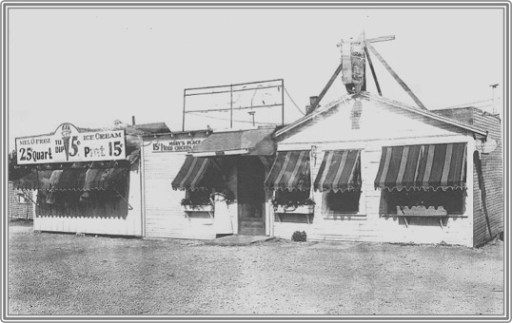
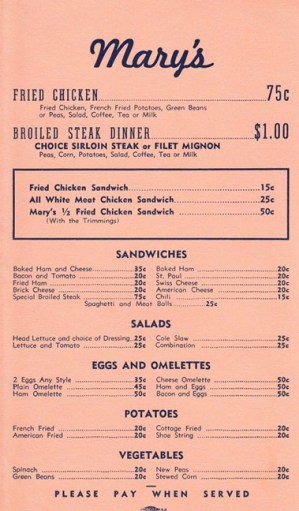

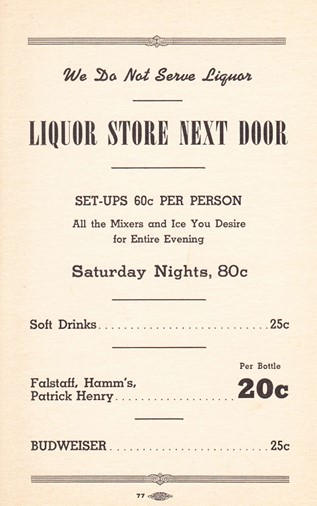


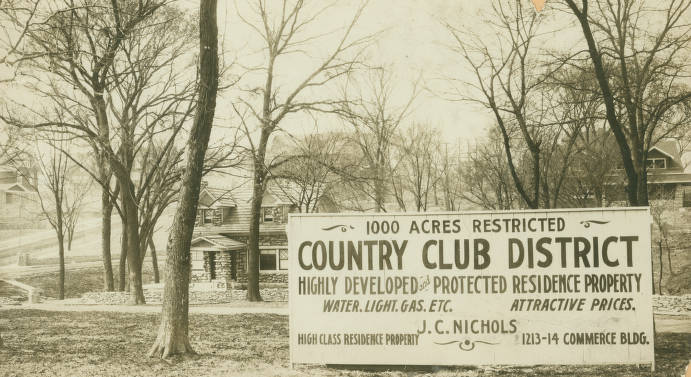


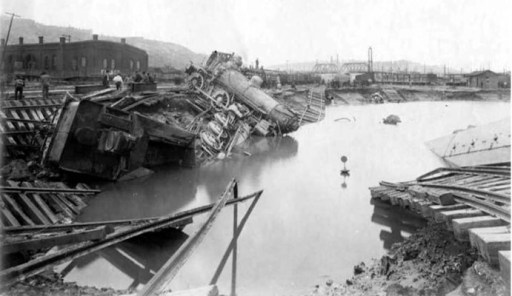
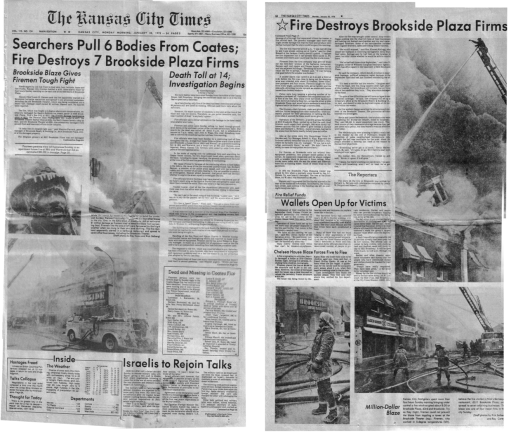


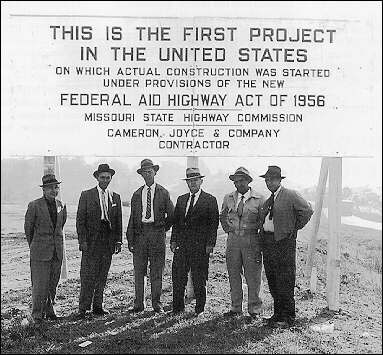
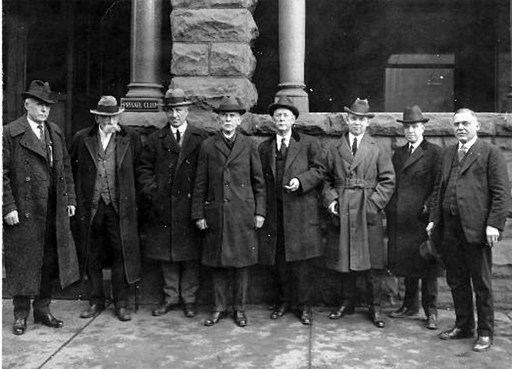
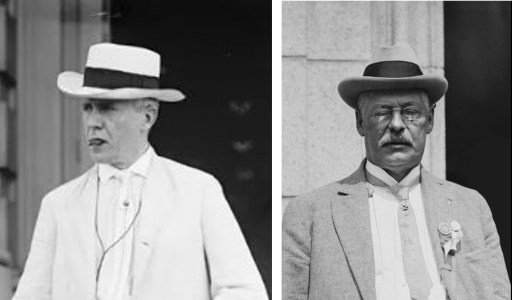

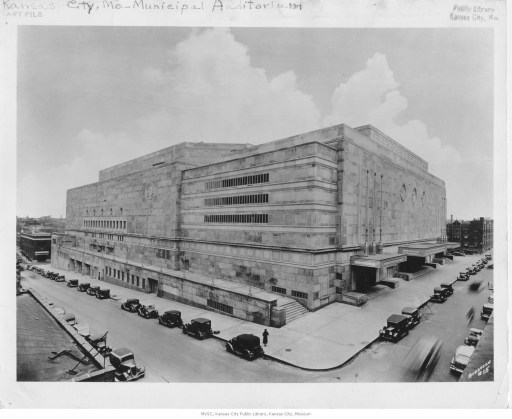
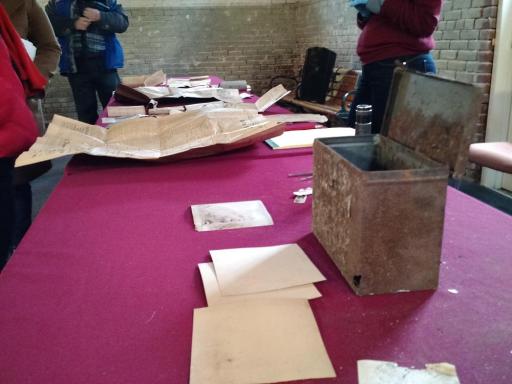


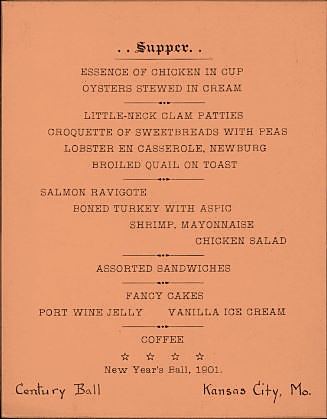

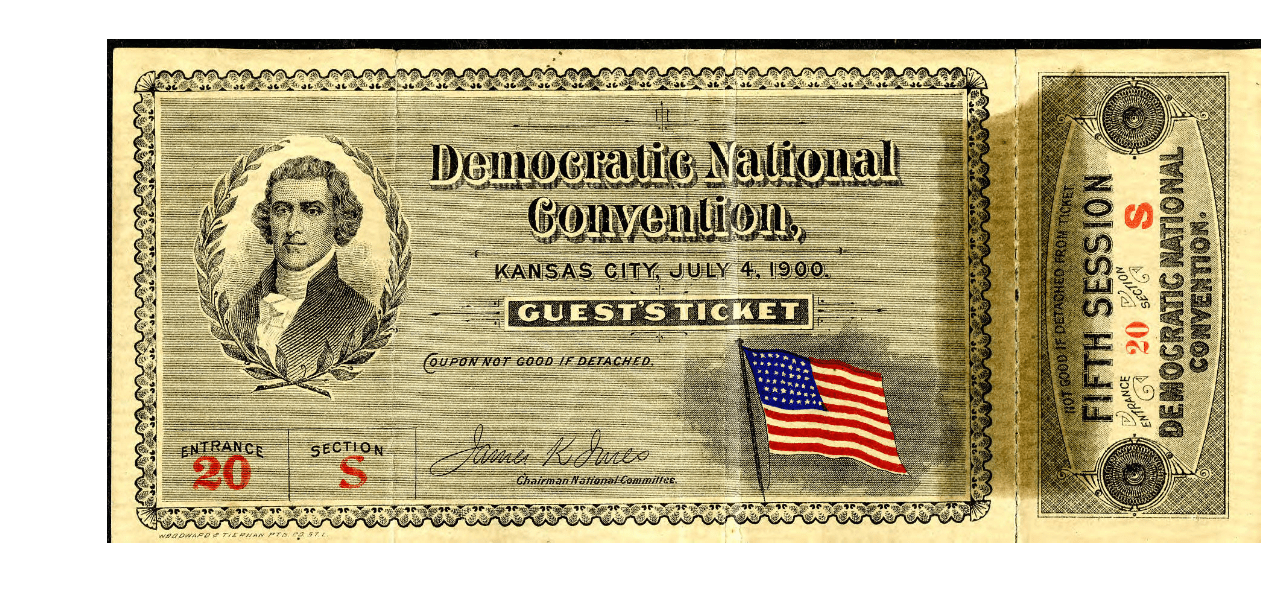

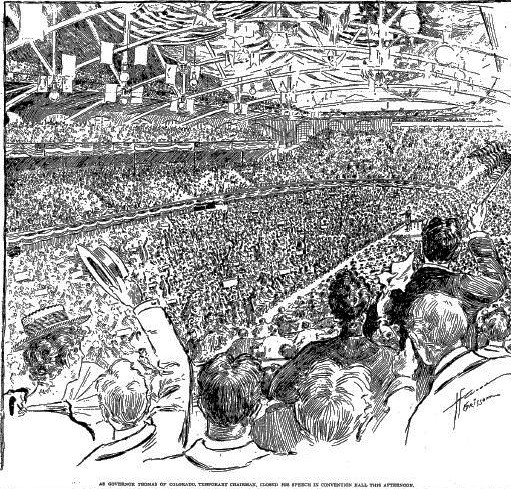


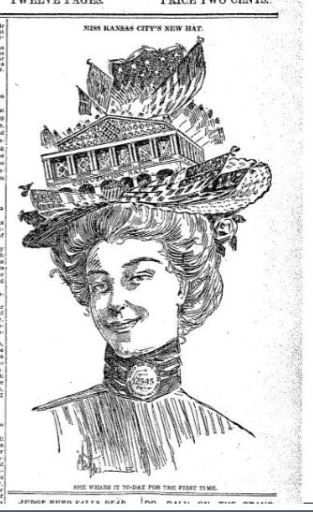


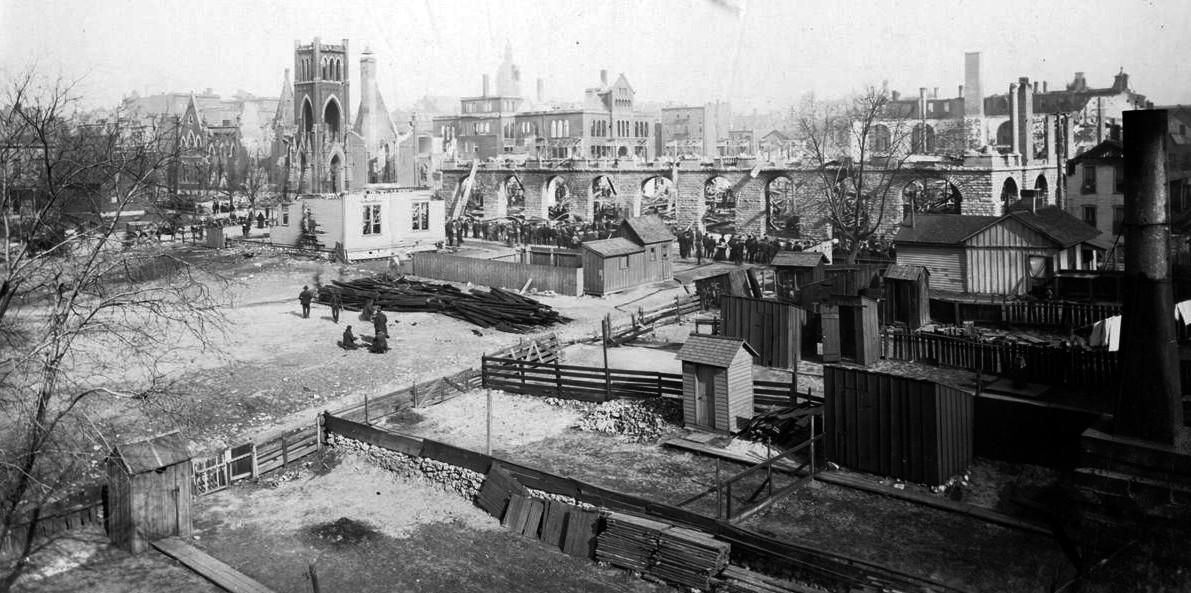


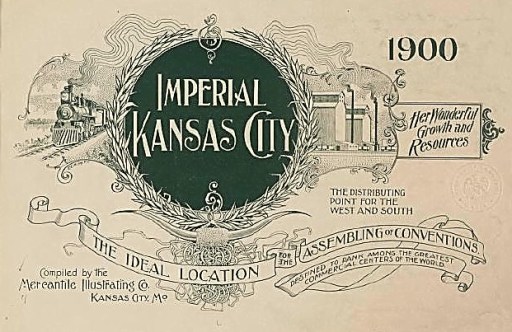


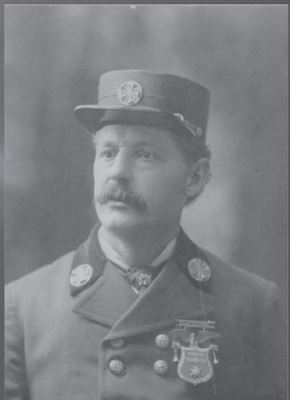


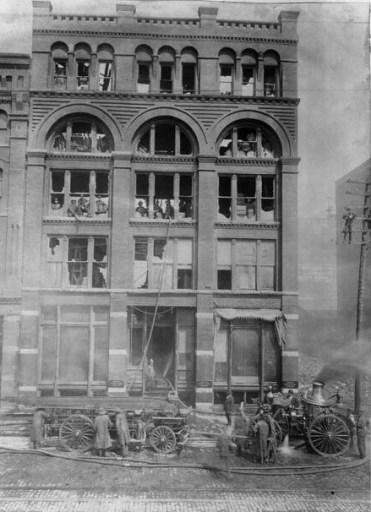
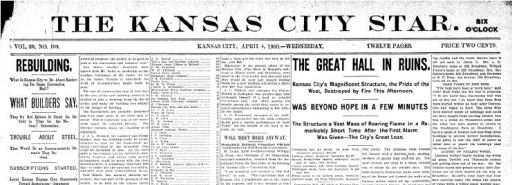
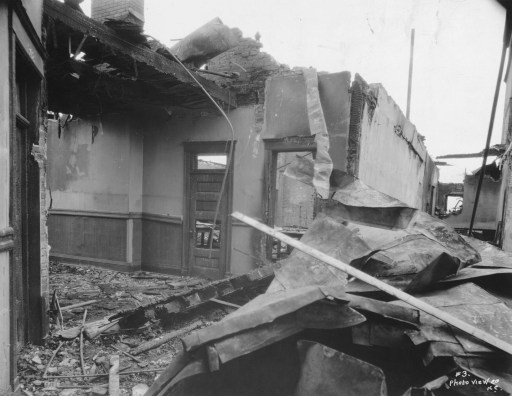


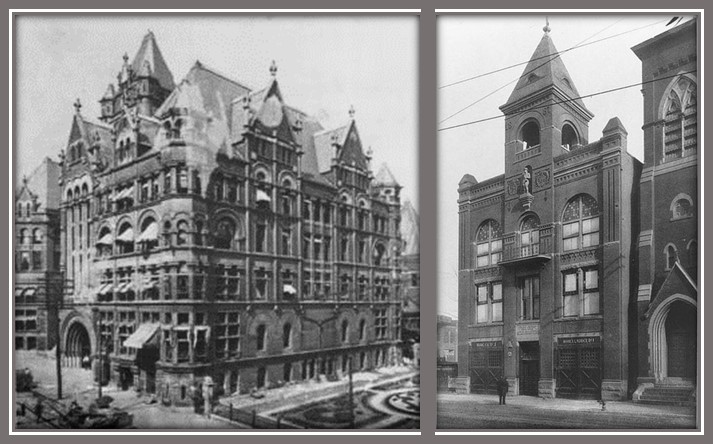

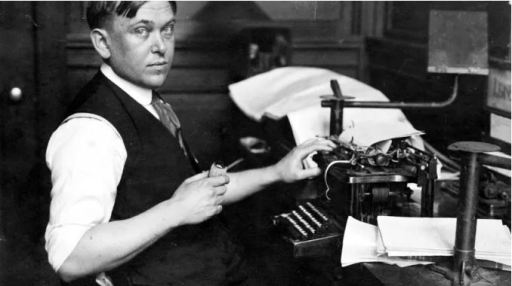


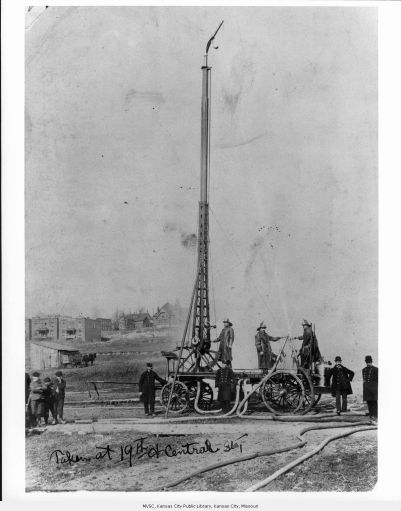

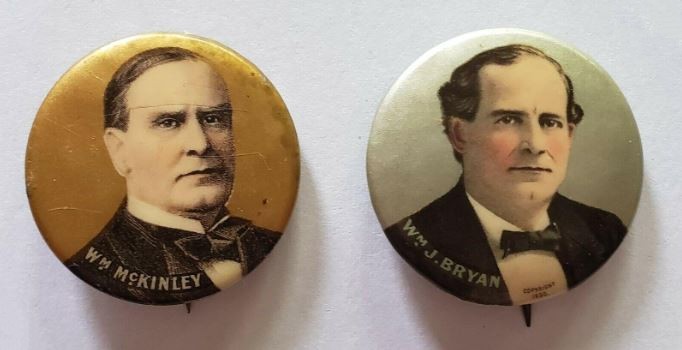


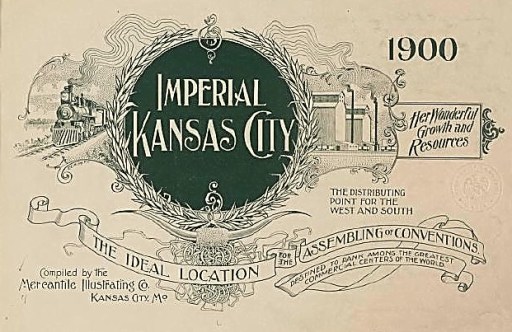
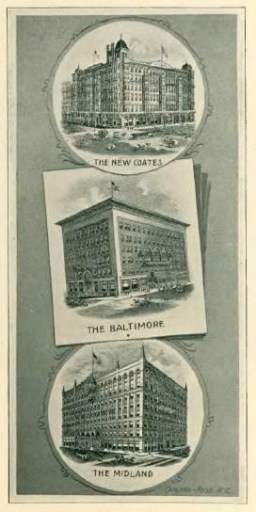


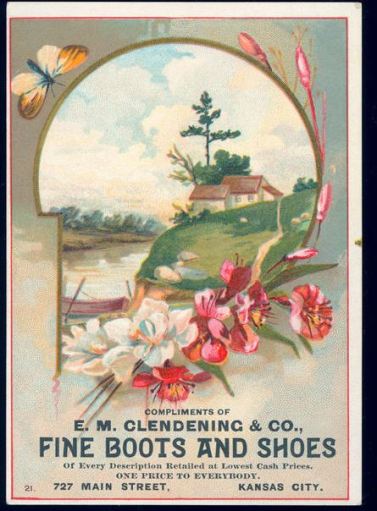

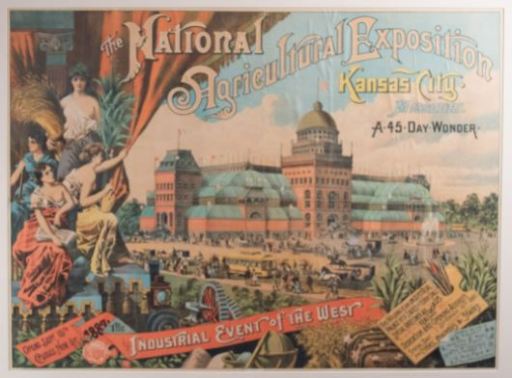
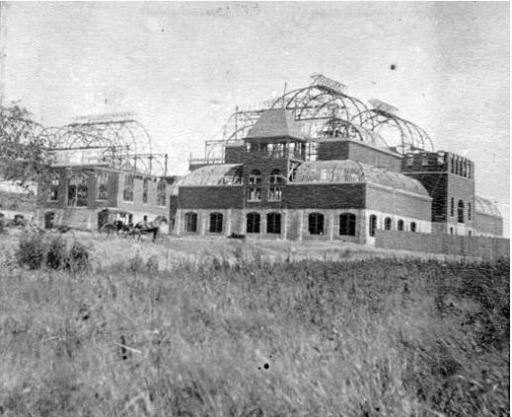


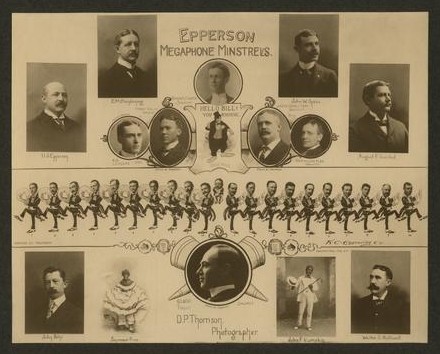


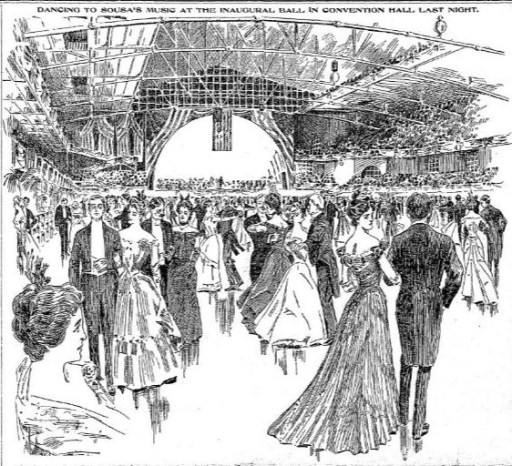
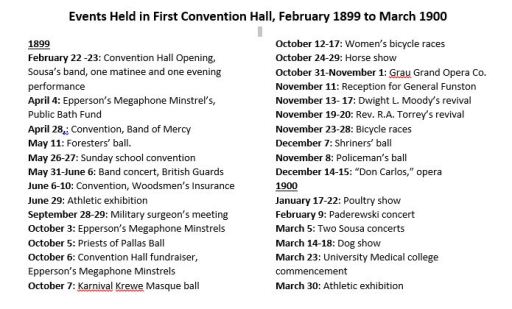


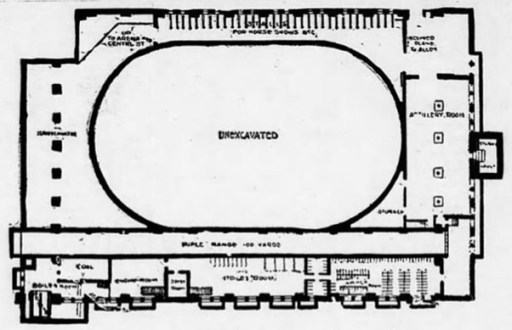

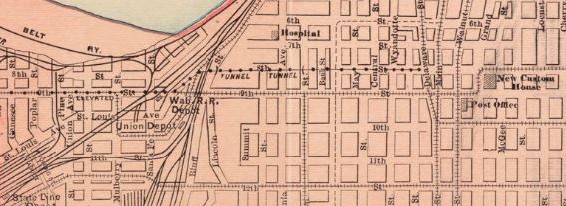
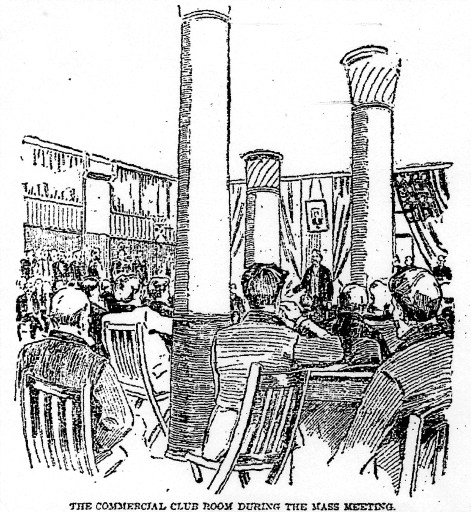
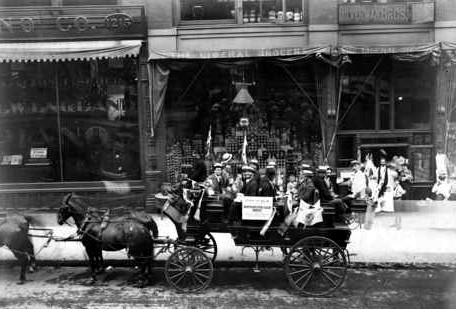
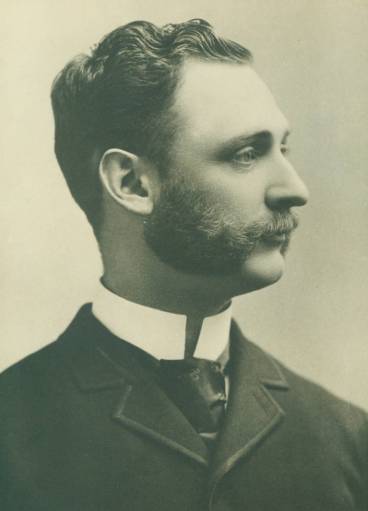
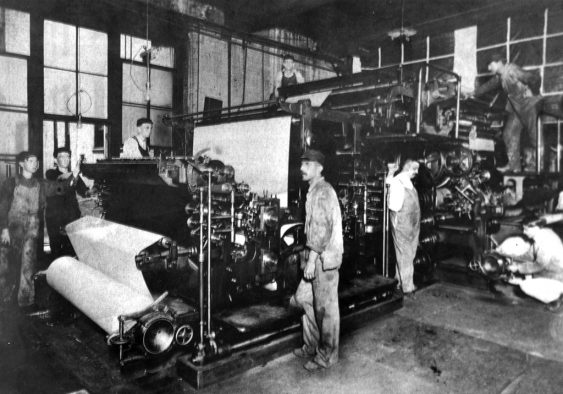


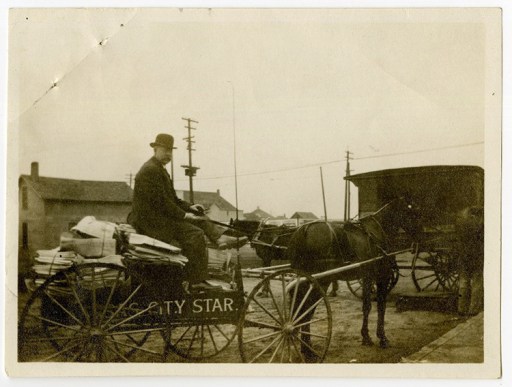


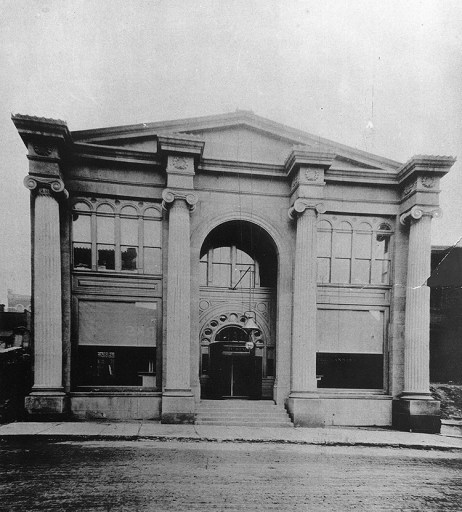

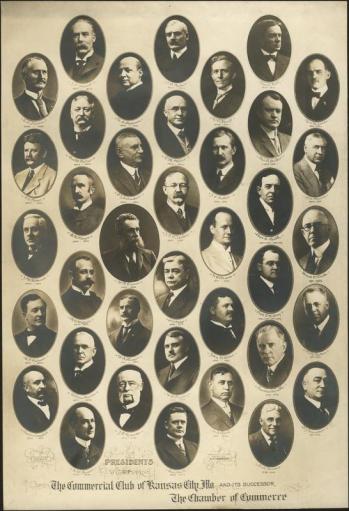
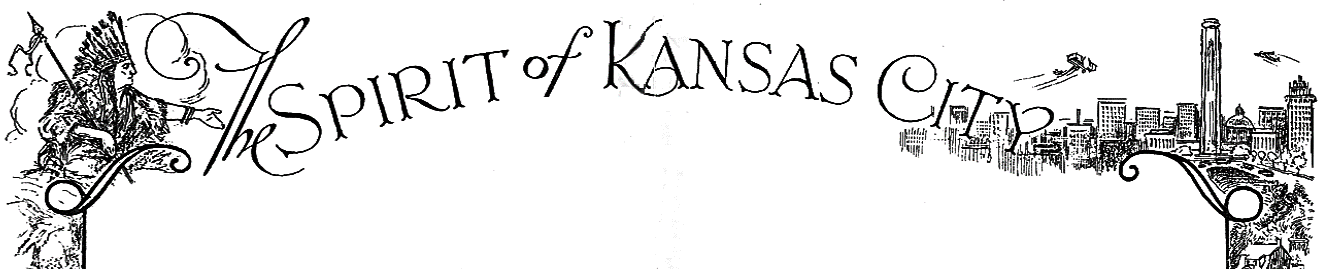



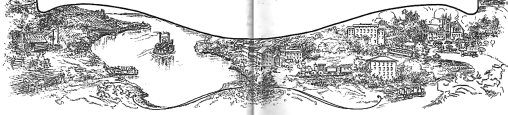
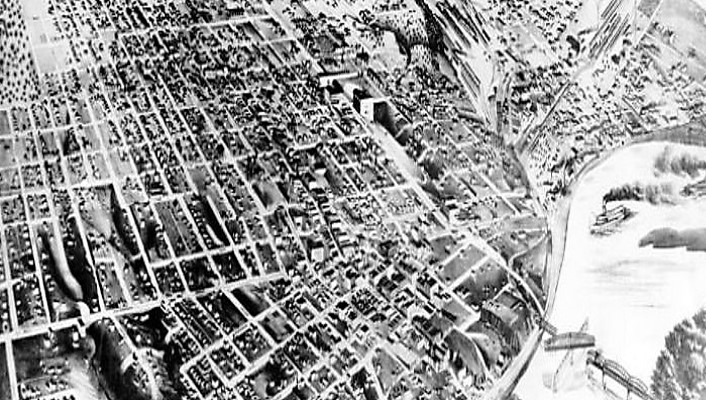


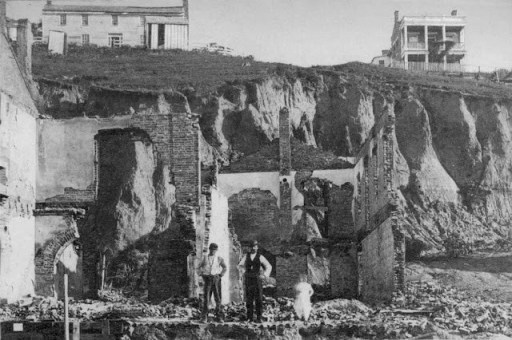
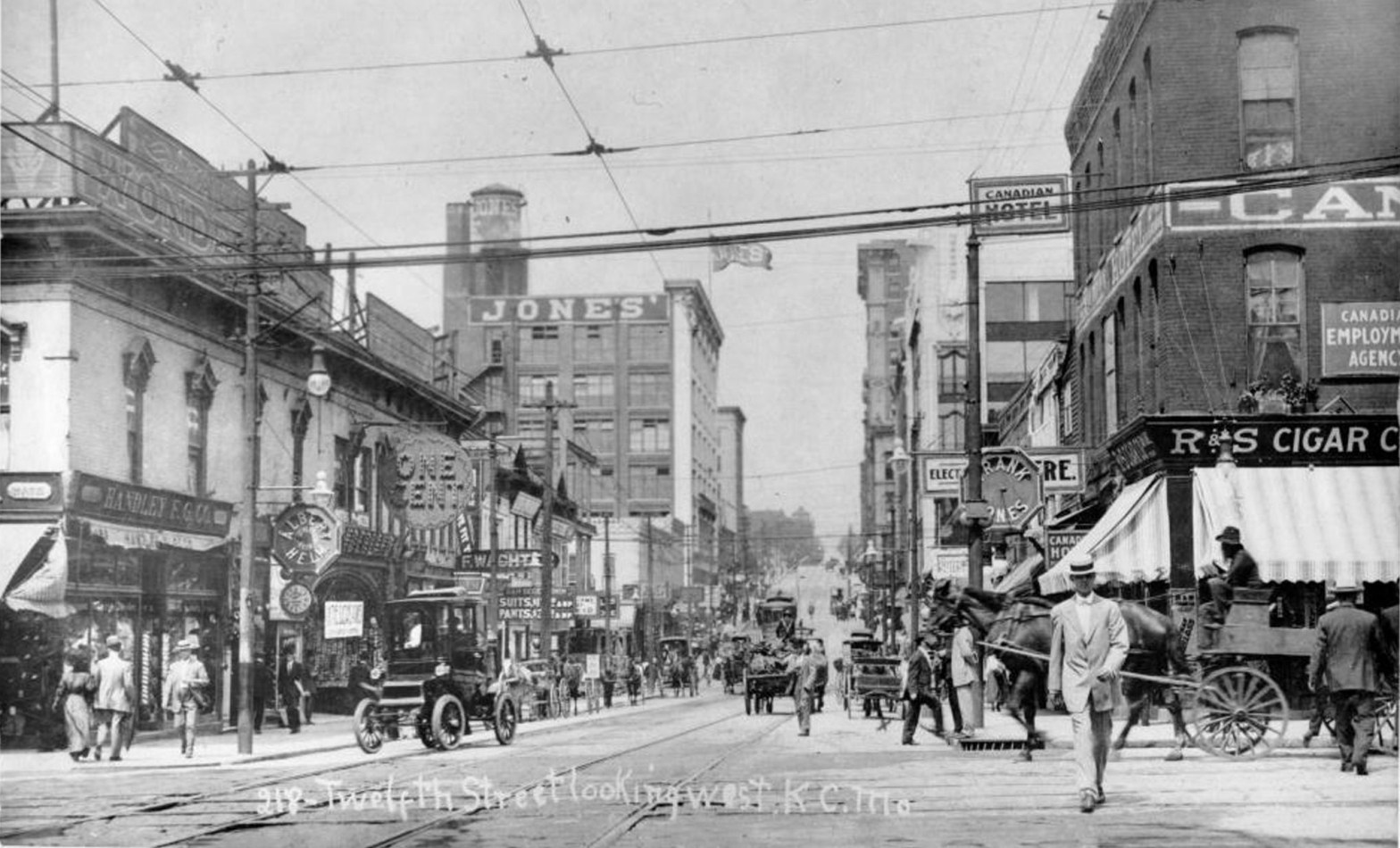
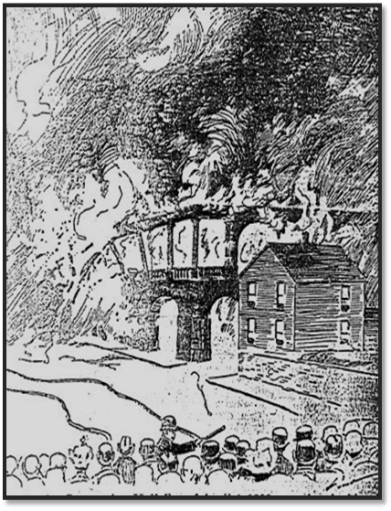


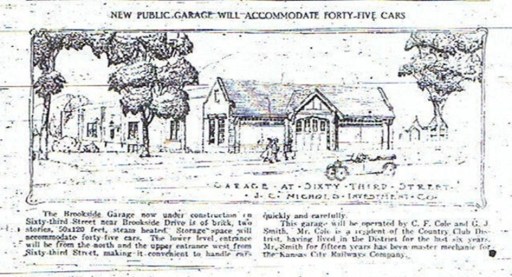


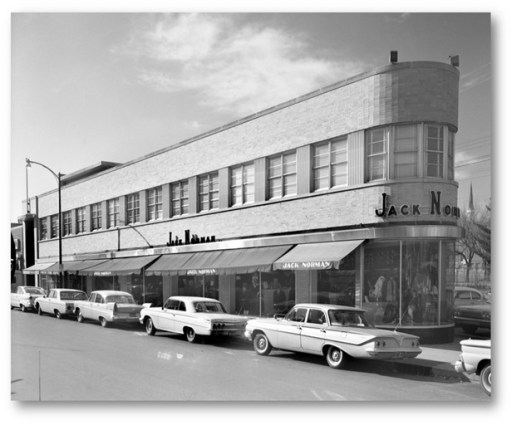

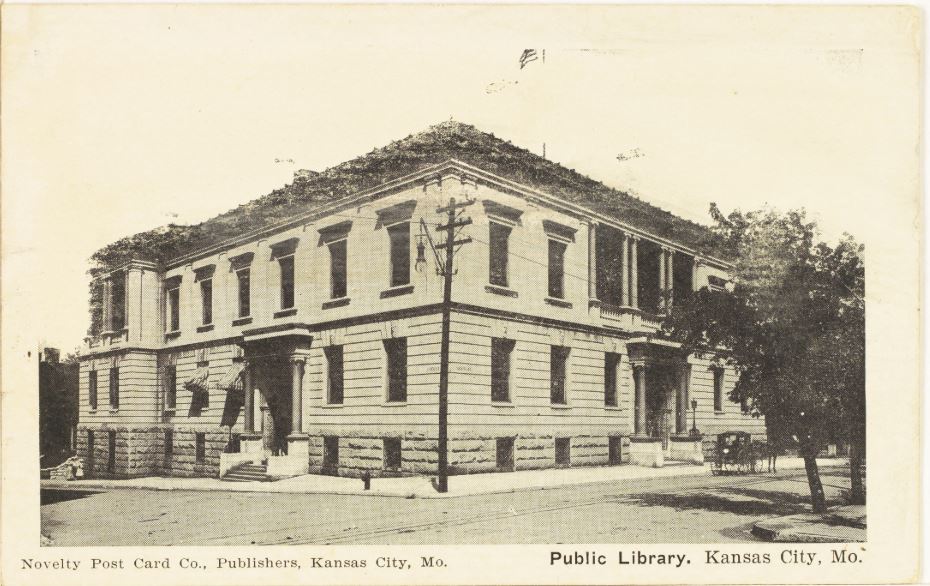


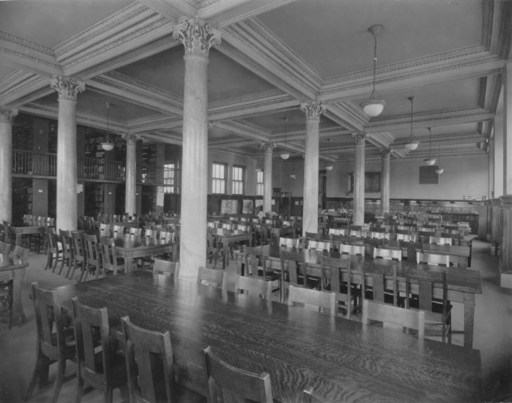




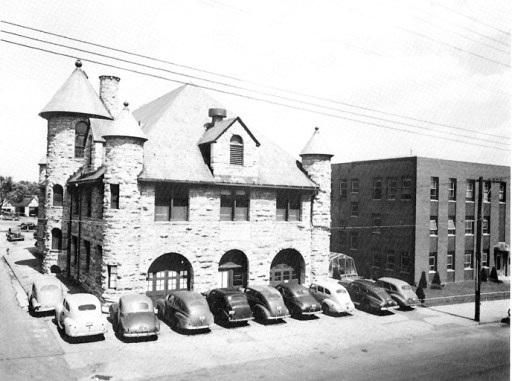
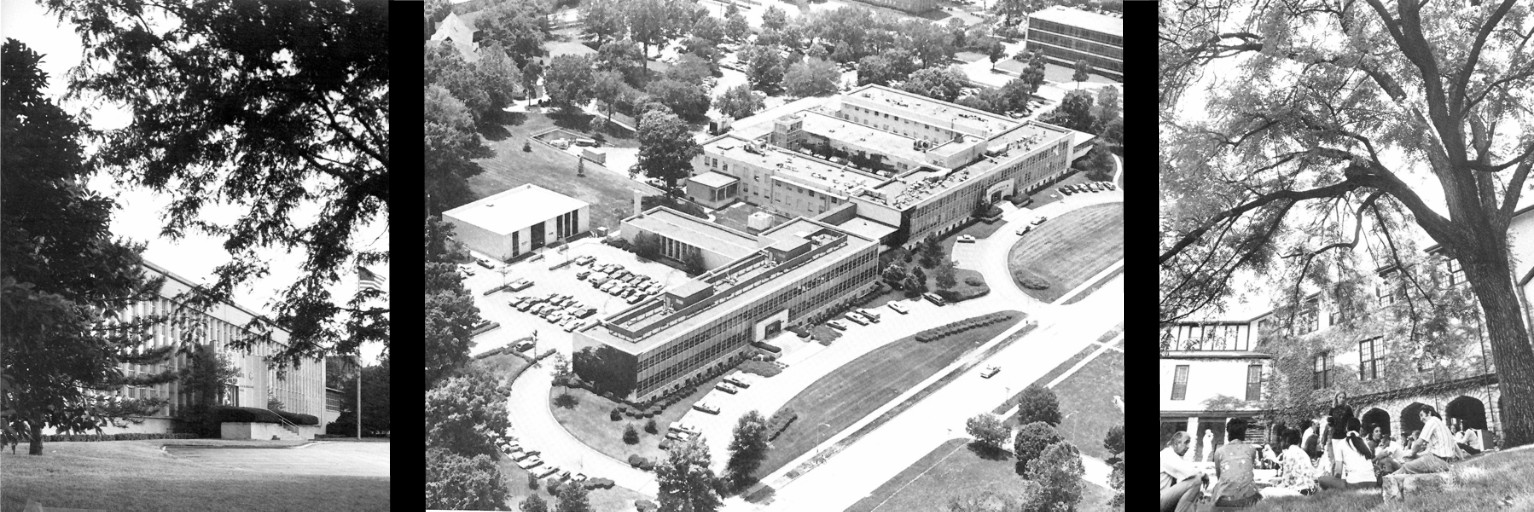


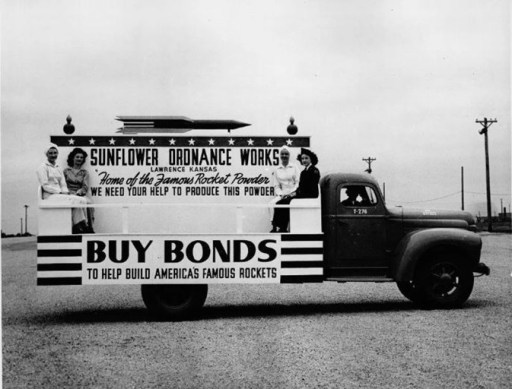
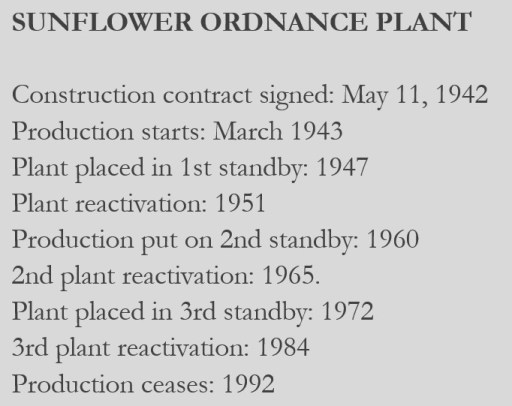

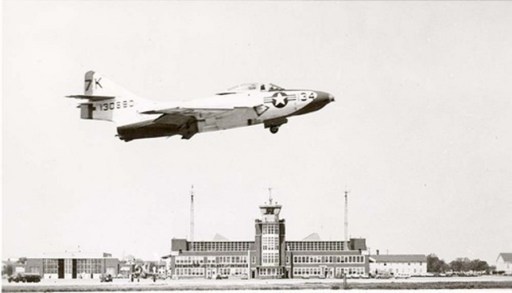



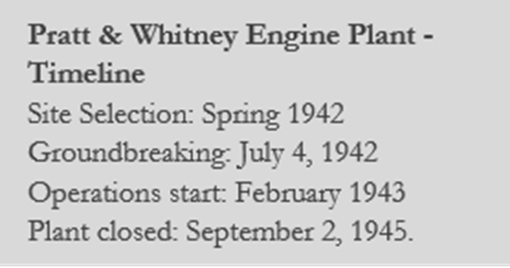
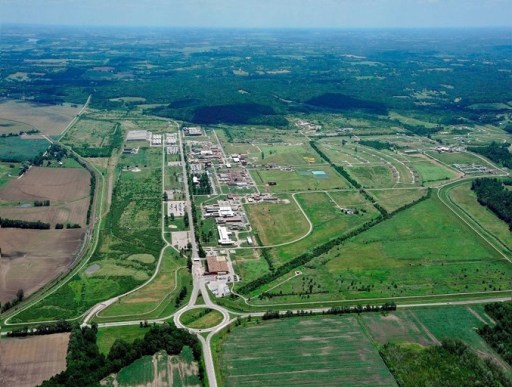
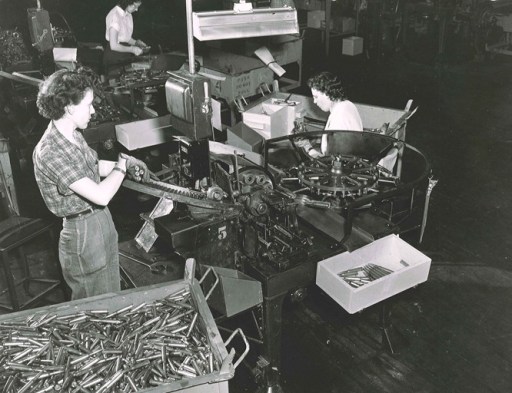
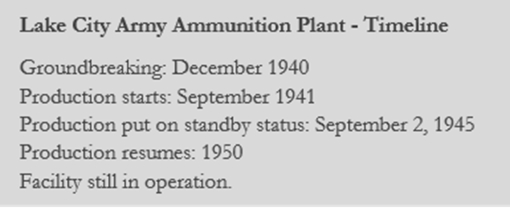

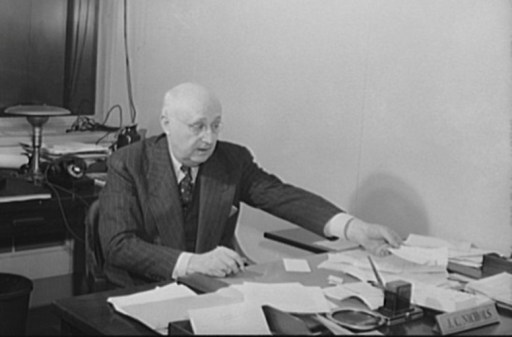


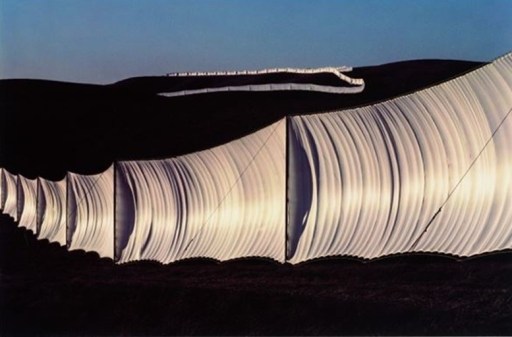
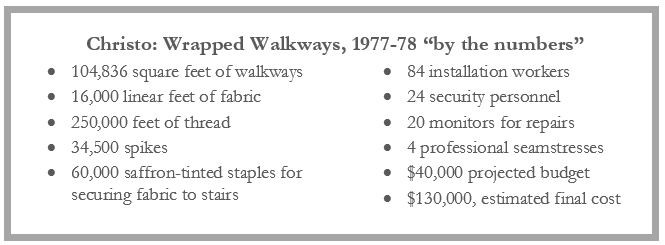



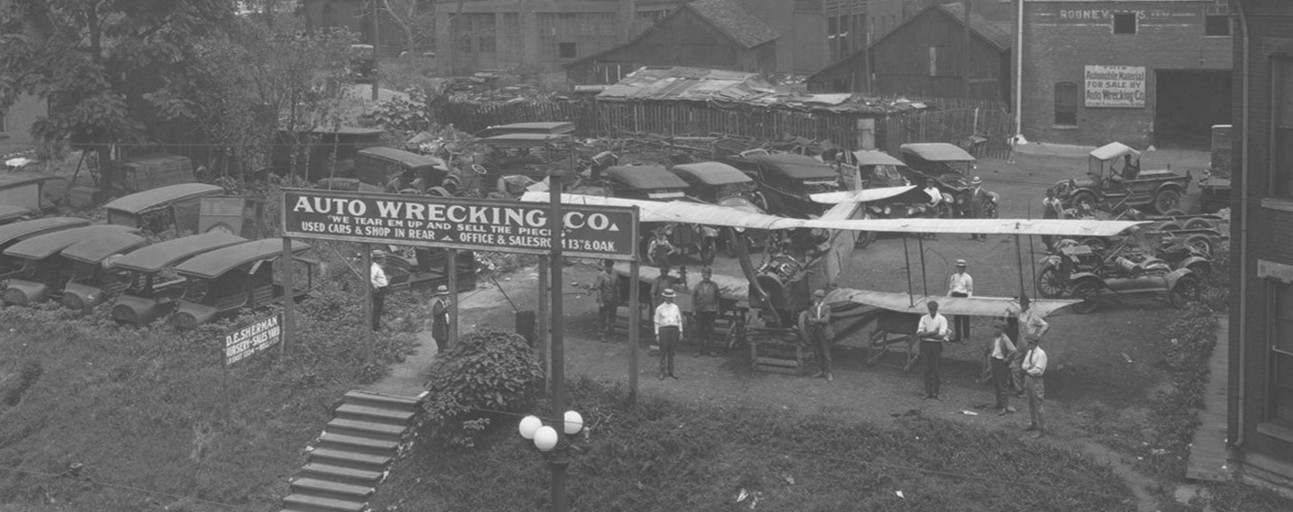





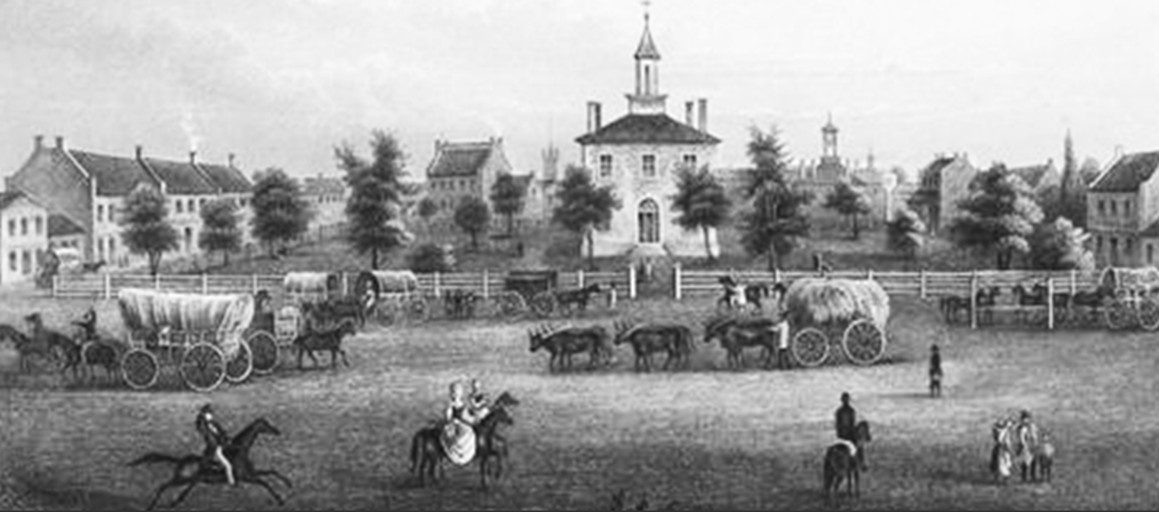

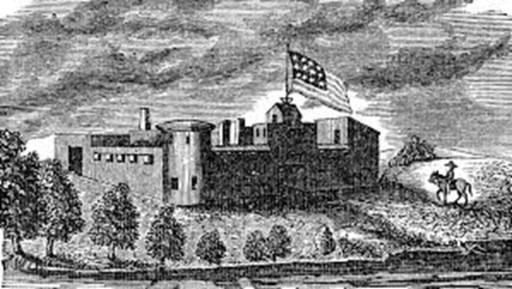

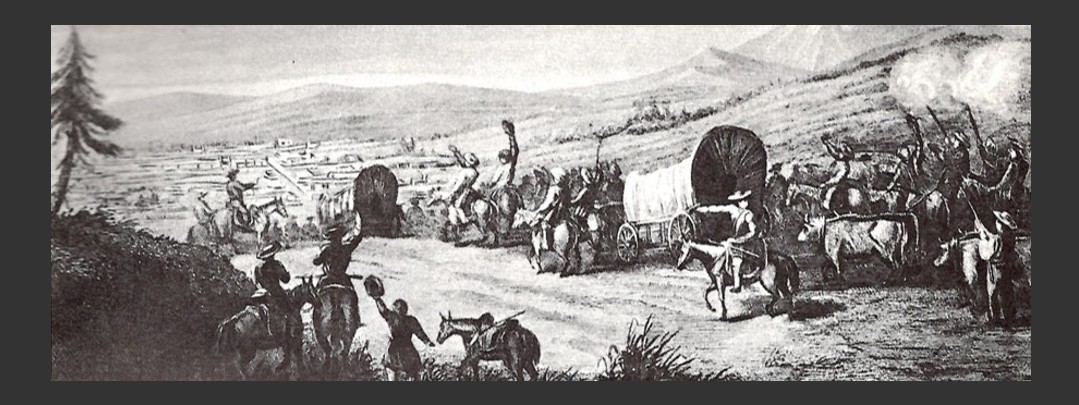
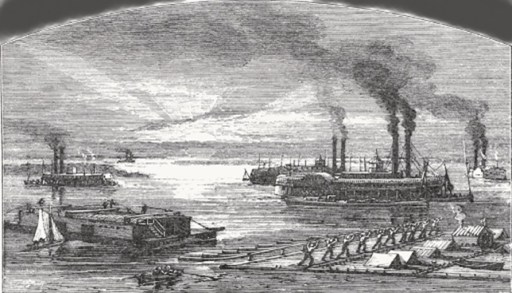








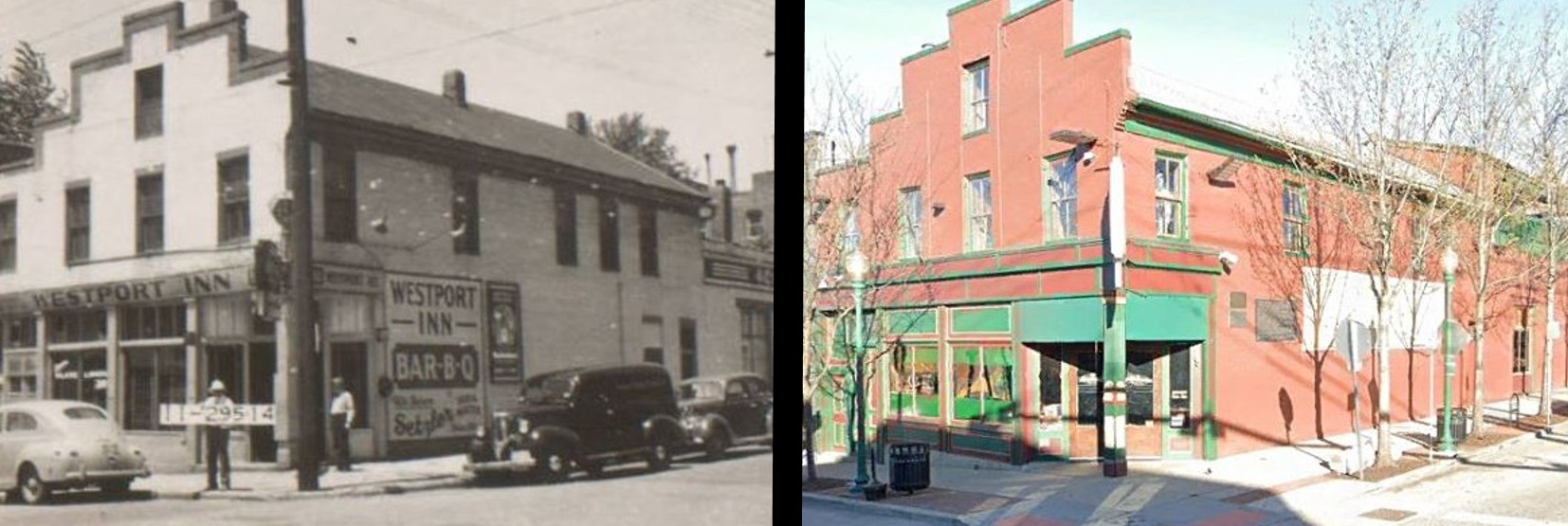
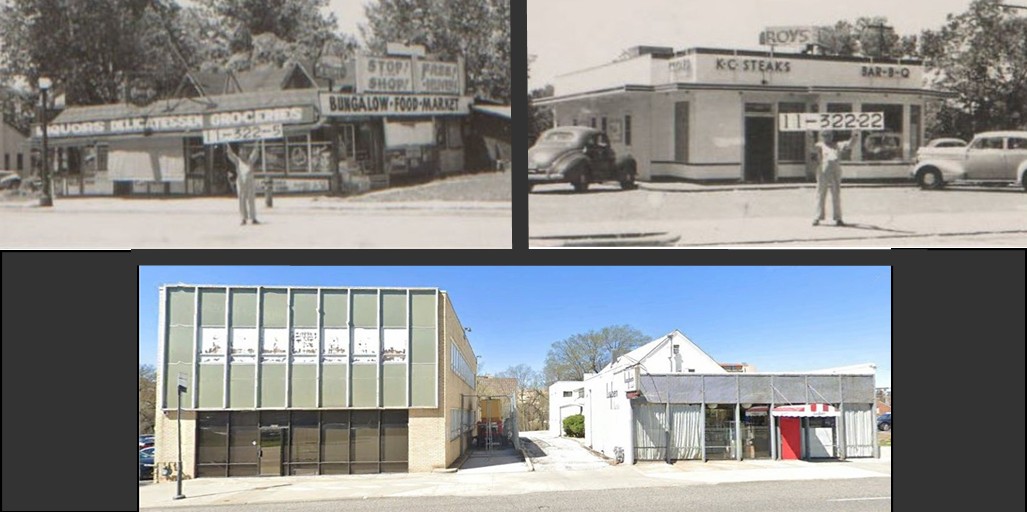

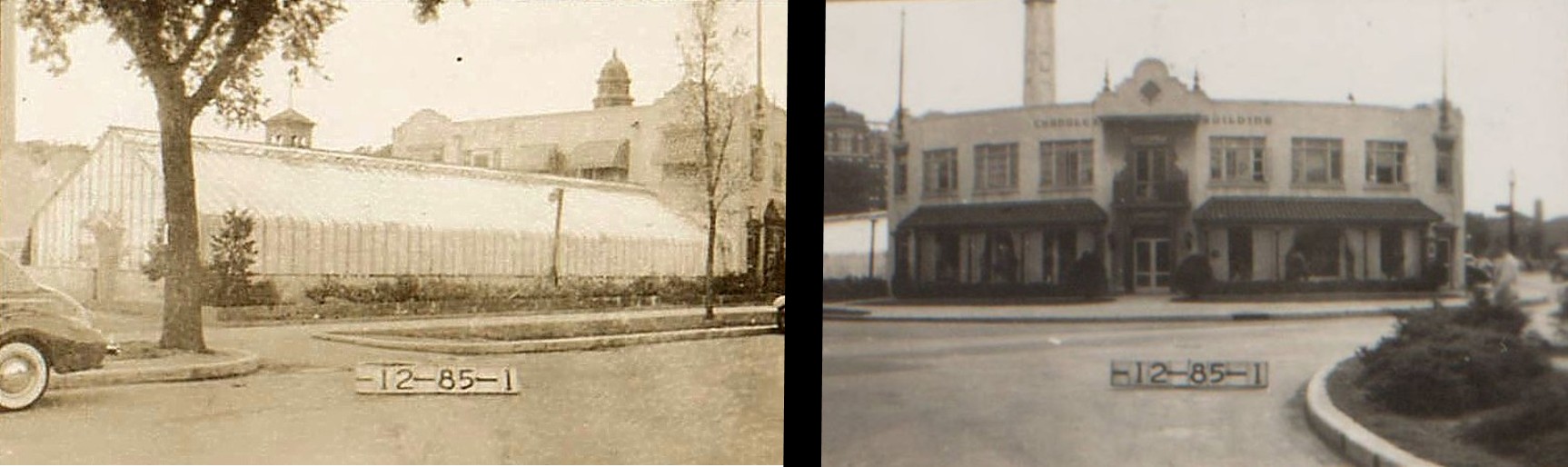
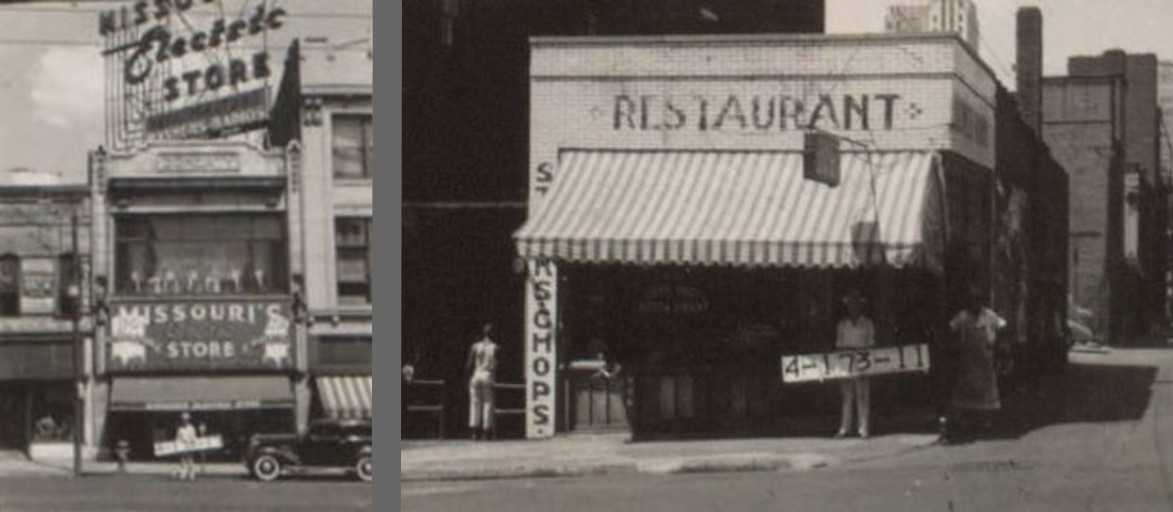


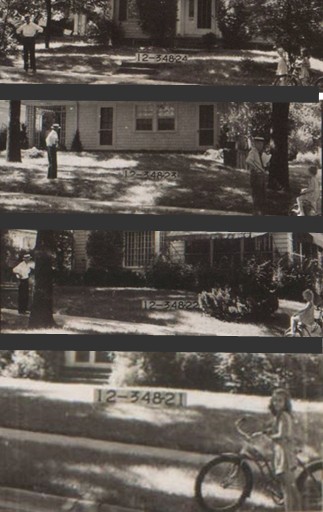

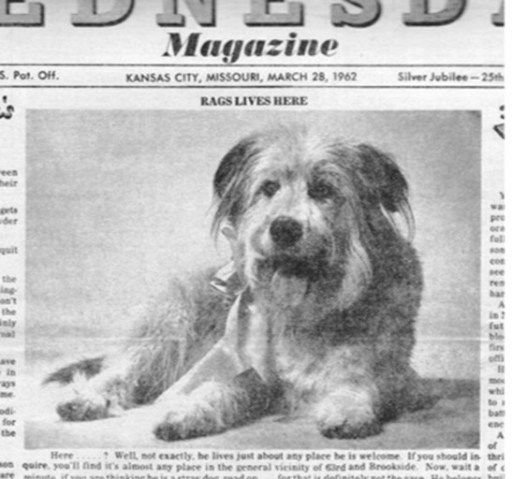


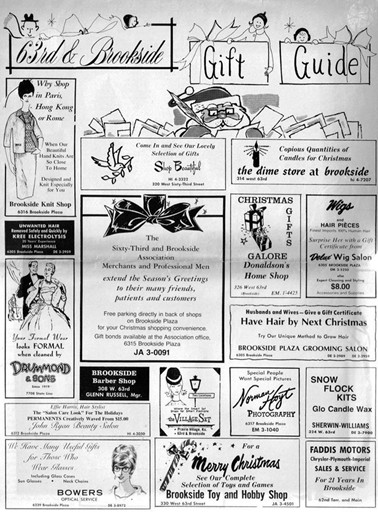





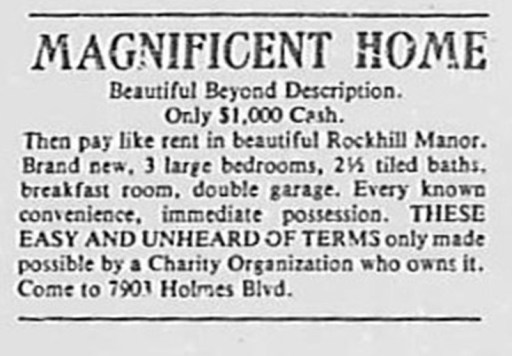
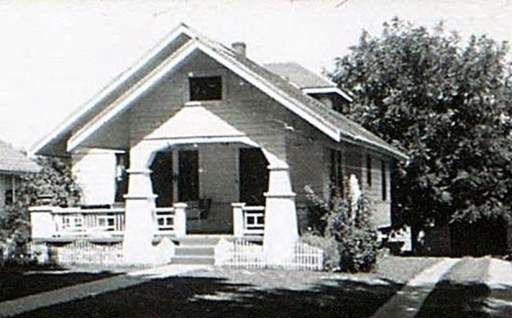
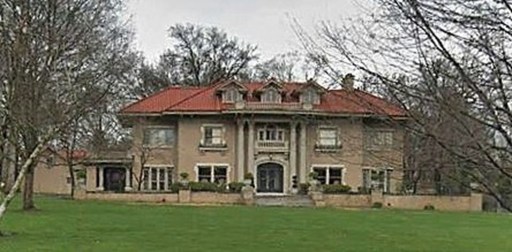
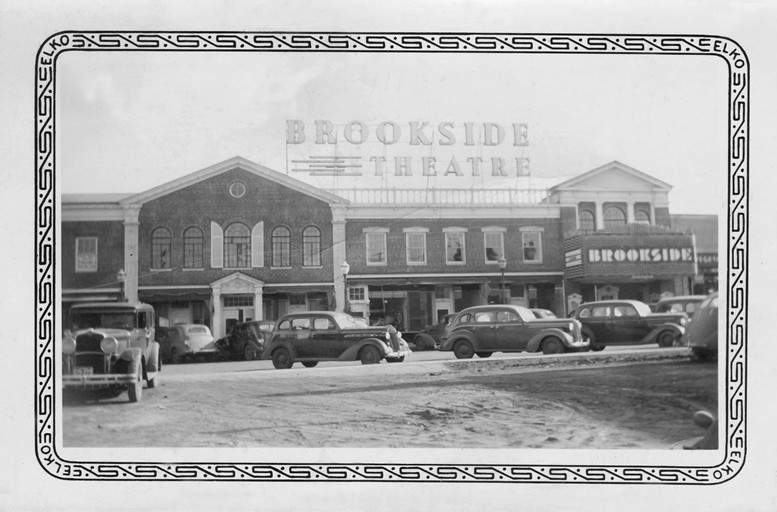

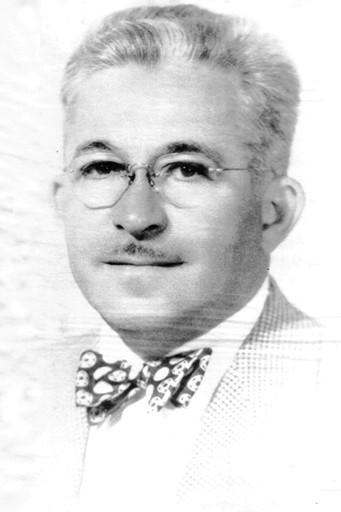
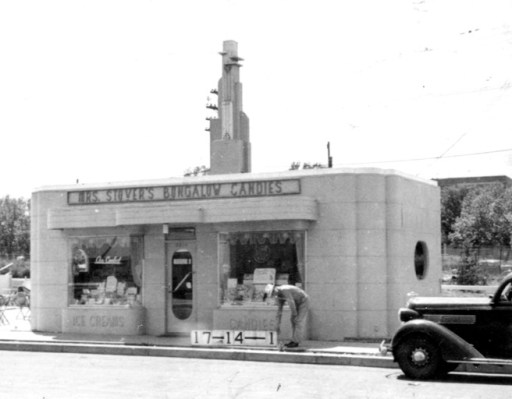
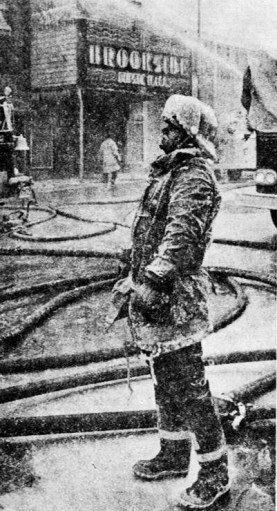
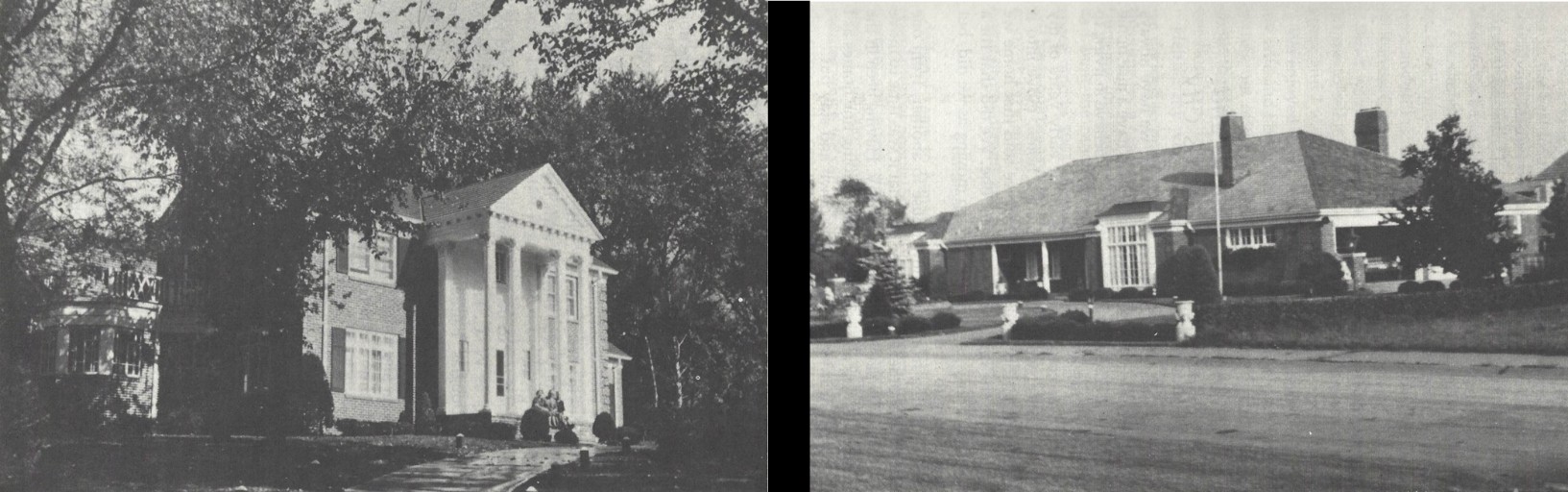
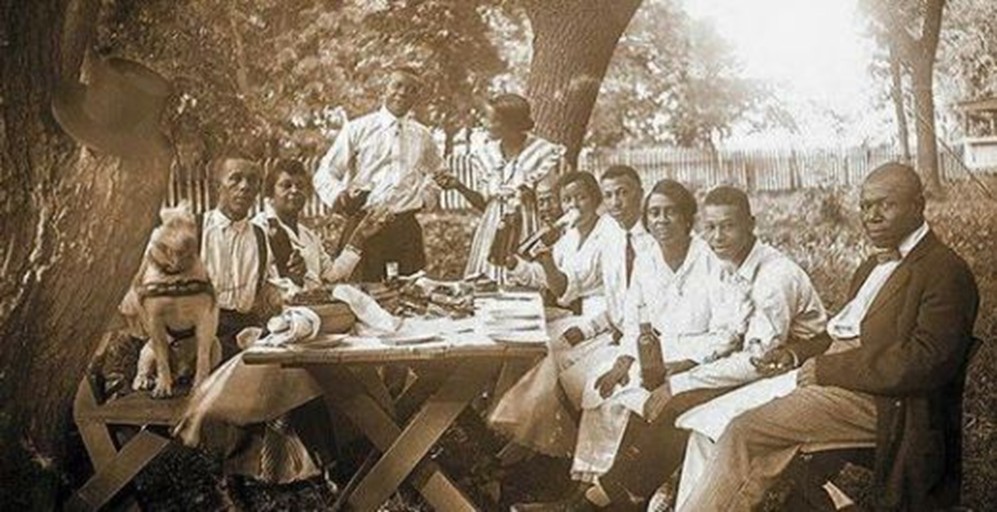

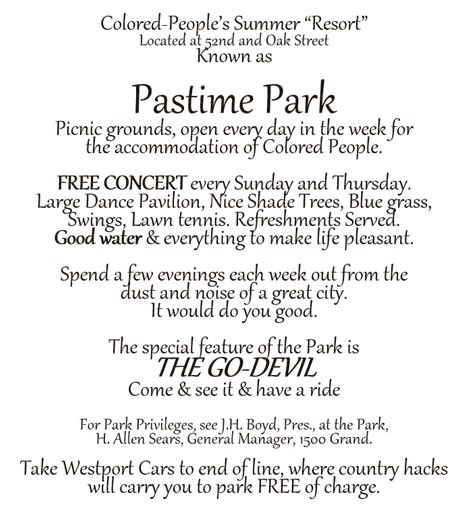


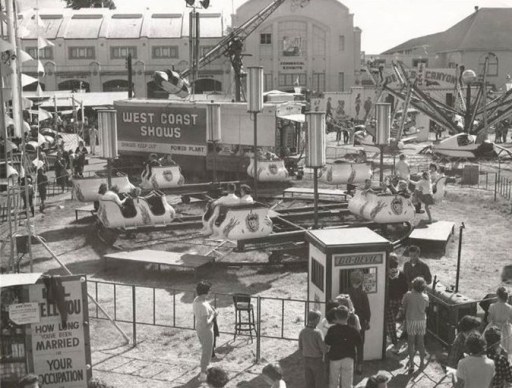

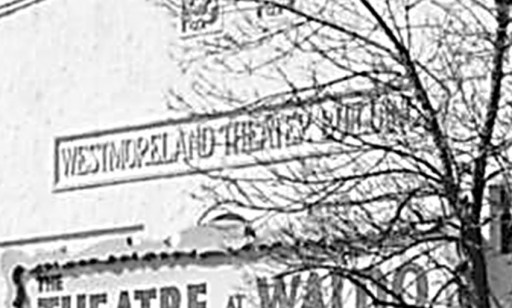
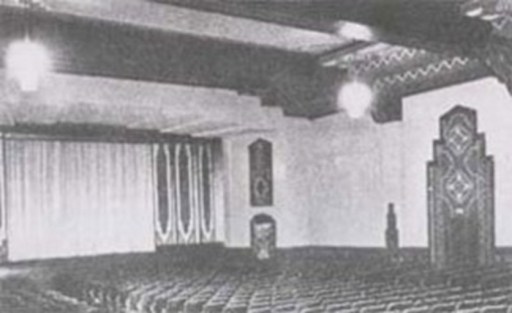
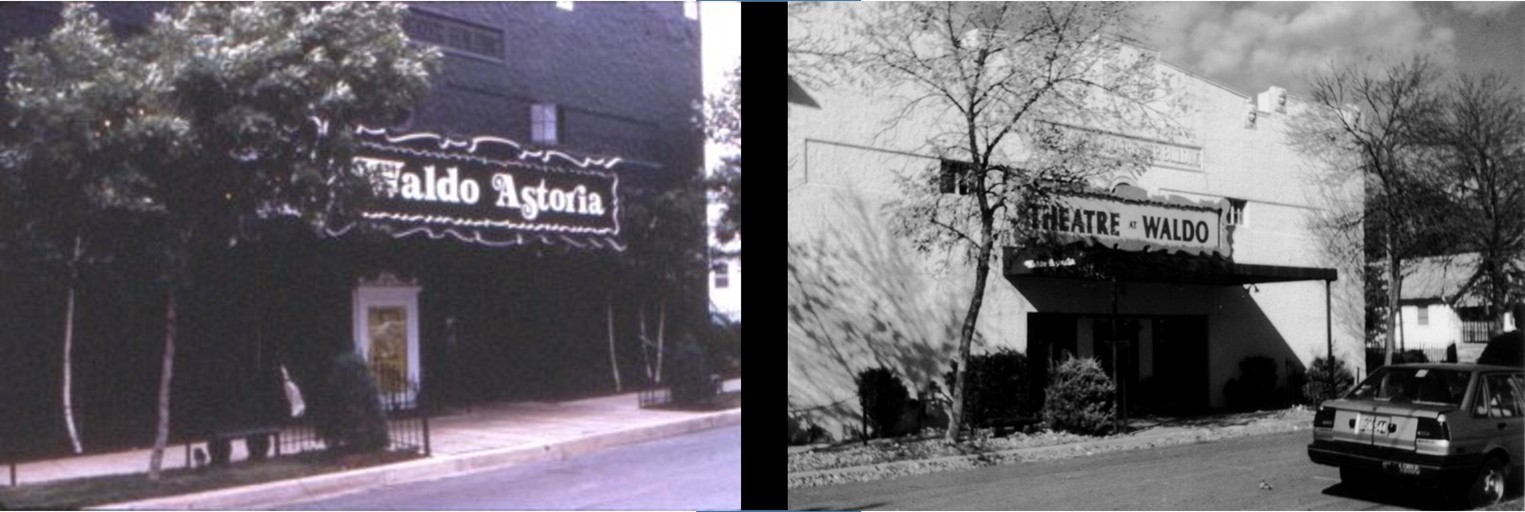
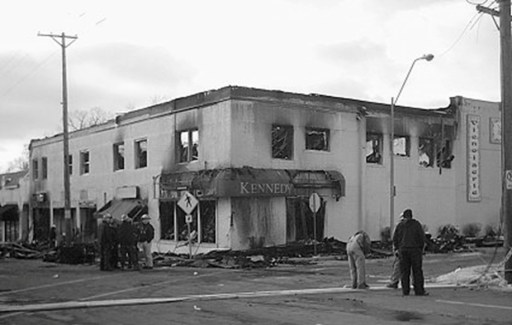
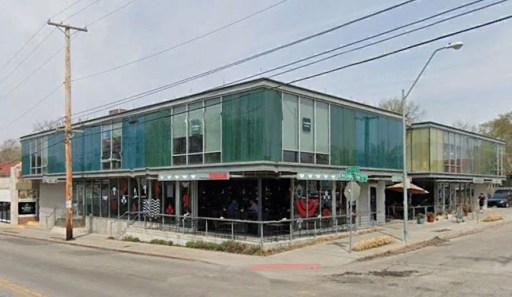

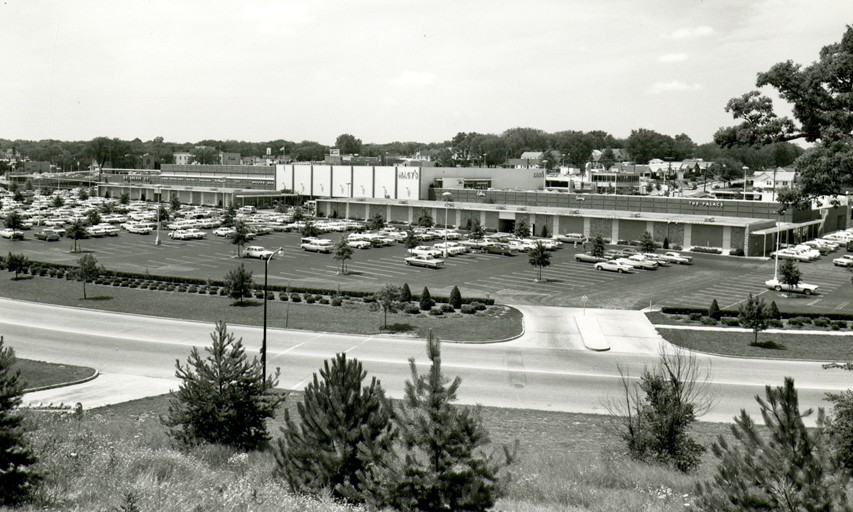


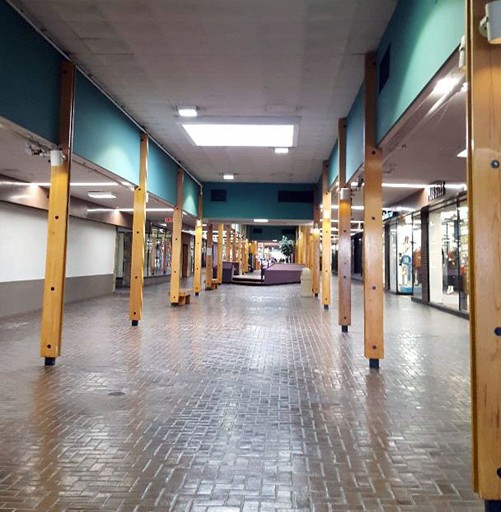


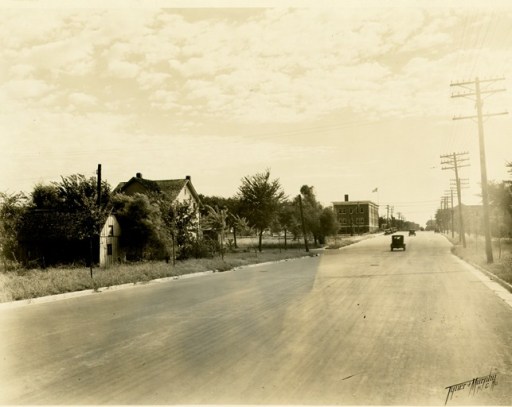


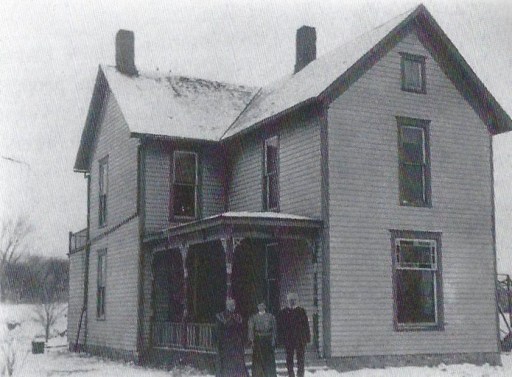
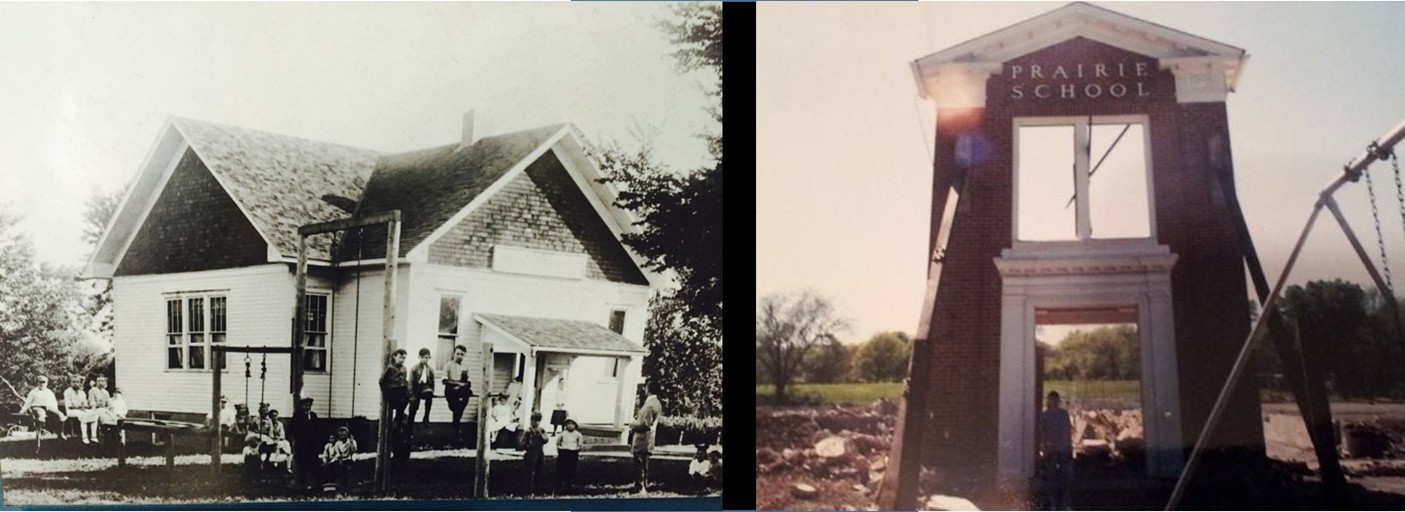
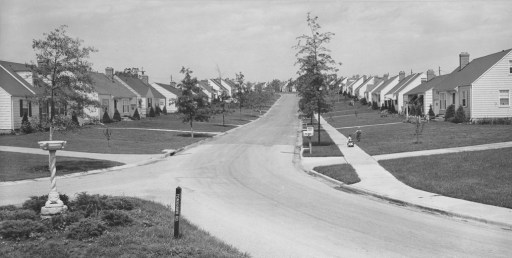

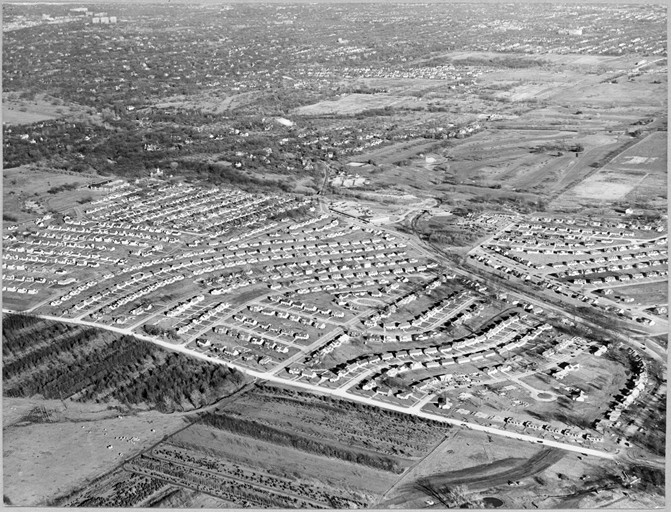

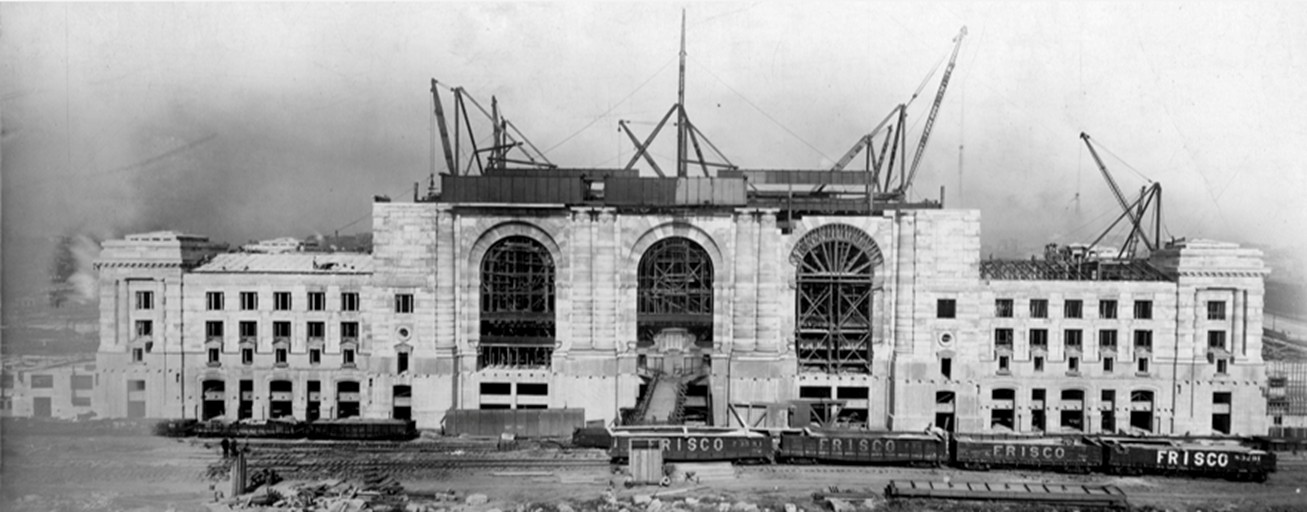

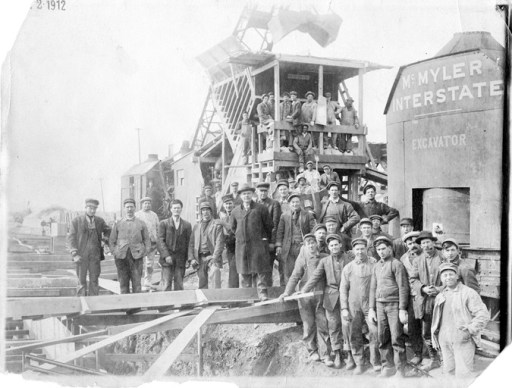

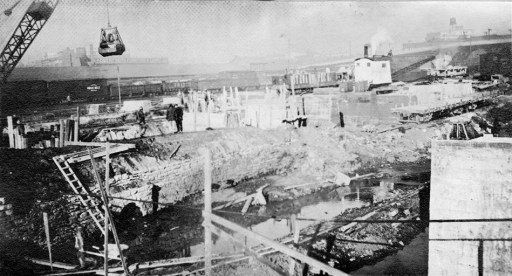

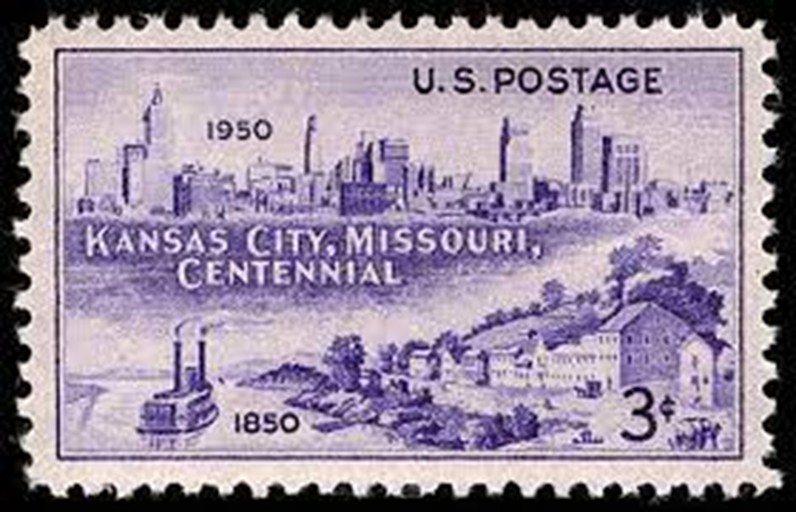
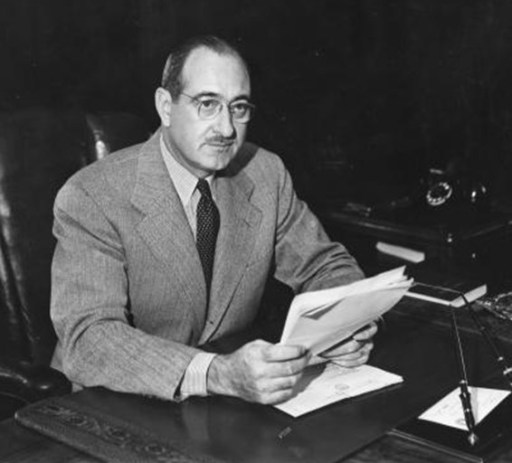

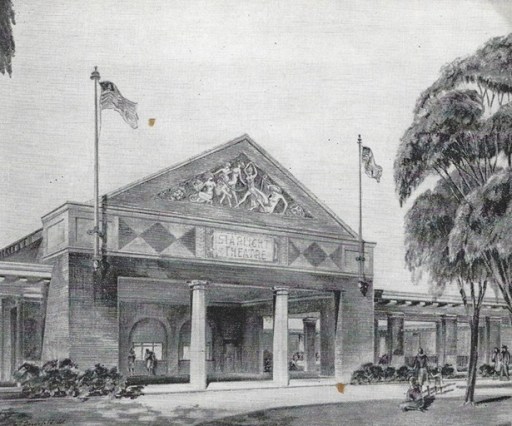

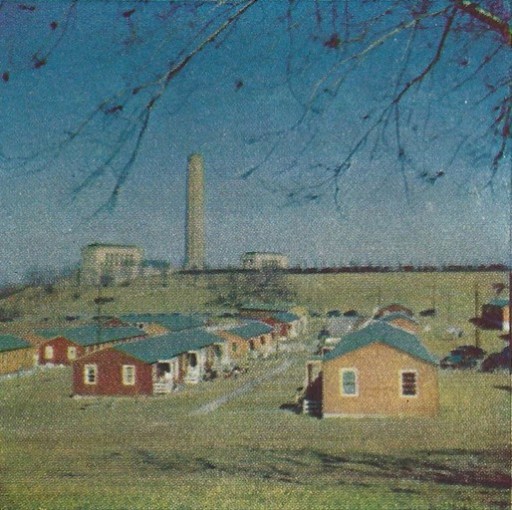
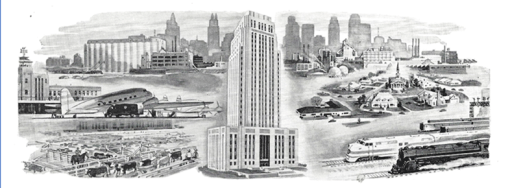

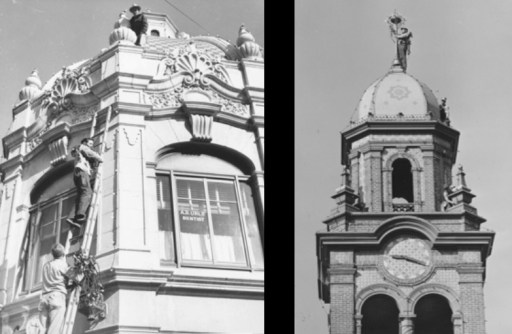

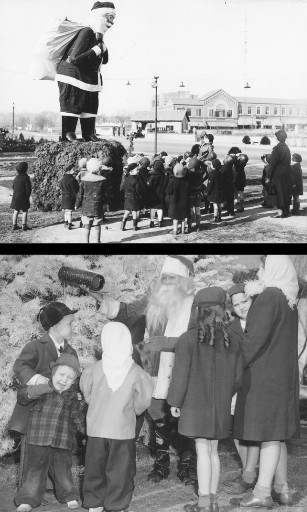
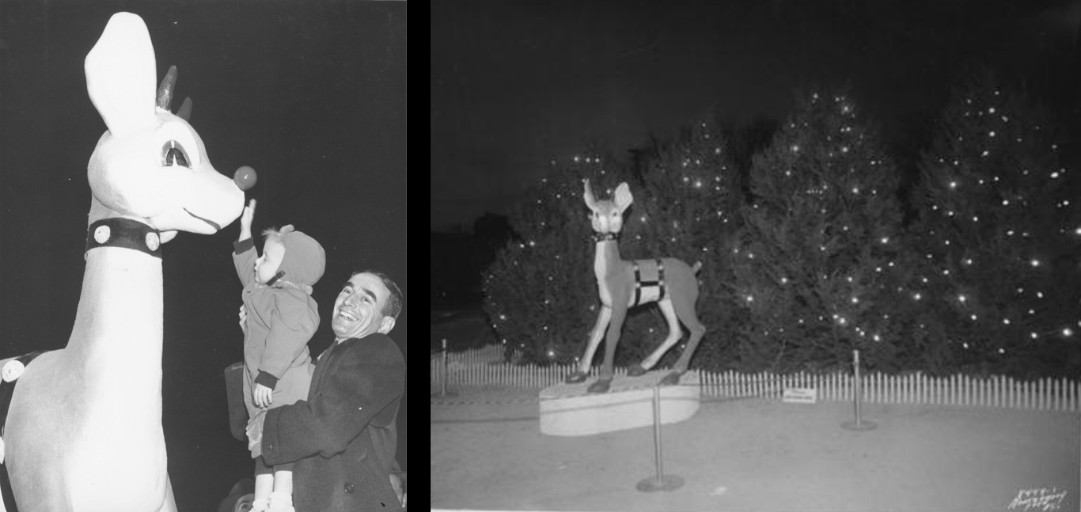


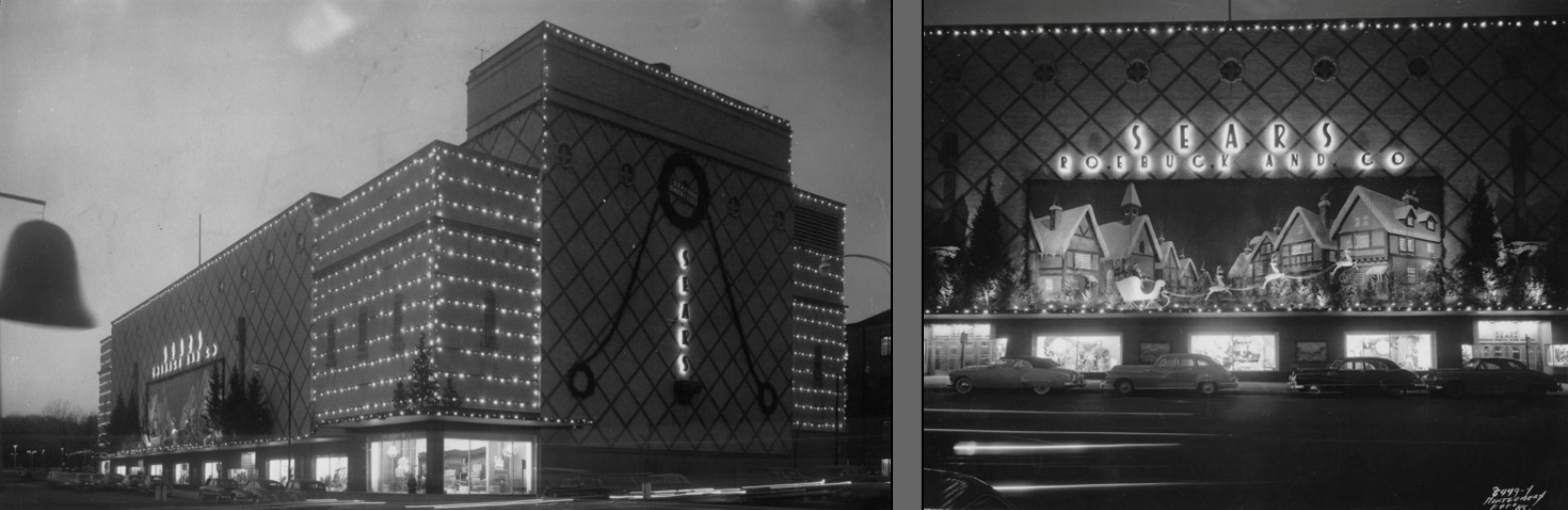


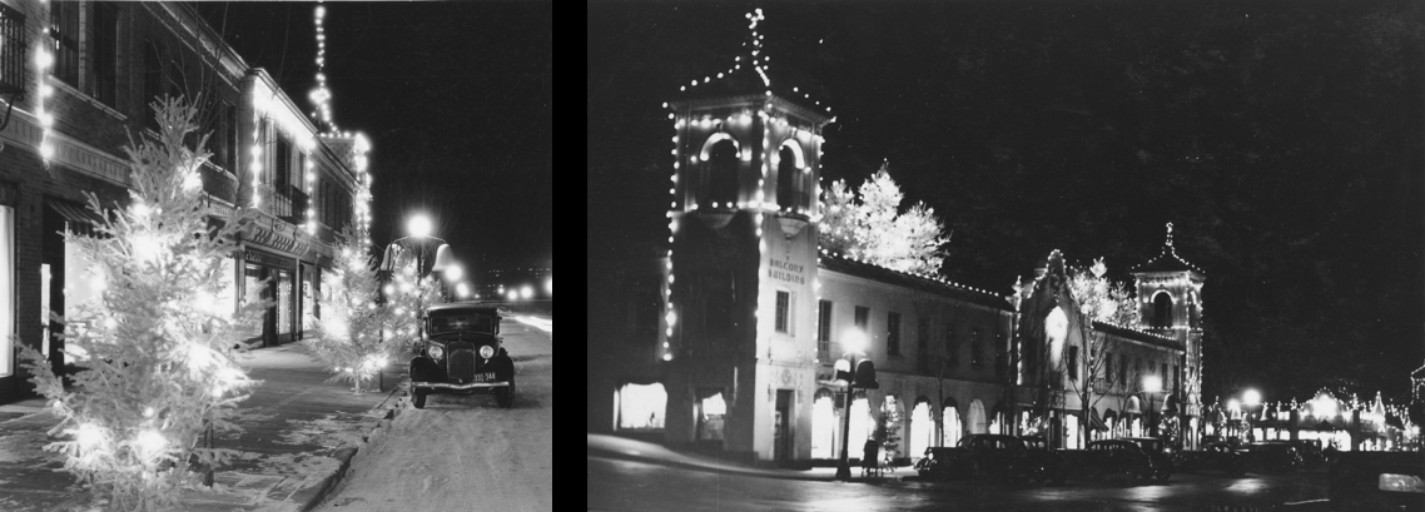
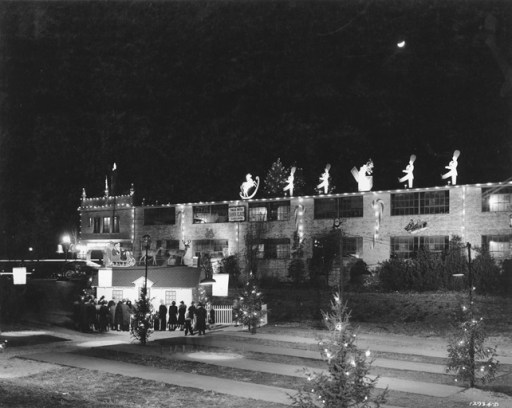
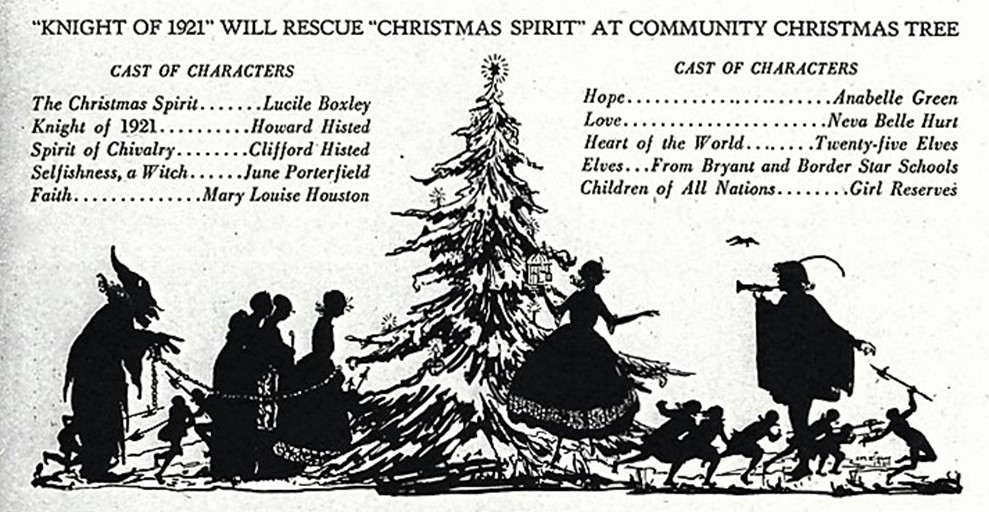
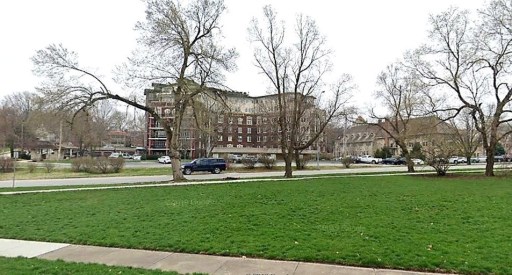
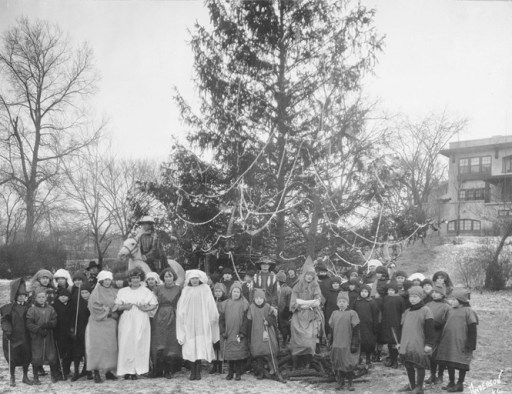
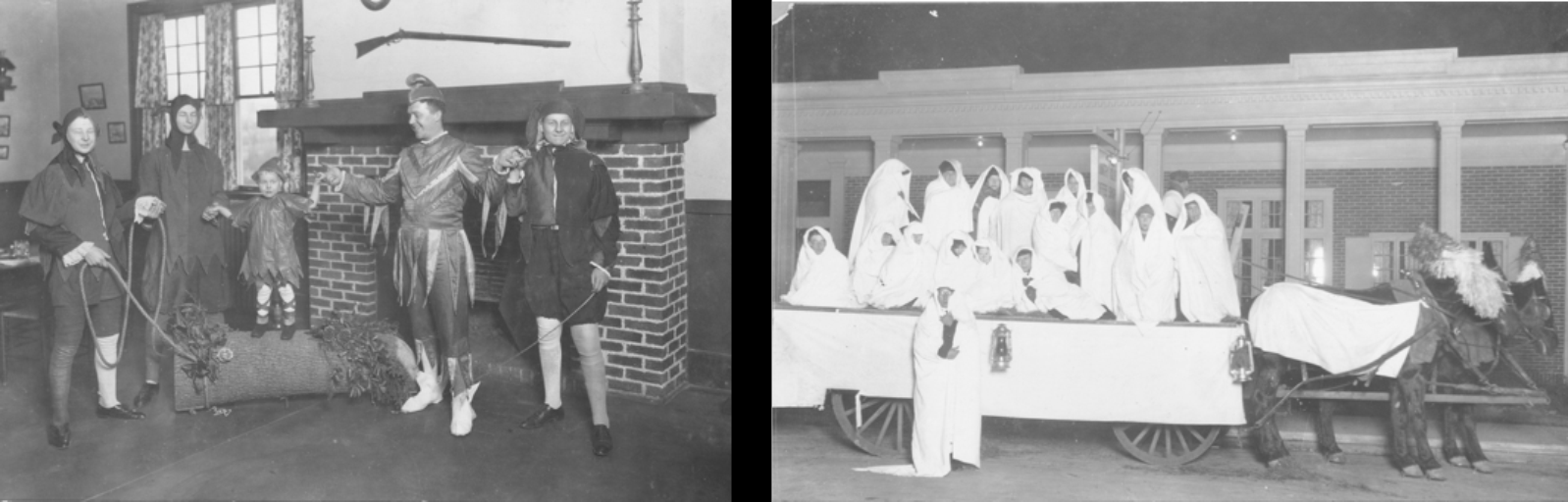

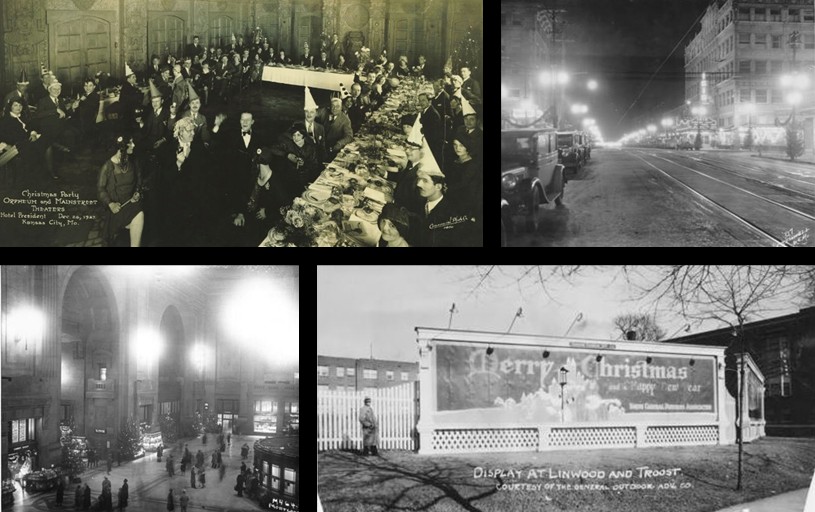
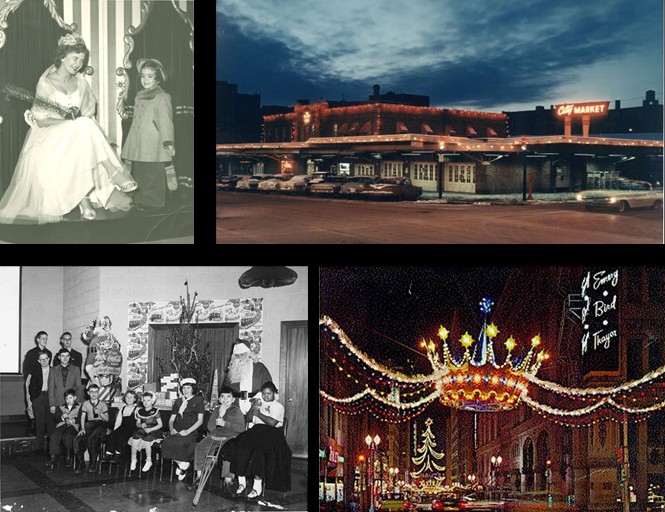




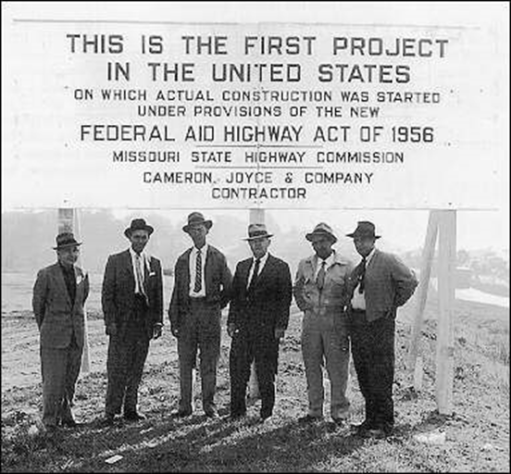
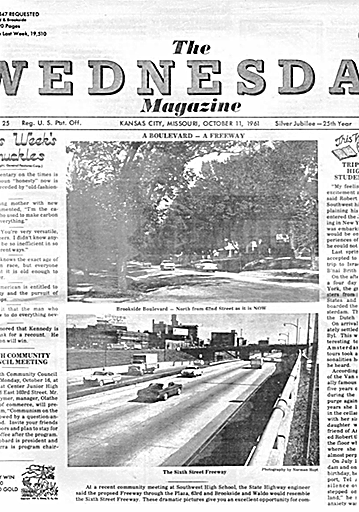

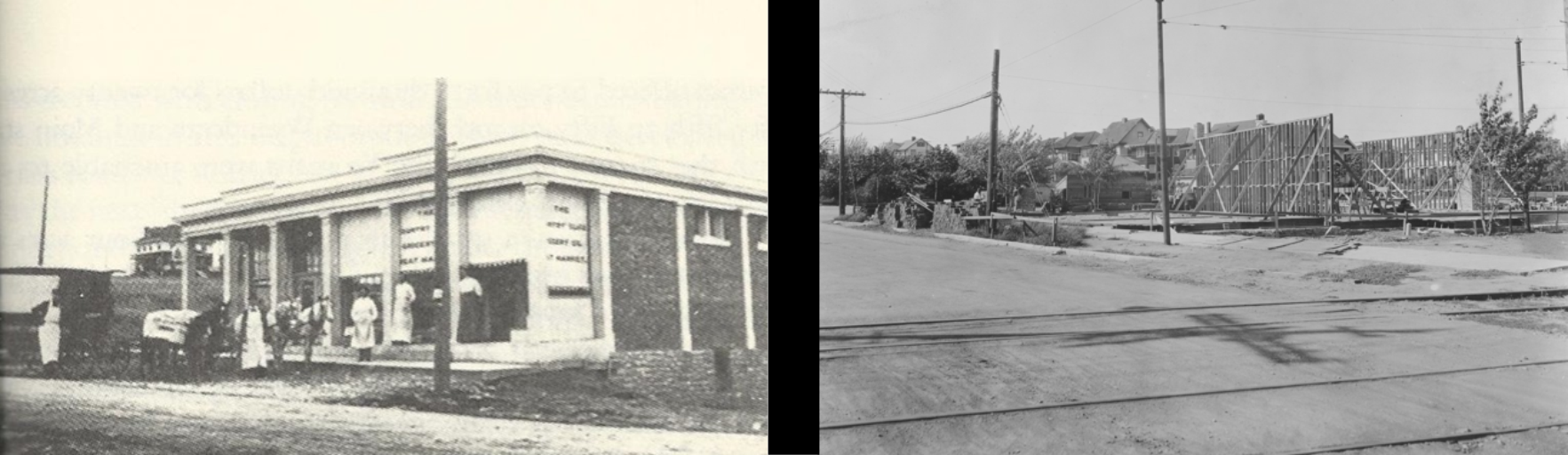
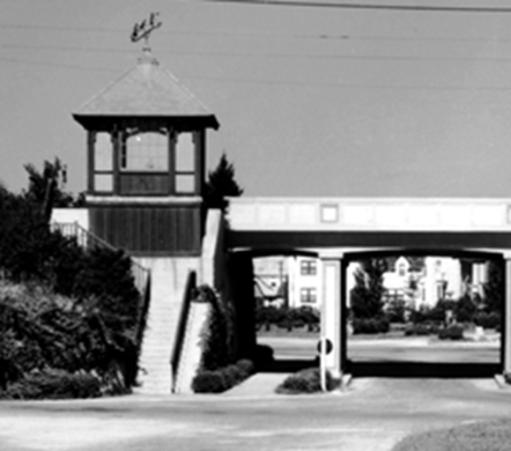

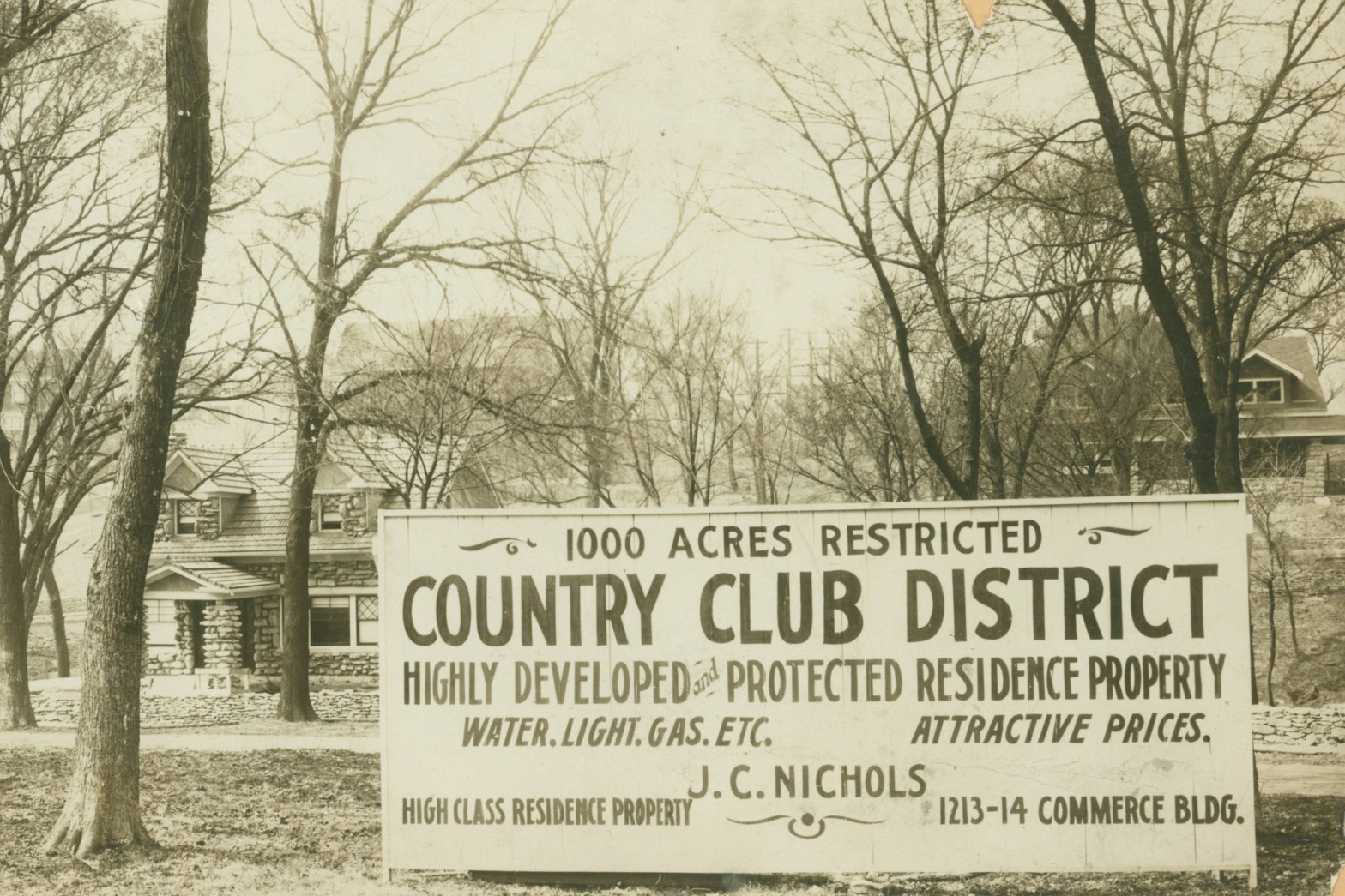

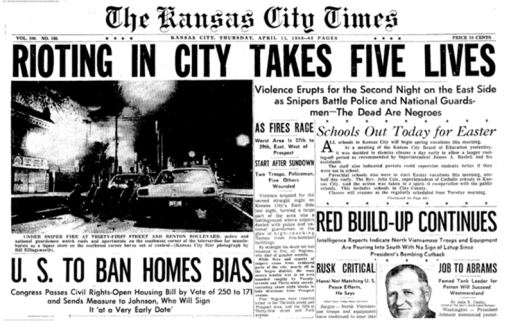
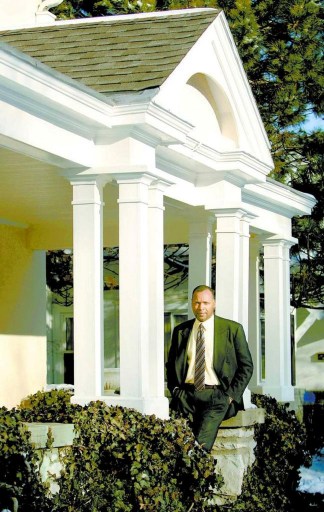



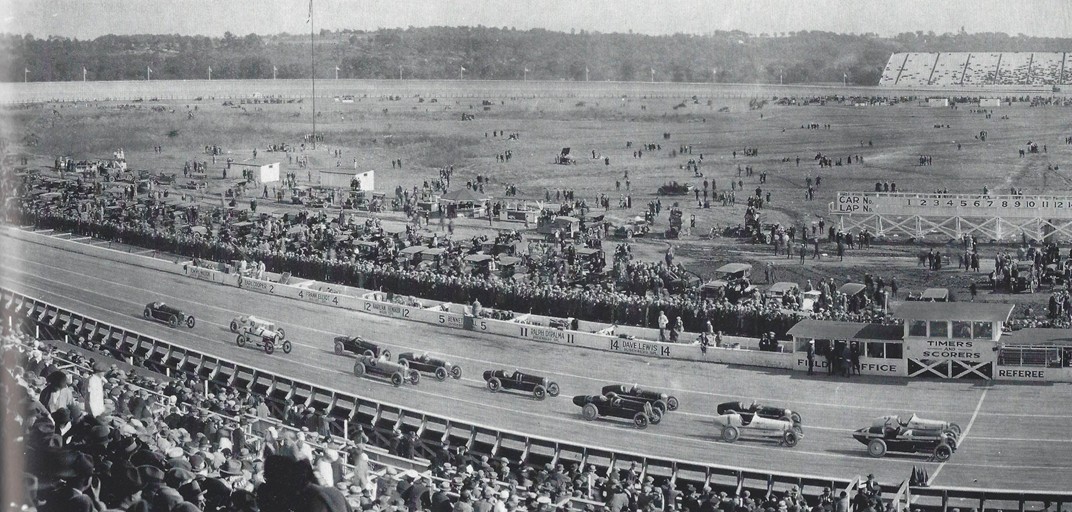

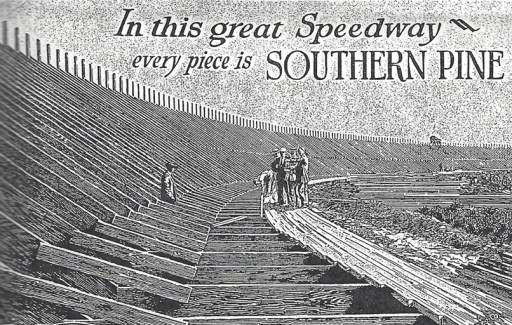


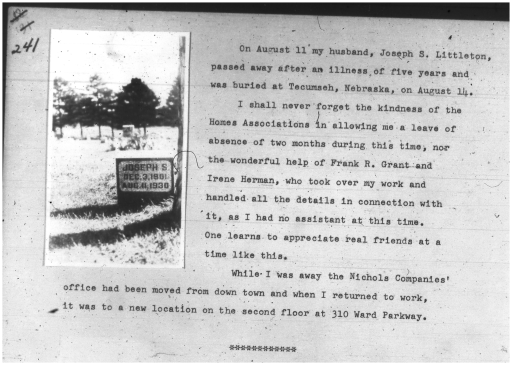

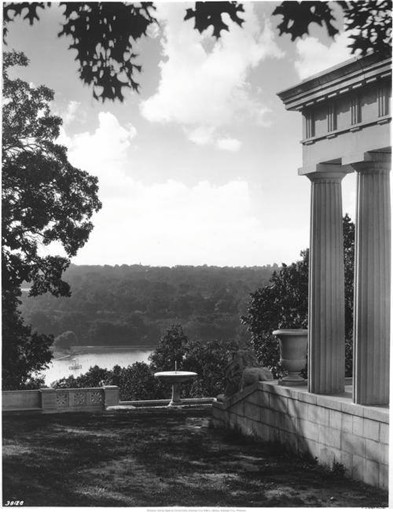


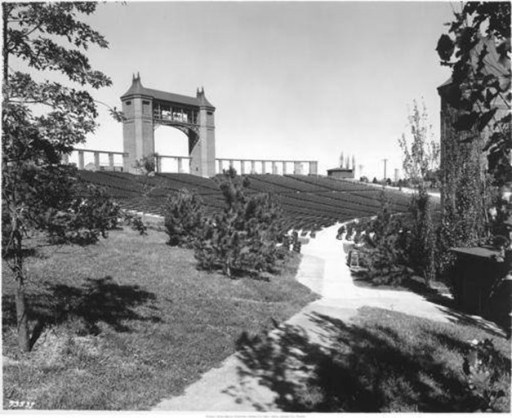
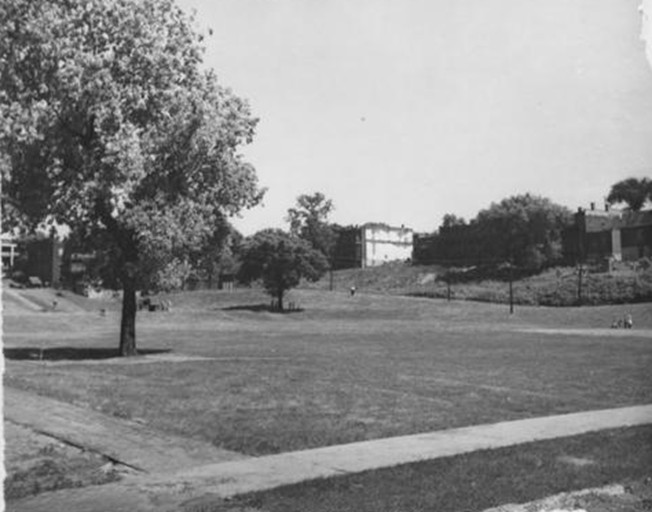
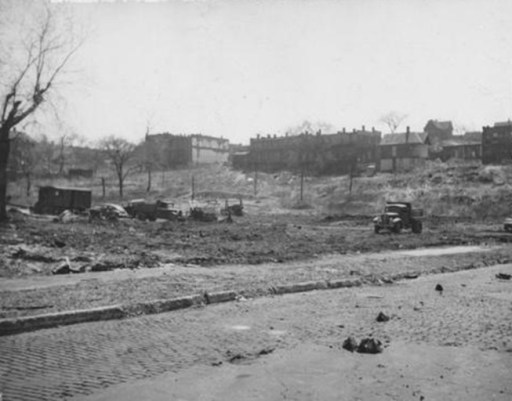
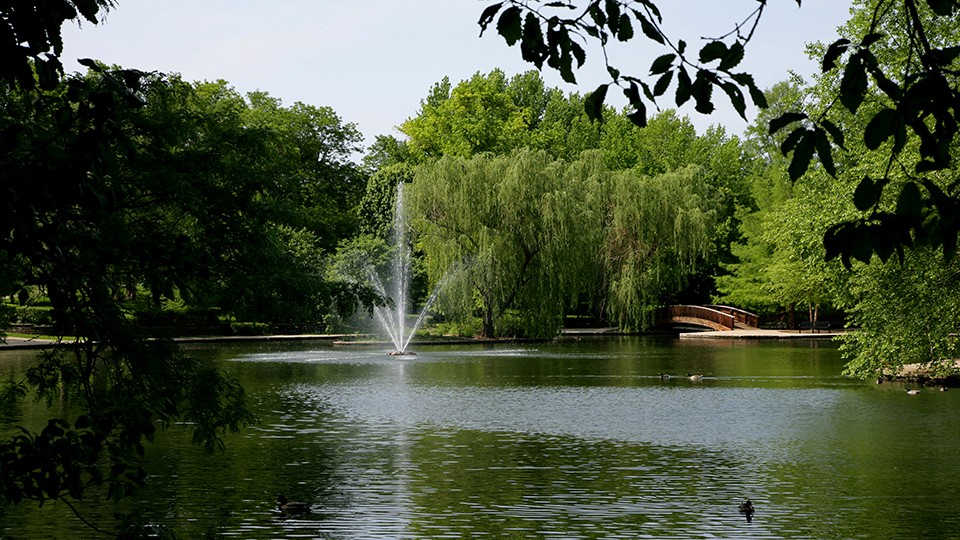

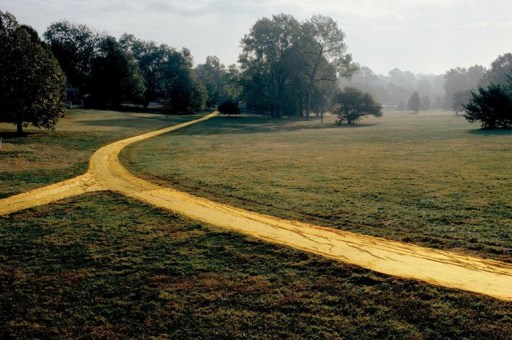
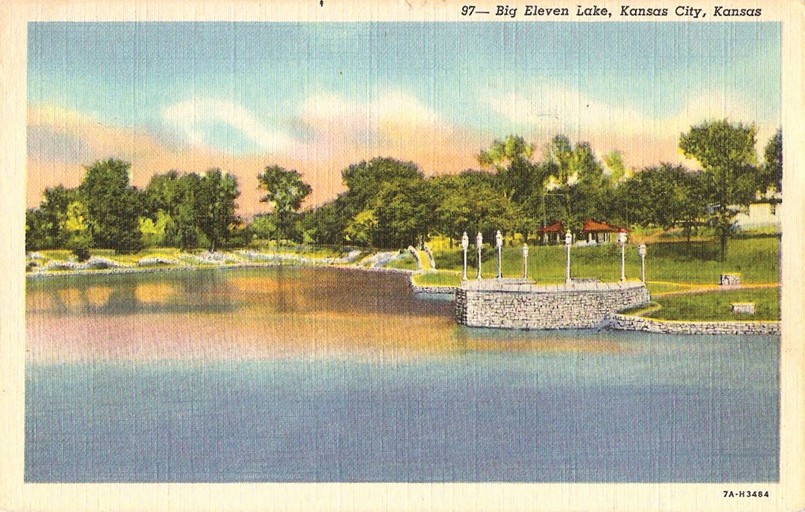

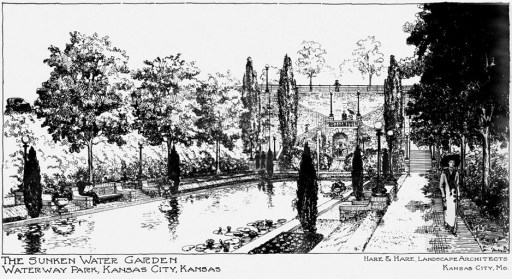
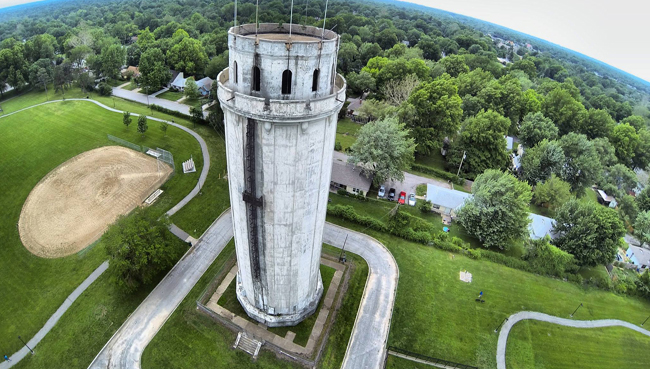
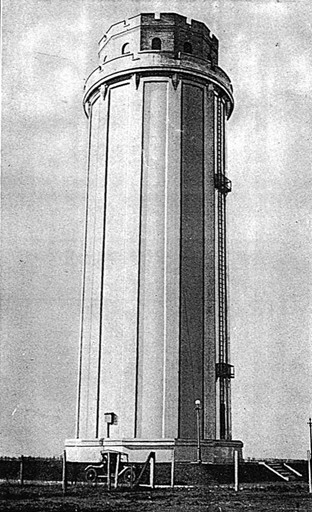
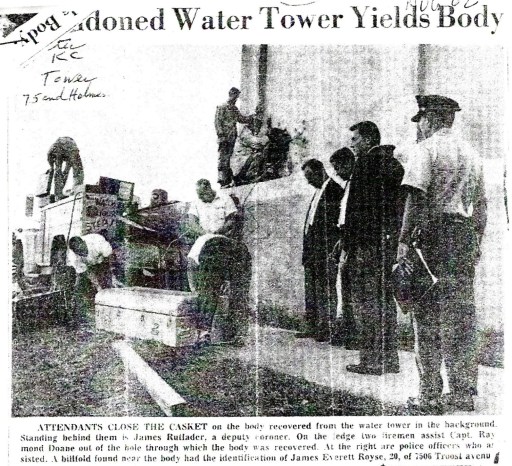


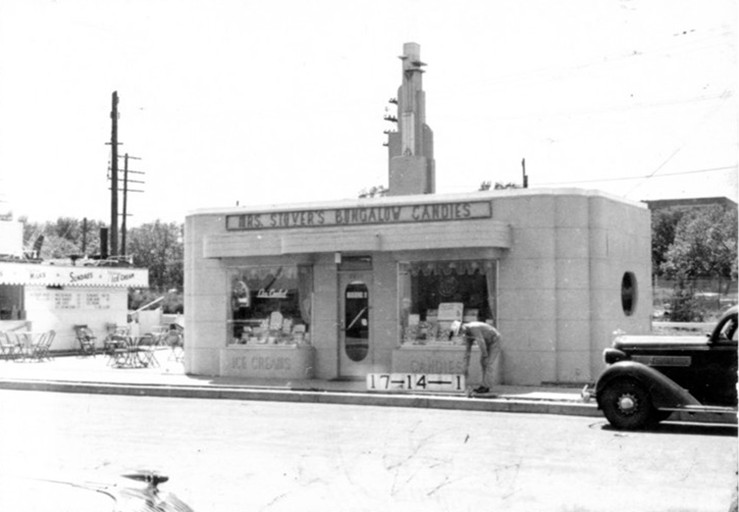








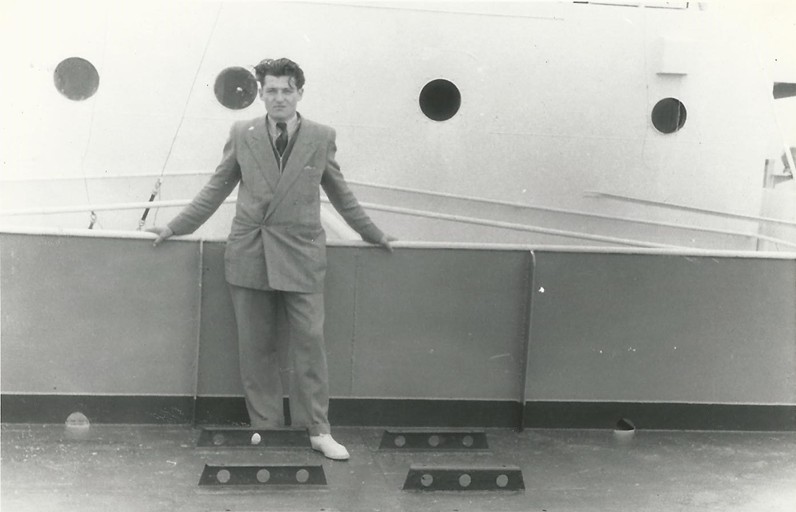
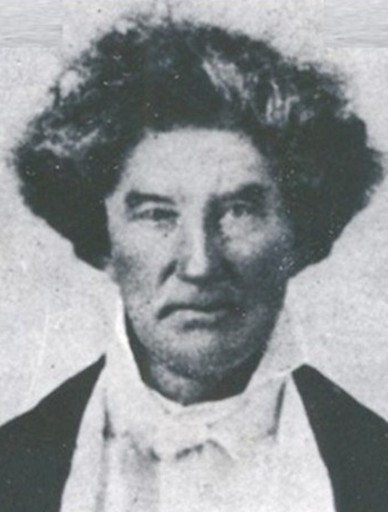
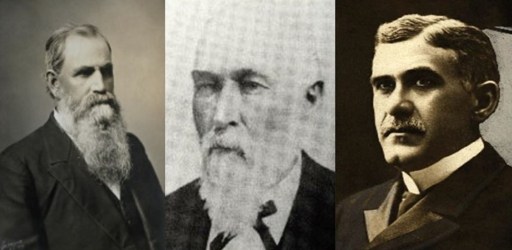
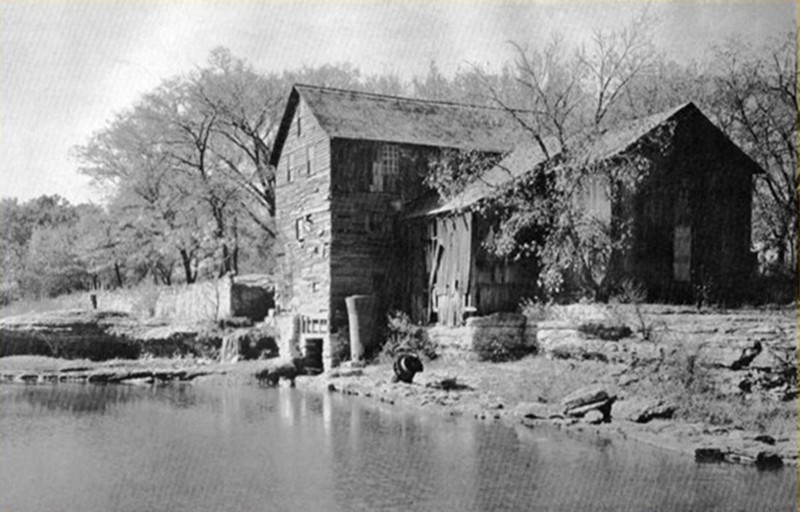
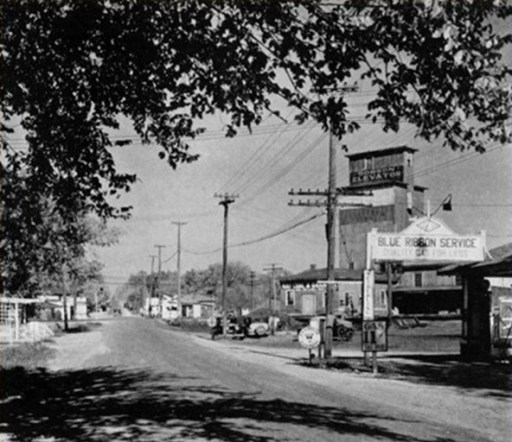

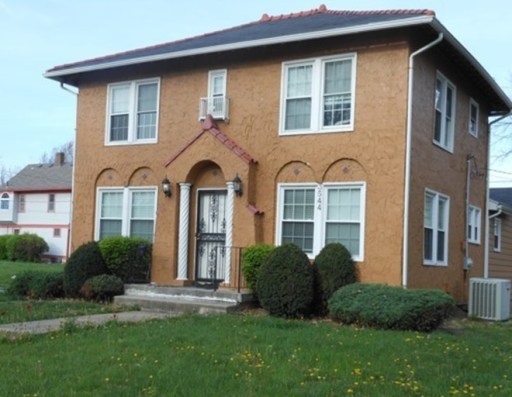


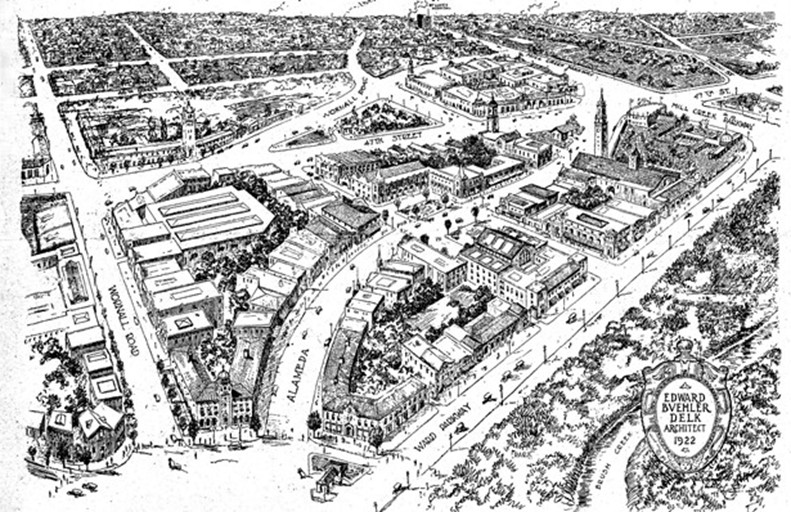

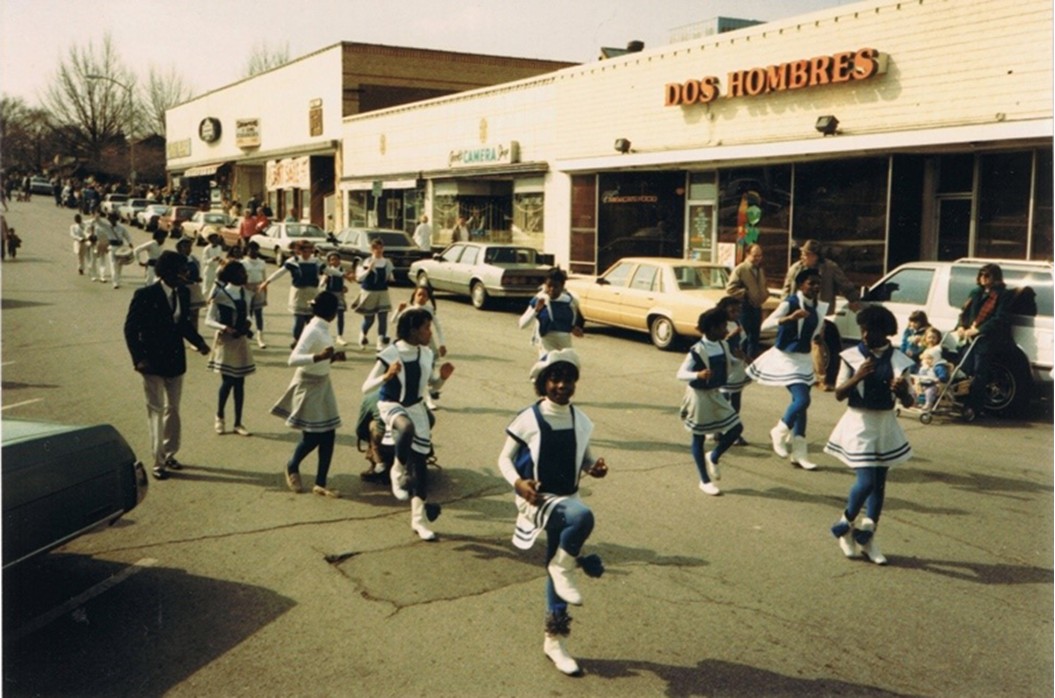


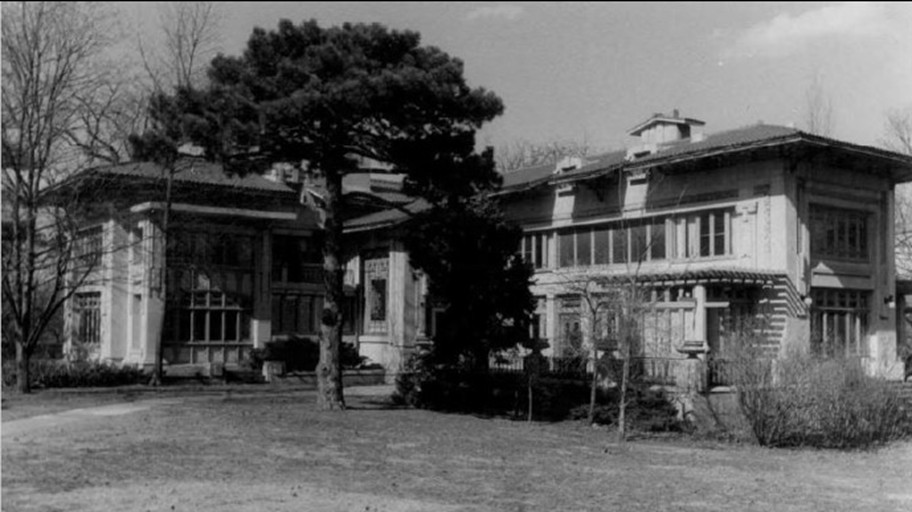

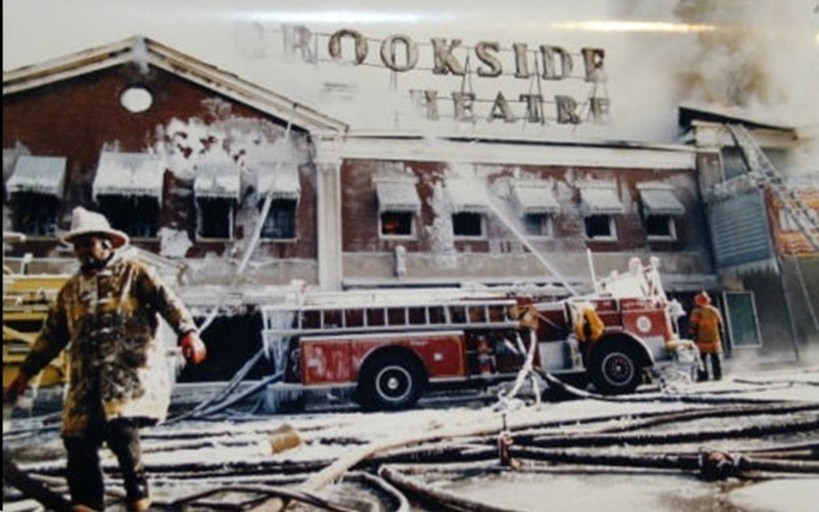

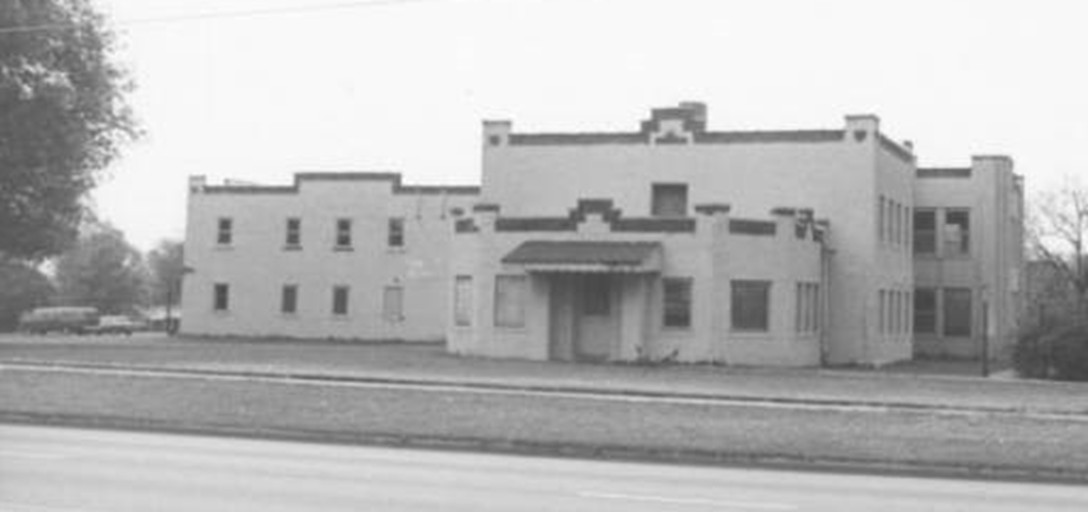



 KC Backstories