The Refugee’s Story

(originally published 12/12/18)

When I first posted this on the original website, it was not coincidentally at a time when the world-wide refugee crisis was at a peak. The crisis is now no less critical, but I offer it in keeping with the current season of holidays around the globe, and Arsenio’s hopeful story.

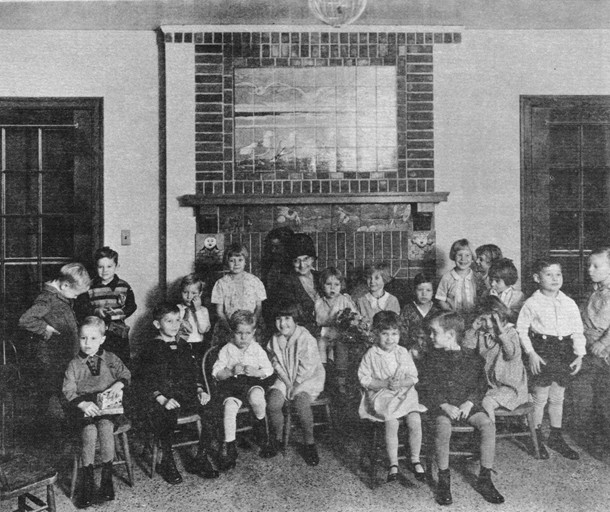
Included in my book on Waldo is a chapter highlighting the Gillis Home, a provider of support for children and families for more than a century, and the story of Aresnio, an eleven-year-old Spanish boy who in 1942 entered the refugee orphanage system in Europe, then came to the United States, and to Gillis. Arsenio wrote Gillis a letter in the 1990s, reflecting on his experiences there. Arsenio’s story tells of the small kindnesses he enjoyed as a non-English speaking refugee, and what that meant to him at such a vulnerable tine in his life.

Gillis provided Arsenio a chance to prove himself. “An elderly lady was the cook at Gillis and each evening she made out a list of the groceries needed the following day. It was the responsibility of one of the boys to get the groceries from the storeroom. The task was never carried out to the cook’s satisfaction. When the job fell to me she had found her grocery boy. I knew how to operate the scales, was careful not to deliver beets when she asked for beans, put away the cart and made sure the storeroom door was locked. I became the permanent grocery boy and the week’s allowance was increased a dime. At the movies I could buy popcorn with double butter.”

Arsenio benefited from the charity of the Kansas City community. “Sometimes on weekends two Jewish ladies dressed from head to toe in black (driving a black car) would come to Gillis and take (another child) and me for an outing. They would drive us to the sights of the city, visit parks, to the airport where we could watch the airplanes take off and land. We could not communicate with them in English nor could they with us in either French or Castilian. The memory of these ladies in black now brings a smile and a tear.”

Recalling how social workers understandably placed him with a Catholic family in his first unsuccessful attempt at adoption, Arsenio wrote, “What the social workers, the American public and this well intentioned couple did not comprehend was the intensity of our hatred for the Catholic church. It was universally believed by the refugees that the Catholic church complied with and even participated in the cruel reprisals suffered by those who opposed Franco. This abhorrence of the church was reinforced daily. An eleven-year-old could not enter a church that he felt was responsible for so much suffering and even the breakup of his family.”

When Arsenio was finally placed for adoption, he poignantly writes about the end of this chapter of his life. He refers to the social worker who would accompany him to his permanent home when he writes, “How could she know that living in groups of children since 1936 had become the norm for me, and in what was always an energized environment, that I thrived.”

I believe Arsenio’s story is best summed up in his memories of belonging. He recalls how “in the summer heading to the swimming hole (following the trolley tracks!) with our arms on each other’s shoulders knowing we were brothers. Brothers not of common parents, brothers made by common loss, thrown together by chance, drawn together by mutual need. The years spent in the orphanage were the happiest of my childhood in America….It was a time when I reveled in the friendship of young boys, boys like myself who were the victims of others’ failings. Our shared lives … bonded us to each other as brothers and sisters bond. Light skin, dark skin, blond or brunette, all pained by circumstances not understood, all in need of friendship to assuage the hurt.”

Photo: Mrs. Ella Loose, back row center, with some of the Gillis Home children during her annual Loose Shoe day visit. Circa 1930. Courtesy of the Gillis Home.

Camp Nichols on Ward Parkway

(originally published 12/6/18)

With the 100th anniversary of the first Armistice Day still in our rearview mirror, I wanted to share once more this sketch of a local regiment and the small camp it occupied for a few critical months in 1917.

The Third Missouri Infantry Regiment was first organized in 1888, and spent the next three decades mustering in and out of federal service – including a stint with Pershing’s forces during the Mexican Revolution. In March 25, 1917, a Presidential order mobilized the Third Missouri at Kansas City to guard the city’s transportation infrastructure, in anticipation of joining the war in Europe. But the Third Missouri lacked a camp site, a spot to muster in the troops, to train and prepare for deployment. So when J.C. Nichols offered a few acres within the undeveloped Country Club, they had their camp which fittingly, if informally, came to be known as Camp Nichols.

To date, I have found only one map that vaguely locates the spot, the well-known cartographic map of the Country Club District, a 1930 promotional map more illustrative than navigational. The map depicts the cartoon images of a doughboy facing a finger-pointing superior. The Nichols Company records do include two photos of the site, included here.

The life of Camp Nichols was brief. There are few references to Camp Nichols in publication or online, but two items give a tiny peek into Kansas City life as America entered the war. The first mention appears in a work on military intelligence, which the author dates to 1917. In one of the first attempts to use law enforcement as a means of gathering intelligence information “in the field,” a former police detective assigned to Camp Nichols after enlistment volunteered to turn spy on local “socialist activities.”

On July 16, 1917, an army lieutenant at Camp Nichols in Kansas City had been invited, by virtue of his previous work as a police detective in that city, to accompany local authorities on a raid of the meeting hall of the Agricultural Workers Organization, a branch of the Industrial Workers of the World (IWW).”

Some revolvers, what appeared to be “burglary tools” and some organizational records were confiscated, “which resulted in a $100 fine for each of the ten radicals arrested and their expulsion from the city.”

The second mention of Camp Nichols appears in a short article in the December 8, 1917 issue of The Survey, the leading social welfare magazine of the day. Under the title, “Camps and Saloons in Kansas City,” the report bestows a dubious distinction on Camp Nichols. Kansas City, so the article relates, was a good example of the problems facing the War Department with respect to the moral character of its soldiers, those problems being liquor and prostitution. In that context, the article relates that…

“…formerly there was located in Kansas City a temporary camp, Camp Nichols, in which the percentage of venereal disease was high.”

Sadly, The Survey article doesn’t rank Camp Nichols on the intoxication levels of its soldiers. But between the spying and the prostitution, it stands to reason there was plenty of reasons to drink.

And what of the soldiers of the Third Missouri Infantry? In October 1917, the Regiment moved to Camp Doniphan, Oklahoma, and was incorporated into the 140th U.S. Infantry, 35th Division, which fought in in the Battle of Verdun, the longest battle of World War I (10 months) and one of the costliest in history. Of the 94 soldiers from the original Third Missouri that fought in Europe, 20 were wounded, 5 were killed, six were killed and one was captured, giving the “Old Third” a heartbreaking casualty rate of 34 percent.

(Photo: The only two known pictures of the 3rd Regiment at the Camp Nichols site. Courtesy the State Historical Society of Missouri-Kansas City.)

J.C. Nichols’ “Don’t”s for Salespeople

(originally published 12/4/18)

Just because it’s the shopping season…

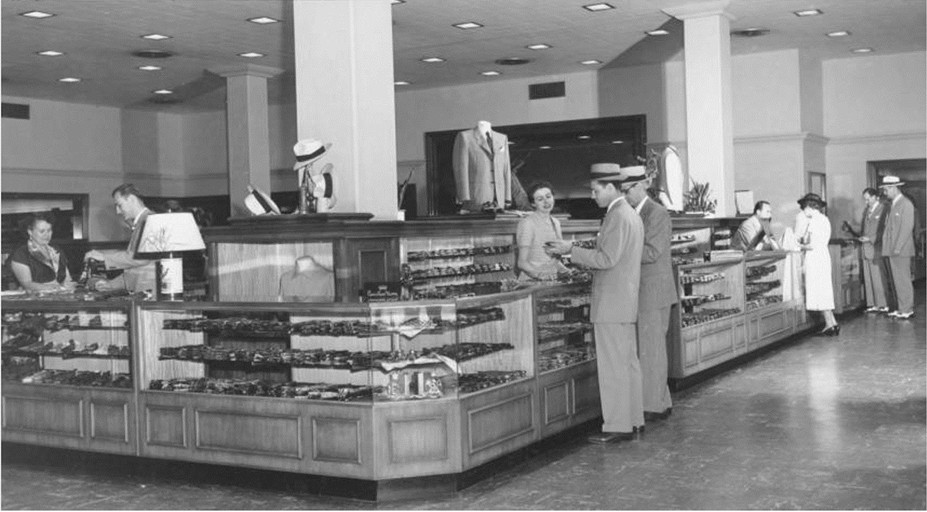
In 1933, J.C. Nichols circulated his “Don’ts for Salespeople” list among the Country Club Plaza businesses to be shared with their employees. The list is a microcosm of Nichols’ most defining characteristics. He was hands-on with every aspect of his vast, vertically integrated real estate empire, and no detail was too small to warrant his personal attention. His philosophy guided his relationships in business and he continually drummed those sensibilities into everyone who worked for him. And like many who have big ideas and like to be hands on, his writings are all over the place. In the transition from one sentence to the other, Nichols could go from flowery oratory to pedantic detail. And of course, the language – the vocabulary, the form and syntax – has the quaint lyricism of another era.

Nichols could be long-winded, too, so I’ve cherry-picked to create a sampling that captures all the characteristics of the Nichols’ character – the attention to detail, the business philosophy, and the paradoxical focus.

Don’t wear too much jewelry – too much paint. “Why look like a night club hostess?”

Don’t rattle money in your pocket…drum on the showcase…distract your customer’s mind.

Don’t under rate [sic] your customer. A chauffeur or maid may influence a good many buyers.

Don’t get high hat. Exclusive shops, particularly, should never get “snooty.”

Don’t criticize a customer. Back fence gossip will reach the customer’s ears eventually and will kill your chances forever of selling that person or those she can influence.”

Don’t express strong political, religious or social opinions until you find out how your customer feels.

Smiles win friends everywhere – and a smile means the same in any language. A clerk with a sincere smile is more valuable than one with just a college degree.

Neatness and orderliness of person, inconspicuous appearance, pleasant, genteel, helpful manners win the way to the heart of your customers.

Learn the names of your customers, children as well as grown-ups. When you call a child by its name, you get not only its friendship but that of every member of the crowd or “gang” to which it belongs.

Don’t stand like a bump on a log and wait for your customer to come to you. Go forward immediately and make evident you are anxious to be helpful.

If you don’t have what your customer wants, direct or – better still – take him to one of your near neighbors.

Nothing builds confidence in your shop more effectively than favorable comments on your near competitor or tears down confidence quicker than knocking him. This rings honesty. Your competitor hears of it and returns the favor by praising you to his customers.

We are not Robinson Crusoes, living, [sic] on desert islands, but are living in an age of cooperation.

Always offer to wrap into a single bundle the several packages your customer is carrying.

Customers resent being hurried just to keep you from being obliged to work a few minutes overtime.

Customers are always interested in new things – new styles, new shipments, new methods of manufacture. People like to feel they are getting new information. You can tell of things you have had for a while in a new and interesting manner. That really makes them new.

The list is sometimes cringe-inducing in its antiquated notions of gender and class. But at its core, the list provides advice that should still be the standard, and in shops that have sustained through the onslaught of on-line competition, it still is.

(Photo: Main Sales Floor of the Jack Henry store at the SE corner of Broadway and Nichols Road. From the JC Nichols Company records, State Historical Society of Missouri)